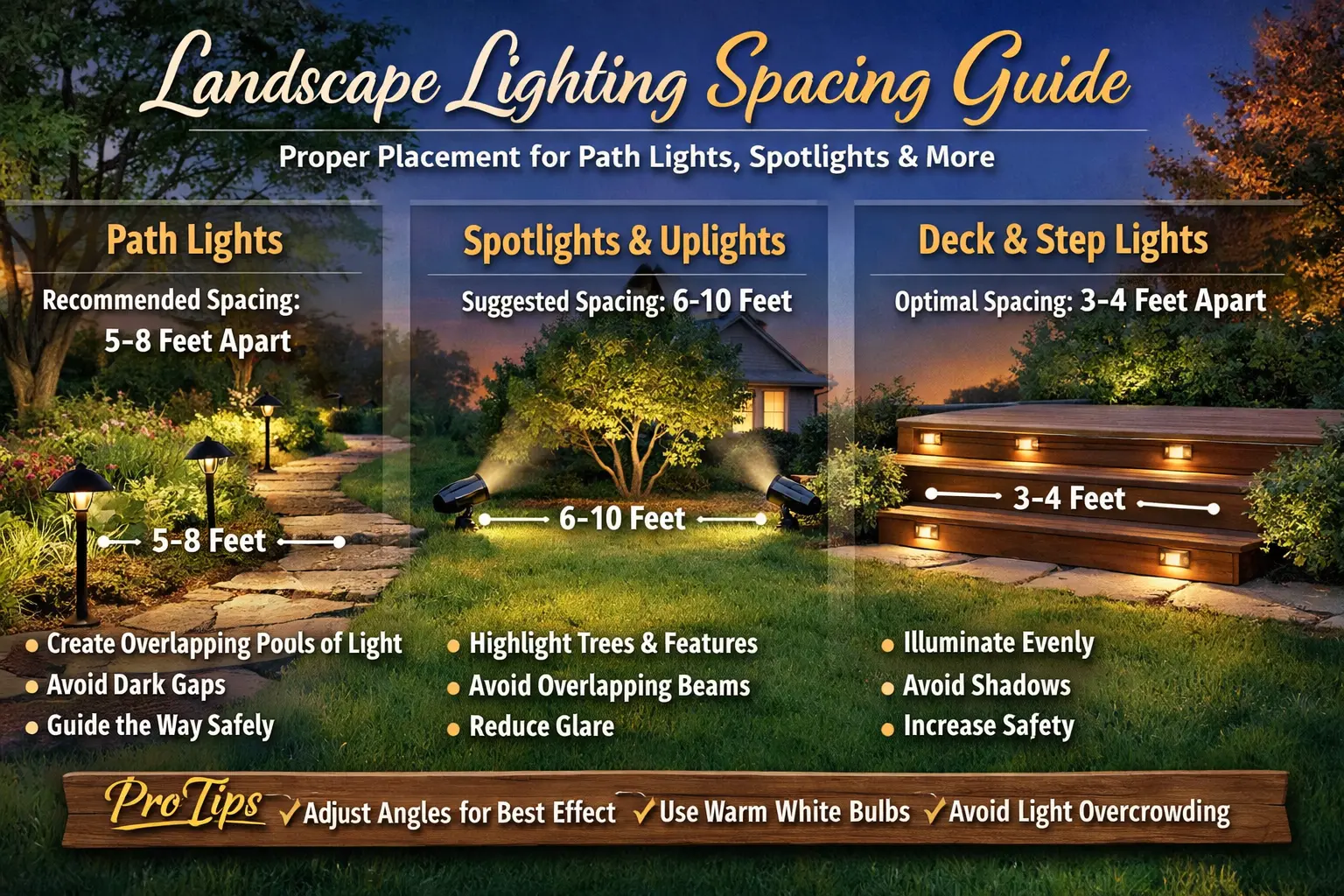
The goal of landscape light spacing is not just covering distance. It is creating balanced, useful light that guides movement, highlights the right features, and avoids the harsh look that comes from placing fixtures too close together.
In a well-planned yard, spacing decisions usually vary by fixture type. Path lights follow one kind of spacing rule, driveway lights follow another, and accent lights are positioned based on beam spread, feature size, and how much emphasis you want after dark.
Spacing is one of the most important parts of a well balanced lighting design, but it works best when considered within the full lighting plan. Our Complete Landscape Lighting Guide explains how fixture spacing fits into landscape lighting layout, path light placement, accent lighting, wiring, transformer planning, and overall outdoor lighting system design.
Path Light Spacing
When homeowners search for how far apart landscape lights should be, path light spacing is usually the first thing they want to know. In most residential systems, path lights are spaced around 6 to 10 feet apart, depending on fixture brightness, beam spread, path width, and the overall look you want.
A Good Starting Range
A 6-to-10-foot range works well because it usually gives enough overlap for visibility without making the path feel crowded. Smaller fixtures or dimmer lights may need to be closer together. Brighter fixtures often allow wider spacing.
Alternate Sides Instead of Mirroring Every Light
Alternating lights along a path often creates a more natural appearance than placing fixtures directly across from each other. That approach usually feels softer and less mechanical while still guiding the eye clearly. For more detailed examples, see path light placement.
Path Light Spacing Diagram for Landscape Lighting
Proper path light spacing is one of the easiest ways to make a landscape lighting system look professional. When fixtures are placed too close together, the walkway can look overlit and harsh. When they are placed too far apart, the path can look uneven and leave dark gaps. A balanced spacing plan helps create a clean, welcoming look without wasting fixtures.
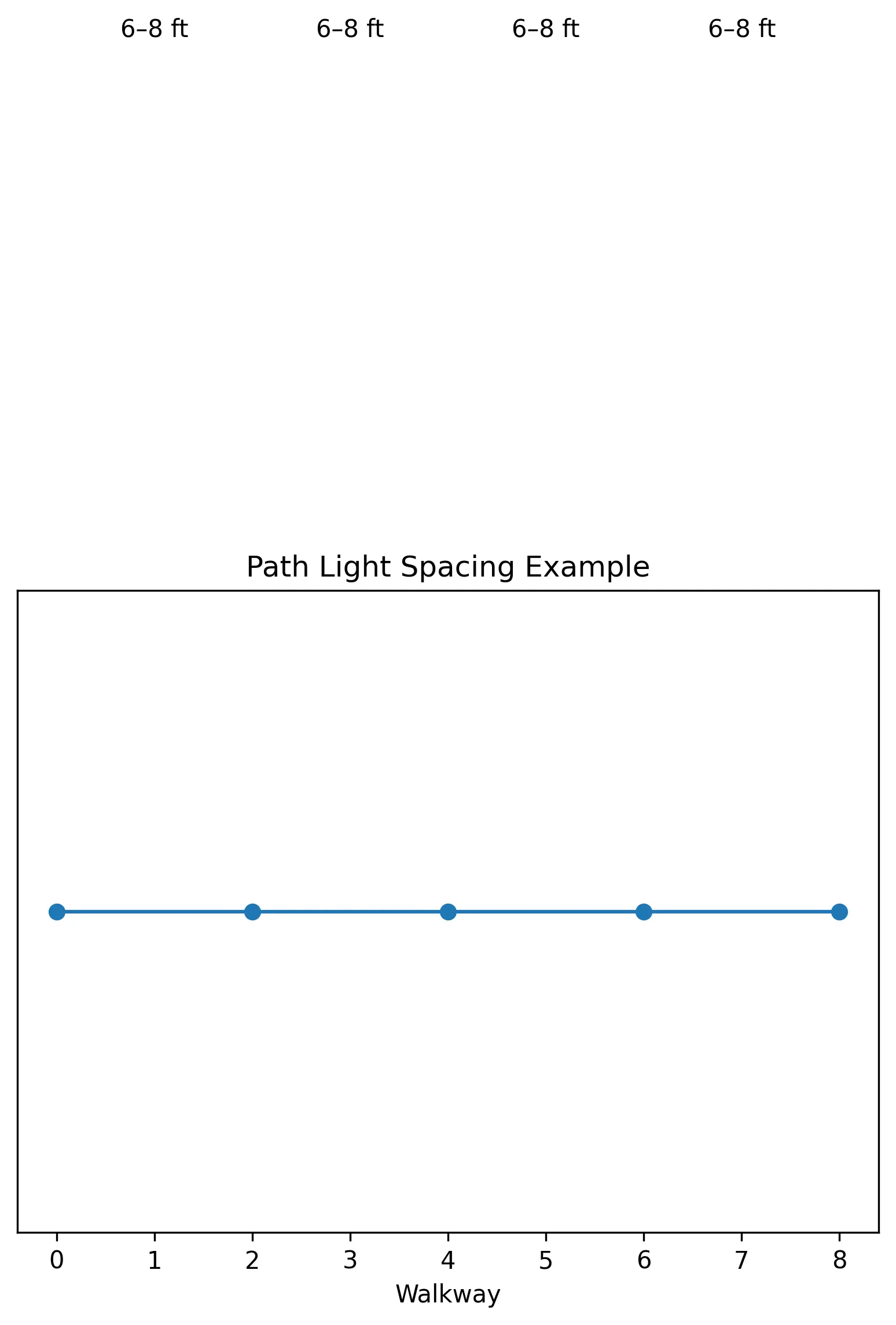
Diagram: Recommended path light spacing for landscape lighting along a walkway. Most installations place fixtures about 6–8 feet apart to create balanced illumination without producing a runway lighting effect.
This diagram shows a simple path lighting layout with fixtures spaced at a practical interval along a walkway. In many residential installations, a spacing range of about 6 to 8 feet works well, but the best distance depends on fixture brightness, beam spread, path width, and how much ambient light is already in the area. The goal is not to create a runway effect. The goal is to create gentle, even guidance along the path.
Best path light spacing for most homes
For many walkways, spacing lights around 6 to 8 feet apart gives a balanced result. On narrower paths, you may use fewer fixtures and stagger them from side to side. On wider or darker paths, you may need slightly closer spacing. It is also smart to test fixture placement at night before making the final installation permanent.
Common path lighting spacing mistakes
The biggest mistakes are placing every fixture directly across from the one on the opposite side, putting fixtures too close together, and ignoring the beam pattern of the light. Even good fixtures can look awkward if the spacing is too tight. A better approach is to think in terms of overlap, softness, and visual rhythm instead of simply counting fixtures.
Spacing becomes even more important around steps because shadows and dark gaps can create a safety issue. If you are lighting stairs, see this outdoor stair lighting guide for more specific recommendations on step light placement, brightness balance, and safe stair illumination.
For more planning help, visit our path light placement guide, landscape lighting layout guide, and landscape lighting design guide.
Accent Light Spacing
Accent lights follow a different rule than path lights. Instead of using one simple distance range, accent lighting spacing depends on what the fixture is illuminating. The size of the feature, the beam spread, and the intended nighttime effect matter more than a fixed measurement.
Feature Size Changes the Spacing
A small ornamental shrub does not need the same spacing approach as a broad tree canopy or a long wall. The larger the feature, the more carefully the beam has to be matched to the target area.
Beam Spread Matters
Narrower beams usually need more deliberate placement, while wider beams may cover more surface with a single fixture. That is why spacing is closely tied to optics and beam control rather than just distance alone.
Accent spacing should be chosen based on what you want highlighted, not just on how much area you want to fill with light.
Driveway and Walkway Lighting Spacing
Driveways and wider walkways usually need a little more breathing room than smaller garden paths. In many cases, driveway lights are spaced around 8 to 12 feet apart, depending on fixture brightness, edge definition, and how curved the driveway is.
Highlight Curves and Transitions
Straight runs are usually easier to space evenly. Curves, turns, and wider approach zones may need more attention because the eye notices gaps there faster.
Do Not Light Both Sides Too Aggressively
It is easy to overdo driveway lighting by treating every edge the same. The goal is usually guidance and visual structure, not creating a bright landing strip.
Tree and Architectural Lighting Spacing
Tree spacing and architectural spacing are usually judged by effect rather than by a universal distance rule. These are some of the most design-sensitive parts of an outdoor lighting spacing guide.
Tree Lighting Spacing
Tree lighting depends on canopy width, trunk shape, viewing angle, and beam spread. Some trees look best with one carefully placed uplight, while broader canopies may need more than one fixture for balance.
Wall and Architectural Spacing
When spacing fixtures against walls or structures, the beam spread and surface width become critical. Poor spacing can create bright hot spots instead of a smooth, clean effect. That is why wall lighting is often planned more by beam pattern than by generic distance.
Landscape Lighting Layout and Spacing Work Together
Spacing works best when it is tied to the full layout of the yard. If the overall fixture plan is weak, even correct spacing on one path or bed will not fix the bigger problem.
Before installing fixtures, it helps to create a simple lighting layout plan so spacing stays consistent across the entire yard. A broader landscape lighting layout plan helps decide where fixtures belong, while the landscape lighting design guide helps explain why certain areas deserve more emphasis than others.
Spacing Supports Balance
A yard usually looks best when the fixture placement feels connected rather than random. Good spacing helps one area lead naturally into the next without abrupt changes in brightness.
How Brightness Affects Spacing
Brightness is one of the biggest reasons a fixed spacing rule does not work for every fixture. Two lights placed the same distance apart can produce very different results if one is brighter, mounted higher, or uses a wider beam.
Lumen Output
Brighter fixtures usually allow wider spacing. Lower-output fixtures often need to be closer together to maintain consistent coverage.
Beam Spread
A wider beam can cover more surface area, while a narrow beam needs more precise placement. This is one reason beam spreadaffects spacing so much.
Fixture Height
Higher fixtures often spread light farther, while lower fixtures create more localized pools of light. This changes how far apart they can be placed without leaving obvious gaps.
Common Landscape Lighting Spacing Mistakes
A spacing guide would not be complete without showing what goes wrong when fixtures are placed without a clear rule. These are some of the most common spacing mistakes in residential yards.
Lights Too Close Together
This creates glare, visual clutter, wasted fixture count, and a much harsher nighttime look than most homeowners want.
Lights in Rigid Straight Lines
Perfectly mirrored rows can make a landscape feel mechanical instead of natural. Alternating placement often softens the result.
Uneven Brightness
Large dark gaps followed by bright clusters usually mean the spacing was not consistent with fixture output and beam control.
Over-Lighting Small Spaces
Small beds, short paths, and compact entries are easy to overwhelm. Not every space needs the same density of light.
Spacing and Electrical Planning
Spacing decisions also affect the electrical side of the system. The more fixtures you add, and the farther apart they are spread across the property, the more cable length, transformer capacity, and wire planning start to matter.
Wire Runs Change with Spacing
Wider spacing across a larger yard often means longer wire runs. That can increase both installation complexity and the need for better cable planning.
Transformer Load
More fixtures usually mean more total load. That is one reason spacing decisions should be part of the full system plan, not an isolated design choice. Use a landscape lighting transformer size calculator before finalizing the system.
Wire Gauge and Connection Quality
Once spacing and layout are mapped, it becomes easier to choose the right cable size and make better connector decisions. Related planning guides include landscape lighting wire gauge.
Portfolio Landscape Lighting Spacing
Many homeowners install low-voltage landscape lighting systems using Portfolio landscape lighting fixtures. Portfolio path lights, spotlights, and accent fixtures follow the same spacing principles described in this guide. If you are planning or troubleshooting a Portfolio outdoor lighting system, these resources may help:
Landscape Lighting Spacing FAQ
How far apart should landscape lights be?
Most path lights are spaced between 6 and 10 feet apart, depending on brightness, beam spread, and the look you want. Accent light spacing depends more on the size of the feature being illuminated.
Should landscape lights be evenly spaced?
Yes, but evenly spaced does not always mean perfectly mirrored. Alternating placement often creates a more natural appearance.
How far apart should driveway lights be?
Driveway lights are often spaced around 8 to 12 feet apart, depending on fixture brightness, driveway width, and the shape of the approach.
Can landscape lights be spaced too close together?
Yes. Lights placed too close together often create glare, hot spots, wasted fixture count, and a cluttered nighttime appearance.
What affects landscape lighting spacing the most?
The biggest factors are fixture brightness, beam spread, mounting height, area width, and whether the goal is wayfinding, accent lighting, or broad coverage.
Final Thoughts on Landscape Lighting Spacing
Good low voltage landscape lighting spacing is one of the simplest ways to make an outdoor system look more professional. It helps paths feel guided, focal features look intentional, and the whole yard feel balanced instead of overlit.
The best spacing decisions come from combining practical distance rules with fixture brightness, beam spread, and the actual layout of the yard. That is why a small spacing adjustment can sometimes improve the nighttime look more than buying more fixtures.
Start with the standard ranges, test the effect visually, and then fine-tune based on the way the space actually feels after dark.
Good landscape lighting spacing starts with fixture placement, but it also depends on wiring, voltage, and how the system is organized behind the scenes. A walkway can still look uneven even when the fixtures seem evenly spaced if the farthest lights are losing power along the cable run. That is why it helps to pair spacing plans with our landscape lighting voltage drop guide. If you are still laying out the cable path, our how to wire landscape lighting guide explains how the wiring route affects the finished result. For a brand-specific example, our Portfolio lighting wiring diagram shows a practical layout approach. If you are planning a larger system, our low voltage landscape lighting zones guide will help you organize fixtures into sections so the spacing and brightness stay more consistent across the property.
Landscape Lighting Spacing, Path Light Distance, and Outdoor Fixture Placement Planning
This page is designed to answer one practical homeowner question clearly: how far apart landscape lights should be. Use it as a spacing reference for path lights, driveway lighting, accent fixtures, and low-voltage planning across the yard.
If you are still in the early stages, the best next step is usually pairing spacing decisions with the broader layout and design pages so the fixture count, placement, and electrical plan all work together.