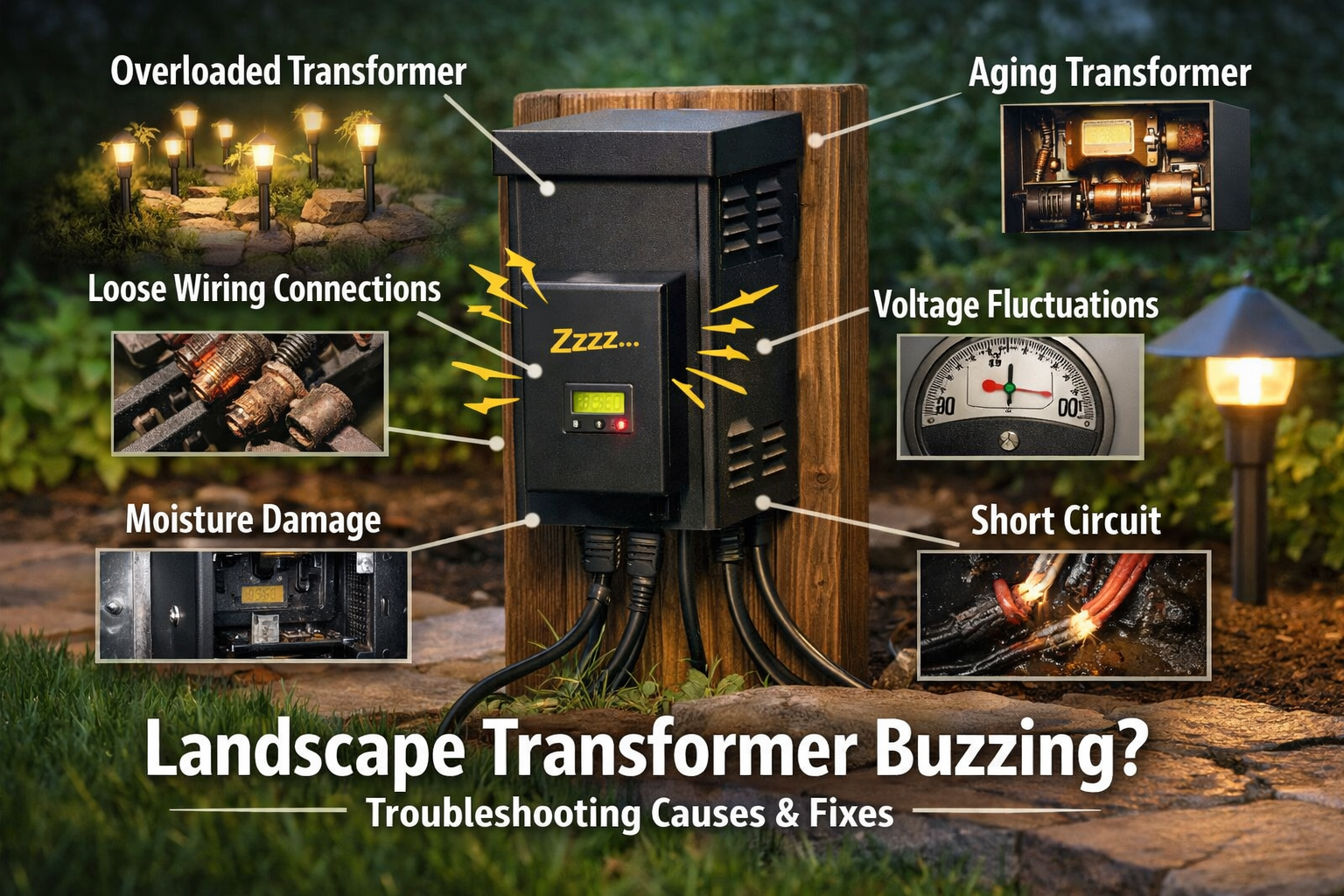
A buzzing transformer can be harmless or it can be the first warning sign that the system is overloaded, wired poorly, or aging out. The key is whether the sound is mild and steady or loud and tied to other symptoms like dim lights, heat, or breaker trips.
The most common causes are normal transformer hum, overload, loose terminals, voltage fluctuations, moisture, and internal wear. Start with the quick diagnosis table below, then work through the transformer checks before assuming the unit needs replacement.
Is It Normal for a Landscape Transformer to Buzz?
Yes, a mild hum is often normal in a low-voltage landscape lighting transformer. Transformers work by using electromagnetic coils, and those coils can create a faint vibration during regular operation. That slight humming is common, especially in older magnetic-style units.
What is not as normal is loud buzzing, rattling, vibration you can clearly feel in the housing, or buzzing that gets worse when the full lighting system turns on. When the sound becomes noticeable from several feet away or shows up with other symptoms like dim lights, flickering, heat, or breaker trips, the transformer needs closer attention.
Usually Normal
- faint hum during operation
- steady low sound with no other problems
- no heat beyond normal warmth
- lights operate normally
Usually a Warning Sign
- loud buzzing or vibration
- noise gets worse when lights turn on
- housing feels very hot
- lights dim, flicker, or blink
Moisture-Related Clues
- buzzing after rain
- wet transformer enclosure
- corrosion around terminals
- intermittent sound changes
Load-Related Clues
- more noise after adding lights
- transformer strain at full load
- buzzing with weak brightness
- buzzing before breaker trips
Quick Diagnosis Table for a Buzzing Landscape Transformer
Use this table to match the sound you hear to the most likely cause before replacing the transformer or rebuilding the lighting run.
| Symptom | Likely Cause | What To Check | Detailed Fix |
|---|---|---|---|
| Faint hum only | Normal transformer operation | Monitor noise, temperature, and light performance | Landscape lighting transformer guide |
| Loud buzzing | Overloaded transformer | Total connected wattage and transformer rating | Landscape transformer overload |
| Buzzing with dim lights | Voltage drop or transformer strain | Cable run, wire size, transformer load | Landscape lights dim |
| Buzzing with breaker trips | Short circuit or overload | Wiring faults, wet connectors, transformer heat | Portfolio transformer tripping breaker troubleshooting |
| Buzzing after rain | Moisture damage | Transformer housing, terminals, wet branch faults | Landscape lights not working after rain |
| Buzzing with no power output | Aging or failing transformer | Output behavior, heat, wiring terminals, load | Portfolio transformer not powering lights |
Common Causes of a Buzzing Landscape Transformer
The most common reasons a landscape transformer buzzes are overload, loose wire connections, aging transformer components, voltage fluctuations, and physical damage or moisture inside the transformer housing. Some causes are minor, while others are early signs that the transformer is no longer operating efficiently.
In many outdoor lighting systems, buzzing does not happen by itself. It often shows up alongside dim lights, flickering fixtures, breaker trips, or transformers that run hotter than usual. That combination makes it easier to separate normal humming from real electrical stress.
Overload
Too many connected fixtures can make the transformer work harder than it should and create louder buzzing.
Check overload symptomsLoose Wiring
Terminals that are loose, corroded, or weathered can create vibration, resistance, and unstable electrical behavior.
Review cable and wiring basicsMoisture
Water exposure can change how a transformer behaves, especially if the enclosure or nearby wiring has been compromised.
Review rain-related problemsAging Components
Older transformers often vibrate more and become noisier as internal components wear down over time.
Check deeper transformer issuesTransformer Overload Problems
Too many lights connected to one transformer is one of the biggest reasons a landscape transformer starts buzzing loudly. When the total wattage load approaches or exceeds the transformer rating, the unit can run hotter, vibrate more, and hum more noticeably.
Overload becomes more likely when a system has been expanded over time. A transformer that worked fine with the original path lights may start buzzing after more spotlights, accent fixtures, or additional runs are added without increasing transformer capacity.
If the buzzing became worse after adding fixtures, compare the system to landscape lighting transformer guide, landscape transformer overload, and landscape lighting transformer size calculator.
Loose Wiring Connections
Loose wiring terminals can make a transformer buzz more than normal. A terminal that is not tightened properly can create extra resistance, uneven electrical flow, and vibration inside the transformer. Corrosion around the connection can make the problem worse.
This is especially important in outdoor systems where weather exposure slowly affects metal parts. A transformer may start out nearly silent, then grow noisier over time as the terminals weather, loosen, or accumulate corrosion.
If you suspect the issue is connection-related, review landscape lighting cable guide, how to wire landscape lighting, and landscape lighting connectors.
Aging or Failing Transformers
A transformer can become noisier as it ages. Internal coil wear, insulation changes, metal vibration, and declining output stability can all make a transformer buzz more than it did when it was new. In older units, that buzzing may gradually become stronger before the transformer starts showing other symptoms.
Warning signs that the transformer may be failing include louder buzzing, excess heat, dim lights, flickering, blinking, or inconsistent output to the lighting run. When those symptoms appear together, the issue is usually bigger than normal transformer hum.
For deeper troubleshooting, review Portfolio lighting transformer troubleshooting, Portfolio transformer buzzing troubleshooting, and Portfolio transformer not powering lights.
Why Buzzing Sometimes Changes With Weather or Load
Some homeowners notice that the buzzing gets worse only on certain nights, after rain, or when the full lighting schedule comes on. That usually points to changing electrical conditions rather than random noise.
Moisture can affect connectors and nearby wiring. Cooler evenings may change load patterns. Added fixtures may strain the system only when every light is active. Those details matter because they help you narrow the cause before assuming the transformer must be replaced.
- buzzing after rain may point to moisture in the housing or run
- buzzing with dim lights often points to strain or voltage loss
- buzzing with breaker trips often points to overload or short issues
- buzzing that slowly gets worse over time often points to aging equipment
When a Buzzing Transformer Should Be Replaced
A transformer does not need replacement just because it makes a faint hum. But replacement becomes more reasonable when the buzzing is loud, the housing gets unusually hot, the lights perform poorly, or the transformer can no longer deliver stable output without noise and stress.
If you have already ruled out overload, loose terminals, moisture, and run layout problems, and the transformer still buzzes loudly, it may simply be aging out. At that point, replacement is usually a safer and more reliable option than continuing to run a stressed unit.
Portfolio Systems and Landscape Transformer Buzzing
Many landscape lighting systems installed over the past two decades used Portfolio low-voltage transformers and fixtures sold through Lowe’s. If your landscape transformer is buzzing and your system includes Portfolio components, the issue may be related to transformer load, wiring connections, or aging equipment. You can explore detailed troubleshooting in our Portfolio lighting troubleshooting guide, learn more about outdoor system setups in Portfolio landscape lighting, diagnose transformer noise in Portfolio transformer buzzing troubleshooting, or review wiring layouts in our Portfolio lighting wiring diagram guide.
Landscape Transformer Buzzing FAQ
Why is my landscape transformer buzzing?
The most common causes are normal transformer hum, overload from too many connected lights, loose wiring connections, moisture, voltage fluctuations, or an aging transformer with worn internal components.
Is it normal for a landscape lighting transformer to hum?
Yes. A faint hum can be normal during operation, but loud buzzing, vibration, heat, dim lights, or repeated breaker trips usually point to a problem that needs closer inspection.
Can an overloaded transformer cause buzzing?
Yes. When too many fixtures are connected or the wattage load is too high, the transformer can work harder than it should and produce louder buzzing or humming.
Why does my transformer buzz louder when the lights turn on?
That usually points to a load-related issue such as overload, voltage drop, weak connections, or an aging transformer that struggles when full system demand starts.
When should I replace a buzzing transformer?
You should consider replacement when the buzzing becomes unusually loud, the housing gets hot, the lights dim or flicker, the breaker trips, or the transformer no longer delivers stable output.
Final Thoughts on a Buzzing Landscape Transformer
A faint humming transformer is often normal, but a loud buzzing transformer usually deserves a closer look. The most common causes are overload, loose terminals, aging equipment, moisture, and load-related strain when the lights turn on.
Start by comparing the sound to the rest of the system behavior. If the transformer is noisy but the lights are strong and stable, you may only be hearing normal hum. If the noise comes with dimness, flicker, heat, or breaker trips, the transformer is telling you something more serious is going on.
More Landscape Lighting Troubleshooting Guides
Landscape Transformer Not Working
Step-by-step checks for full-system power loss, internal failure, timer errors, and no-output problems.
Landscape transformer not working guideLandscape Transformer Overload
How overload happens, what symptoms to watch for, and how to size a system more safely.
Landscape transformer overload guideLandscape Lights Dim
Understand weak brightness caused by voltage drop, poor spacing, cable size, or transformer strain.
Fix dim landscape lightsLandscape Lights Flickering
Fix unstable lighting caused by loose connections, weak runs, moisture, or inconsistent transformer output.
Fix flickering landscape lightsLandscape Lights Tripping Breaker
Diagnose overloads, damaged cable, wet connections, and faults that trip circuit protection.
Fix breaker tripsLandscape Lighting Transformer Guide
Learn how transformer sizing, load, and run planning affect outdoor lighting reliability.
Landscape lighting transformer guideLandscape Lighting Cable Guide
Review cable selection, run planning, and common low-voltage wiring mistakes.
Landscape lighting cable guideHow to Wire Landscape Lighting
Review practical cable and connector setup before tracing voltage or connection problems.
How to wire landscape lightingLandscape Transformer Buzzing, Landscape Lighting Transformer Buzzing, and Low Voltage Transformer Humming Help
This page is designed to help readers diagnose a buzzing landscape transformer by separating normal humming from overload, loose wiring, moisture, and aging-transformer problems. Use the diagnosis table and step-by-step checks above before replacing the transformer or rebuilding the full lighting run.
Because transformer buzzing is often tied to load, wiring, and equipment age, this page focuses on those causes first rather than on fixture placement or design topics. That makes it more useful for homeowners trying to solve the exact symptom quickly.