
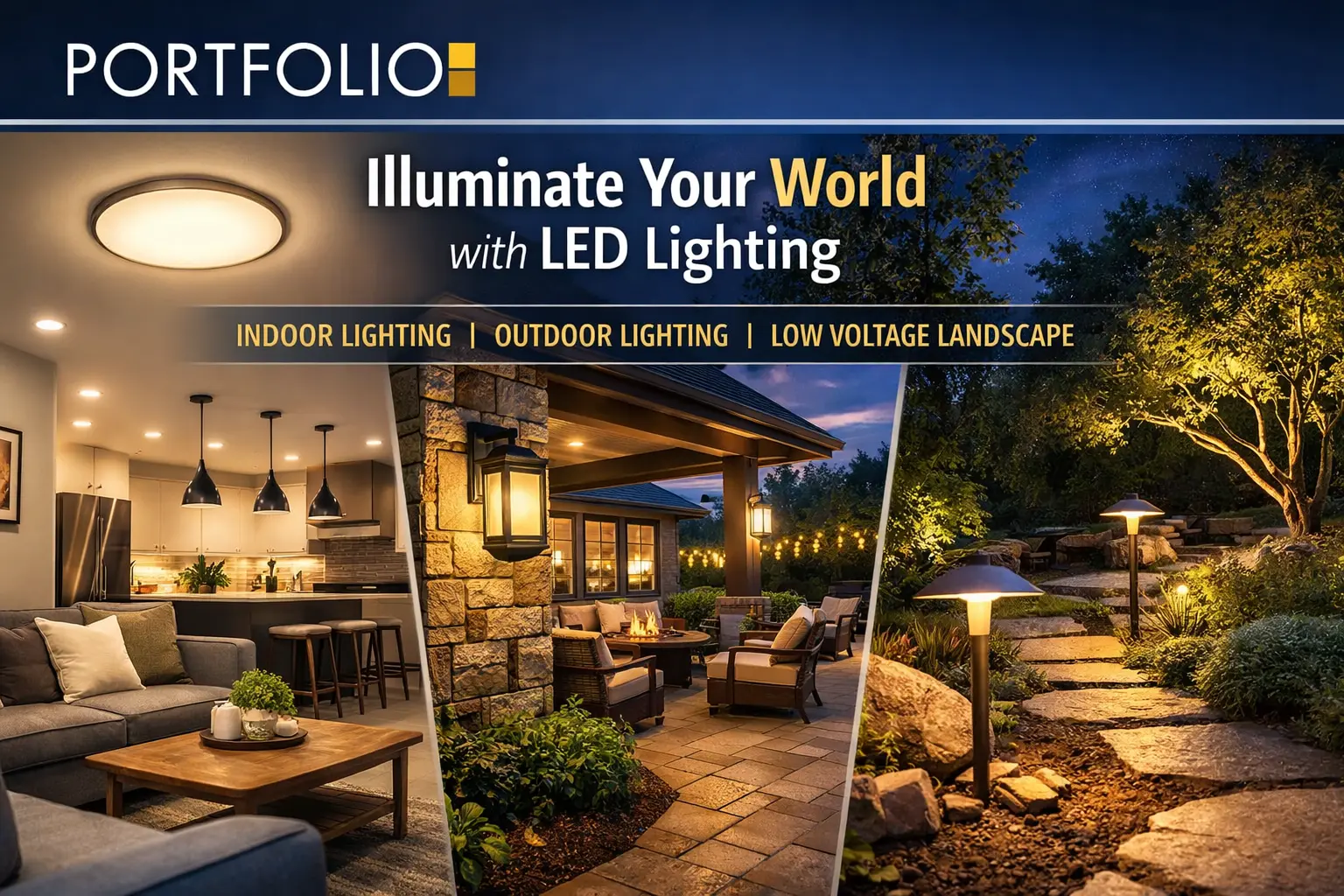
Most visitors searching for Portfolio LED lighting are trying to do one of three things: upgrade older lights, replace a failed bulb, or troubleshoot a fixture that is flickering, dim, or unreliable.
This page is written to help with all three. Instead of talking in vague marketing language, it focuses on the questions homeowners actually ask: Can I convert my Portfolio lights to LED? What kind of LED bulb do I need? Why are my LED landscape lights flickering? Is this fixture worth repairing, or should I replace it?
Portfolio Indoor Lighting Fixtures
Portfolio indoor lighting fixtures cover a wide range of lighting styles designed for kitchens, living rooms, hallways, and workspaces. Each fixture type provides a different type of illumination, from focused task lighting to ambient ceiling lighting. The following guides explain the most common Portfolio indoor lighting fixtures used throughout the home.
What Portfolio LED Lighting Is
LED stands for light-emitting diode. In plain English, that means a lighting technology that creates light more efficiently than older incandescent or halogen bulbs. For homeowners, the benefit is straightforward: you get useful light with less wasted energy and less heat.
Portfolio uses LED technology across a wide range of fixtures, including indoor lights, landscape fixtures, path lights, spotlights, deck lights, and other outdoor products. In some fixtures, the LED comes as a replaceable bulb. In others, the LED is built into the fixture as an integrated module.
Compared to halogen and incandescent lighting, LED lighting usually gives you four major advantages. First, it uses less electricity, which can help lower energy use over time. Second, it lasts much longer, so you are not changing bulbs as often. Third, it runs cooler, which is especially useful in enclosed fixtures and outdoor housings. Fourth, it tends to be a stronger long-term fit for outdoor use because many LED landscape systems are designed to run nightly with less maintenance.
If energy savings are one of the main reasons you are looking at LED lighting, it is also worth reading Portfolio energy efficient lighting. If you are deciding whether it makes sense to replace older halogen landscape bulbs with LED, visit LED vs halogen landscape lighting.
Many newer Portfolio fixtures use integrated LED technology, which means the LED components are built directly into the light fixture rather than using a replaceable bulb. These fixtures are designed to last longer and often provide better heat management and energy efficiency. If you are trying to figure out whether your fixture uses a standard LED bulb or a built-in LED module, visit our guide to Portfolio integrated LED lighting to learn how these systems work, how long they typically last, and what your options are if the light stops working.
While LED technology is widely used indoors, it has become especially popular in outdoor lighting systems. Many homeowners now use LED fixtures for landscape lighting because they consume less power and work well with low voltage transformers. If you want to see how LED technology is used in gardens, pathways, and outdoor accent lighting, explore our guide to Portfolio LED landscape lighting to learn how these fixtures improve energy efficiency and nighttime visibility around your home.
Types of Portfolio LED Fixtures
One reason people search for “Portfolio LED lighting” is that LED technology shows up across several different fixture categories. The right choice depends on where the light will be used and what job it needs to do.
LED Path Lights
LED path lights are best for walkways, front approaches, garden paths, and other areas where you want safer nighttime movement without harsh brightness. If that is what you are trying to light, start with Portfolio path lights.
LED Spotlights
LED spotlights are ideal when you want to highlight a tree, planting bed, stone wall, or other focal point. They are more directional than path lights and are usually used for accent lighting rather than general visibility. See Portfolio landscape spotlights.
LED Flood Lights
LED flood lights work best when you need wider outdoor coverage, such as a driveway, backyard edge, garage area, or security-focused zone. They are broader and more functional than a narrow spotlight. See Portfolio flood lighting.
LED Deck Lights
LED deck lights are useful for outdoor living spaces where you want softer light built into the deck, railings, or surrounding structure. They help with both atmosphere and safety. See Portfolio deck lighting.
LED Step Lights
LED step lights help define stairs, elevation changes, and deck transitions. They are one of the most practical uses of LED because they improve safety while using very little power. See Portfolio step lighting.
LED Bollard Lights
LED bollard lights work well in modern landscape layouts, larger pathways, and open outdoor spaces where you want a more visible fixture style with broader path illumination. See Portfolio bollard lighting.
LED Landscape Lighting Applications
A lot of homeowners researching Portfolio LED lighting are really looking for ideas. They know they want a better-looking yard after dark, but they are not sure where LED fixtures make the biggest difference. The good news is that LED landscape lighting works well in several very practical areas.
Walkway Lighting
LED path lights are one of the easiest upgrades because they improve visibility and curb appeal at the same time. They work especially well along front walks, side-yard passages, and garden paths.
Tree Uplighting
LED spotlights are a strong fit for tree uplighting because they can create focused accent light with less maintenance than older halogen systems. This is often one of the most dramatic changes in a landscape plan.
House Accent Lighting
LEDs are also useful for highlighting stone, columns, entry walls, and architectural features around the home. They pair naturally with spotlights, wall-mounted fixtures, and selective accent placements.
Patio and Deck Lighting
In patios and decks, LED fixtures help create a more comfortable outdoor room feel. Deck lights and step lights are especially practical in these areas because they can support traffic flow without making the space feel too bright.
Driveway Lighting
Driveways and garage approaches often benefit from LED flood lighting or a mix of flood and accent lighting depending on the layout. The goal is useful visibility, not just raw brightness.
If you want more visual direction for how these fixture types can work together, visit Portfolio landscape lighting ideas.
LED Bulb Types Used in Portfolio Fixtures
One of the biggest sources of confusion with Portfolio LED lighting is bulb type. Visitors often know they want an LED replacement, but they are not sure which style the fixture uses.
MR16 LED
MR16 LED bulbs are commonly used in spotlights and some accent fixtures. These are a very common replacement search because older landscape spotlights often used halogen MR16 bulbs before homeowners started converting them to LED. If that sounds like your situation, start with Portfolio MR16 LED replacement bulbs.
GU5.3 LED
GU5.3 base bulbs often show up in landscape fixtures that use low voltage lamp replacements. In many cases, a visitor may know the light is low voltage but not know the base type until they remove the bulb.
Integrated LED
Many newer Portfolio fixtures use integrated LEDs instead of standard screw-in or pin-base bulbs. In those cases, there may be no simple bulb to replace. The real question becomes whether the module, driver, or entire fixture needs replacement.
If you are still trying to figure out what bulb or module you need, the next useful page is usually Portfolio lighting bulb replacement.
Many Portfolio landscape fixtures use MR16 style bulbs, which are one of the most common LED upgrades for outdoor lighting systems. Switching from halogen to LED MR16 bulbs can significantly reduce power consumption while increasing brightness and lifespan. Our guide to Portfolio MR16 LED replacement bulbs explains how these bulbs work, how to choose the correct wattage, and how to safely replace them in compatible fixtures.
One of the biggest advantages of LED lighting is how it compares to older halogen and incandescent technologies. LED bulbs use far less electricity, produce less heat, and typically last many times longer than traditional lighting. If you are deciding whether to upgrade an existing landscape lighting system, our comparison of LED vs halogen landscape lighting explains the differences in brightness, energy consumption, and long-term maintenance.
Converting Portfolio Lighting to LED
Converting older Portfolio lighting to LED is one of the highest-intent reasons people land on a page like this. Usually the visitor already has a working fixture but wants lower power use, less heat, and fewer bulb changes.
In many cases, converting from halogen to LED is straightforward if the bulb type and voltage match the fixture. The important part is not assuming every halogen replacement is interchangeable without checking compatibility.
| Halogen | LED Equivalent |
|---|---|
| 20W | 3–4W |
| 35W | 5W |
| 50W | 7W |
That table is a general guide, not a substitute for checking your exact fixture specs. If you are comparing older halogen landscape lights to LED replacements, read LED vs halogen landscape lighting before ordering.
Energy Savings of LED Lighting
One of the biggest reasons homeowners convert Portfolio fixtures to LED is long-term operating cost. This matters even more in outdoor lighting because landscape fixtures, path lights, and security-oriented lights often run every night.
LEDs usually use much less electricity than incandescent or halogen lighting, and they also last far longer. That means you save not only on power use, but also on maintenance, replacement time, and repeated bulb purchases.
| Bulb Type | Lifespan |
|---|---|
| Incandescent | 1,000 hours |
| Halogen | 2,000 hours |
| LED | 25,000+ hours |
If lower power use is one of your main priorities, it is also worth reviewing Portfolio energy efficient lighting.
Common Problems With LED Landscape Lights
LED lights are reliable overall, but they are not immune to problems. In landscape systems, the light source is only one part of the setup. Transformers, wire runs, connectors, moisture exposure, and compatibility issues can all affect how the light performs.
LED Lights Flickering
Flickering may point to a loose connection, bulb compatibility issue, a failing driver, or instability somewhere in the system. If that is what you are seeing, go to Portfolio LED lights flickering.
LED Lights Too Dim
Dim LED lights may be caused by the wrong replacement bulb, transformer issues, long cable runs, or voltage drop in the system. See Portfolio lighting too dim.
Compatibility Issues
Some problems are not failures at all. They come from trying to use a replacement that does not properly match the original fixture, bulb base, or system voltage.
Installing Portfolio LED Landscape Lighting
Installing LED landscape lighting is not just about swapping bulbs. The full system matters. Low voltage transformers, wire runs, fixture spacing, and connection quality all affect whether the lighting will perform well.
If you are building or updating an outdoor LED system, it helps to understand the basics of cable layout, transformer sizing, and how spacing affects the final look. Start with how to wire landscape lighting and landscape lighting transformer guide.
Good LED results usually come from planning the whole system instead of treating each fixture like a separate mini-project.
Although LED lights are known for their reliability, occasional issues such as flickering, dimming, or lights that stop working can still occur. These problems are often related to wiring, transformer compatibility, or aging LED components. If you are experiencing these symptoms, our troubleshooting guide for Portfolio LED lights flickering walks through common causes and simple steps homeowners can take to diagnose and fix the issue.
Replacement Parts for LED Fixtures
Not every LED problem requires a full new fixture. Depending on the design, you may need a replacement bulb, LED module, driver, or wiring connector. The challenge is identifying what the fixture actually uses before you order the wrong part.
For newer integrated fixtures, parts like modules and drivers may be more relevant than bulbs. For older bulb-based fixtures, the search often starts with the lamp itself. For help with integrated components, go to Portfolio lighting replacement LED modules and drivers.
If your bigger question is where to source compatible parts, see where to buy Portfolio lighting replacement parts.
Some Portfolio fixtures use integrated LED modules rather than replaceable bulbs. When these components wear out, the solution may involve replacing the LED module or driver rather than changing a bulb. Our guide to Portfolio lighting replacement LED modules and drivers explains when these parts need replacement and how to identify compatible components for your lighting system.
Best Next Pages for Portfolio LED Lighting Questions
Most visitors searching for Portfolio LED lighting are really trying to solve a more specific question. These related guides can help narrow that down faster.
- Portfolio Lighting Troubleshooting
- Portfolio Lighting Parts and Accessories
- Portfolio MR16 LED Replacement Bulbs
- Portfolio Lighting Bulb Replacement
- Portfolio Path Lights
- Portfolio Landscape Spotlights
- Portfolio Flood Lighting
- Portfolio Deck Lighting
- Portfolio Step Lighting
- Portfolio Bollard Lighting
Portfolio LED Lighting FAQ
Are Portfolio LED lights replaceable?
Some are and some are not. Older or bulb-based fixtures may use replaceable LED bulbs, while many newer fixtures use integrated LEDs built directly into the fixture.
Can I convert halogen landscape lights to LED?
Often yes, but only if the replacement bulb type, voltage, and fixture compatibility match. That is why checking the original specs matters before ordering.
How long do LED landscape lights last?
Many LED products are rated for 25,000 hours or more, which is far longer than incandescent or halogen bulbs in typical residential use.
Are LED lights brighter than halogen?
They can be, but brightness depends on the specific bulb or module, not just the word LED. The key is choosing the right LED equivalent for your existing fixture and lighting goal.