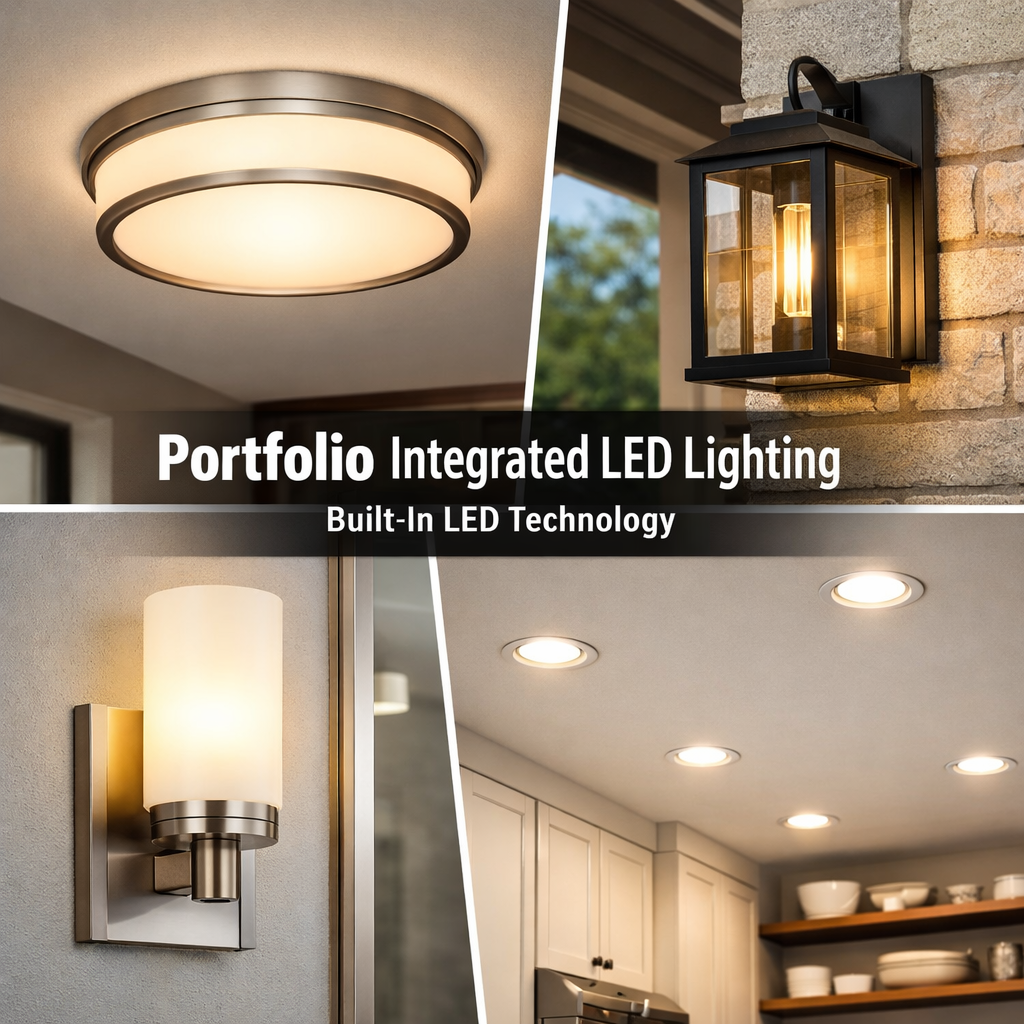
The biggest thing to know about integrated LED lighting is simple: there is usually no separate bulb to change. That makes these fixtures cleaner and lower-maintenance in normal use, but it also means troubleshooting and replacement work differently when a problem shows up.
If you are not sure whether your current fixture uses an integrated LED or a replaceable LED bulb, it helps to compare this page with Portfolio LED lighting. That broader guide covers standard LED fixture types and replacement questions, while this page focuses specifically on fixtures where the light source is built into the unit.
What Integrated LED Lighting Means
Integrated LED lighting means the LEDs are built directly into the fixture instead of being installed as a separate screw-in or plug-in bulb. In a standard bulb-based light, the fixture and the light source are two different things. In an integrated LED fixture, they are designed to work together as one unit.
That design is common in newer, cleaner-looking Portfolio fixtures where the goal is a slimmer profile, better light control, or a more modern appearance. You will often see integrated LED technology in flush mount ceiling fixtures, wall sconces, bathroom lights, recessed lights, and some outdoor and landscape fixtures.
For a homeowner, the practical difference is important. If a standard LED bulb stops working, you may only need a new bulb. If an integrated LED fixture starts having problems, the answer may involve the internal driver, the wiring, or the entire fixture rather than a quick bulb swap.
If you are trying to compare built-in LED fixtures with standard bulb-based LED products, visit Portfolio LED lighting. That page helps explain the broader category, while this one focuses on the built-in fixture side of the conversation.
Advantages of Integrated LED Fixtures
Integrated LED fixtures became popular for a reason. When they are designed well, they can solve several common problems at once. They often last longer, run efficiently, manage heat better than older technology, and allow a more streamlined fixture design because they do not need to accommodate bulky replaceable bulbs in the same way.
That cleaner design is one of the most obvious benefits. A flush mount light or sconce can look much slimmer when the light source is built into the fixture. But the more important benefit for many homeowners is long-term use. These fixtures are often designed for thousands of hours of operation without the frequent bulb changes that came with incandescent and halogen lighting.
Energy efficiency is another major reason people move toward integrated LED fixtures. Like other LED products, they typically use less electricity than halogen and incandescent lights, and they usually create less heat during normal use. In outdoor or enclosed settings, that lower heat output can be especially helpful.
| Lighting Type | Lifespan |
|---|---|
| Halogen bulb | 2,000 hours |
| LED bulb | 25,000 hours |
| Integrated LED | 30,000–50,000 hours |
Of course, those lifespan ranges are estimates, not guarantees. The real life of the fixture still depends on heat, electronics, installation quality, and how the light is used.
Types of Portfolio Fixtures That Use Integrated LED
If you landed here because you already have a Portfolio fixture installed, the next useful question is what kind of fixture category you are dealing with. Integrated LED technology shows up across several different Portfolio pages, and each one leads to slightly different visitor needs.
Flush Mount Lights
Flush mount fixtures are one of the most common places you will see integrated LEDs because the design works well with a low-profile ceiling fixture. If that is your category, visit Portfolio flush mount lighting.
Wall Sconces
Many modern sconces use integrated LED elements to keep the design cleaner and more decorative. If your fixture is mounted on a wall indoors, visit Portfolio sconces lighting.
Bathroom Lighting
Bathroom bars and vanity fixtures often use integrated LEDs because they offer even light and a cleaner fixture body. If that sounds like your setup, use Portfolio bathroom lighting.
Recessed Lighting
Some recessed lights use replaceable bulbs, but many newer ones use integrated LED modules or retrofit designs. If you are troubleshooting ceiling can lights or modern recessed fixtures, start with Portfolio recessed lighting.
Landscape and Outdoor Fixtures
Integrated LEDs also show up in certain outdoor and landscape products where weather resistance, efficiency, and low maintenance matter. If your question is more outdoor-focused, go to Portfolio LED landscape lighting.
Can You Replace Integrated LED Lights?
This is one of the biggest questions people have, and the honest answer is: sometimes, but not usually in the same way you replace a bulb. In most integrated LED fixtures, the LED itself is not intended to be removed and swapped like a standard lamp.
That does not always mean the entire fixture is automatically dead. Some fixtures have replaceable drivers or serviceable internal components. In other cases, the wiring connection may be the real issue rather than the LED board itself. But if the fixture was designed as a sealed integrated unit and no replacement parts are available, full fixture replacement is often the most practical option.
For a homeowner, this means the smartest first step is diagnosis, not guessing. If the light flickers or dims, you may still have a fixable problem. If the driver has failed and a compatible part is available, that may save the fixture. If not, replacing the complete unit may be the better long-term answer.
How Long Integrated LED Lights Last
Most integrated LED fixtures are marketed with lifespan ranges of roughly 30,000 to 50,000 hours. That sounds impressive, and in many normal residential settings it can translate to years of use. But the actual life of the fixture still depends on more than the LED chips alone.
Heat is one of the biggest factors. Even though LEDs run cooler than halogen or incandescent lights, the internal electronics still do not like excessive heat buildup. That is why fixture design and ventilation matter. Driver quality also matters because many integrated LED failures come from the internal electronics rather than the LED light source itself.
Voltage quality, moisture exposure in outdoor fixtures, and the overall installation environment can also affect how long the fixture really lasts. A well-designed fixture in a stable indoor environment usually has a better chance of reaching its expected lifespan than an outdoor fixture exposed to heat swings, moisture, and electrical stress over time.
Common Problems With Integrated LED Fixtures
When integrated LED fixtures start acting up, the symptoms are usually pretty familiar. The light may flicker, dim, turn off unexpectedly, or stop working entirely. Because there is no standard bulb to swap out first, these problems can feel more frustrating than a simple lamp replacement.
LED Flickering
Flickering can point to loose wiring, driver trouble, compatibility issues, or unstable power. If this is what you are seeing, go to Portfolio LED lights flickering.
Lights Dimming or Weak Output
If the fixture still works but the output looks weak, the issue may involve the driver, internal electronics, voltage conditions, or the fixture aging out over time. See Portfolio lighting too dim.
Lights Turning Off
When an integrated LED turns off intermittently or stops working after warming up, that can point to thermal protection, driver failure, or another electrical problem inside the fixture.
For broader help across all of these situations, use Portfolio lighting troubleshooting.
How to Troubleshoot Integrated LED Lights
The best way to troubleshoot an integrated LED fixture is to stay methodical and avoid assuming the fixture is instantly dead. Start with the basic things first.
- Check wiring connections to make sure the fixture is still getting stable power.
- If it is an outdoor light, check the transformer or low voltage power source if the fixture is part of that kind of system.
- Inspect the driver if the fixture design allows it and the part is accessible.
- Reset the circuit or test the power source if the issue appears to affect more than one light.
- Look for signs of heat damage, moisture intrusion, or corrosion depending on where the fixture is installed.
Outdoor and landscape systems may also need transformer and wiring checks, which is why pages like Portfolio low voltage lighting, landscape lighting transformer guide, and how to wire landscape lighting can become relevant even when the fixture itself uses integrated LED technology.
Replacement Options for Integrated LED Fixtures
Once you know the fixture is integrated LED, the next question is what replacement path makes the most sense. In general, you have three possibilities: replace the driver if that part is serviceable, replace a compatible internal part if one is available, or replace the entire fixture.
For some homeowners, replacing the full fixture is actually the most practical choice because it restores reliable performance without spending too much time chasing hard-to-find internal components. For others, especially with higher-quality or more specialized fixtures, a driver replacement may still be worth it.
If you need help sourcing parts, start with Portfolio lighting parts and accessories and where to buy Portfolio lighting replacement parts. Those pages are the better next step when you are trying to decide whether the current fixture can realistically be saved.
Integrated LED vs LED Bulbs
A lot of visitor confusion disappears once this comparison becomes clear. Both are LED lighting, but they behave differently when it comes to design, maintenance, and replacement.
| Feature | LED Bulb | Integrated LED |
|---|---|---|
| Replaceable | Yes | No, usually not |
| Lifespan | About 25k hours | About 30k–50k hours |
| Fixture design | Standard bulb-based design | Slimmer, more modern built-in design |
If your main goal is understanding standard LED fixtures and bulb-based options, use Portfolio LED lighting. If your main issue is a built-in fixture with no obvious bulb, this page is the better match.
Final Thoughts on Portfolio Integrated LED Lighting
Portfolio integrated LED lighting can be a great fit when you want a cleaner fixture design, long service life, and efficient light output. It is especially common in modern flush mounts, sconces, bathroom fixtures, recessed lights, and some outdoor applications.
The tradeoff is that these fixtures do not behave like standard bulb-based lights when something goes wrong. That is why understanding drivers, wiring, fixture design, and replacement reality matters so much. If you know what category your light belongs to and you troubleshoot it in the right order, you will usually make a much better decision about whether to repair it, replace it, or move on to a newer compatible option.
Portfolio Integrated LED Lighting FAQ
Are integrated LED lights replaceable?
Usually not in the same way a standard bulb is. In most cases the LED is built into the fixture, so repair involves the driver, wiring, or full fixture rather than a simple bulb swap.
Can integrated LED lights be repaired?
Sometimes. If the issue is a wiring problem or a replaceable driver, repair may be possible. If the LED board is sealed into the fixture and parts are not available, replacing the fixture is often the practical choice.
Why do integrated LEDs fail?
Common causes include heat, voltage issues, driver failure, moisture in outdoor applications, and general aging of the internal electronics over time.
How long do integrated LED fixtures last?
Many are rated for around 30,000 to 50,000 hours, but actual lifespan depends on driver quality, heat control, installation conditions, and how often the fixture is used.
Portfolio integrated LED lighting, built-in LED fixtures, integrated LED replacement, integrated LED troubleshooting, flush mount LED lighting, bathroom LED fixtures, recessed integrated LED lights, and Portfolio replacement parts help.