
A well-planned indoor lighting layout helps a room feel better in every practical sense. It improves visibility, supports everyday activities, reduces dark spots, and gives the room more depth and balance. The right layout also helps each fixture do the job it was meant to do instead of forcing one light to carry the entire room by itself.
Poor layouts create common problems you can feel immediately. A kitchen may have shadows on the counters. A bathroom may look bright overall but still cast shadows on the face at the mirror. A living room may feel flat and uncomfortable at night because all the light comes from one ceiling fixture. A bedroom may feel too harsh because there is no softer secondary lighting. This page is built to help you avoid those issues by planning the layout first.
The Three Layers of Indoor Lighting
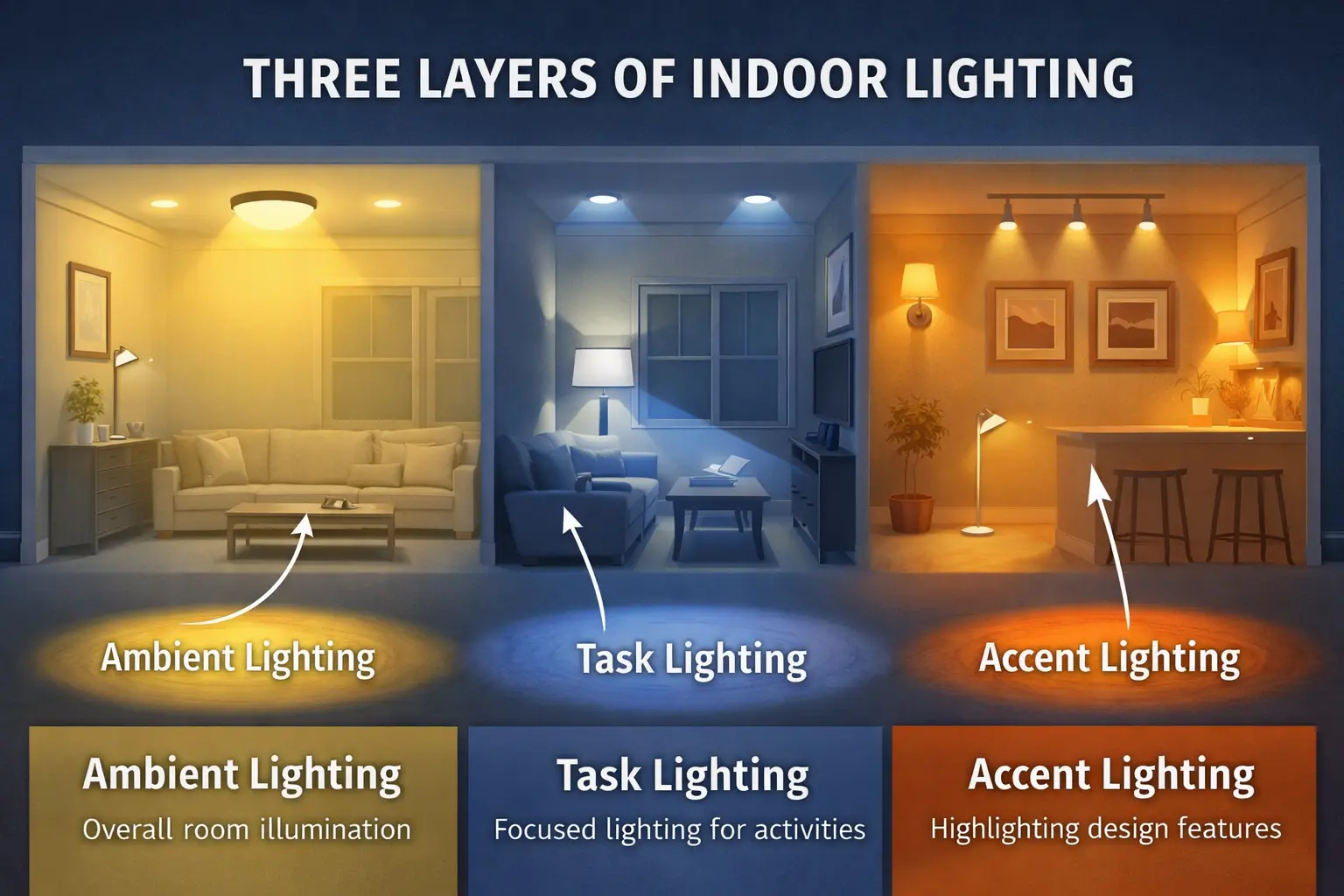
This is one of the most important ideas in room-lighting design. Most good layouts use three layers of light working together instead of asking one fixture to do every job.
Ambient lighting
Ambient lighting is the general room light that makes the space usable overall. This often comes from ceiling fixtures, recessed lights, chandeliers, and other broader light sources. The goal is even room coverage rather than focused light on one spot. If you want to compare the fixtures that most often fill this role, see Portfolio ceiling lighting and Portfolio chandeliers lighting.
Task lighting
Task lighting is focused light used where specific activities happen. That might mean a reading lamp by a chair, under-cabinet lighting in a kitchen, or vanity lighting around a bathroom mirror. Task lighting matters because a room can feel bright overall and still work badly if the places where you actually read, cook, or get ready are too shadowed. Helpful supporting pages include Portfolio floor lamps and Portfolio bathroom lighting.
Accent lighting
Accent lighting adds depth and draws attention to features in the room. It may highlight a wall, shelves, artwork, or architectural details. Wall sconces and track lighting often fit this role especially well because they can add visible style and directional emphasis to selected parts of the room. For those fixture types, see Portfolio sconces lighting and Portfolio track lighting.
How to Plan Lighting for a Room
Planning a room layout becomes much easier when you break it into a few simple steps instead of trying to choose every fixture at once.
1. Identify how the room is used
Start by thinking about what really happens in the room. Is it mainly for relaxing, reading, cooking, grooming, entertaining, working, or sleeping? The main activities tell you where stronger light is needed and where softer light may feel better.
2. Add ambient lighting first
Ambient lighting is usually the base layer because it gives the room general brightness. This may be a ceiling fixture, recessed lights, a chandelier, or a combination of those depending on the room.
3. Add task lighting where needed
Once the room has general light, think about where more focused light is needed. That could mean counters, seating areas, vanities, bedside locations, or desks.
4. Use accent lighting to create depth
Accent lighting gives the room more interest and dimension. It keeps the room from feeling flat and helps the layout feel more intentional.
One of the biggest layout lessons is that most rooms should not rely on one fixture. A stronger layout comes from building layers that support the room from several directions.
Lighting Layout for Living Rooms
Living rooms usually benefit from more than one type of light because they are used in different ways throughout the day. A living room may need general brightness for daily use, softer lighting for the evening, task lighting for reading, and accent lighting to make the room feel more finished.
A common living room layout
- A central ceiling fixture or recessed lighting for general brightness
- Floor lamps near seating areas for reading and softer evening light
- Wall sconces to add warmth and visual balance on the walls
- Accent lighting for shelves, artwork, or feature walls
This kind of setup works because each fixture handles a different job. The ceiling light gives the room its base layer, while the floor lamps and wall fixtures make the room feel more comfortable and usable once the overhead light is no longer enough on its own.
Supporting pages for this room include Portfolio floor lamps and Portfolio wall lighting.
Lighting Layout for Kitchens
Kitchens often need one of the strongest lighting layouts in the home because they combine broad room light with detailed task areas. A kitchen that feels acceptable under one ceiling light often still performs poorly at the counters, island, or sink because shadows land exactly where the work happens.
A common kitchen layout
- Recessed lights spaced across the ceiling for even room coverage
- Pendant lights over the island as both task and focal lighting
- Under-cabinet lighting to brighten counters and reduce shadows
- Focused task lighting near the sink and prep areas
This layout works because it separates general room light from the surfaces where the real work happens. The recessed lights keep the kitchen bright overall, but the pendants and under-cabinet lights handle the areas where detail matters more.
For supporting fixture pages, see Portfolio pendant lighting and Portfolio recessed lighting.
Lighting Layout for Bathrooms
Bathroom layouts are especially important because general room brightness and mirror lighting are not the same thing. A bathroom may feel bright from the doorway and still cast poor light on the face at the vanity.
A common bathroom layout
- Vanity lights around or above the mirror
- A ceiling light for overall room brightness
- Optional accent lighting for design depth and softer evening use
The mirror area usually deserves the most attention because that is where grooming tasks happen. This is why the bathroom lighting page is one of the most important room-specific resources in your indoor cluster. For deeper help, see Portfolio bathroom lighting.
Lighting Layout for Bedrooms
Bedrooms often work best with a softer lighting approach than kitchens or bathrooms. The room still needs enough light to be practical, but most people do not want bedroom lighting to feel sharp or overly intense at night.
A common bedroom layout
- A ceiling fixture for general brightness
- Bedside lamps or wall sconces for reading and softer nighttime use
- A floor lamp or accent light for corners or seating areas
- Optional accent lighting to make the room feel warmer and more layered
Bedrooms are one of the clearest examples of why layered lighting matters. One ceiling fixture may be enough to see the room, but it rarely creates the most comfortable atmosphere. For bedroom-friendly fixture ideas, see Portfolio sconces lighting and Portfolio floor lamps.
How Bright Should Indoor Lighting Be?
It helps to think in lumens instead of watts when planning room brightness. Lumens tell you how much visible light the fixture produces, which makes them much more useful for layout planning.
| Room | Common Brightness Range | Why It Varies |
|---|---|---|
| Living room | About 1,500–3,000 lumens | Depends on room size, windows, lamp use, and whether the room is meant to feel softer in the evening |
| Kitchen | About 3,000–4,000 lumens | Task-heavy rooms often need stronger overall brightness and better counter lighting |
| Bathroom | About 2,000–4,000 lumens | Depends on room size, mirror lighting, and how much task work happens at the vanity |
| Bedroom | Often softer and more layered | Bedrooms usually benefit from flexibility rather than one strong light level |
Common Indoor Lighting Layout Mistakes
Using only one overhead light
This is one of the most common layout mistakes because it leaves dark corners, creates harsh shadows, and forces one fixture to do too much.
Ignoring task lighting
Rooms often look bright enough overall but still work badly where specific activities happen. This is especially common in kitchens, bathrooms, and reading areas.
Poor fixture spacing
Even good fixtures can create weak results when they are spaced poorly. Too much distance creates dark gaps. Too little distance creates glare and unnecessary overlap.
Too many lights in one area
More fixtures do not always create a better room. In some layouts, too much light in one zone makes the room uncomfortable and visually unbalanced.
Simple Indoor Lighting Layout Example
A typical living room layout might include one ceiling fixture, two floor lamps, two wall sconces, and one accent light near shelves or artwork. That example is useful because it helps you visualize what layered lighting actually looks like in a real room.
The ceiling fixture provides the base brightness. The floor lamps support reading and create softer light near seating. The sconces bring light to the walls and improve the room’s balance. The accent light adds depth and helps keep one area of the room from looking flat.
This is often more effective than installing one brighter ceiling fixture because the light reaches the room from multiple directions instead of only from the center.
Choosing the Right Fixtures for Your Layout
Fixture types change how a layout performs. Recessed lights are often best for even coverage. Pendants are useful where a focal point or centered task area matters. Sconces help add wall-level light and depth. Lamps add flexibility because they can be moved and repositioned more easily.
This is why a layout page works so well as a planning hub. Once you understand what the room needs, you can move naturally into the fixture pages that best support that design. Good next stops include Portfolio recessed lighting, Portfolio pendant lighting, Portfolio sconces lighting, Portfolio floor lamps, and Portfolio ceiling lighting.
Planning Lighting Before Installation
Layout planning matters most before the fixtures are installed because this is when wiring locations, switch placement, and dimmer decisions are easiest to improve. Once wiring is in place, layout mistakes become much more expensive to fix.
This is especially important for ceiling lights, recessed lights, and wall fixtures that depend on box placement and switch control. Planning early lets you decide where the room needs light, how the fixtures should be grouped, and whether dimmers would make the room more flexible.
For the installation side of the process, see Portfolio lighting installation and instructions.
Related Indoor Lighting Guides
Portfolio Indoor Lighting
This is the main indoor cluster hub and the best starting point for comparing fixture categories and room-based lighting plans.
Read the guidePortfolio Track Lighting
Helpful for directional lighting layouts where adjustable heads and targeted light matter more than broad ceiling coverage.
Read the guidePortfolio Pendant Lighting
Useful for islands, tables, and focal-point zones where hanging fixtures need to be part of the room layout.
Read the guidePortfolio Sconces Lighting
Explore wall-level lighting when the room needs more depth, softer evening light, or better wall balance.
Read the guidePortfolio Bathroom Lighting
Use this room guide to plan vanity lighting, mirror placement, and bathroom layouts more effectively.
Read the guidePortfolio Chandeliers Lighting
Helpful when a room layout includes a central statement fixture that also needs to support general brightness.
Read the guidePortfolio Floor Lamps
See how portable lamps fit reading areas, dark corners, and softer room-lighting plans.
Read the guidePortfolio Recessed Lighting
Learn how recessed lights support clean ceiling layouts and even room coverage.
Read the guidePortfolio Ceiling Lighting
Compare ceiling fixtures when you are building the ambient base layer of a room-lighting layout.
Read the guideIndoor Lighting Layout FAQ
How do you plan lighting in a room?
Start by identifying how the room is used, add ambient lighting first, then add task lighting where specific activities happen, and finish with accent lighting to add depth and visual balance.
How many lights should be in a room?
There is no single number that fits every room. The right amount depends on the room size, ceiling height, fixture brightness, and the activities that happen there.
What is the best indoor lighting layout?
The best indoor lighting layout uses layered lighting, which combines ambient, task, and accent lighting so the room feels bright, useful, and comfortable instead of relying on one harsh overhead fixture.
What is layered lighting?
Layered lighting means using multiple types of light in one room. Ambient lighting brightens the room overall, task lighting supports work and daily activities, and accent lighting adds depth and highlights features.
Where should ceiling lights be placed?
Ceiling light placement depends on the room size, furniture layout, and the type of fixture. The goal is even coverage without creating strong dark spots or glare.
How bright should indoor lighting be?
Brightness should match the room. Living rooms often work well around 1,500 to 3,000 lumens, kitchens around 3,000 to 4,000 lumens, and bathrooms around 2,000 to 4,000 lumens depending on the size and layout.
This page is designed to be the planning hub for the indoor lighting cluster, helping you move from room layout decisions into fixture pages, installation guidance, and deeper room-specific lighting help.