
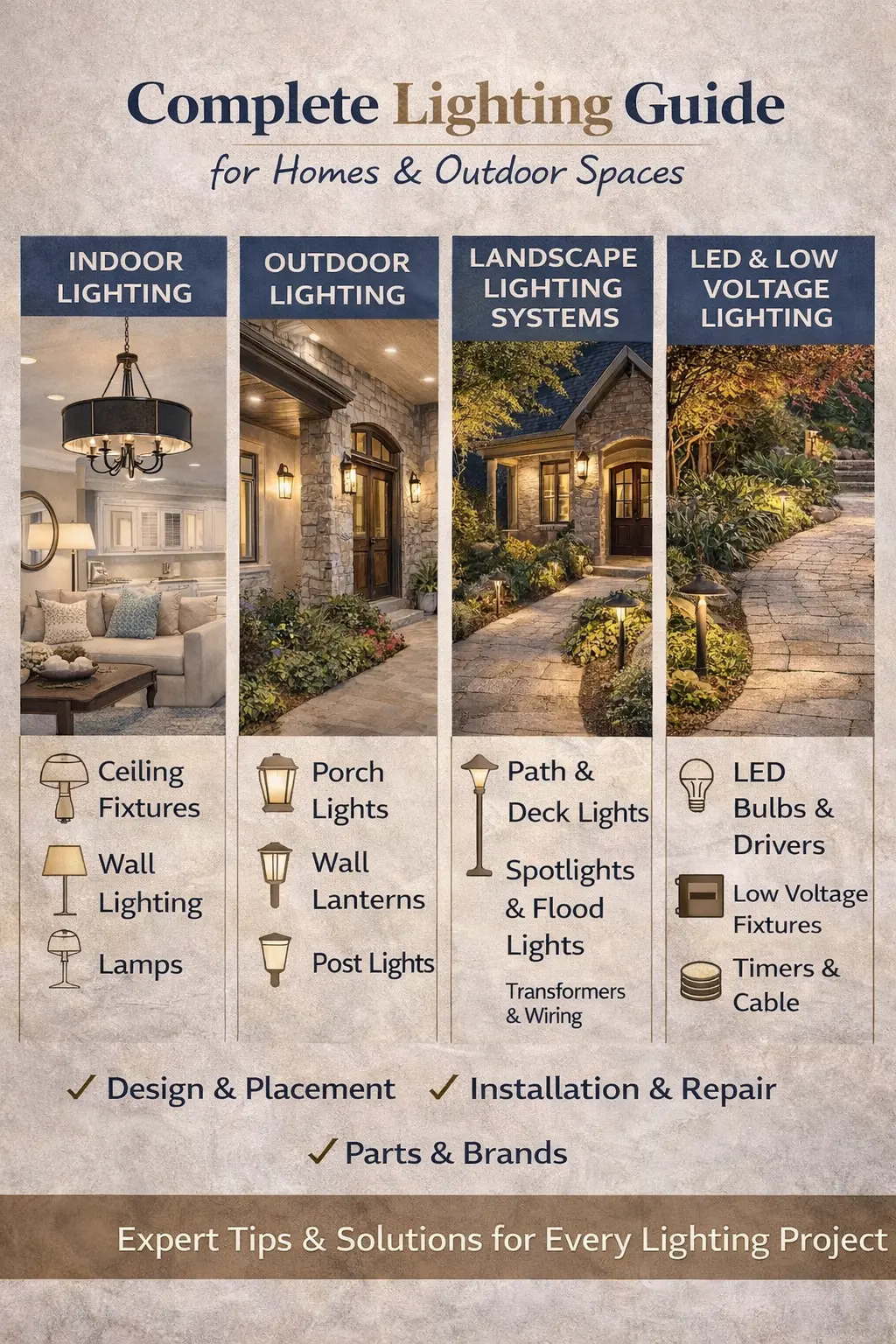
Lighting touches almost every part of a home. It affects safety, comfort, visibility, style, energy use, and the way each room feels from morning to night. A hallway that feels dark can become more welcoming with better wall lighting. A kitchen can work better with improved task light. A yard can become safer and more attractive with low voltage landscape lighting. A room with the right fixture can still disappoint if the bulb choice, placement, or brightness is wrong.
That is why this page is built as a true master guide instead of a short category page. A strong lighting resource should help you understand the broad lighting ecosystem first, then connect you to the more specific pages that fit your project. This page is meant to do exactly that for the entire site. fileciteturn13file0
Understanding How Lighting Works in a Home
Before you compare fixture styles, it helps to understand the three basic jobs lighting does in a home. Most rooms work best when these jobs are layered instead of handled by only one fixture.
Ambient lighting
Ambient lighting is the general light that makes the room usable overall. It is often created by ceiling fixtures, recessed lights, wall lighting, or a combination of several fixtures that brighten the room as a whole. If you want to explore that idea more closely, visit Portfolio ambient lighting.
Task lighting
Task lighting supports a specific activity like reading, cooking, grooming, desk work, or detailed hobby work. Track lights, under-cabinet lights, reading lamps, vanity lighting, and focused pendants are all examples. If task lighting is what you need most, see Portfolio task lighting.
Accent and mood lighting
Accent lighting highlights a feature such as artwork, a wall, landscaping, or a fireplace. Mood lighting helps change how a room feels, especially in the evening, by adding warmth and visual softness. Those ideas overlap in many homes, especially in bedrooms, living rooms, and outdoor spaces. To explore that side of lighting, see Portfolio mood lighting.
Indoor Lighting Fixtures and Room Lighting Guides
Indoor lighting covers a wide range of fixture types because different rooms need light in different ways. A kitchen may need strong task light and broad general light. A bedroom may need softer layered light. A hallway may need better wall lighting. A bathroom needs mirror support as well as room brightness. This is why indoor lighting works best when you think about both the room and the fixture type together.
The site’s indoor cluster is built to help you do exactly that. Start with the main indoor hub and then move into the more specific fixture pages that match your project.
Portfolio Indoor Lighting
The main indoor pillar page for comparing room-lighting strategies and fixture categories side by side.
Read the guidePortfolio Chandeliers Lighting
Learn how chandeliers fit dining rooms, entryways, bedrooms, and other spaces that need a focal-point fixture.
Read the guidePortfolio Pendant Lighting
Compare pendants for islands, tables, bars, and rooms where hanging task light and visual style matter together.
Read the guidePortfolio Wall Lighting
Explore wall-mounted lighting for hallways, bedrooms, bathrooms, stairways, and layered living-room lighting.
Read the guidePortfolio Bathroom Lighting
Understand vanity lighting, mirror placement, bathroom brightness, fixture ratings, and room-specific bathroom choices.
Read the guidePortfolio Recessed Lighting
Learn when recessed lighting is the better answer for clean ceilings, distributed light, and more subtle fixture styling.
Read the guidePortfolio Track Lighting
Use this page when you need directional light, adjustable heads, and more flexibility from one ceiling location.
Read the guidePortfolio Floor Lamps
See how portable lamps improve room comfort, reading areas, dark corners, and layered indoor lighting plans.
Read the guidePortfolio Under Cabinet Lighting
Useful for kitchens, task-lighting zones, and work surfaces that need more focused light where detail matters.
Read the guideOutdoor Lighting and Landscape Lighting Systems
Outdoor lighting is different from indoor lighting because it has to handle weather, darkness, safety, curb appeal, and larger open spaces at the same time. Some outdoor fixtures are meant to guide walking paths. Others are meant to highlight architectural features, light decks, improve security, or make the yard more usable after sunset.
The outdoor cluster on the site is designed to help you compare fixture types and choose the right style for the job instead of guessing.
Portfolio Outdoor Lighting
The broader outdoor hub for comparing fixture categories, placement ideas, and outdoor system choices.
Read the guidePortfolio Landscape Lighting
Explore the main landscape-lighting hub for paths, spotlights, transformers, design ideas, and low voltage systems.
Read the guidePortfolio Path Lights
Useful for walkways, paths, front entries, and low-level fixture spacing ideas in outdoor areas.
Read the guidePortfolio Deck Lighting
Learn how to light deck surfaces, steps, railings, and outdoor gathering spaces more safely and attractively.
Read the guidePortfolio Bollard Lighting
Compare bollard lights for paths, driveways, edges, and more structured landscape-lighting layouts.
Read the guidePortfolio Post Lighting
Helpful for driveways, mailbox areas, entries, fences, and outdoor zones that need elevated fixture coverage.
Read the guidePortfolio Flood Lighting
Useful when broader yard illumination, security lighting, or stronger beam coverage is the main priority.
Read the guideLow Voltage Landscape Lighting Systems
One of the strongest authority areas for the site is low voltage landscape lighting systems. This part of lighting is not just about fixtures. It is about transformers, cable, wiring layouts, connectors, timers, photocells, load planning, and voltage drop. This is where outdoor lighting becomes a true system instead of just a collection of lights.
If your project involves installing or improving a landscape system, these pages will help you understand how the system works from the transformer all the way to the last fixture on the line.
Landscape Lighting Transformer Guide
Learn how transformers work, how to size them, and how they affect the entire low voltage system.
Read the guideHow to Wire Landscape Lighting
A practical system guide for homeowners planning cable runs, fixture connections, and layout wiring decisions.
Read the guideLandscape Lighting Voltage Drop
Understand why far-end fixtures get dim, how load affects performance, and how to avoid common system mistakes.
Read the guideLandscape Lighting Cable Guide
Compare cable sizing, wire runs, and practical wiring decisions that affect reliability in the field.
Read the guideLandscape Lighting Layout Design
Use this page when you need to plan fixture placement, light balance, and a system that looks intentional at night.
Read the guideLandscape Lighting System Diagram
Helpful for understanding how the parts of a low voltage lighting system fit together in one organized view.
Read the guideLighting Design, Placement, and Layout Planning
Good lighting design is what keeps a system from feeling random. This is true indoors and outdoors. Indoors, it means layering light, spacing fixtures well, and choosing the right light for the activity in the room. Outdoors, it means path-light spacing, tree uplighting, driveway balance, house highlighting, and knowing when to use softer or stronger beam patterns.
The site’s design and placement pages help turn lighting from a fixture-shopping decision into an actual plan.
- Landscape lighting layout
- Path light placement
- Tree uplighting guide
- Driveway landscape lighting guide
- Landscape lighting spacing
- Portfolio lighting placement
Lighting Installation, Wiring, and System Setup
Lighting installation is where planning becomes real. A fixture can be correct for the room and still disappoint if the wiring, support, placement, or setup is wrong. This is true with indoor fixtures like pendants and sconces, and it is equally true with outdoor transformers, cable runs, and low voltage landscape systems.
The site’s installation and wiring pages are meant to help you understand what has to happen before the light ever turns on.
- Portfolio lighting installation and instructions
- How to wire landscape lighting
- Portfolio lighting transformer wiring diagram
- Landscape lighting cable guide
Lighting Troubleshooting and Repair Guides
Every lighting system eventually runs into problems. Lights stop turning on. Fixtures flicker. Transformers overload. Timers fail. A path-light line goes dim. An LED system looks weaker than expected. The best troubleshooting pages help you narrow the issue before you waste money on the wrong replacement part.
These troubleshooting pages are some of the most practical resources on the site because they are written around the real problems homeowners actually face.
Lighting Replacement Parts and System Repairs
Many lighting searches are really parts searches. Homeowners are often not trying to replace an entire fixture or system. They are trying to replace one broken shade, one missing lens, one failed photocell, one dimming driver, or one hard-to-find piece of hardware that would let the existing light keep working.
That is why replacement parts are such an important part of lighting authority. A site that explains fixtures but does not help with actual repairs leaves out one of the most useful parts of the homeowner experience.
Lighting Brands and Compatible Replacement Options
Brand guides matter because homeowners often start with the brand they already own, then broaden into alternatives or compatible replacement options when parts are discontinued or harder to find. A strong lighting site should help visitors navigate that transition clearly instead of forcing them to start over.
This section is where brand knowledge fits into the broader lighting ecosystem. Portfolio remains a major expertise area on the site, but it sits alongside other useful brand and replacement comparisons that help homeowners make better buying and repair decisions.
Portfolio Lighting Fixtures, Parts, and Troubleshooting
Portfolio is still one of the strongest expertise areas on the site, and that matters because many homeowners are looking for help with existing Portfolio fixtures, discontinued models, replacement parts, manuals, and troubleshooting steps. This brand-specific depth is one reason the broader lighting ecosystem on the site is so useful. You are not only getting general lighting advice. You are also getting practical support for real fixtures people already own.
Common Questions About Home Lighting
What type of lighting is best for indoors?
Most indoor spaces work best with layered lighting that combines ambient, task, and accent light. The right mix depends on the room and how it is used.
How many lumens do outdoor lights need?
That depends on the purpose of the fixture. Path lights usually use lower output, while flood lights and security lighting usually need much more brightness.
What transformer size do I need for landscape lighting?
The transformer should be sized based on the total fixture load, with enough extra capacity for reliable operation and future expansion.
How far apart should path lights be?
Many homeowners start around 6 to 8 feet apart and then adjust based on fixture brightness, beam spread, and the look they want along the path.
What causes landscape lights to flicker?
Common causes include voltage drop, loose connections, failing bulbs or LED modules, overloaded transformers, timer issues, or damaged wiring.
Where can I find lighting replacement parts?
Replacement parts may include glass, shades, lenses, sockets, drivers, photocells, connectors, bulbs, and mounting hardware. It helps to match the part to the fixture type and model before ordering.
This master lighting guide is designed to help you understand the broader lighting ecosystem across the home, then move into the more specific pages on fixture types, room lighting, outdoor systems, troubleshooting, and replacement parts that match your project.