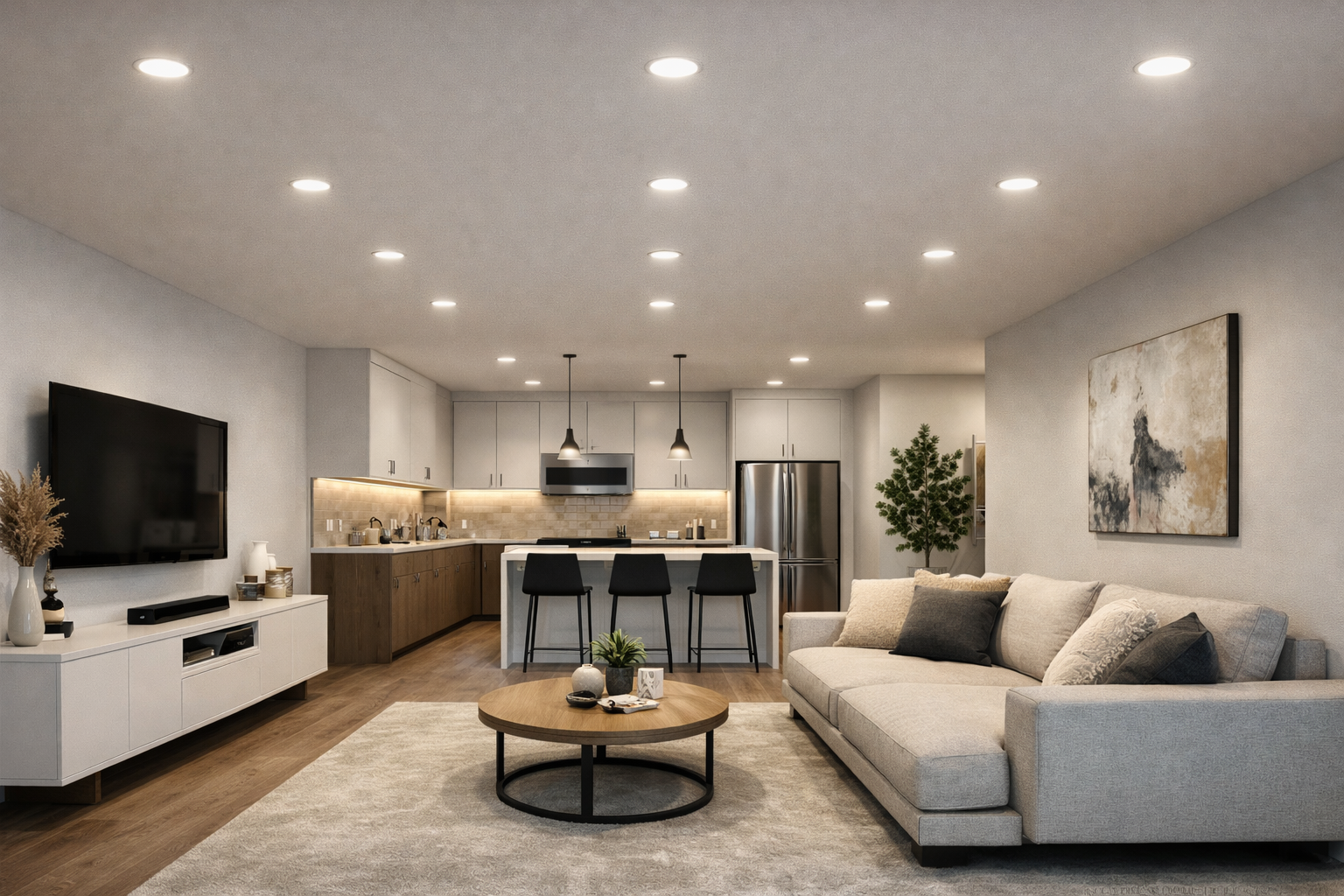
The best recessed lighting plans start with the room, not the fixture count. When every light has a purpose, the room feels brighter, cleaner, and easier to use without looking overlit.
A lot of recessed lighting problems come from one simple mistake: treating every can light as if it should be spaced evenly and do the same job. That almost never produces the best result. A stronger plan thinks about work zones, dark corners, traffic flow, mirrors, counters, seating areas, and where people actually need light. That is why recessed lighting often works better when paired with other categories such as Portfolio adjustable downlights, Portfolio bathroom lighting, under cabinet lighting, and Portfolio LED lighting depending on the room.
What Portfolio Recessed Lighting Is Really For
Portfolio recessed lighting is designed to provide ceiling-based downlight without the visual bulk of a hanging or surface-mounted fixture. That is why so many homeowners choose it when they want a cleaner ceiling line and more open feel in the room. Recessed lighting can make a space feel more modern and less crowded, especially in rooms where multiple fixture types would otherwise compete for attention.
But recessed lights are not just a design shortcut. They are useful because they can handle several different roles depending on how the room is set up. In some spaces, they act as the main ambient light. In others, they support task areas like kitchen counters, bathroom vanities, office desks, or reading corners. In still other rooms, recessed fixtures fill in the general light while a pendant, chandelier, or wall fixture becomes the more decorative focal point.
This is one reason recessed lighting works so well with pages like Portfolio task lighting, Portfolio pendant lighting, and Portfolio chandeliers lighting. Those categories help show that the best rooms often use more than one layer of light. Recessed cans can quietly do the support work while a more decorative fixture gives the room personality.
If you are comparing recessed fixtures with more directional ceiling lighting, our Portfolio track lighting guide is a helpful next step. Recessed lighting works well when you want a clean, built-in look, but track lighting can be the better choice when you want adjustable light direction, stronger accent lighting, or the ability to highlight work areas, walls, and décor without opening multiple ceiling locations. Reading both guides can help you decide which Portfolio lighting style fits your room layout, design goals, and installation needs more effectively.
Best Rooms and Uses for Recessed Lights
Some rooms naturally benefit from recessed lighting more than others. The best candidates are usually spaces where people want broad usable light, a cleaner ceiling appearance, or a lighting plan that works around cabinets, mirrors, hallways, or other built-in features.
Kitchens
Kitchens are one of the most common uses because recessed lighting can provide strong general light across the room without blocking sight lines. It often works especially well with Portfolio under cabinet lighting and task lighting so counters stay more usable. A kitchen that relies only on a central fixture often ends up with shadows in the wrong places.
Bathrooms
Bathrooms are another natural fit, especially when recessed lights are paired with better vanity lighting and thoughtful mirror placement. A room like this often benefits from a mix of ceiling light and fixture-specific support, which is why Portfolio bathroom lighting is a strong companion page.
Hallways and Entry Areas
Narrow spaces often look cleaner with recessed fixtures because they keep the ceiling simple while still improving visibility. This is where Portfolio recessed lighting can make a home feel more updated without requiring a large decorative fixture.
Living Rooms and Open Areas
In living areas, recessed lights can provide the general layer while floor lamps, pendants, sconces, or accent fixtures do more of the atmosphere work. If the goal is a layered room instead of flat bright light, it helps to think in terms of Portfolio ambient lighting instead of just fixture quantity.
| Room | Main Recessed Lighting Job | Helpful Companion Pages |
|---|---|---|
| Kitchen | General light and counter support | Under cabinet lighting, task lighting, pendant lighting |
| Bathroom | Ceiling illumination and support around vanity zones | Bathroom lighting, LED lighting |
| Hallway or entry | Clean ceiling light and traffic visibility | Flush mount lighting, ambient lighting |
| Living room | General support light within a layered scheme | Floor lamps, sconces lighting, chandeliers lighting |
If the room still feels uncertain, comparing recessed lighting with Portfolio flush mount lighting, Portfolio track lighting, and adjustable downlights can help clarify whether recessed cans are really the best fit.
Placement, Spacing, and Room Layout Thinking
Recessed lighting placement is where a lot of ceiling projects either work beautifully or start to feel off. Rooms with too few fixtures often feel patchy and dim. Rooms with too many fixtures can feel harsh, expensive, and strangely flat. The best layouts are not based on random symmetry. They are based on what the room is trying to do.
For example, in a kitchen you usually care about counters, islands, traffic paths, and sink or prep areas. In a hallway you care more about even visibility down the path of travel. In a living room, you may want softer general light that works with lamps or accent fixtures rather than a ceiling that feels like a grid of brightness. This is why a room-by-room mindset works better than one universal recessed lighting formula.
Adjustable fixtures can also matter. If the space includes artwork, a fireplace wall, open shelving, or directional emphasis, Portfolio adjustable downlights may be a better fit in part of the room than fixed cans alone. Likewise, a room that needs more flexible aiming may be better served by Portfolio track lighting rather than a fully recessed-only plan.
Trim Styles, Bulbs, and Compatibility Questions
One reason recessed lighting can get confusing is that the fixture category looks simple from below but can involve several separate decisions: housing, trim, bulb or module type, color temperature, beam spread, and replacement compatibility. For older Portfolio products, that is often where homeowners run into trouble. They may know the light is recessed, but they are still trying to figure out whether they need a trim piece, a replacement module, a bulb, or a more complete retrofit option.
This is where compatibility and replacement pages become valuable. If you are trying to figure out what still works with older recessed units, it helps to review Portfolio lighting parts and accessories, Portfolio lighting compatibility guide, and where to buy Portfolio lighting replacement parts. Those pages help visitors move from “something is wrong with this recessed light” to a more specific replacement decision.
Bulb choice also matters more than people first expect. A recessed can with the wrong bulb type or wrong light quality can make the whole room feel off even if the layout is otherwise good. That is one reason this page naturally links to Portfolio LED lighting and Portfolio energy efficient lighting. Many people exploring recessed lighting are really trying to solve a broader question about cleaner, more efficient room lighting.
Replacement Parts and Troubleshooting Help
Recessed lighting problems usually show up in a few predictable ways. The light may flicker, stay dim, stop working entirely, or become difficult to service because the original part is discontinued or hard to identify. In newer systems that may point to bulbs, drivers, or trim compatibility. In older systems it may also point to sockets, housings, or aging internal components.
If the issue looks electrical or performance-related, start with the broader support pages. Flicker and dimness questions often connect naturally to Portfolio LED lights flickering and Portfolio lighting too dim. General failure problems can be easier to sort out through Portfolio lighting troubleshooting. If the bigger problem is identifying the product or finding a match, pages like Portfolio lighting model number lookup and Portfolio lighting manuals can help narrow it down.
This is also where replacement strategy matters. Some recessed lights are best fixed with a simple bulb or trim replacement. Others make more sense as part swaps, module updates, or full fixture replacements depending on age and compatibility. If a homeowner cannot find a clean Portfolio replacement, related brand comparison pages such as Utilitech lighting replacement parts or Hampton Bay lighting replacement parts may become relevant from the buyer side, even if the original fixture was Portfolio.
Best Supporting Pages to Use Next
This page is meant to act as the main recessed lighting category guide, so the right next step depends on what you are trying to solve. If you are comparing fixture categories, adjustable downlights, track lighting, and flush mount pages are natural follow-ups. If you are solving a room-specific problem, bathroom, task, and under-cabinet pages make more sense. If you are troubleshooting or replacing older components, the parts, manuals, and troubleshooting cluster is the right next stop.
For directional ceiling light
Use this when you want more aiming flexibility than a fixed recessed can provides.
Adjustable DownlightsFor room-by-room kitchen help
Use this when recessed lights need to support prep areas, counters, or layered task lighting.
Task LightingFor bathroom projects
Use this when your recessed layout is part of a bathroom remodel or vanity lighting plan.
Bathroom LightingFor track-style alternatives
Use this when the room may need adjustable or exposed directional lighting instead of cans.
Track LightingFor parts and compatibility
Use this when older recessed fixtures need trims, bulbs, or replacement help.
Parts and AccessoriesFor troubleshooting
Use this when the fixtures are installed but dim, flickering, or not working correctly.
Troubleshooting HubFinal Thoughts on Portfolio Recessed Lighting
Portfolio recessed lighting is one of the most useful categories for homeowners who want a cleaner ceiling look and flexible room lighting without depending on large decorative fixtures for every job. It works well in kitchens, bathrooms, hallways, entries, and open living areas when the layout is tied to how the room is actually used.
The key is to think beyond the fixture itself. Good recessed lighting is really about room planning, support lighting, compatibility, and long-term serviceability. When recessed cans are paired with the right companion categories such as adjustable downlights, task lighting, bathroom lighting, and replacement parts and accessories, the visitor gets a much clearer path from planning to installation to repair.
Portfolio Recessed Lighting FAQ
What is Portfolio recessed lighting used for?
It is used for clean ceiling-based light in kitchens, bathrooms, hallways, living rooms, and remodel projects. Depending on placement and trim style, it can provide general lighting, task lighting, or supporting ambient light.
How do you place Portfolio recessed lights?
Placement depends on the room, ceiling height, and what each fixture needs to do. Recessed lights should support task areas, traffic paths, and the overall room layout rather than simply being spaced evenly with no purpose.
What problems happen with older recessed lighting?
Common issues include dim output, flickering, trim compatibility problems, older housings, bulb or module confusion, and difficulty finding replacement parts. That is why parts, manuals, and troubleshooting pages are important for older Portfolio fixtures.
What pages should you read next after this one?
Helpful next pages include Portfolio adjustable downlights, Portfolio track lighting, Portfolio bathroom lighting, Portfolio task lighting, Portfolio LED lighting, Portfolio lighting parts and accessories, and Portfolio lighting troubleshooting.
Portfolio recessed lighting, Portfolio can lights, recessed light trims, ceiling downlights, recessed light placement, recessed lighting replacement parts, and Portfolio indoor lighting support.