
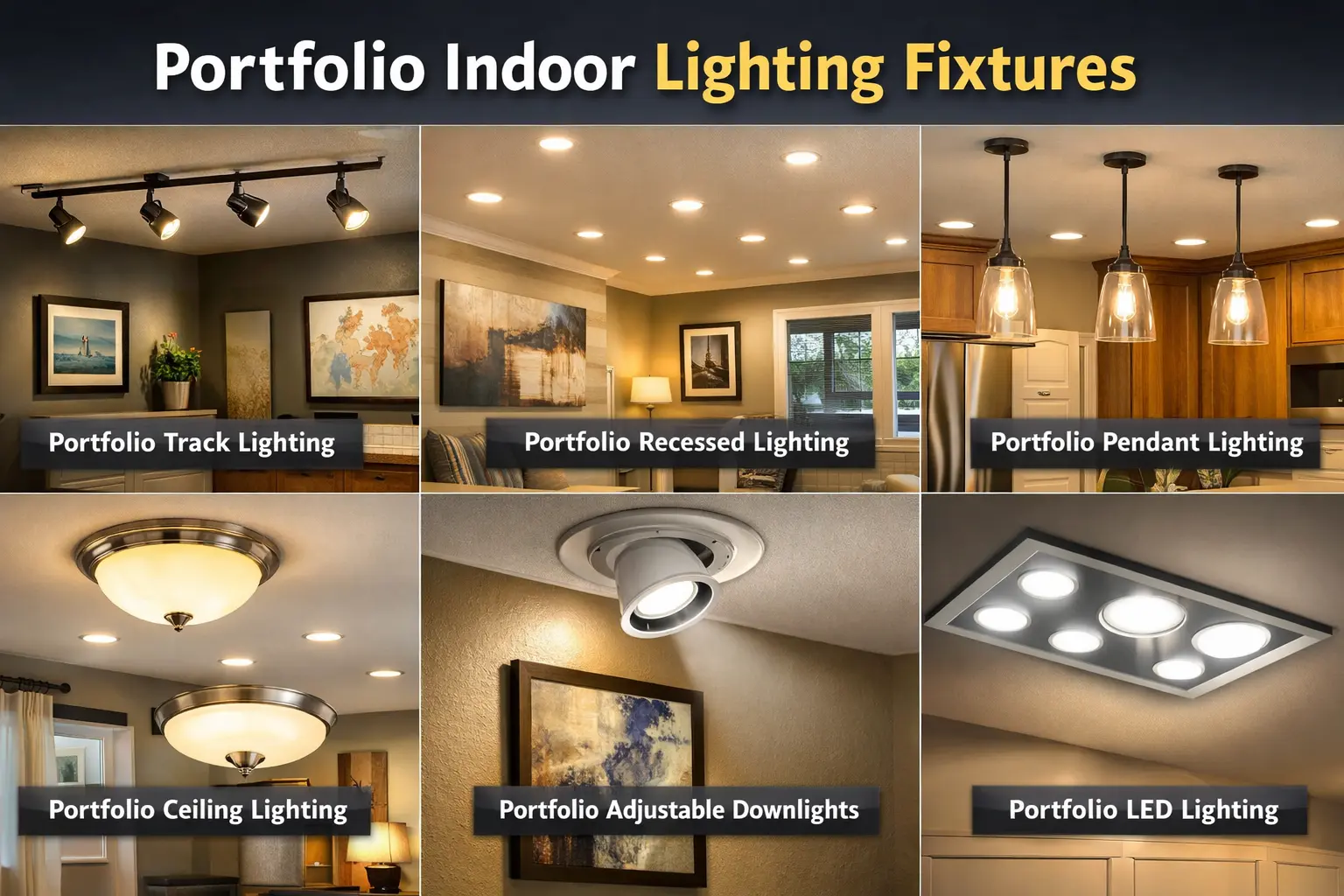
Many homeowners start searching for Portfolio indoor lighting because they are trying to solve a practical problem. Maybe a kitchen feels dim, a hallway needs better coverage, a living room needs a more layered lighting plan, or an older fixture needs to be replaced with something more efficient and updated. Other people arrive here because they already own Portfolio fixtures and want help with installation, LED upgrades, troubleshooting, or finding replacement parts that actually fit.
That is why this page is designed as a true pillar page instead of a short category description. A strong indoor lighting hub should help you understand the major fixture types, when each one makes sense, how they are typically installed, and how the supporting pages on the site connect together. Indoor lighting is not just about buying a fixture. It is about choosing the right kind of light for the room, the ceiling, the tasks that happen there, and the style of home you are trying to create.
Understanding Portfolio Indoor Lighting
Portfolio indoor lighting covers a wide range of fixture types that are used throughout the home. Kitchens, hallways, entry areas, bedrooms, offices, bathrooms, dining areas, and living spaces all need light, but they do not all need the same kind of light. That is one reason indoor lighting can feel confusing to homeowners. A flush mount that works well in a hallway may not be the best answer above a kitchen island. Track lighting that is excellent for directional light may not replace the softer general coverage needed in a bedroom.
A useful way to think about indoor lighting is to break it into three jobs. First, you need general lighting so the room feels bright and usable. Second, you may need task lighting where people cook, work, read, shave, or apply makeup. Third, you may want accent or decorative lighting to highlight a wall, add visual depth, or give the room more style. Portfolio indoor light fixtures fit across all three of those goals, which is why the brand can show up in so many room types and fixture categories.
Homeowners also come to this topic from different directions. Some are planning upgrades. Some are comparing fixture types before they buy. Some are trying to match or replace an older Portfolio ceiling lighting fixture. Others are troubleshooting a problem with flickering, dimming, a dead socket, or an LED upgrade that did not go the way they expected. A good hub page has to support all of those search intents, and that is the role this page is meant to play.
Types of Portfolio Indoor Lighting Fixtures
Portfolio Track Lighting
Track lighting is one of the most flexible indoor fixture types because the heads can be aimed where the light is needed. That makes it especially useful in kitchens, home offices, hallways, feature walls, and rooms where one centered ceiling fixture does not spread light well enough. Many homeowners like track lighting because it gives them several points of directional light from one ceiling location. It is also a good choice when you want accent lighting without cutting openings for multiple recessed fixtures.
The main advantage of track lighting is control. You can direct one head toward a countertop, another toward artwork, and another toward a shelf or darker corner of the room. That makes it one of the most adaptable choices in the indoor lineup. For deeper guidance, visit the Portfolio track lighting guide.
Portfolio Recessed Lighting
Recessed lighting is popular when you want a cleaner, built-in ceiling look. Instead of a fixture hanging down or drawing attention to itself, recessed lights sit flush with the ceiling and provide a more subtle design. They are often used in kitchens, hallways, living rooms, and finished basements where homeowners want even light distribution without a visible decorative fixture.
Recessed lighting can work well for general lighting, but layout matters. If spacing is poor, rooms can still feel uneven or underlit. Recessed fixtures also require more planning than surface-mounted lights. If this is the style you are considering, the Portfolio recessed lighting guide is the next page to read.
Portfolio Pendant Lighting
Pendant lighting is often chosen when a room needs both function and style. Pendants are common above kitchen islands, dining tables, bars, and some sink areas because they bring light down closer to the surface while also acting as a visual focal point. In many homes, pendant fixtures help define the room and support the design style at the same time.
The challenge with pendant lighting is scale and placement. A fixture can be beautiful and still feel wrong if it hangs too high, too low, or is too small for the space. For room-by-room guidance, visit the Portfolio pendant lighting page.
Portfolio Ceiling Lighting Fixtures
Ceiling lighting includes flush mount and semi-flush mount fixtures that are often used for broad general illumination. These are among the most common indoor choices because they fit many rooms, work with standard ceiling boxes, and usually provide dependable light without requiring a specialized layout. Hallways, bedrooms, closets, utility rooms, and entry areas often use this category.
Ceiling fixtures are a practical choice when the goal is straightforward room brightness, but the best result still depends on room size, ceiling height, and bulb or LED output. If this is the category you need, the Portfolio ceiling lighting page is the most relevant follow-up.
Portfolio Adjustable Downlights
Adjustable downlights are useful when you want the cleaner ceiling look of recessed-style lighting but still need the ability to aim the beam slightly. These fixtures can help highlight art, architectural details, or targeted task areas without switching to a more visible track system. They can be a smart middle ground between pure general lighting and a more directional fixture style.
Not every room needs adjustable downlights, but they can make a big difference when you are trying to give a space a more custom, layered feel. Learn more on the Portfolio adjustable downlights page.
Portfolio LED Lighting
LED lighting is no longer a niche upgrade. In many homes, it is the standard expectation for indoor fixtures because it offers lower energy use, longer service life, less heat, and reduced maintenance. Portfolio LED lighting shows up across fixture categories, including ceiling lights, track heads, under-cabinet fixtures, and integrated designs.
The biggest practical benefit of LED indoor lighting is that it lowers the need for frequent bulb changes while often improving brightness and efficiency at the same time. To explore that category further, visit Portfolio LED lighting.
Portfolio Integrated LED Lighting
Integrated LED fixtures are different from fixtures that simply use LED bulbs. With an integrated LED fixture, the light source is built into the fixture itself. This can create a sleeker design and may improve performance, but it also changes how replacements are handled later. In some cases you are replacing the whole unit or a built-in component rather than just changing a bulb.
This distinction matters because many homeowners assume all LED fixtures are serviced the same way. They are not. If you want to understand the difference better, see Portfolio integrated LED lighting.
How Portfolio Indoor Lighting Systems Work
Most indoor lighting systems start with the same basic foundation: a ceiling or wall electrical box, a power feed controlled by a switch, and a fixture that mounts safely to the box and connects to the household wiring. From there, the details depend on the type of fixture. A flush mount may simply attach to one central box. A track lighting system uses that box as the feed point for the rail. Recessed lights may involve multiple housings connected across the ceiling layout. Pendant lighting adds height and hanging considerations. LED fixtures may include drivers, built-in modules, or specific dimming requirements.
Switches and dimmers also affect how the system behaves. A basic on-off switch is simple, but a dimmer introduces another layer that must be compatible with the bulbs or LED components being used. One of the most common indoor lighting mistakes is treating every bulb, fixture, and dimmer combination as interchangeable. That is often why homeowners run into flickering, buzzing, inconsistent brightness, or lights that fail sooner than expected.
Another common mistake is focusing only on how a fixture looks and not on how the room needs to be lit. Good indoor lighting is both electrical and visual. The wiring has to be safe, but the light also has to be useful. That is why planning, placement, and fixture choice matter just as much as the wiring connection itself.
Basic Indoor Lighting Installation Guide
Indoor lighting installation can range from a simple fixture swap to a more involved project that changes the way a room is wired and lit. In many homes, replacing an existing surface-mounted fixture at the same box location is the simplest kind of installation. More advanced work, like adding new recessed lights or changing switch and dimmer arrangements, requires more planning and often more electrical skill.
The safest starting point is always the same. Turn off the breaker, confirm the circuit is dead, inspect the electrical box, and make sure the box is rated and supported correctly for the fixture being installed. Then follow the fixture instructions closely. Secure mounting matters just as much as the wire connection. A good fixture install should feel stable, sit straight, and work correctly the first time the power is restored.
- Turn off power at the breaker before touching any wires.
- Check that the electrical box is secure and suitable for the fixture type.
- Match the fixture wiring carefully to the house wiring and grounding path.
- Support the fixture correctly so weight is not carried by loose hardware.
- Test switches, dimmers, and bulb compatibility after installation.
For broader setup instructions and fixture-specific help, go to the Portfolio lighting installation and instructions page.
Benefits of LED Indoor Lighting
LED indoor lighting has become so common that many buyers now expect it by default. The reasons are practical. LED fixtures and bulbs usually use less energy, produce less heat, last longer, and reduce the annoyance of frequent bulb changes. In rooms where lights are used every day, those benefits add up quickly.
Another advantage is design flexibility. LED technology has made slimmer ceiling fixtures, modern under-cabinet lights, updated track heads, and more compact indoor designs easier to produce. That does not mean every LED product is automatically the best choice. Quality, dimmer compatibility, color temperature, and fixture design still matter. But in most homes, LED lighting is a strong upgrade path when replacing older indoor fixtures.
If LED upgrades are part of your project, read the supporting guides for Portfolio LED lighting and Portfolio integrated LED lighting.
Common Portfolio Indoor Lighting Problems
Lights not turning on
When an indoor fixture does not turn on, start with the breaker, switch, bulb or light source, and wiring connections. If the whole fixture is dead, the problem may be in the feed, switch, or fixture wiring. If only one part of the system fails, such as one track head or one bulb position, the problem is often more local.
Lights flickering
Flickering is one of the most common complaints after changing bulbs or adding LED lamps. The issue may be a loose connection, a failing bulb, a worn socket, or dimmer incompatibility. In LED setups, mismatched controls are often the hidden cause.
Dimmer issues
A dimmer that worked fine with older bulbs may not behave well with newer LED lamps or integrated LED fixtures. This can lead to buzzing, flashing, or limited dimming range. When that happens, the dimmer, bulb, and fixture should be checked as a system rather than as separate parts.
One light not working
A single light position that fails while the rest of the fixture works usually points to a bulb, socket, connector, or head problem rather than a whole-circuit issue. Swapping parts between working and non-working positions can help narrow the cause.
For broader diagnostic help, visit the Portfolio lighting troubleshooting guide. That page is one of the best support pages for this hub because many indoor issues overlap with other Portfolio fixture categories.
Finding Portfolio Indoor Lighting Replacement Parts
Many people looking for indoor lighting information are not shopping for a completely new fixture. They are trying to repair, refresh, or extend the life of something they already own. That is where replacement parts become important. Depending on the fixture type, those parts may include bulbs, lenses, glass shades, track heads, connectors, mounting hardware, sockets, trim pieces, or other accessories.
Replacement decisions usually come down to two questions. First, is the fixture still worth repairing? Second, can the needed part still be identified and matched correctly? A track system with one failed head may be worth repairing. A discontinued decorative fixture with broken glass and hard-to-find hardware may be a better candidate for full replacement. The right answer depends on cost, appearance, availability, and whether the existing fixture still meets the room’s needs.
The best starting point is the Portfolio lighting parts and accessories page. If you are ready to shop broadly, you can also browse Portfolio lighting replacement parts on eBay and Portfolio lighting parts on Amazon.
How to Choose the Right Indoor Lighting Fixture
The best fixture choice depends on the room, the ceiling, and what you need the light to do. Style matters, but function should lead the decision. Start by asking whether the room needs broad general light, focused task light, directional accent light, or a decorative statement fixture.
| Room Factor | What to Think About | Good Fixture Fits |
|---|---|---|
| Room size | Larger rooms often need stronger output or layered lighting | Ceiling lights, recessed layouts, track lighting |
| Ceiling height | Low ceilings limit hanging fixtures and favor closer profiles | Flush mounts, recessed lights, slim LED fixtures |
| Task needs | Cooking, reading, and desk work need more focused light | Track lighting, pendants, adjustable downlights |
| Décor style | The fixture should look right for the room, not just fit electrically | Pendants, decorative ceiling fixtures, integrated LED styles |
| Maintenance preference | Some people want fewer bulb changes and lower heat | LED and integrated LED fixtures |
Track Lighting vs. Recessed Lighting vs. Ceiling Fixtures
These are three of the most common indoor categories, but they solve lighting differently. Track lighting is best when you want directional control and flexibility from one ceiling location. Recessed lighting is best when you want a cleaner, built-in look with less visible fixture presence. Ceiling fixtures are often the most straightforward choice when a room mainly needs broad general light from a standard box location.
In practice, many homes use more than one of these styles. A kitchen might use recessed lights for general brightness and pendants over the island. A hallway might use a simple ceiling fixture. A home office or living room might benefit more from track lighting because the beam direction can be adjusted over time.
Explore Our Portfolio Indoor Lighting Guides
If you are comparing indoor fixture types, planning a room update, or trying to solve a lighting problem, these guides will help you explore the most relevant Portfolio lighting categories in one place. This section is designed to make it easier to move from broad indoor lighting research into more specific pages for fixture types, installation help, troubleshooting, and replacement parts.
Portfolio Track Lighting
Learn how track systems work, how to choose heads, and how to troubleshoot common issues.
Read the guidePortfolio Recessed Lighting
Understand layout, clean ceiling design, and when recessed fixtures make the most sense.
Read the guidePortfolio Pendant Lighting
Explore island, dining, and decorative hanging fixture ideas for indoor spaces.
Read the guidePortfolio Sconces Lighting
See where wall sconces work best for hallways, bedrooms, bathrooms, and accent lighting.
Read the guidePortfolio Chandeliers Lighting
Review decorative ceiling fixtures for dining rooms, entryways, and statement lighting areas.
Read the guidePortfolio Bathroom Lighting
Learn how to choose indoor lighting for vanities, mirrors, and bathroom task-lighting needs.
Read the guidePortfolio Wall Lighting
Compare wall-mounted fixture options when you want accent lighting without relying only on ceiling lights.
Read the guidePortfolio Flush Mount Lighting
Explore low-profile ceiling fixtures that work well in bedrooms, hallways, and rooms with lower ceilings.
Read the guidePortfolio Adjustable Downlights
Understand directional recessed-style lighting for highlighting walls, décor, and work areas.
Read the guidePortfolio Under Cabinet Lighting
Find practical kitchen and workspace lighting ideas for counters, cabinets, and task-oriented areas.
Read the guidePortfolio Puck Lighting
See how compact puck lights can be used for cabinets, shelving, display areas, and focused accent lighting.
Read the guidePortfolio Task Lighting
Learn which indoor lighting options work best when you need better visibility for reading, cooking, and work surfaces.
Read the guidePortfolio Picture Lighting
Explore accent fixture ideas for illuminating artwork, frames, shelves, and decorative wall features.
Read the guidePortfolio LED Lighting
Review LED fixture options, upgrade ideas, and energy-saving indoor lighting choices.
Read the guidePortfolio Integrated LED Lighting
Learn how integrated fixtures differ from standard LED bulb designs.
Read the guidePortfolio Ceiling Lighting
See common indoor ceiling fixture types for general room lighting and everyday use.
Read the guideInstallation and Instructions
Use this page for setup help, instructions, and installation basics across fixture categories.
Read the guidePortfolio Lighting Troubleshooting
Work through flickering, dead fixtures, dimmer issues, and other common lighting problems.
Read the guidePortfolio Lighting Parts and Accessories
Find the best starting point for bulbs, lenses, heads, hardware, and other replacement parts.
Read the guideBuy Portfolio Lighting
Browse the broader buying hub when you are ready to compare fixtures and replacement options.
Read the guideCommon Questions About Portfolio Indoor Lighting
What is the best indoor lighting for a living room?
A layered approach usually works best. Many living rooms need a mix of general ceiling light, accent lighting, and sometimes task lighting for reading or work areas.
Are LED lights better for indoor lighting?
In many homes, yes. LED lighting usually uses less energy, lasts longer, and reduces maintenance compared with older bulb styles.
What type of ceiling lighting is most common?
Flush mount and semi-flush mount fixtures are among the most common because they fit many rooms and provide broad general light.
How many lights should be in a room?
That depends on room size, ceiling height, wall color, fixture output, and what activities happen in the space. There is no one-size-fits-all number.
Is track lighting good for kitchens?
Yes. Track lighting is a strong kitchen option because it can aim light directly at counters, islands, and prep areas.
Can recessed lighting replace ceiling lights?
In some rooms it can, but the layout has to be planned correctly so the room still receives enough overall light.
Where can I find Portfolio indoor lighting replacement parts?
The best starting point is a parts guide that helps you match the replacement part to the fixture type, especially for bulbs, lenses, track heads, and mounting hardware.
This indoor lighting guide is designed to help homeowners understand Portfolio fixture categories, installation considerations, troubleshooting decisions, and replacement part options before spending money or starting a project.