
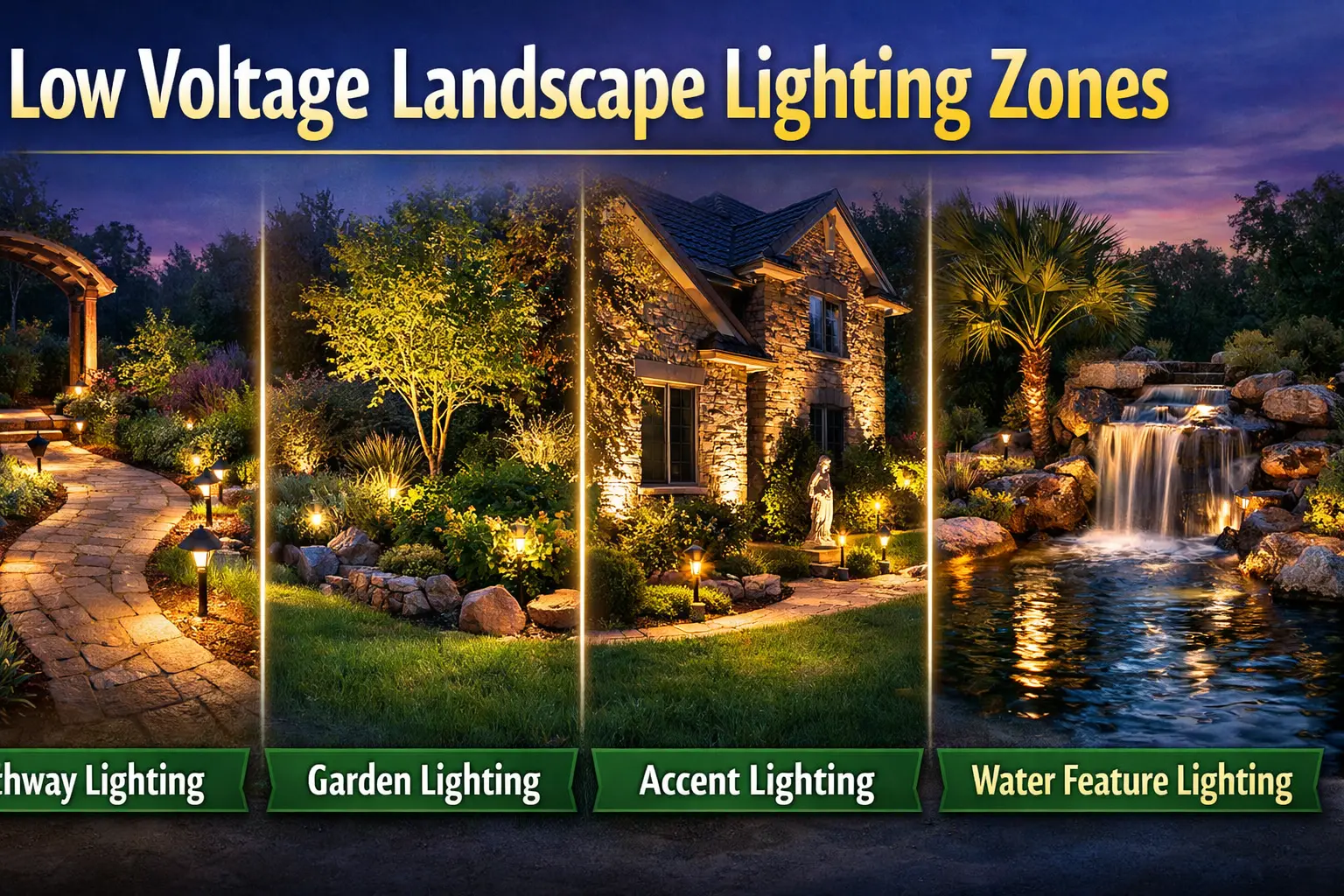
If you think of a landscape lighting system like a classroom project, zones are the way you break a big assignment into smaller, smarter parts. Instead of forcing every fixture to run from one long cable path, you divide the property into logical sections so each area receives power more evenly.
This is one of the most important planning ideas in low voltage lighting. A good zone layout can reduce dim fixtures, simplify future upgrades, and make troubleshooting easier later. It also helps the transformer work more efficiently because the load is spread across separate runs instead of one oversized circuit.
If you are still working through the basics, review Portfolio low voltage lighting first. Then use this page alongside your landscape lighting layout design, wiring plan, and transformer sizing strategy.
What Is a Low Voltage Landscape Lighting Zone?
A low voltage landscape lighting zone is a separate cable run or circuit that powers one area of the property. Instead of sending every fixture through one long line, the system is divided into sections. Each section starts at the transformer and feeds a defined part of the yard.
Think of a zone as a teaching group in a class. You could try to teach every student at once in one giant group, but it is usually easier to organize the room into smaller sections. In the same way, landscape lighting performs better when the front entry, garden beds, patio, and tree uplights are treated as separate parts of the overall system.
Common examples of zones include:
- front walkway path lights
- foundation or garden bed accent lights
- driveway marker lights
- backyard patio lighting
- tree uplighting
Each zone may connect to a different transformer output, terminal, or tap depending on the system. The important idea is that each run serves a specific purpose and is planned around distance, wattage, and layout rather than simply connecting everything in the easiest possible line.
Why Landscape Lighting Systems Use Multiple Zones
Dividing a yard into zones is not just about neat organization. It directly affects how well the lighting system performs. One overloaded run can leave the farthest fixtures dim, uneven, or harder to troubleshoot. Separate zones help keep power distribution cleaner and more balanced.
Main benefits of using zones
- reduces voltage drop across long runs
- helps fixtures stay brighter and more consistent
- makes it easier to troubleshoot one part of the yard
- allows cleaner future expansion
- helps balance transformer load more intelligently
This is especially important on larger properties or systems with many fixtures. A few path lights by the front walk may work fine on one simple run, but once you add driveway lights, patio accents, step lights, and tree uplights, the system becomes harder to manage as one single circuit.
Low Voltage Landscape Lighting Zones Diagram
Dividing a low-voltage landscape lighting system into zones is one of the best ways to improve performance, reduce voltage drop, and make future troubleshooting easier. Instead of powering every fixture from one long cable run, zones let you organize the system into smaller sections such as front yard lighting, pathway lighting, backyard lighting, or accent lighting around architectural features.
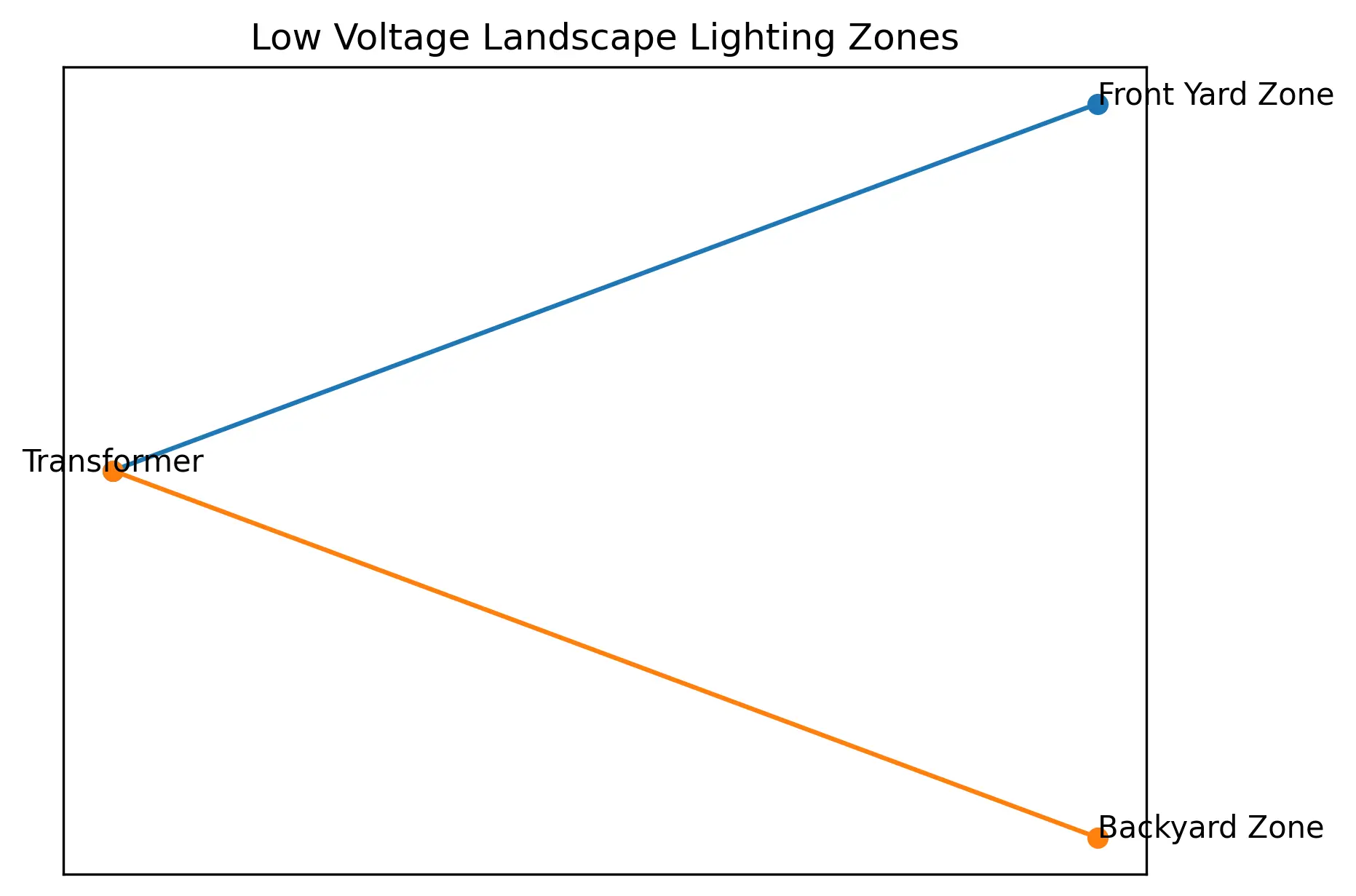
Diagram: Example of dividing a low-voltage landscape lighting system into separate zones. Organizing fixtures into zones helps distribute transformer load, reduce voltage drop, and simplify troubleshooting.
This diagram shows how one transformer can feed separate lighting zones instead of one overloaded path. Breaking the system into zones helps distribute power more evenly and gives you more control over layout planning. It also makes it easier to identify problems because you can isolate one section of the system without guessing which fixture or wire run is causing the issue.
Why lighting zones matter
Zones matter because they help control wire distance, fixture load, and layout organization at the same time. A well-zoned lighting system usually performs better than a system that tries to push every light through one long run. This is especially important for larger yards, layered lighting designs, and systems with a mix of path lights, uplights, and accent fixtures.
Examples of landscape lighting zones
Common zones include a front walkway zone, a foundation bed zone, a tree uplighting zone, and a backyard entertaining zone. Organizing the system this way can improve brightness consistency and make expansion easier later if you decide to add more fixtures.
You can continue learning with our landscape lighting transformer guide, Portfolio lighting transformer sizing guide, and how to expand a landscape lighting system guide.
Common Low Voltage Landscape Lighting Zone Layouts
The best zones usually follow how the yard is naturally used. Instead of dividing the system randomly, group fixtures by area and purpose. That makes the layout easier to understand today and easier to adjust later.
Front yard zone
This is often the main curb appeal zone. It may include path lights, entry lights, short accent lighting near shrubs, and fixtures guiding visitors from the sidewalk to the front door. A front yard zone is often kept separate because it is the most visible area and needs steady, even performance.
Driveway zone
Driveway lighting often stretches over a longer area, which makes it a strong candidate for its own run. Keeping it separate can improve brightness and make future expansion easier if more lights are added later.
Garden bed or foundation zone
Accent lights aimed at plants, walls, or architectural features often work best in their own area-based run. This keeps decorative lighting from being mixed into a longer path-light circuit where voltage drop may be harder to manage.
Backyard patio zone
Patio lighting is often used differently than front yard lighting. It may stay on longer during evenings outside or include a mix of accent and functional fixtures. Giving the patio its own zone makes it easier to plan for both layout and control.
Tree uplighting zone
Tree lights often use a different spacing pattern and may sit farther from the transformer than foundation lights do. A separate tree zone helps protect brightness and gives you more freedom to expand the design later.
How Many Zones Should a Landscape Lighting System Have?
There is no perfect number for every property. The right answer depends on yard size, wire distance, fixture count, transformer capacity, and how much separation you want between different parts of the design. Still, the table below gives homeowners a practical starting point.
| Property Size | Typical Zone Count | Common Zone Examples | Planning Notes |
|---|---|---|---|
| Small yard | 1–2 zones | Front walk, garden bed | May work well with one transformer and short balanced runs |
| Medium yard | 2–4 zones | Front walk, driveway, beds, patio | Separate runs help prevent long overloaded circuits |
| Large yard | 4–6 zones | Driveway, entry, trees, backyard, patio, garden areas | Requires more deliberate transformer and wattage planning |
How to Think About Zone Count the Smart Way
Do not think of zones as a contest to create as many circuits as possible. Think of them as a way to keep the system organized, balanced, and expandable. Too few zones can create dim lights and messy planning. Too many zones can make the design more complicated than it needs to be.
A good rule is to separate areas that are physically distant, serve different purposes, or create long wire runs if combined. For example, putting the front path lights and far backyard tree uplights on the same run usually creates more trouble than keeping them separate.
This is where pages like landscape lighting wire gauge and voltage drop become important. Zone planning and wire planning go together. The farther the run and the heavier the load, the more important it is to divide the layout intelligently.
How Landscape Lighting Zones Connect to the Transformer
Every zone starts at the transformer. That is the central point where household power is stepped down to the lower voltage used by your outdoor lighting system. From there, separate cable runs leave the transformer and head toward the area they serve.
Some transformers support multiple outputs or taps, which makes zone planning easier. In other cases, multiple runs may still leave the same transformer but need to be balanced carefully so one section of the yard does not take too much of the available capacity.
This is why transformer planning matters so much. If the system is divided beautifully into zones but the transformer is too small, the result will still be disappointing. That is why you should review the Portfolio lighting transformer sizing guide while planning zones.
When to Add a New Landscape Lighting Zone
Many homeowners do not start with zones in mind. They add fixtures over time, and eventually the original run becomes too long or too crowded. That is usually the moment when a new zone becomes the better answer.
Dim or uneven lights
If lights near the transformer look stronger than lights farther away, the run may simply be too long or too heavily loaded. Dividing it into two zones often improves balance more than trying to squeeze everything through one circuit.
System expansion
Adding patio lights, driveway lights, or new garden lighting often calls for a separate run. Expansion is easier when the new fixtures get their own zone instead of being patched into an already crowded circuit.
Troubleshooting problems
When all fixtures are tied together too broadly, troubleshooting becomes more frustrating. Separate zones make it easier to isolate a problem area and determine whether the issue is in one run, one fixture group, or one part of the property.
Transformer overload risk
If the load is growing, a new zone may need to be paired with transformer review. This is one reason pages like how to wire landscape lighting and transformer sizing should be part of the same planning conversation.
Example Landscape Lighting Zone Layout
Here is a simple way to picture a zoned landscape lighting system:
Transformer
├── front walkway zone
├── driveway zone
├── garden bed accent zone
└── backyard patio zone
That type of layout gives each part of the yard a defined run. The front walk stays easy to manage. The driveway lights are not fighting the patio lights for the same long cable path. The garden accents can be adjusted separately in the planning stage, and the patio zone can grow later if the homeowner adds more outdoor living features.
In teaching terms, this is just smart organization. Each zone has one job. That clarity helps the whole system perform better and makes future decisions easier.
Dividing a low-voltage landscape lighting system into zones is one of the best ways to improve performance, but zoning works best when it is planned alongside wiring layout, fixture spacing, and voltage management. If one part of the yard looks dimmer than another, our landscape lighting voltage drop guide explains what is happening and why longer runs often struggle. If you are mapping out the cable itself, our how to wire landscape lighting guide will help you understand the basic layout options. For a more specific example of a split wiring approach, see our Portfolio lighting wiring diagram. Once the zones are established, our landscape lighting spacing guide can help you place fixtures in a way that looks balanced and professional from one zone to the next.
How Zones Fit Into Your Larger Landscape Lighting Plan
Zones are not a separate topic from layout, wiring, and transformer sizing. They are the bridge that connects all three. A good layout tells you where lights should go. Good wiring tells you how to connect them safely and efficiently. Good transformer planning tells you how much power the system can support. Zones bring those ideas together into a workable yard design.
That is why this page fits naturally into a larger cluster with Portfolio low voltage lighting, layout design, wiring, wire gauge, and voltage drop. A homeowner who understands zones makes better decisions across the whole system.
Low Voltage Landscape Lighting Zones FAQ
What is a landscape lighting zone?
A landscape lighting zone is a separate low voltage cable run or circuit that powers a specific section of the yard, such as a front walkway, driveway, garden bed, patio, or tree lighting area.
How many lights can be on one landscape lighting zone?
The number depends on fixture wattage, wire length, transformer capacity, and voltage drop. Smaller balanced runs usually perform better than one long overloaded run.
Can multiple landscape lighting zones use one transformer?
Yes. Many systems use one transformer with multiple output runs or taps, with each run feeding a different part of the property.
Do lighting zones help prevent voltage drop?
Yes. Dividing the system into shorter, more balanced runs can reduce voltage drop and help fixtures stay brighter and more even across the yard.
Can I add another zone to an existing low voltage lighting system?
In many cases, yes. Homeowners often add a new zone when expanding the layout, correcting dim lights, or separating one long overloaded run into smaller circuits.
More Low Voltage and Landscape Lighting Planning Guides
Portfolio Low Voltage Lighting
Learn the basics of low voltage landscape lighting systems, including transformers, wiring, fixtures, and outdoor layout planning.
Read the guideLandscape Lighting Layout Design
Plan where fixtures should go before you divide the property into separate circuits and lighting zones.
Read the guideHow to Wire Landscape Lighting
Understand how the cable runs are connected once you know how the yard should be divided.
Read the guideLandscape Lighting Voltage Drop
See why long overloaded runs often create dim lights and why proper zone planning helps solve that issue.
Read the guideLandscape Lighting Wire Gauge
Choose the right wire size for your distance and load so each zone performs the way it should.
Read the guidePortfolio Lighting Transformer Sizing Guide
Match the transformer to the overall system so your separate zones have enough power to run correctly.
Read the guideLow Voltage Landscape Lighting Zones, Multiple Runs, and Circuit Planning Help
This page is designed to help homeowners understand one of the most important ideas in outdoor lighting design: dividing the system into logical zones. That simple step often leads to better brightness, easier expansion, and more reliable performance across the whole property.
If you are planning a new layout or fixing an older one, do not just ask where the lights should go. Also ask how the property should be divided into runs. That question often makes the difference between a system that looks balanced and one that slowly becomes harder to manage.
About the author: This page was written by Philip Meyer, Landscape Lighting Researcher and Founder of PortfolioLighting.net, with 20+ years studying lighting systems and troubleshooting.