Landscape Lighting Guide
This is the broader outdoor lighting hub and the best place to connect color decisions to full layout and fixture planning.
Read the guide
The best color temperature for most landscape lighting is 2700K to 3000K. This range creates a warm, natural look that works well for homes, pathways, and outdoor spaces.
If you want a softer, more traditional feel, choose 2700K. If you want a slightly cleaner and brighter look, choose 3000K. Use 4000K only for security or high-visibility areas where clarity matters more than warmth.
This page works as the main color decision guide inside the landscape lighting cluster. For the broader design foundation, see landscape lighting guide and landscape lighting layout design. If you are comparing LED fixture options, also review portfolio LED lighting.
See the Landscape Lighting GuideFor most homes, the best landscape lighting color temperature is between 2700K and 3000K. This range creates a warm, natural appearance that looks attractive on houses, pathways, and landscaping without feeling harsh.
In most cases, choosing between 2700K and 3000K will give the best overall result for residential landscape lighting.
| If You Want | Best Choice | Why |
|---|---|---|
| Warm, inviting residential lighting | 2700K | Soft, natural, blends well with homes and landscaping |
| Balanced look with more clarity | 3000K | Slightly brighter without becoming harsh |
| Maximum visibility and security | 4000K | Cooler tone increases contrast and sharpness |
| Traditional home style | 2700K | Matches classic warm lighting tones |
| Modern or mixed design | 3000K | Clean and flexible across different areas |
The goal is to match the color temperature to the feel of your home and the purpose of the lighting, not just pick a number.
Warm color temperature does not always mean safe at night. See why 2700K lighting still contains blue light and what to use instead .
Warm color temperature is especially important for aging eyes because harsh blue-white light increases glare and visual fatigue. The Senior Safety Lighting Guide explains why most senior-safe paths perform best with warm 2700K to 3000K shielded fixtures.
Most homeowners are happiest with 2700K or 3000K. 4000K is usually best reserved for specific functional areas.
Color temperature describes how warm or cool light appears. In outdoor lighting, that choice affects the mood of the yard, how the house looks at night, how natural trees and planting beds appear, and whether the light feels soft and inviting or crisp and more functional. This is one of the most important lighting decisions because it changes the entire visual character of the system even when the fixture placement stays exactly the same.
The most common confusion comes from comparing 2700K, 3000K, and 4000K. Those numbers are close enough that they can seem minor, but outdoors they create noticeably different effects. Once you understand what each one does, it becomes much easier to build a system that looks consistent and intentional.
Color temperature describes how warm or cool the light appears. It is measured in Kelvin, often shortened to K. Lower numbers create warmer light with more yellow or amber character. Higher numbers create cooler light that appears whiter or slightly bluer.
This does not mean the lamp is physically hotter or colder. It means the visible color of the light changes. In outdoor lighting, that change affects the atmosphere of the yard, the way textures look, and how the house and landscaping feel at night.
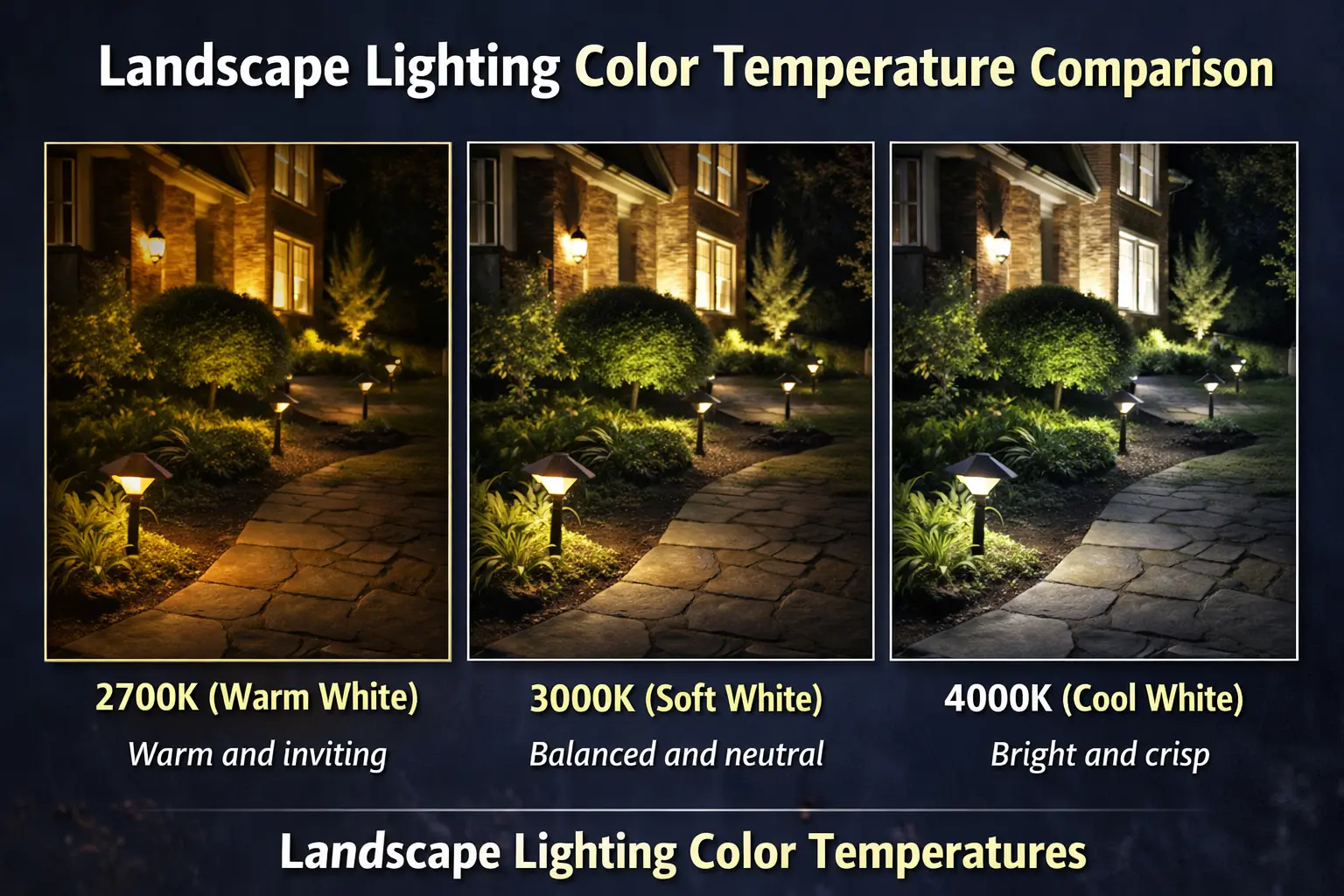
The three most common residential comparison points are 2700K, 3000K, and 4000K. Each one has a different visual effect, and that is why choosing the right one matters so much.
2700K creates a soft, warm glow that feels similar to classic incandescent lighting. It is one of the most common choices for homes, pathways, facade lighting, and traditional landscape designs because it feels natural, comfortable, and welcoming.
3000K is slightly whiter than 2700K but still warm enough for most residential settings. It often works well when you want a cleaner look without becoming harsh. It is one of the most flexible outdoor options because it fits many home styles and many parts of the yard.
If you are choosing warmer outdoor bulbs because of an HOA review or city code requirement, our Outdoor Lighting Ordinance Guide shows how color temperature limits fit into broader outdoor lighting compliance rules.
Beyond visual style, color temperature has biological and environmental consequences. For a deeper explanation of sleep effects, wildlife sensitivity, and glare, see the biological impact of outdoor light color.
4000K creates a brighter, crisper effect with more cool-white character. It often works better in functional, high-visibility, or more modern-looking situations than it does in softer residential design settings.
Comparing these three options is one of the most useful ways to understand outdoor lighting color.
2700K is the warmest of the three. 3000K is still warm, but more neutral. 4000K is noticeably cooler and sharper.
Even when lumen output is similar, cooler light often appears brighter to the eye because of the cleaner white tone. This is one reason people sometimes assume 4000K is “stronger” even when the real brightness is comparable.
2700K feels softer and more inviting. 3000K feels clean and balanced. 4000K feels more functional and crisp.
2700K often suits homes, pathways, and traditional landscaping. 3000K works well for balanced general landscape lighting. 4000K is often better for security, strong visibility, and more modern-looking exterior lighting decisions.
For most residential landscape lighting, the best color temperature usually falls in the 2700K to 3000K range.
2700K is one of the most common residential choices because it feels warm, flattering, and natural around homes, planting beds, and pathways.
3000K is a strong balanced option when you want slightly more visual clarity while still keeping the lighting comfortable and residential.
4000K usually works best when the lighting is more functional, more security-oriented, or meant to create a crisp modern feel rather than a soft residential one.
Warm light blends naturally with most homes and landscaping. It tends to soften surfaces and creates a more relaxed nighttime atmosphere.
3000K often feels clean without feeling harsh. It gives slightly more definition while still working well with most residential outdoor materials.
4000K creates sharper contrast and a more modern, technical appearance. In some landscapes it works well. In others, it can feel too stark if the goal is warmth and curb appeal.
Path lights often look best in 2700K or 3000K because these temperatures feel comfortable and residential while still supporting navigation.
Tree lighting often looks more natural in 2700K, while 3000K can work well when you want a little more definition in bark, branching, or foliage detail.
Driveways often benefit from 3000K because it balances visibility with a clean residential appearance.
Security-focused areas may benefit more from 4000K where the goal is clearer visibility and stronger contrast rather than softer atmosphere.
It is possible to mix color temperatures, but it should be done carefully. Too many different light colors in one yard can make the system look inconsistent and unplanned.
In some cases, controlled contrast works well. For example, a warm pathway system might be paired with slightly cooler functional lighting in another area. But that difference should feel intentional, not accidental. Randomly mixing 2700K, 3000K, and 4000K fixtures usually makes the yard look disorganized.
LED fixtures often come in fixed color temperatures, which means the color choice is part of the fixture decision itself. That makes planning even more important. Once the fixtures are installed, changing the look of the system may mean replacing the lamp or the fixture rather than simply adjusting a setting.
Consistency matters with LED systems because mismatched fixtures are usually easier to notice outdoors at night. For the broader LED page, use portfolio LED lighting.
One of the most common misunderstandings is assuming color temperature and brightness are the same thing. They are not.
Color temperature describes how warm or cool the light looks.
Brightness is measured in lumens. That tells you how much visible light the fixture produces.
A cooler light can appear brighter visually even if the lumen output is similar, which is why this distinction matters so much when comparing fixtures.
Color temperature affects comfort, but glare and light direction are just as important. The BUG rating system explains how uplight and glare impact how lighting is perceived at night.
Traditional homes usually look best with warmer outdoor lighting, often in the 2700K range.
Modern homes often work well with 3000K and sometimes 4000K depending on the architecture and the overall lighting goal.
Mixed landscapes often benefit from 3000K because it provides a balanced middle ground between warmth and clarity.
This is one of the fastest ways to make the yard look inconsistent and poorly planned.
Very cool light may feel harsh around homes, planting beds, and residential pathways if the goal is warmth and curb appeal.
While warmer color temperatures can make lighting feel softer, they do not fix where the light is going. If your lights are spilling into unwanted areas, review our light trespass troubleshooting guide to correct beam direction and fixture control.
Choosing the right Kelvin temperature is about more than aesthetics. The outdoor lighting and health effects guide explains how cooler LEDs often create stronger glare perception, harsher nighttime contrast, and greater circadian stimulation compared to properly shielded warm-spectrum landscape lighting systems designed for evening comfort and visual recovery.
The light color should fit the architecture and feel of the home rather than being chosen in isolation.
Color temperature should be chosen as part of the full outdoor lighting plan, not as an isolated detail. Placement, fixture type, brightness, and overall system purpose all affect what color temperature will work best.
For the broader planning pages, use landscape lighting guide and landscape lighting layout design.
If part of the system looks different from the rest, the issue may be mismatched bulbs, mismatched fixtures, or inconsistent LED color temperature across the layout. In some cases, unstable fixture behavior can also make color problems more noticeable.
For flicker-related issues, use landscape lights flickering.
If the outdoor lighting feels mismatched, too cool, too harsh, or inconsistent from one area to another, replacement may be the better path. This is especially true with fixed-color LED fixtures where the temperature is built into the unit.
For parts and replacement help, use Portfolio lighting parts and accessories.
This is the broader outdoor lighting hub and the best place to connect color decisions to full layout and fixture planning.
Read the guideHelpful when you want to connect color temperature with placement, focal points, and overall yard design.
Read the guideUse this page when comparing LED fixture options and deciding how fixed color temperatures affect the system choice.
Read the guideThis page helps connect color temperature decisions to the broader Portfolio landscape fixture category.
Read the guideHelpful when you need replacement fixtures, bulbs, or system components to correct mismatched color temperature.
Read the guideUse this page when color inconsistency overlaps with unstable performance, flicker, or failing outdoor fixtures.
Read the guideFor most residential landscape lighting, 2700K to 3000K is the best range because it looks warm, natural, and attractive without feeling harsh.
2700K is warmer and softer, while 3000K is slightly whiter and crisper. Both work well outdoors, but 2700K often suits traditional homes and 3000K often suits more modern or mixed-use designs.
Yes, but it should be done carefully. Too many mixed color temperatures can make the system look inconsistent and unplanned.
4000K is not necessarily too bright, but it usually appears cooler and sharper. It often works better for security or high-visibility areas than for warm residential landscape design.
Color temperature affects the appearance of warmth or coolness, while brightness is measured in lumens. They are related visually, but they are not the same thing.
This page is designed to be the main outdoor color decision guide in the landscape lighting cluster, helping you connect fixture color, layout planning, home style, LED selection, and replacement decisions into one clear outdoor lighting strategy.