
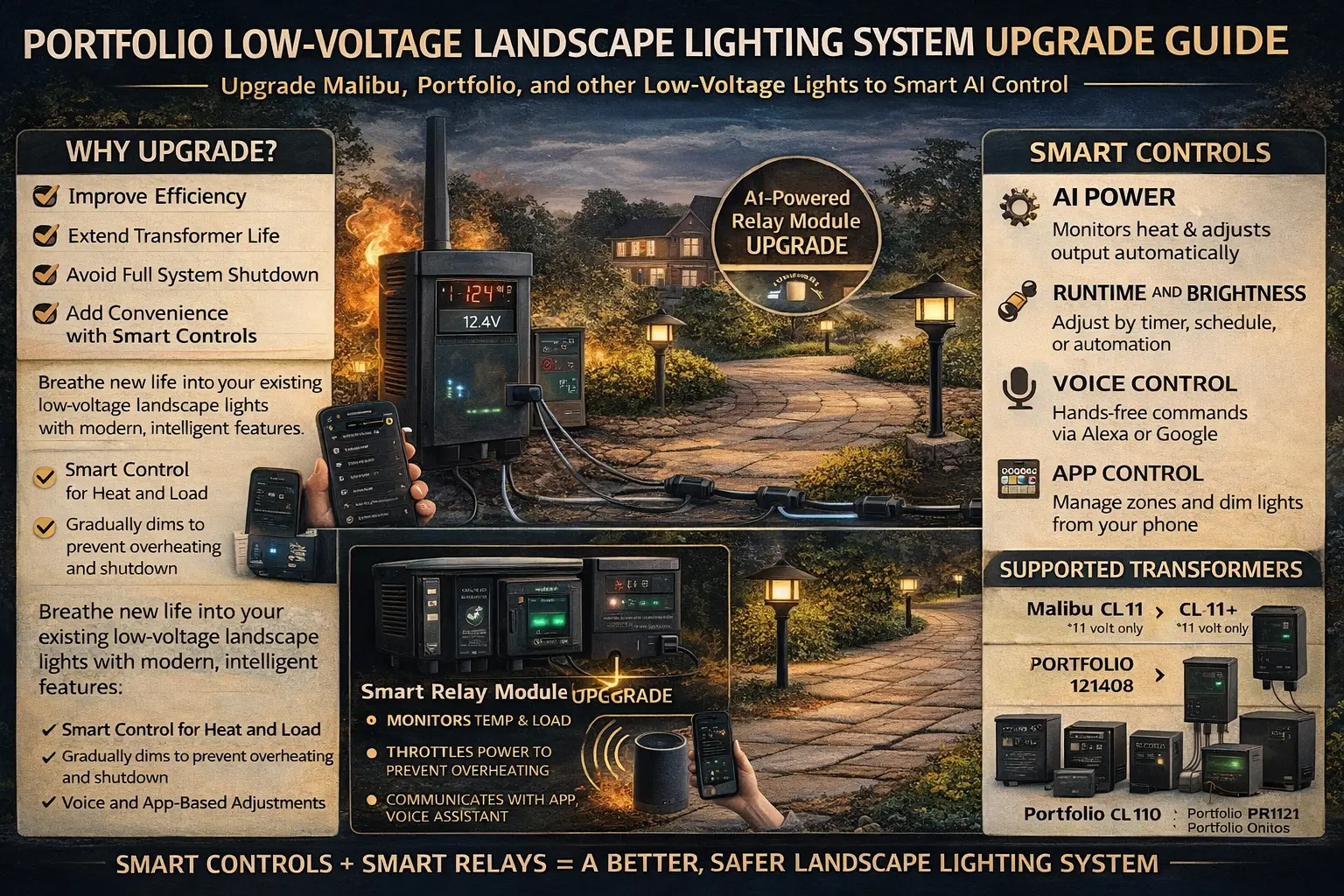
Portfolio Lighting transformer and control checks
Use this Portfolio Low Voltage Lighting: Wiring, Voltage Drop, Transformers & Troubleshooting guide alongside the label on your existing Portfolio transformer or control. Record the model number, electrical ratings and timer or photocell arrangement before selecting replacement parts or changing the wiring.
Portfolio owner’s first step: Start by confirming outlet power and GFCI status, then identify the exact Portfolio unit; never assume a similarly shaped replacement has compatible ratings.
Quick Answer: Portfolio Low Voltage System Architecture
Portfolio low voltage lighting relies on a balanced step-down system infrastructure rather than standalone fixture power. A central magnetic or electronic transformer steps standard 120V household current down to a safer 12V–15V secondary circuit loop, distributing power via direct-burial cable runs.
To keep the loop operational and prevent early component failure, your entire network layout must adhere to seven foundational low-voltage engineering principles:
- 120V to 12V Step-Down Conversion: Power packs reduce line voltage to eliminate lethal shock hazards across wet turf, allowing standard direct-burial cable installation.
- Voltage Drop Threshold Limits: Operational current must remain between 10.8V and 12.1V at the final fixture to prevent halogen dimming or LED driver flickering.
- The 80% Transformer Load Rule: Cumulative fixture wattage must never exceed 80% of the transformer's total rated magnetic or electronic core capacity.
- Cable Gauge Specification (AWG): Longer wire runs require moving from standard 16-gauge or 14-gauge cable up to heavy-duty 12-gauge or 10-gauge lines to combat resistance.
- High-Resistance Connection Points: Factory pierce-style saddle connectors degrade rapidly over time; heavy-duty direct-burial lug splices prevent localized voltage drops.
- Loop Sizing & Layout Geometry: Dividing high-wattage runs into distinct hub layouts or center-fed configurations balances terminal loads better than a single long daisy chain.
- Automation Interruption Circuits: Integrating mechanical timer pins, astronomical clocks, or ambient photo eye lenses requires strict isolation from conflicting light pollution.
⚠️ CRITICAL SYSTEM RISK: Blindly replacing a dark bulb or fixture without verifying your line resistance will ignore the underlying fault code. Operating a low-voltage circuit below 10.8V will cause three specific structural failures detailed in our diagnostic blueprints below.
My Golden Rule: Never purchase replacement components until you map out the far-end voltage values across your direct burial lines using a standard digital multimeter.
Low-Voltage Lighting Works Best When the Fixture Is Shielded
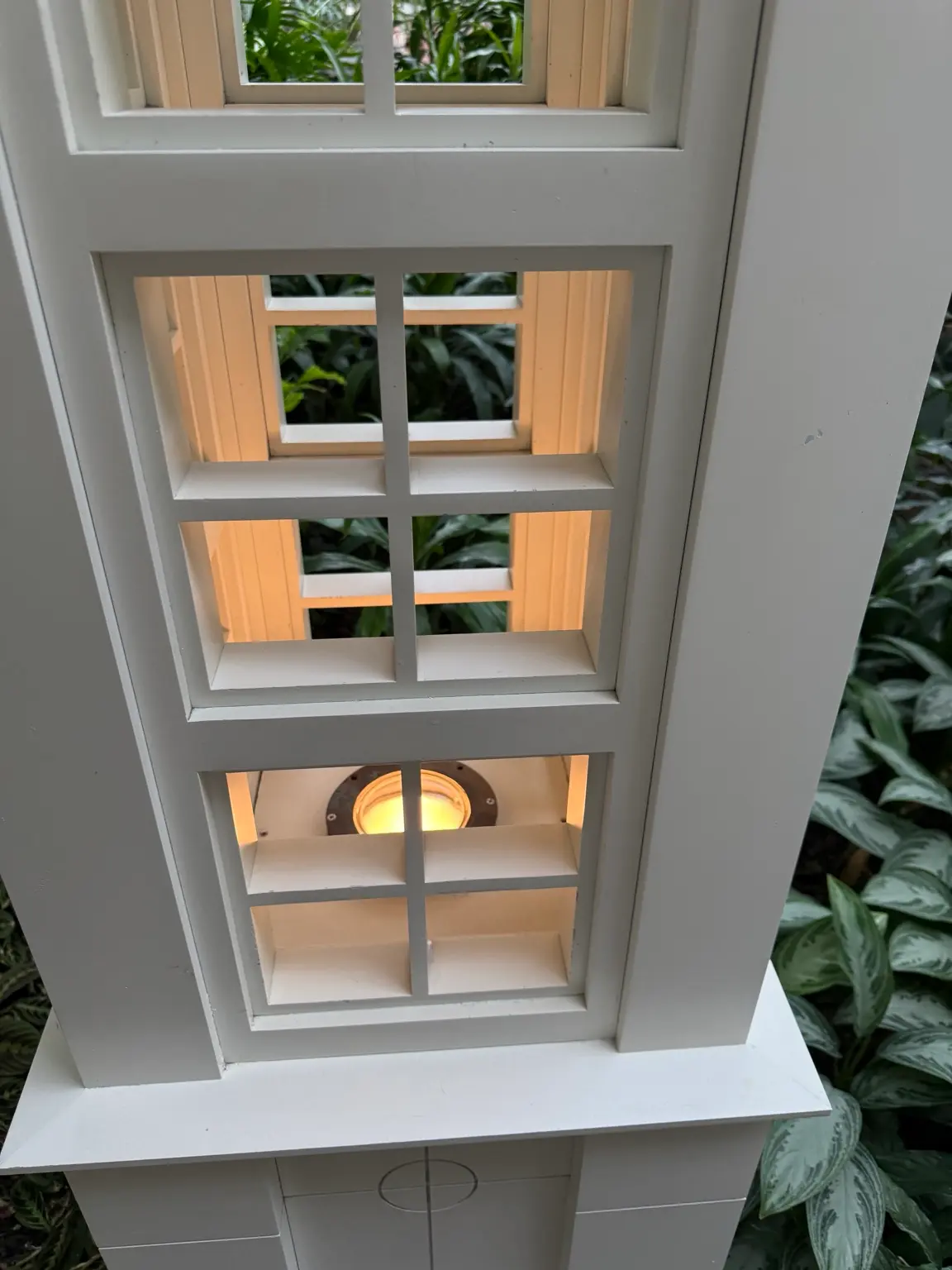
Low-voltage lighting is strongest when the fixture, lens, beam angle, and placement all work together. A small warm light can be more effective than a brighter exposed fixture if it is aimed correctly and protected from direct glare.
This matters for Portfolio systems because voltage, fixture spacing, transformer load, and beam control all affect the final result. A clean low-voltage design should feel calm and usable, not harsh or overpowered.
Voltage loss becomes even more critical in underwater lighting systems where long wire runs and wet niche fixtures can reduce brightness dramatically. Our Portfolio Swimming Pool Lighting Guide explains how transformer taps, cable distance, and underwater fixture design affect real-world pool light performance.
Once you understand how low-voltage systems work, the next step is choosing reliable fixtures. The Best LED Landscape Lighting Fixtures Comparison ranks fixtures by repairability, voltage compatibility, heat buildup, and long-term reliability.
Halloween landscape displays often work best with low-voltage fixtures because they are easier to hide around pathways, trees, and decorations. The low-voltage Halloween lighting guide explains safe outdoor setup ideas using landscape transformers and LED fixtures.
Low Voltage Lighting Logic Summary
| Symptom | Most Likely Cause | Fix |
|---|---|---|
| Dim lights at end of run | Voltage drop | Shorten run, use thicker wire, or split into zones |
| Lights flicker or pulse | Loose connection or driver instability | Check connectors and transformer terminals |
| System shuts off | Transformer overload or GFCI trip | Reduce load or inspect for shorts |
| Works until rain | Water intrusion in connectors | Replace with waterproof connectors |
A good low voltage system is simple when it is laid out correctly. A transformer supplies power, wire carries it, connectors distribute it, and fixtures use it. Problems start when too many fixtures are added to one run, wire is undersized, connectors corrode, or the transformer tap is chosen by guessing instead of measuring.
Before mounting any low-voltage transformer outdoors, check the outdoor lighting transformer mounting code requirements so the unit is elevated, ventilated, GFCI protected, and kept away from pool, gas, heat, and water hazards.
Use the voltage drop calculator to verify your layout before adding more fixtures.
If your system uses LED fixtures or you are planning an upgrade, see Portfolio LED lighting for detailed troubleshooting, conversion tips, and driver-related issues.
A lot of low-voltage issues come from mixing brands without checking compatibility. I’ve mapped that out step-by-step in the universal lighting compatibility guide.
Low-voltage lighting systems last much longer when the fixtures themselves are field-serviceable. The Which LED Fixtures Can Actually Be Repaired? guide explains which designs allow driver swaps, lamp replacement, and long-term maintenance.
Identify the Portfolio transformer before making changes
Read the model label for input and output ratings, maximum connected load, and any timer or photocell controls. Older Portfolio transformer generations can differ; do not select a replacement by wattage alone.
Diagnostic Flowchart: What to Check Based on the Symptom
This is the flowchart I would use in the field. Start with the symptom, then move from power source to transformer to wire run to connector to fixture. That order saves time.
If you’re running a 12V system with deck or spotlight fixtures, the DL and SL series technical specs guide helps break down how these fixtures behave and what typically fails.
Low-voltage planning matters even more when using RGBW holiday scenes. The Patriotic July 4th Outdoor Lighting Guide shows how long July 4th roofline and landscape runs can lose red, white, and blue color consistency without proper wire sizing or power injection.
Most low-voltage lighting failures happen at the connection point, not the fixture itself. The low-voltage plug and limited-energy connector guide explains how moisture, loose terminals, mismatched wire gauges, and failing outdoor connectors create flicker, voltage loss, and intermittent lighting problems.
Low-voltage lighting systems are excellent hands-on tools for learning diagnostics, sequencing, and logical troubleshooting. The lighting systems and problem-solving guide explains how outdoor electrical troubleshooting strengthens engineering-style reasoning.
Low-voltage systems can appear mostly functional even while hidden connection or voltage problems are developing. The low-voltage landscape lighting intermittent fault guide explains why some outdoor lighting systems work only part of the time.
Every low-voltage lighting system ages differently depending on installation quality, climate, connector condition, transformer loading, and maintenance history. The Portfolio Lighting Failure Database organizes the most common failure modes by component, expected lifespan, repair complexity, and preventive maintenance recommendations for complete Portfolio systems.
| What You See | Most Likely Area | What I Check First | What It Usually Means |
|---|---|---|---|
| All Portfolio lights are out | GFCI, transformer, timer, photocell, or breaker | Reset GFCI, check outlet power, bypass timer setting, test transformer output | The system may not be receiving power before the 12V side even starts. |
| Transformer hums but no lights work | Secondary side short or overloaded output | Disconnect the low voltage cable from transformer output terminals | If the hum changes or reset holds after disconnecting the cable, the problem is likely in the yard run. |
| Only the last few fixtures are dim | Voltage drop | Measure voltage at transformer and at farthest fixture | Wire is too long, too small, overloaded, or daisy-chained too far. |
| One fixture is out | Bulb, socket, pierce connector, local splice | Swap bulb with a known working fixture and inspect the connector | The main transformer is probably fine. |
| Lights work only when photocell is covered | Photocell placement or obstruction logic | Clean photocell lens and check nearby artificial light | The sensor may be seeing porch light, street light, or fixture glare. |
| Lights trip after rain | Water intrusion | Open suspect connectors and fixtures after power is off | Wet splices, flooded fixtures, and damaged wire are the main suspects. |
Most low-voltage landscape lighting systems do not suddenly “die” overnight. They slowly degrade from hidden moisture intrusion, connector oxidation, thermal stress, voltage bounce, galvanic corrosion, and underground cable damage that standard troubleshooting guides rarely explain. Our low-voltage landscape lighting failure points guide breaks down the real-world electrical, chemical, and mechanical failures that cause outdoor lighting systems to flicker, dim, fog, buzz, or fail years after installation.
Low-voltage systems can appear to work correctly while still suffering from hidden voltage-drop problems. The outdoor fixture voltage drop behavior guide explains how reduced voltage affects LED drivers, MR16 lamps, dimming response, and fixture lifespan.
For deeper system-wide troubleshooting, use Portfolio lighting troubleshooting.
Expanding a low-voltage lighting system without upgrading the wire can create dim fixtures and overheating problems. The outdoor lighting wire load database helps homeowners compare cable capacity for larger landscape lighting systems.
Modern low-voltage lighting systems often include built-in diagnostics that can warn you about overloads, wiring faults, overheating and communication issues before the entire system fails. This low-voltage transformer error code reference guide helps explain what common lighting fault codes mean and how to troubleshoot them safely before replacing fixtures or rewiring the system.
Portfolio Wire Gauge vs. Max Load Cheat Sheet
This is the kind of chart I wish came printed on more transformer doors. It is not a substitute for a full voltage drop calculation, but it gives you a practical decision point before you add more fixtures.
Frost heave, wet connectors, and damaged buried cable often show up during spring startup. The Portfolio Easter & Spring Lighting Maintenance Guide covers common spring voltage-drop problems, moisture shorts, and outdoor wiring issues found after winter weather.
| Wire Run Length | 16-Gauge Max Watts | 12-Gauge Max Watts | My Field Recommendation |
|---|---|---|---|
| 0-50 feet | Up to 100W | Up to 240W | Short runs are forgiving, but I still split loads when the layout allows it. |
| 50-100 feet | Up to 50W | Up to 120W | This is where voltage drop starts showing up in real yards. |
| 100+ feet | Not recommended | Up to 60W | Use heavier wire, split the run, or redesign the layout. |
For exact planning, use the landscape lighting voltage drop calculator.
Low Voltage Still Requires Careful Design and Documentation
Low-voltage lighting is easier to adapt than line-voltage lighting, but it still creates real design, safety, and performance issues when installed outdoors. Long cable runs, LED drivers, and smart controls can create signal problems, which is why the low-voltage EMI interference troubleshooting guide is important for systems near cameras, hubs, sensors, or communication wiring. If low-voltage fixtures are being used around a spa, the hot tub outdoor lighting design guide explains how to use soft, shielded, water-aware lighting without creating glare or unsafe placement. When a fixture or transformer failure may become a warranty question, the warranty-ready voltage drop testing guide shows how to record readings that prove what the fixture actually received under load. For lights near bedrooms, the dark-sky bedroom exterior lighting guide helps keep path and security lighting useful without sending glare into sleeping spaces.
Low-voltage does not mean low startup current. A group of 12-volt LED fixtures may use very little power after stabilizing while still producing a sharp combined current pulse when the transformer energizes the entire zone. Review the landscape lighting inrush-current database to understand how fixture quantity, driver design, transformer type, wire resistance, and switching timing affect the true peak load.
12V vs. 15V Tap Decision Matrix
A multi-tap transformer can help with voltage drop, but I do not recommend using the higher tap just because it is available. Test first. Guessing with a 15V tap can shorten lamp life or make LEDs run hotter than they should.
| Measured Voltage at Fixture | Fixture Behavior | Tap Decision | What I Would Do |
|---|---|---|---|
| 11.0V to 12.2V | Normal brightness | Stay on 12V | No tap change needed. |
| 10.5V to 11.0V | Slightly dim but stable | Test before changing | Check connector quality and load before moving taps. |
| Under 10.5V | Dim, flickering, color shift, or weak output | Consider higher tap or redesign | Use 13V, 14V, or 15V only after measuring and confirming fixture limits. |
| Over 12.5V at fixture | Bright, hot, short lamp life risk | Lower tap | Move down or reduce overvoltage before it damages lamps or LEDs. |
Low-voltage landscape lighting systems often develop both physical fixture problems and electrical warning conditions at the same time, especially in aging outdoor installations. This Portfolio broken stake repair and stabilization guide explains how to repair leaning fixtures and damaged mounting stakes without replacing the entire system, while the transformer error code reference for low-voltage lighting systems helps diagnose overloads, voltage instability and transformer shutdown behavior across many popular lighting brands.
For more on dim lights and long runs, see landscape lighting voltage drop.
Secondary Side Short Circuits: When the Transformer Hums but No Lights Work
A secondary side short means the problem is on the low voltage output side of the transformer, not the 120V input side. In plain terms, the transformer is trying to feed the yard wire, but something on that wire path is shorted, damaged, wet, or overloaded.
What I check first
- Turn the transformer off.
- Disconnect the low voltage cable from the output terminals.
- Turn the transformer back on with no yard wire connected.
- If the transformer stabilizes, reconnect one run at a time.
- Walk the failed run and inspect splices, pierce connectors, shovel cuts, and wet fixtures.
Some older SL-series style transformers may also have a reset button or breaker-style protection. I always check the underside and back side of older power packs before assuming the transformer is dead.
If your transformer is tripping, use Portfolio transformer tripping breaker.
Low Voltage Does Not Mean “No Code, No Moisture, No Risk”
Low-voltage lighting is safer to work around than line-voltage fixtures in many situations, but it still has code, connector, transformer, and moisture considerations. When low-voltage lighting is combined with smart controls, dimming leads, sensors, or app-based automation, the Class 2 smart lighting control guide helps separate power-limited control circuits from actual lighting load wiring. If the system is older, the electrical grandfather clause guide for outdoor lighting explains why age does not protect damaged, modified, or unsafe components. If a Portfolio fixture lens is fogging or holding moisture, the foggy lens condensation repair guide helps prevent trapped water from becoming socket corrosion, LED failure, or recurring fixture replacement.
Photocell Obstruction Troubleshooting
Photocell problems are easy to overlook because the transformer may be working perfectly. A photocell is just a light sensor. If it sees light, it may keep the system off. If it is dirty, shaded wrong, or failed internally, the lights may act random.
Common photocell problems I see
- Porch light interference: the photocell sees nearby house light and thinks it is daytime.
- Street light spill: a bright streetlight keeps the sensor from switching on.
- Fixture glare: one landscape light shines back at the photocell.
- Dirty lens: dust, mulch, hard water, or spider webs block the sensor.
- Bad sensor: the photocell no longer switches reliably.
Pierce Connectors, Direct Burial Rated Cable and Weak Splice Points
Portfolio kits often use pierce-style connectors because they are easy for homeowners. The issue is that easy does not always mean permanent. Over time, soil movement, moisture, freeze-thaw cycles, and mower vibration can loosen the connection.
I have seen plenty of “bad fixtures” come back to life after replacing the connector. The LED, bulb, or socket was not the real failure. The wire contact was weak.
Connector warning signs
- light works when you wiggle the wire;
- one fixture cuts in and out;
- green corrosion is visible around the contact points;
- fixture fails after rain but works after drying;
- connector feels loose or cracked.
For connector choices, see low voltage wire connectors landscape lighting.
Check the Portfolio system from power source to fixtures
If the lights are out, confirm the protected supply receptacle and timer settings before checking the low-voltage cable and fixture connections. Disconnect power before opening or servicing equipment; refer line-voltage faults to a qualified electrician.
NEC 411 Compliance: What Homeowners Should Understand
Low voltage landscape lighting is often discussed under NEC Article 411 when systems operate at 30 volts or less. I do not use code language to scare homeowners, but I do want people to understand the big idea: the system must be installed with properly rated equipment, safe transformer placement, correct wire type, and outdoor-rated connections.
Practical code-minded points
- Use outdoor-rated transformers and fixtures.
- Use cable listed or rated for direct burial where it enters soil.
- Protect cable where it rises out of the ground.
- Keep 120V power sources GFCI protected where required.
- Follow manufacturer limits for transformer wattage and fixture count.
For code and safety depth, read landscape lighting electrical code safety guide.
Choosing the Right Wire (And Avoiding Hidden Failures)
Not all wire is the same. Portfolio systems require direct burial-rated cable designed for outdoor use.
When only one low-voltage lighting zone stops working, the hidden failure is usually located somewhere inside that branch run rather than inside the transformer itself. Our landscape lighting one-zone troubleshooting guide explains how to isolate cable faults, identify bad fixture chains, locate failed splices, and diagnose localized voltage loss without tearing apart the entire system.
- Landscape cable (recommended): Flexible, UV-resistant, and rated for burial.
- UF-B cable: Heavier and code-compliant but harder to work with.
- SPT-2 wire: Not designed for burial—fails quickly outdoors.
If only one part is failing, check Portfolio lighting parts and accessories before replacing the entire system.
Photocell vs Timer: Why Lights Turn On at the Wrong Time
Many transformers use both a timer and a photocell. When they conflict, the system can behave unpredictably.
- Timer says “ON” at 5 PM
- Photocell says “Still daylight”
Tool List: What I Want Before Troubleshooting a Low Voltage System
You do not need a truck full of specialty tools to diagnose most Portfolio low voltage lighting problems. You do need a few basics so you can stop guessing.
Low-voltage systems still require fixtures rated for the environment around them. The low-voltage fixture IP protection guide explains how enclosure ratings affect moisture resistance, corrosion protection, and long-term outdoor reliability.
Low-voltage landscape lighting systems should produce only a faint electrical hum under normal operation. Loud buzzing, rattling, or vibrating sounds usually indicate overload, poor transformer ventilation, loose terminals, or unstable branch resistance somewhere in the system. Our landscape lights buzzing troubleshooting guide explains the hidden causes of transformer noise and how to diagnose them safely.
One of the biggest advantages of an older low-voltage Portfolio system is that many fixtures with replaceable lamps can potentially be upgraded to LED without replacing the entire landscape-lighting system. However, a successful conversion depends on more than finding a 12-volt bulb that fits. See our Convert Portfolio Lighting to LED Guide for the full compatibility process, including AC-versus-DC input, lamp-base identification, transformer behavior, voltage testing, flicker diagnosis, and fixture-condition checks.
A low-voltage lighting plan should account for fixture wattage, transformer capacity, cable runs, voltage drop and the areas that actually need illumination. Our Portfolio Lighting stadium grounds research and classroom simulator gives students and property planners a practical scenario for investigating these decisions, estimating electricity use and separating suitable landscape lighting applications from specialized sports-field lighting.
Multimeter
The most important tool. Use it to test transformer output, fixture voltage, and voltage drop.
Voltage Tester
Useful for checking the 120V side at the outlet before blaming the low voltage side.
Waterproof Wire Connectors
Use outdoor-rated connectors when replacing weak pierce connectors or wet splices.
Small Shovel or Hand Trowel
Needed to expose buried connectors, cable transitions, and fixture wire loops without damaging the cable.
Wire Strippers
Clean wire preparation matters. Nicked copper and loose strands can create heat or intermittent contact.
Dielectric Grease
Useful in some serviceable socket areas and connector maintenance, but it is not a substitute for waterproof connectors.
AMP Load: Why Watts Are Only Half the Story
Homeowners usually think in watts. Transformers and wire runs also care about current. On a 12V system, the same wattage creates more current than people expect.
| Total Fixture Watts | Approximate AMP Load at 12V | What It Means in the Field |
|---|---|---|
| 60W | 5 amps | Usually manageable on short, clean runs. |
| 120W | 10 amps | Wire gauge, connector quality, and run length matter more. |
| 240W | 20 amps | Split runs, heavier cable, and careful terminal connections become important. |
| 300W | 25 amps | I would not run this casually on one long daisy chain. |
For terminal issues, see Portfolio lighting replacement terminal blocks and transformer lugs.
How I Would Lay Out a Strong Portfolio Low Voltage System
A good layout avoids long daisy chains when possible. I prefer shorter balanced runs, heavier cable when distance increases, and clean access to the transformer. The goal is to make the system easy to test later.
- Place the transformer near the main lighting area if possible.
- Split front yard and backyard lighting into separate runs when practical.
- Use direct burial rated cable below grade.
- Keep connectors out of low spots that collect water.
- Leave service loops near fixtures so repairs do not require pulling tight cable.
- Test voltage at the farthest fixture before burying everything permanently.
Efficient LEDs can reduce transformer load and operating cost in low-voltage systems. The ENERGY STAR lighting efficiency guide explains how certified products differ from generic low-wattage lighting claims.
For full installation help, use Portfolio lighting installation and instructions.
Older low-voltage systems often fail because of one bad connector, transformer, or lamp rather than total system incompatibility. The legacy low-voltage landscape lighting guide explains how older hardware can still work with newer replacement components.
Modern low-voltage systems can dramatically reduce outdoor energy usage when they are designed correctly instead of simply adding more fixtures and wattage. My landscape lighting carbon footprint guide explains how transformer sizing, runtime control, LED retrofits, voltage drop reduction, and fixture efficiency affect the long-term environmental impact of a Portfolio lighting system.
Low voltage makes landscape lighting easier to work with, but it does not mean every 12-volt transformer, fixture, connector, or lighting kit is interchangeable or appropriate for outdoor use. When comparing equipment, see our UL vs ETL landscape lighting guide to understand the safety certification marks you may find on low-voltage products and the additional information you should check before installing them.
My Portfolio Low Voltage Troubleshooting Checklist
- Confirm outlet power: reset GFCI and check the breaker.
- Check timer mode: make sure the transformer is not simply scheduled off.
- Cover the photocell: test whether the sensor is preventing operation.
- Test transformer output: measure output at the low voltage terminals.
- Disconnect the yard cable: see whether a secondary side short is pulling the transformer down.
- Reconnect one run at a time: isolate the bad run instead of digging up everything.
- Inspect pierce connectors: replace weak or corroded connectors.
- Measure far-end voltage: confirm voltage drop before adding fixtures.
- Look after rain: wet failures usually reveal connector and fixture problems.
If your system keeps failing in different ways, follow the full Portfolio lighting troubleshooting guide to isolate the problem step by step.
If all low-voltage landscape lights suddenly stop working at the same time, the issue is usually located at a shared failure point affecting the entire electrical path. Our landscape lighting all lights out at once guide explains how to diagnose total system shutdowns caused by dead transformers, timer faults, GFCI interruptions, overloaded circuits, hidden shorts, and severe cable damage.
Low-voltage landscape lighting is usually inexpensive to run, but the total cost depends on fixture wattage, number of lights, and nightly runtime. Use the outdoor lighting electricity calculator to estimate monthly and yearly energy use before expanding a Portfolio system.
Low-voltage lighting systems can support far more than pathway illumination. Downlighting is one of the most effective low-voltage techniques for creating broad, comfortable illumination over outdoor living spaces while minimizing glare. Our Portfolio downlighting guide explains how elevated low-voltage fixtures are used to illuminate patios, walkways, entry areas, landscape beds, and gathering spaces from above rather than from ground level.
Low-Voltage Reliability Depends on Clean Contacts and Protected Power
Low-voltage systems are safer than line-voltage outdoor lighting, but they still fail when moisture, corrosion and power spikes are ignored. If one fixture is dim or intermittent, start with this Portfolio socket cleaning and corrosion repair guide. If the entire system has experienced storm damage or repeated transformer issues, use the Portfolio transformer surge protector installation guide. For fixture upgrades, this dark-sky compliance and IDA certification comparison helps keep low-voltage lighting useful without creating unnecessary glare or skyglow.
Plan repairs without losing the original Portfolio layout
Record the existing transformer terminals, cable runs, fixture count, and lamp ratings before upgrading. Check output compatibility and total connected load when considering LED conversion or a different transformer.
Best Next Step Based on Your Low Voltage Problem
Transformer Troubleshooting
Use this if the whole system is out, buzzing, tripping, or not sending low voltage output.
Open transformer guideVoltage Drop Calculator
Use this before adding fixtures or switching transformer taps.
Open calculatorWire Connectors
Use this if one fixture cuts in and out or lights fail after rain.
Open connector guideFor wiring rules and outdoor electrical safety, see the landscape lighting electrical code guide.
If you’re upgrading or replacing fixtures and seeing Origin21 options, it helps to understand how they compare to older Portfolio systems. I explain that here: Portfolio to Origin21 compatibility guide.
Voltage stability also affects how calm or harsh lighting feels in the evening. If you are building a low-voltage system for patios, bedrooms, or outdoor relaxation spaces, review voltage stability and melatonin before choosing drivers, dimmers, or transformer loads.
If you plan to add smart dimming to a Portfolio low-voltage system, first check the smart low-voltage landscape lighting compatibility guide for transformer output, inrush current, wire length, connector style, and dimming stability issues.
Low-voltage lighting repairs usually become expensive only when the wrong component is replaced first. Bulbs, connectors, cable issues, voltage drop, and transformer overload can all look like fixture failure. The Portfolio Lighting repair cost guide helps you compare the real cost of fixing each part of a Portfolio low-voltage system.
Common Low Voltage Lighting Mistakes
- Using the wrong wire type
- Overloading the transformer
- Ignoring voltage drop
- Using cheap connectors
- Burying wire without protection
Fixing these five issues solves most low voltage lighting problems.
Portfolio Low Voltage Lighting FAQ
What voltage is Portfolio low voltage lighting?
Most Portfolio low voltage landscape lighting uses 12V output from a transformer. Some multi-tap transformers include higher taps such as 13V, 14V, or 15V to help compensate for voltage drop on longer runs.
Why are my Portfolio low voltage lights dim at the end of the run?
Dim lights at the end of the run usually mean voltage drop. Long wire distance, small wire gauge, too many fixtures, weak connectors, or a daisy-chain layout can all cause it.
Should I use the 12V or 15V tap?
Use the 12V tap when fixture voltage is already in range. Use a higher tap only after measuring voltage at the farthest fixture and confirming the lights are under-voltage.
What is a secondary side short?
A secondary side short is a fault on the low voltage output side of the transformer. It can be caused by damaged direct burial cable, wet connectors, crushed wire, or a failed fixture.
Is low voltage landscape lighting covered by NEC Article 411?
Systems operating at 30 volts or less are commonly discussed under NEC Article 411, but local code and the authority having jurisdiction control final requirements.
Modern low-voltage systems can dramatically reduce outdoor energy usage when designed correctly. Our landscape lighting carbon footprint reduction guide explains how transformer loading, LED retrofits, runtime scheduling, and fixture selection influence the environmental impact of a Portfolio lighting system over time.
Low Voltage Lighting Safety Disclaimer
This page is educational and does not replace the NEC, local code, manufacturer instructions, or a licensed electrician. Low voltage lighting is safer than line voltage, but it can still overheat, short, corrode, trip GFCI protection, or fail when installed incorrectly. Turn off power before opening transformers, touching terminals, replacing connectors, or working around wet fixtures.