

Quick Answer: Portfolio LED Circuit Optimization & Diagnostics
Isolating a faulty Portfolio LED system requires diagnosing solid-state driver frequencies rather than checking for basic continuity. While retrofitting diodes drastically improves your energy footprint, it dramatically changes line-load characteristics, often exposing hidden resistance points inside legacy wire runs.
When an active LED array fails to fire or begins to misbehave, I walk through these seven core solid-state parameters before I pull a single hardware fixture from the soil:
- 1. Verify the 10.8V Minimum Threshold: Solid-state LED drivers demand stable, unfluctuating current; if line resistance drops terminal voltage below 10.8V, the onboard diodes will enter a rapid, aggressive flickering state.
- 2. Trace High-Resistance Saddle Taps: Standard pierce-style factory clips struggle to bite deeply enough into aged cable cores, creating high localized resistance that chokes low-wattage solid-state current.
- 3. Audit Total Harmonic Distortion (THD): Mixing legacy analog magnetic transformers with modern digital retrofit bulbs can generate a line frequency conflict, resulting in a persistent, distinct system-wide hum.
- 4. Isolate Localized Moisture Intrusions: If only a single LED cluster drops completely offline, I inspect the socket seat for capillary action—ground moisture creeping past worn seals will short out a driver instantly.
- 5. Check Core Inductive Back-EMF: Shutting off an entire system can generate a tiny electrical spike; without a dedicated protection circuit, this back-current can fry low-cost aftermarket diodes prematurely.
- 6. Track Minimum Power Core Loads: Older high-wattage transformers require a minimum baseline draw to stay engaged; running ultra-low-draw LED heads can confuse the core timer, causing it to shut off early.
- 7. Map Circuit Geometry Balance: Long, single-line daisy chains degrade LED current rapidly; center-fed loops or dedicated multi-tap hub runs are mandatory to ensure even brightness across the layout.
⚠️ CRITICAL SOLID-STATE HAZARD: Dropping brand-new high-output LED arrays into a corroded line path without performing a digital multimeter line-load evaluation will cause an immediate voltage dip. This triggers three distinct structural driver breakdowns detailed in our schematics below.
My Golden Field Shortcut: If a solitary fixture goes dark, your issue sits locally at the socket assembly or the pierce splice. If the entire network falls into total failure, you must skip the fixtures entirely and test incoming line power directly at the central transformer, photocell, or primary GFCI breaker.
Most modern solid-state networks run on fine-tuned low-voltage wiring constraints. Before making a blind hardware change, check our comprehensive master blueprint layout over in the Portfolio low voltage lighting directory to secure your system wiring, master your multi-tap transformer calculations, and review our step-by-step troubleshooting diagnostics.
LED Troubleshooting Logic Summary
- If ONE light is out → bulb, socket, or connector.
- If MULTIPLE lights flicker → voltage drop, loose terminals, or driver issue.
- If ALL lights are out → transformer, timer, or GFCI problem.
- If lights fail after rain → water in connectors or fixtures.
- If LEDs are dim at the end → wire run design or voltage drop issue.
Many DL and SL fixtures use integrated LEDs, and I’ve documented their behavior in the DL and SL series specs guide, including output, failures, and replacement considerations.
Portfolio LED lighting can be reliable, but only when the transformer, wire size, connector type, driver, and fixture design all match. LEDs use less wattage than halogen, but they are more sensitive to unstable voltage, poor dimming, weak drivers, and water intrusion.
Over the years, I've worked with LED lighting long enough to see how it behaves differently from halogen. In my experience, LEDs are more efficient, but they are also more sensitive to inconsistencies in power.
When I tested output with my meter after switching to LED, I noticed voltage variations that didn’t affect halogen lights before. That’s something I’ve learned to expect during conversions.
Not all LED lighting is biologically safe. Learn how to choose LED lighting that eliminates blue light for nighttime use .
That is why I built this page because it focuses on the complete LED system, not just the bulb. A good LED repair starts with the electrical path: transformer output, terminal screws, wire run, connector, socket, driver, and LED emitter.
If you are trying to identify your exact fixture or system, use model number lookup to match parts and specs correctly.
LED reveals what halogen tends to hide.
If you are deciding whether to upgrade or stay with your current setup, compare LED vs halogen landscape lighting to understand brightness, energy use, and long-term reliability differences.
If you are not sure which fixture or transformer you have, start with the Portfolio Lighting model library and repair index to match your older system before buying LED parts to assist your LED upgrade.
Portfolio LED Fixture Types: Replaceable Bulb vs. Integrated LED
The first step is identifying what kind of LED fixture you have. Portfolio sold both replaceable-bulb fixtures and integrated LED fixtures. They fail differently and require different repair decisions.
I feel most LED problems get misdiagnosed. People replace bulbs first, when the real issue is almost always power, wiring, or connection failure.
Replaceable LED Bulb Fixtures
These use a socket such as wedge, bi-pin, MR16, or another replaceable bulb type. The fixture body may still be useful even when the bulb fails.
Integrated LED Fixtures
These have LED chips or boards built into the fixture. If the driver or LED board fails, the repair may require a matching driver or full fixture replacement.
For original product documentation and wiring references, check Portfolio lighting manuals before replacing an integrated LED fixture or driver.
If you are working with decorative strands or patio setups, see portfolio string lights replacement bulbs to find compatible LED and incandescent options.
Transformer Capacity Chart for Portfolio LED Conversions
This is the missing technical piece other pages I see online miss. When converting old Portfolio halogen systems to LED, the transformer load can drop dramatically. That helps the transformer run cooler, but it can also expose old wiring, connector, or minimum-load problems on some older transformers.
| Existing System | Old Halogen Load | LED Replacement Load | Transformer Impact | Repair Decision |
|---|---|---|---|---|
| 6 path lights using 11W wedge bulbs | 66W | 12W to 24W total with 2W to 4W LEDs | Major load reduction | Good LED conversion candidate if sockets and connectors are clean. |
| 10 spotlights using 20W halogen lamps | 200W | 40W to 70W total with 4W to 7W LEDs | Transformer runs cooler with more headroom | Check voltage at far fixtures because long runs may still drop voltage. |
| Mixed path and accent lighting on 120W transformer | 90W to 120W | 25W to 55W after conversion | Less heat and lower overload risk | Replace weak pierce connectors with waterproof connectors during conversion. |
| Older 300W halogen-heavy system | 220W to 300W | 60W to 120W after LED conversion | Large amount of transformer capacity freed up | Do not automatically add more fixtures; inspect terminal lugs and wire layout first. |
| Integrated LED kit | Already LED | No conversion benefit | Transformer may not be the issue | Focus on the driver, connectors, water intrusion, and fixture replacement. |
If you are unsure which bulb to use, see Portfolio lighting parts and accessories for compatible LED replacements.
LED efficiency alone does not determine how long a fixture will remain visually bright outdoors. The landscape LED lifespan comparison database explains how heat buildup, driver quality, and enclosure design affect lumen depreciation over time.
For deeper transformer help, use Portfolio Lighting transformer troubleshooting and Portfolio Lighting transformer replacement.
If your LED conversion pushes the system into a larger upgrade, compare repair versus replacement in the commercial-grade landscape lighting upgrade guide.
If your LEDs are flickering, dimming, or acting inconsistent after a replacement, it is usually a compatibility issue—not the bulb. I break that down in the universal lighting compatibility source.
If your LED lights flicker, buzz, or feel harsh when dimmed, the issue may be driver stability instead of the bulb itself. I break that down in voltage stability and melatonin.
Avoid These Common LED Mistakes
I’ve encountered flickering, dimming, and inconsistent performance after LED upgrades. In my experience, these issues are usually tied to power or compatibility, not the LED itself.
Test your system, not just the bulb.
- Using indoor-rated LED bulbs outdoors (they fail fast with moisture).
- Buying “no-name” LED bulbs with weak drivers.
- Ignoring connector condition during conversion.
- Overloading old transformers after adding more fixtures.
- Assuming dim LEDs are bad instead of checking voltage drop.
When I put my meter on the line and watched voltage under load, I’ve seen fluctuations that explained exactly why the lights weren’t stable. That’s something I always test now.
Halogen-to-LED Conversion: The Right Way to Upgrade Portfolio Fixtures
Converting Portfolio halogen fixtures to LED is usually one of the best upgrades because it reduces wattage, heat, and transformer stress. The mistake is assuming every LED bulb that fits the socket will perform correctly.
If your fixtures use MR16 bulbs, see Portfolio MR16 LED replacement bulbs to choose the correct beam angle, brightness, and voltage for your system.
Match these before buying LED bulbs
- Voltage: Most low-voltage landscape fixtures use 12V bulbs, not 120V bulbs.
- Base: Match wedge, MR16, bi-pin, or other socket style exactly.
- Physical size: Some LED replacements are wider or taller than old halogen bulbs.
- Beam angle: Narrow spots, wide floods, and path lights need different light patterns.
- Color temperature: 2700K to 3000K usually looks warmer and more natural outdoors.
- Transformer compatibility: Older transformers may behave differently after a large load reduction.
I’ve converted systems where everything seemed straightforward, but unexpected issues showed up after the swap. In my experience, load reduction can change how transformers and timers behave.
When I choose LED replacements, I focus on compatibility first. I’ve seen systems where the wrong bulb type caused issues even though it technically fit the fixture.
If your older system still uses incandescent or halogen-style lamps, compare it with Portfolio incandescent lighting before converting everything to LED.
I’ve tested different options and observed how they performed in real use. I've learned through the years that choosing the right LED makes the entire system feel more stable and consistent so your research is well worth it.
For exact calculations, use the voltage drop calculator to verify your system layout.
I remember testing a system where lights wouldn’t stay stable after conversion. When I checked the load and voltage, I realized the system needed adjustment to match the new setup.
Integrated Portfolio LED Failures: Driver vs. LED Board
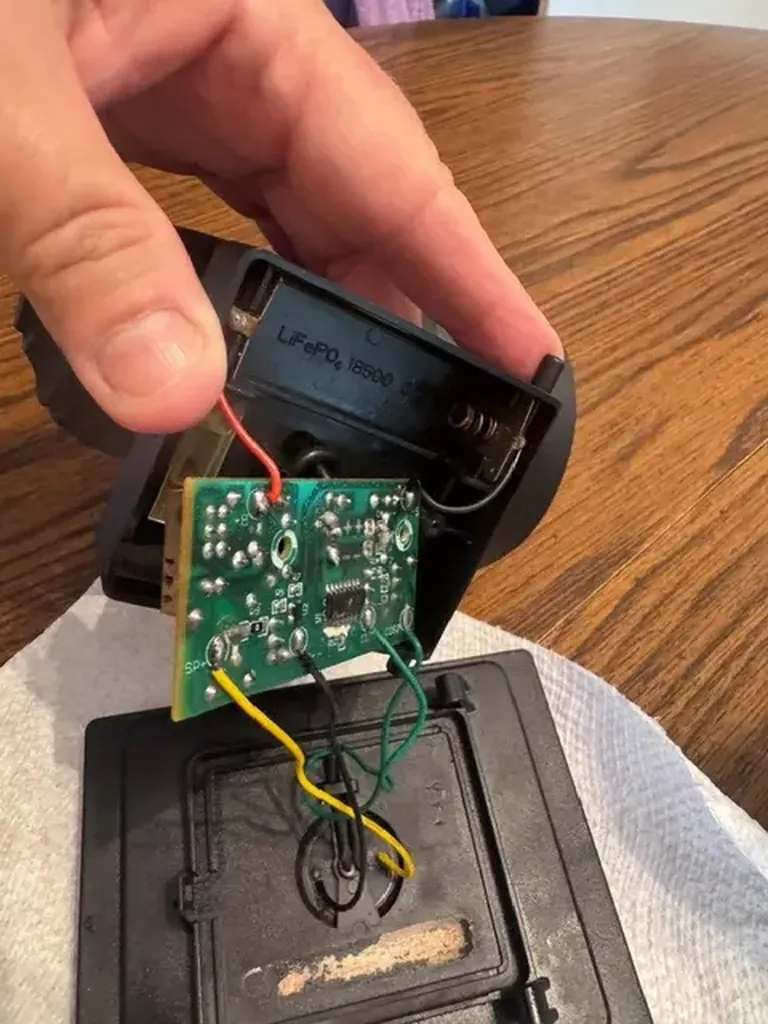
If your fixture has a built-in LED instead of a replaceable bulb (this is how mine is), see Portfolio integrated lighting to understand repair options, driver failures, and when replacement is the better move.
Integrated LEDs can be frustrating because there is no simple bulb to replace. In many cases, the LED board is not the first part to fail. The small driver that feeds the LED can fail from heat, moisture, voltage instability, or age.
Common driver failure symptoms
- light flickers for a few minutes before shutting off;
- fixture is dim even with correct transformer output;
- light flashes once and then goes dark;
- multiple identical fixtures fail in different ways;
- fixture works when dry but fails after rain;
- driver box shows swelling, discoloration, or water marks.
If the fixture uses a separate driver, match input voltage, output voltage, output current, wattage, polarity, weather rating, and physical size before replacing it. Guessing with LED drivers can destroy the LED board.
If you are working with integrated LED fixtures like the LD6C series, see Portfolio LD6C lighting for model-specific troubleshooting and replacement options.
Some flicker and performance issues are easier to understand when compared to older technologies. Review portfolio fluorescent lighting control solution to see how ballast-controlled lighting behaves versus LED drivers.
Not every LED fixture with low wattage has the same verified performance. The ENERGY STAR lighting label guide explains how certified fixtures are evaluated for efficiency, light output, color quality, and long-term performance.
Portfolio LED Troubleshooting Table
| Symptom | Likely Cause | What to Test First | Best Fix |
|---|---|---|---|
| One LED fixture is out | Bad bulb, corroded socket, loose connector, failed local driver | Swap bulb with a working fixture, inspect socket, test connector | Replace bulb, clean socket, or replace waterproof connector. |
| All LED lights are out | Transformer, timer, photocell, GFCI outlet, or main cable problem | Check transformer outlet, reset GFCI, test transformer output | Fix power source before replacing fixtures. |
| LEDs flicker | Loose terminal, voltage drop, incompatible bulbs, wet connector, bad driver | Check terminal screws, far-end voltage, and wet splices | Tighten terminals, replace connectors, or use compatible LED bulbs. |
| LEDs are dim at the end of run | Voltage drop from long wire run or undersized cable | Measure voltage near transformer and farthest fixture | Split the run, use heavier wire, or redesign layout. |
| Lights fail after rain | Water inside connector, fixture, socket, driver, or outlet | Open and inspect wet locations after power is off | Dry, replace corroded parts, and use waterproof connectors. |
| Transformer hums after LED conversion | Loose mounting, old transformer, minimum-load issue, or terminal problem | Check load, mounting, terminal screws, and output voltage | Replace worn transformer or correct terminal/wiring issue. |
If your system wiring may be the issue, review low voltage wire connectors to identify weak or failed connections.
If your issue is isolated to pathway fixtures (many site visitors have mentioned this problem), check Portfolio path lights for fixture-specific troubleshooting, replacement options, and common failure points.
Real-World Portfolio LED Repair Examples
In my experience, I have come up with a few case studies that are typically the kinds of failures homeowners usually see in their yards.
Case Study 1: Path Light Converted to LED Still Fails
A homeowner replaced an old wedge halogen bulb with an LED wedge bulb, but the fixture still cut in and out. The problem was not the LED. The old pierce connector had weak contact after years of moisture and soil movement. Replacing the connector with a waterproof low-voltage splice fixed the intermittent failure.
Case Study 2: Integrated LED Wall Light Flickers
The LED board looked clean, but the driver had heat discoloration and delayed startup. The fix was not a new bulb because there was no bulb. The driver specs had to be matched before replacement, including output current and weather rating.
Case Study 3: LED Conversion Made the End Lights Dim
The owner expected LEDs to solve everything because total wattage dropped. But the far end of the run still had weak voltage due to a long daisy chain and undersized wire. Splitting the run improved the system more than changing bulbs again.
Case Study 4: Transformer Trips Only After Rain
The LED fixtures were not defective. Water entered one low-voltage connector and created a fault path. Once the wet splice was replaced and raised slightly out of the mulch, the system stopped tripping.
If LED fixtures fail after storms or irrigation, use weatherproofing outdoor holiday lights for practical connector and moisture-protection methods that also apply to many temporary outdoor lighting setups.
Portfolio LED Lighting Repair Checklist
- Identify fixture type: replaceable LED bulb or integrated LED board.
- Check transformer output: verify low-voltage output before replacing fixtures.
- Add the load: confirm total watts are within transformer rating.
- Inspect terminals: look for loose screws, melted lugs, or corrosion.
- Check connectors: replace weak snap connectors or wet pierce connectors.
- Test voltage drop: compare voltage near the transformer and at the farthest fixture.
- Inspect sockets: clean green corrosion before blaming the bulb.
- Match LED specs: voltage, base, beam angle, size, color temperature, and driver compatibility.
- Look after rain: wet failures are usually connector, fixture, outlet, or driver problems.
Best Next Step Based on Your Symptom
LEDs Flicker
Use this when your LED fixtures pulse, shimmer, blink, or behave worse when dimmed.
Open flicker guideTransformer Problems
Use this when the whole system is out, buzzing, tripping, or not sending power.
Open transformer guideVoltage Drop
Use this when LED lights get weaker farther away from the transformer.
Open voltage drop guideParts and Accessories
Use this when you need replacement stakes, connectors, bulbs, drivers, or hardware.
Open parts guideFor warehouse ceilings, garages, workshops, and commercial spaces needing higher mounting heights and broader beam spread, visit the Portfolio High Bay Lighting Guide for fixture spacing, lumen planning, and industrial lighting recommendations.
When to Stop Repairing and Replace the Fixture
- Multiple integrated LEDs have failed in the same fixture line
- Driver replacements don’t hold or keep failing
- Fixture body is cracked or full of moisture
- Socket corrosion keeps returning
At that point, replacing the fixture is usually faster, safer, and cheaper than chasing repeated failures.
If your fixture uses replaceable bulbs instead of a built-in LED, follow the Portfolio lighting bulb replacement guide to avoid incorrect sizing or compatibility issues.
My recommendation is to test everything after switching to LED. I’ve seen systems that looked fine at first but developed issues once they ran for a while.
What I’ve found is that checking load, voltage, and connections after the upgrade prevents most problems. In my experience, that final step is what makes the conversion successful long term.
For current outdoor electrical requirements that affect transformers, GFCI protection, and low-voltage systems, see NEC 2026 landscape lighting code updates.
Portfolio LED Lighting FAQ
Can I replace Portfolio halogen landscape bulbs with LED bulbs?
Yes, many Portfolio halogen landscape fixtures can be converted to LED if the voltage, bulb base, physical size, color temperature, and beam angle match. Also check transformer compatibility and socket condition.
Why are my Portfolio LED lights flickering?
Flicker can come from loose terminals, voltage drop, wet connectors, incompatible LED bulbs, failing drivers, old transformers, or dimmer problems. Start with power and connections before replacing every fixture.
What fails first in integrated Portfolio LED fixtures?
The driver often fails before the LED board. Symptoms include flicker, dim output, delayed start, blinking, or no light even when the fixture looks physically fine.
Do LED bulbs reduce load on a Portfolio transformer?
Yes. LED bulbs usually use far less wattage than halogen bulbs. This can reduce heat and free up transformer capacity, but wiring and connector problems can still remain.
Why do my Portfolio LED lights fail after rain?
Rain failures usually point to water inside a connector, fixture, driver, socket, outlet cover, or junction point. Dry the system safely, inspect connections, and replace wet or corroded parts.
LED Repair Safety Disclaimer
This page is educational and does not replace manufacturer instructions, local code, or help from a licensed electrician. Turn off power before opening fixtures, replacing drivers, touching terminals, or working around wet outdoor lighting components. Use outdoor-rated parts and verify voltage before connecting replacement LEDs.