

Apply this guide to Portfolio landscape lighting
When using Portfolio Landscape Lighting Ideas That Actually Work (Layout, Spacing & Placement Guide) with an existing Portfolio system, begin with the transformer output, fixture ratings, cable route and the model of each light. Existing Portfolio equipment may constrain wire sizing, replacement choices or layout changes.
Portfolio owner’s first step: Map the existing Portfolio fixtures and transformer first, then use the installation and troubleshooting guides for product-specific decisions.
Quick Answer: Portfolio Landscape Lighting Design Standards
The most successful landscape lighting layouts rely on layered photometric zoning rather than flooding an outdoor space with uniform brightness. Achieving clean depth, safety, and curb appeal requires balancing specific fixture beam spreads against hard system electrical limits to eliminate blind spots and harsh glare fields.
Before mapping out your yard's layout or sourcing hardware, your landscape lighting plan must satisfy seven technical design and installation parameters:
- Walkway Guidance Corridors (Path Lights): Restricts outputs to 100–200 lumens with fixtures staggered 6 to 8 feet apart; linear "runway alignment" must be avoided to keep the view visually balanced.
- Foliage & Focal Feature Highlights (Spotlights): Demands targeted 15° to 35° narrow beam angles paired with deep shroud shields; fixtures must be positioned to project up-lighting away from window sightlines.
- Architectural Masonry Texturing (Wall Grazing): Requires placing wide-flood accent fixtures 6 to 12 inches away from the home's facade, directing output straight up to amplify brick or stone shadows.
- Hardscape Border & Step Safety (Recessed Pucks): Utilizes low-wattage, integrated surface-mount disc lights; installations require watertight perimeter seals to withstand constant ground moisture and foot traffic.
- System Voltage Drop Mitigation (Cable Runs): Terminal line voltage must be balanced via multimeter tracking to stay strictly between 10.8V and 12.1V at the final fixture on the circuit loop.
- The 80% Power Core Load Rule: Cumulative fixture wattage across a direct-burial cable line must never exceed 80% of your central transformer’s maximum rated magnetic capacity.
- Cross-System Energy Infrastructure (Power Sourcing): Solar layouts must be isolated to standalone accent spots with direct sun exposure; high-traffic safety zones require wired low-voltage lines to ensure reliable winter performance.
⚠️ CRITICAL DESIGN TRAP: Grouping too many high-lumen fixtures on a single uncalculated cable run drops terminal voltage below 10.8V. This triggers three distinct system-wide faults, which are fully mapped in our technical blueprint directories below.
What you’ll lock down using our comprehensive design blueprints below:
- ✔ Proportional layout spacing math that eliminates blind spots using fewer physical fixtures.
- ✔ Exact placement blueprints for major architectural profiles, mature trees, and garden perimeters.
- ✔ The step-by-step diagnostic sequence to protect your hardware from early circuit burnouts.
If you are deciding between solar and wired configurations, check our dedicated solar vs low voltage energy efficiency guide to evaluate true brightness and long-term costs. For strict national electrical code compliance, including safe trench burial depths and transformer placement, see our master landscape lighting electrical code and safety guide.
Good Landscape Lighting Is Controlled, Not Just Bright
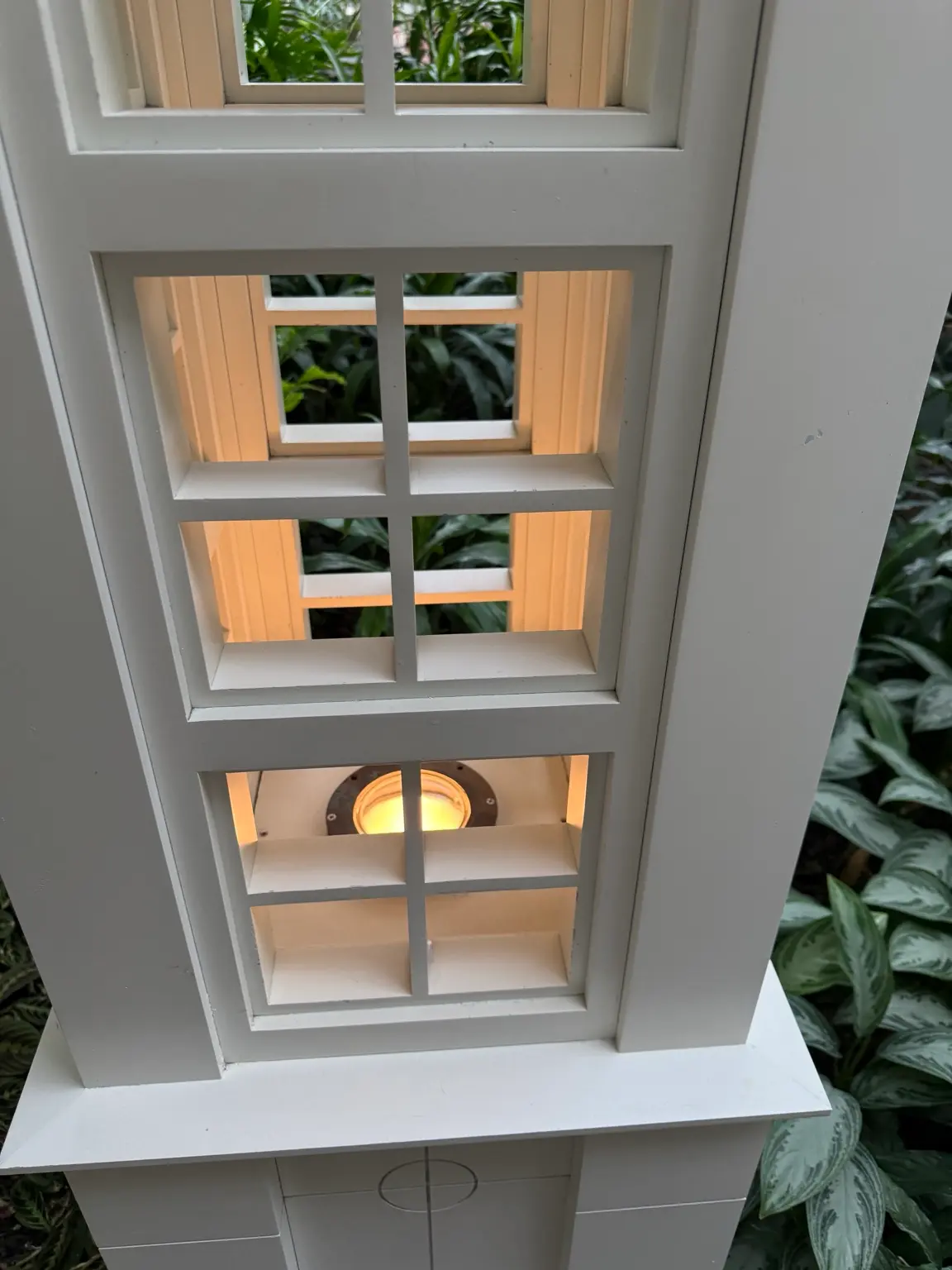
This is the kind of outdoor lighting I like to see: warm, shielded, and built into the structure instead of blasting light in every direction. Good landscape lighting is not about making the yard as bright as possible. It is about placing useful light where people walk, gather, and notice architectural details.
When planning Portfolio landscape lighting, use this same logic: control glare, keep color temperature comfortable, avoid over-lighting, and choose fixtures that support the design of the home.
When planning a Portfolio landscape lighting system, do not choose the transformer location only by convenience. The outdoor transformer mounting requirements explain height above grade, GFCI protection, airflow, drip loops, and clearance from water, heat, and gas equipment.
Retaining walls can be excellent places to hide low-profile landscape lights, but water exposure needs to be considered before the fixtures are installed. A wall beside a dry walkway is different from one beside a pool, pond, fountain, irrigation zone, or frequently wet landscape area. If your design includes both hardscape and water, use our retaining wall lighting near water guide to plan fixture locations, wiring, drainage, moisture protection, and electrical safety before the wall lighting is installed.
Broken ground stake but the Portfolio light itself is still good? A cracked metal or plastic stake does not necessarily mean the entire fixture needs to be replaced. Our Portfolio landscape lighting stake replacement guide explains how to identify the original stake connection, determine whether the fixture uses male or female threads, measure an unknown threaded mount, remove a broken piece without twisting the fixture wire, and evaluate compatible stakes or mounting adapters for discontinued Portfolio path lights. It also includes a step-by-step stake identification worksheet for fixtures whose original replacement part is no longer available.
Direct Answers About Portfolio Landscape Lighting
What is the best way to lay out landscape lighting?
The best layout starts with path and entry lighting for safety, then adds spotlights or accent lights to highlight trees, garden beds, and focal points without over-lighting the yard.
How far apart should landscape lights be?
Most path lights work best when spaced about 6 to 10 feet apart, while driveways and larger open areas may need wider spacing depending on beam spread and brightness.
What type of lights should you use in a front yard?
Most front yards use path lights for walkways, spotlights for trees or architecture, and softer accent lighting near planting beds or entry features.
What is the biggest mistake in landscape lighting?
The biggest mistake is using too many fixtures too close together, which creates glare, clutter, and a harsh look instead of a balanced outdoor design.
Portfolio manufactured a wide variety of lighting fixtures over the years, including low-voltage path lights, adjustable spotlights, flood lights, deck lights, wall lanterns, step lights, recessed fixtures, transformers, and solar products. Although many share similar finishes and styling, each fixture family uses different sockets, lenses, mounting hardware, wiring methods, and replacement parts. Before ordering components or assuming two fixtures are interchangeable, use the complete Portfolio Lighting Fixtures identification and repair guide to identify your fixture family, understand common failure points, and determine which parts can actually be repaired or replaced.
Connect this project to an existing Portfolio landscape system
Identify the Portfolio fixtures, transformer, cable layout, and controls already installed. Use that inventory to decide whether to maintain, extend, or replace parts of the system.
What Are the Best Landscape Lighting Ideas?
The best landscape lighting ideas use a combination of path lights, spotlights, and accent lighting to create balanced outdoor illumination. Most layouts focus on guiding movement, highlighting key features, and avoiding overly bright or cluttered lighting.
Most homeowners make the mistake of adding too many lights instead of placing them correctly.
Modern landscape lighting can go beyond basic motion detection. Learn how camera-triggered lighting systems improve accuracy by responding differently to people, vehicles, and background movement.
For transformer setup, wiring, and troubleshooting, refer to Portfolio outdoor transformer manuals to match your system correctly.
If you are planning a new system or updating an older one, see NEC 2026 landscape lighting code updates for the latest safety and installation requirements.
Before upgrading or replacing fixtures, identify your existing system using the Portfolio Lighting model library and specifications index .
If your current setup keeps failing or you want a longer-lasting system, see the commercial-grade landscape lighting upgrade guide for safety, transformer sizing, fixture durability, and long-term ROI.
The long-term performance of a landscape lighting system depends on protecting every component from environmental exposure. Weather seals, gaskets, and O-rings help prevent moisture-related failures in outdoor fixtures. Learn more with our outdoor lighting gaskets, O-rings, and seals guide.
Best Landscape Lighting Layout by Area
This quick reference table helps you choose the right fixture type, spacing, and placement approach for the most common outdoor areas around the home.
A complete landscape lighting system includes proper grounding and bonding to meet safety standards. Learn more in our grounding and bonding guide.
Landscape lighting can create a strong patriotic effect when red and blue accents are balanced with safe white pathway lighting. Use the Patriotic July 4th Outdoor Lighting Guide for layout ideas, RGBW settings, and voltage planning.
| Area | Best Light Type | Typical Spacing | Common Mistake |
|---|---|---|---|
| Walkways | Path lights | 6 to 10 feet apart | Placing fixtures too close together |
| Driveways | Path or bollard lights | 8 to 12 feet apart | Over-lighting the edge lines |
| Trees | Spotlights | 1 to 2 fixtures per tree | Using too much brightness or the wrong angle |
| Steps | Step lights | Every step or every other step | Leaving transitions too dark |
| Patios and seating areas | Accent or ambient lighting | Based on zone size | Making the space too bright to feel comfortable |
Not every outdoor fixture is built for the same moisture exposure. The outdoor landscape lighting water-resistance guide compares common IP ratings and explains which fixtures work best for pathways, uplights, in-ground wells, wet mulch areas, and exposed installations.
Fire pits can dramatically change how a landscape lighting system performs at night because nearby heat, smoke and seating layouts influence fixture positioning and beam direction. This fire pit lighting proximity and gas clearance guide explains safer ways to integrate landscape lighting around outdoor gathering areas without creating excessive glare or heat-related fixture problems.
Not every landscape fixture is equally effective for nighttime comfort and dark-sky performance. Our dark-sky-friendly fixture selection guide explains how fixture shielding, beam angle control, mounting height, and optical design influence glare, visibility, light pollution, and long-term outdoor usability across residential Portfolio lighting systems.
Looking for Portfolio Landscape Lighting?
If you are trying to find Portfolio landscape lighting products, replacement parts, or outdoor lighting help, you are in the right place. This page works as a central guide to Portfolio landscape lighting, including fixture types, system design, troubleshooting, and replacement options.
Landscape lighting should improve visibility without making the yard look harsh or overlit. Our Dark Sky outdoor lighting guide explains how warm light, better timing, and lower late-night brightness can create a more comfortable and balanced look.
Older landscape lighting systems often consume far more electricity than homeowners realize, especially when using halogen lamps or oversized transformers. This guide to reducing the carbon footprint of landscape lighting explains how LED retrofits, smart controls, transformer sizing, and efficient fixture placement can significantly lower long-term energy usage.
Portfolio landscape lighting systems often contain a mix of older socketed fixtures and newer LED replacements. Before upgrading only one failed light, compare how the replacement will age beside the rest of the system. Socketed fixtures allow bulb swaps, but they can introduce socket corrosion and uneven performance over time. Integrated LED fixtures reduce bulb maintenance but may require full fixture replacement if the light engine fails. Our integrated LED vs. socketed fixture lifespan comparison explains the long-term tradeoffs for landscape lighting systems.
Portfolio Landscape Lighting – Common Questions
Is this the official Portfolio landscape lighting website?
Portfolio lighting products were widely sold through major retailers, and many official resources are no longer easy to find. This site acts as a complete guide to Portfolio landscape lighting, including fixtures, replacement parts, troubleshooting help, and system design.
What can I find here about Portfolio landscape lighting?
You can explore fixture types, learn how low-voltage systems work, troubleshoot common problems, find replacement parts, and plan or upgrade your outdoor lighting layout.
Can I still get replacement parts for Portfolio lighting?
In many cases, yes. Some original parts are discontinued, but compatible replacements, bulbs, transformers, and accessories are still available depending on your system.
Where should I start if I am new to landscape lighting?
Start with understanding how a basic low-voltage system works, then look at layout and fixture placement. From there, you can choose the right lights and build a system that fits your space.
What if my Portfolio lights are not working?
Most issues come from transformers, wiring connections, timers, or bulbs. You can follow step-by-step troubleshooting guides to identify the problem and fix it without replacing the entire system.
If you're planning your layout, start with ourlandscape lighting layout guide and spacing guide to avoid common mistakes.
Not all landscape fixtures age the same outdoors. The 2026 LED Landscape Fixture Rankings compare driver temperatures, moisture resistance, standby drain, and low-voltage transformer compatibility for real-world outdoor performance.
Landscape lighting can do more than stay the same every night of the year. Our holiday lighting automation guide explains how outdoor systems can switch colors, brightness, and seasonal themes automatically for events like July 4th, Halloween, and Christmas.
If the problem is not obvious, use the Landscape Lighting Failure Mode Database before replacing parts. It organizes common system failures by symptom, including lights that fail after rain, one dead branch, intermittent shutdowns, voltage drop, transformer faults, connector corrosion, photocell problems, and LED retrofit issues. Start with what the system is actually doing, then use the matching diagnostic checks to narrow the failure to the transformer, cable run, connection, control, or fixture.
Quick Start: Simple Landscape Lighting Layout
- Add path lights along walkways and entry areas
- Use spotlights to highlight trees or focal points
- Light steps, decks, or elevation changes for safety
- Space fixtures evenly to avoid dark spots or glare
- Use a low voltage transformer sized for your system
This simple layout works for most homes and can be expanded over time.
Proper spacing is one of the biggest factors in how your lighting looks at night. Use landscape lighting spacing guidelines to avoid dark areas and overly bright clusters.
How Many Landscape Lights Do You Actually Need?
Most homeowners need fewer lights than they think. A strong layout usually starts with the main walkway, front entry, one or two focal trees, and any steps or dark transitions that affect safety. The goal is to guide movement and create depth, not light every inch of the yard.
- Small front walkway: 4 to 6 path lights
- Average front yard: 6 to 10 total fixtures
- Front yard with trees or architectural accents: 8 to 12 fixtures
- Larger full-property layouts: planned in lighting zones
A better layout with fewer fixtures usually looks more professional than an over-lit yard with too many lights.
What Is Portfolio Landscape Lighting?
Portfolio landscape lighting refers to outdoor lighting fixtures and low voltage systems used to illuminate walkways, gardens, patios, decks, driveways, entry areas, and focal landscaping features around the home. The category usually includes path lights, spotlights, deck lights, transformers, wiring components, and other outdoor fixtures designed to improve visibility, curb appeal, and nighttime use of the property.
For most homeowners, the best Portfolio landscape lighting setup combines multiple fixture types rather than relying on a single style. Path lights help guide movement, spotlights create depth and highlight focal points, and low voltage system planning helps the entire layout operate more evenly and reliably.
When choosing landscape fixtures, finish durability can be just as important as brightness. The landscape lighting finish durability comparison shows how outdoor materials weather over time.
Many homeowners focus on path lights and spotlights while overlooking one of the most versatile landscape lighting techniques available: downlighting. Instead of projecting light upward from the ground, downlighting places fixtures in elevated locations such as trees, eaves, pergolas, or architectural structures to create a natural moonlight effect while reducing glare. Our Portfolio downlighting guide explains fixture placement strategies, beam spread selection, mounting considerations, and common applications for creating safer and more natural-looking outdoor illumination.
Portfolio landscape lighting is one of the easiest ways to improve how an outdoor space looks and functions after dark. A thoughtful lighting plan can improve visibility, add curb appeal, define walkways, and help decks, pergolas, gardens, and outdoor living spaces feel more complete.
Whether you are planning a full low voltage landscape layout or just adding a few path lights and spotlights, this page brings together practical ideas, fixture types, buying tips, and related installation and troubleshooting help.
If you already know you want landscape lighting but specifically want the lower-maintenance and longer-lasting benefits of LED fixtures, visit our Portfolio LED landscape lighting guide. That page focuses on how LED path lights, LED spotlights, and other low voltage LED outdoor fixtures fit into a cleaner yard layout, when older landscape lights are worth upgrading, and how to think about LED performance without losing sight of good overall landscape-lighting design.
If you are trying to design a full outdoor lighting system instead of choosing fixtures one at a time, start with our Complete Landscape Lighting Guide. It explains the fundamentals of landscape lighting design including layout planning, fixture spacing, path lighting, tree uplighting, low voltage systems, transformers, wiring, and maintenance.
Portfolio landscape fixtures are part of a larger low-voltage lighting system that includes transformers, wire, connectors, timers, and fixture placement. If you want a better understanding of how these systems operate before choosing or repairing fixtures, see how landscape lighting works. It explains the basic system design behind residential landscape lighting and how the main components work together across a property.
If your lights appear dim or uneven, voltage drop is often the cause. Use this landscape lighting voltage drop guide to diagnose and fix the issue properly.
Landscape lighting works best when it is planned as a full system rather than installed a few fixtures at a time. For a step-by-step approach to layout, spacing, fixture selection, and yard zoning, use this outdoor lighting plan guide to build a more balanced and useful design.
While Portfolio landscape lighting systems were popular, many homeowners now look for updated alternatives with better performance and availability. This best replacement guide for Portfolio landscape lighting helps you choose the right upgrade.
Portfolio landscape lighting includes several different fixture types, and identifying the exact model can make it easier to find parts or plan upgrades. This Portfolio lighting identification guide helps you determine what fixture you have.
A well-designed landscape lighting system should not just look good. It should also be easy to control in everyday use. That is why voice-driven scenes have become so important for modern outdoor lighting, especially when multiple zones and lighting moods are involved. For the system logic behind that, read AI voice lighting logic.
Portfolio Outdoor Landscape Lighting Fixtures
Portfolio outdoor landscape lighting fixtures are designed to illuminate pathways, patios, gardens, and architectural features around the home. Different fixture types serve different purposes, from guiding walkways to highlighting trees and improving nighttime visibility. The following guides explain the most common Portfolio outdoor lighting fixtures and how they are used in residential landscape lighting systems.
Before installing your system, follow this step-by-step landscape lighting wiring guide to ensure proper connections and performance.
Pool and water-feature lighting systems require additional planning for waterproof connections, GFCI protection, transformer sizing, and fixture compatibility. For underwater lighting repair and replacement help, visit the Portfolio Swimming Pool Lighting Guide.
- Portfolio Path Lights – walkway lighting that helps guide paths, sidewalks, and garden trails.
- Portfolio Post Lighting – decorative lighting commonly used along driveways, entrances, and property edges.
- Portfolio Deck Lighting – lighting designed for deck stairs, railings, and outdoor living areas.
- Portfolio Flood Lighting – high-output lighting for large areas such as yards, driveways, and security lighting.
- Portfolio Step Lighting – fixtures designed to improve safety on stairs and elevation changes.
- Portfolio Bollard Lighting – modern pathway lighting often used for driveways and contemporary landscape designs.
- Portfolio Outdoor Wall Spotlights – accent lighting for walls, columns, and architectural features.
- Portfolio In-Grade Lighting – ground-installed fixtures used to highlight trees and structures.
- Portfolio Wall Lantern Lighting – classic exterior wall lighting used near entry doors and garages.
- Portfolio Outdoor Transformer Lighting – low voltage power supplies that operate landscape lighting systems.
- Portfolio Solar Lighting – self-contained outdoor lights powered by solar panels.
Most Common Reasons People Search This Page
- They want ideas for Portfolio landscape lighting around a house, walkway, garden, deck, or patio.
- They are trying to understand which fixture type works best for a specific outdoor space.
- They need help with low voltage layout planning, wiring, or transformer setup.
- They want troubleshooting help for dim, uneven, or non-working landscape lights.
- They are looking for compatible replacement fixtures or updated alternatives.
If your older Portfolio landscape fixtures are still structurally sound, an LED conversion may be a better first step than replacing every fixture. The important part is matching the LED to the existing voltage, lamp base, transformer output, fixture dimensions, and electrical condition. Our Portfolio Lighting LED Conversion Guide provides a step-by-step compatibility test for discontinued fixtures and explains when you can reuse the existing transformer and when the system needs additional repair.
Check Portfolio parts and power compatibility
Before moving or adding fixtures, confirm output voltage, total connected load, cable condition, connector ratings, and the specifications of replacement lamps or housings.
How to Plan a Portfolio Landscape Lighting Layout
The best landscape lighting setups are planned before fixtures are installed. Start by identifying key areas such as walkways, entry points, seating areas, and trees. Most systems combine path lights for visibility, spotlights for accents, and softer lighting for patios or decks to create a balanced outdoor design.
Instead of placing lights randomly, focus on spacing, beam direction, and how each fixture contributes to the overall layout. If you want a step-by-step approach to designing your system, follow this outdoor lighting plan guide to build a complete and effective setup.
A well-designed landscape lighting system should not only highlight features but also feel comfortable to use throughout the evening. Lighting that is too bright or too cool late at night can feel harsh. Many systems now adjust color and brightness over time for a more natural effect. For that approach, see circadian outdoor lighting.
Good landscape lighting is not just about placement—it is about controlling where light goes. The BUG rating guide explains how professional lighting design minimizes glare and spill while improving visibility.
If your landscape lighting plan includes buried wire, a transformer, or outdoor power, check low voltage lighting permit requirements before installation.
If your lighting layout runs through pet areas, mulch beds, or wildlife habitat, use our landscape lighting wire safety guide for pets and wildlife before placing fixtures and cable.
Model-Level Repairs for Portfolio Landscape Lighting
Portfolio landscape lighting systems often include a mix of path lights, accent lights, solar fixtures, motion lights, and older discontinued models. Each type fails differently, so model-level diagnosis is more useful than generic replacement advice. The Portfolio Lighting Model 7133C replacement parts guide, Portfolio DualBrite PF-4300-BK motion light manual, and Portfolio Lighting Model SLL12BK solar light parts guide show how to separate physical damage, electrical failure, sensor settings, and solar charging problems before replacing fixtures.
Dicontinued Portfolio Models With Hard To Find Answers In One Place
Outdoor flood lights are often one of the first fixtures homeowners upgrade when modernizing older landscape-lighting systems. This Portfolio Lighting Model 0157561 flood-light parts guide helps explain replacement compatibility and long-term repair strategies.
Many Portfolio systems remain installed years after the original fixtures were discontinued. This Portfolio Model 0062582 manual and replacement guide helps preserve important model-specific information for those older installations.
Understanding how original fixtures were wired and powered is important before mixing old and new low-voltage hardware. This Portfolio Lighting Model 0394866 compatibility guide explains how those system differences affect upgrades.
Integrated LED landscape-lighting systems can create unique repair limitations compared to older socketed fixtures. This Portfolio Model 0482436 technical repair guide explains how to approach those systems more carefully.
Discontinued Portfolio systems become much easier to maintain when technical references are preserved in one place. This Portfolio Lighting Model 17794-000 parts and manual guide helps organize replacement information for long-term maintenance.
Who This Portfolio Landscape Lighting Guide Is For
This page is useful for homeowners who are planning a new outdoor lighting layout, upgrading older Portfolio fixtures, comparing fixture types, troubleshooting an existing low voltage system, or looking for compatible replacement options. It is also helpful for visitors who want to understand the difference between path lights, spotlights, deck lights, transformers, and other common landscape lighting components before buying.
If you already know the specific fixture or problem you are dealing with, use the related guides throughout this page to go deeper into installation, wiring, replacement parts, troubleshooting, and individual fixture categories.
Why Homeowners Choose Portfolio Landscape Lighting
Portfolio landscape lighting is popular because it helps outdoor areas feel more inviting while still being practical. A good outdoor lighting layout can highlight walkways, add definition to flower beds, improve visibility around steps or decks, and give the home a stronger nighttime appearance from the street.
Many homeowners also like that Portfolio offers different outdoor styles and finishes that can match a wide range of homes and landscaping designs. Copper and bronze finishes are especially popular because they blend naturally into landscaping while reflecting warm light in attractive ways.
Portfolio landscape lighting fixtures can be used to illuminate multiple areas around your home, including walkways, garden beds, entryways, and architectural features. A well-planned system usually combines several fixture types such as path lights, spotlights, and accent lights to create balanced outdoor lighting. Our landscape lighting around a house design guide shows how these fixtures work together to light the entire exterior of a property.
If your outdoor lighting project also needs to meet HOA or city code requirements, review the Outdoor Lighting Ordinance Guide for practical help with shielding, lumen limits, warm-color compliance, and late-night control rules.
Portfolio Landscape Lighting Ideas for Outdoor Spaces
Landscape lighting can do far more than simply brighten a yard. It can guide movement, improve curb appeal, and make outdoor living areas feel more complete after sunset. A thoughtful lighting plan can also make smaller spaces look larger and more polished.
Spring landscape lighting needs more than fresh mulch and new plants. The Portfolio Easter & Spring Lighting Maintenance Guide explains how to recover from winter moisture damage, clean cloudy lenses safely, and build better pastel RGBW spring scenes for gardens, pathways, and outdoor gatherings.
Walkways and Front Paths
Path lighting is one of the most common landscape lighting upgrades because it improves visibility and adds a clean, welcoming look to front walks and side-yard pathways. Portfolio path lights are often used to create a steady visual rhythm without overpowering the space.
If a path light in your system is dim, flickering, or not turning on, review the Portfolio 0688503 troubleshooting guide to see how connector issues, voltage drop, and integrated LED failure affect real landscape lighting setups.
Gardens and Planting Beds
Garden lights help highlight flowers, shrubs, decorative stonework, and planting borders. Even soft landscape lighting around a garden bed can make the yard feel more intentional and finished.
Pergolas, Decks, and Outdoor Living Spaces
Pergola lighting, string lights, deck lighting, and wall lighting are all strong choices for outdoor living areas. These lights can create a more inviting atmosphere for entertaining while also improving visibility around seating areas, stairs, and pathways.
Fire Pits and Backyard Gathering Areas
Fire pits create their own glow, but surrounding landscape lighting helps define the space and make it safer to move around. Additional accent lighting can also make backyard social areas feel more open and comfortable after dark.
Trees and Architectural Accents
Large trees, entry columns, walls, and textured exterior features often look especially strong when highlighted by well-placed spotlights. This type of lighting can dramatically increase nighttime curb appeal and add depth to the yard.
Landscape light housings are the outer structure that protects the internal wiring, LED module, and lens of each fixture. They are used across many types of outdoor lights, including path lights, spotlights, and accent fixtures, and they play a major role in long-term durability outdoors.The cost of landscape lighting depends heavily on the number of fixtures and the type of system you choose. This landscape lighting cost guide helps break down pricing so you can plan your system more confidently.
Portfolio landscape lighting fixtures rely on several core components, and the housing is one of the most important because it protects the internal parts and helps the fixture hold up outdoors. This Portfolio landscape light housings guide helps explain what to look for when a fixture body is damaged or worn out.
Modern landscape lighting is moving beyond simple dusk-to-dawn controls and motion sensors. Our predictive arrival lighting behavior patterns page explains how AI can learn when a homeowner usually arrives and activate pathway, driveway, and entry lighting before the car even pulls in.
What Type of Landscape Lighting Should You Use?
Different areas of your yard require different types of lighting. Path lights are best for walkways and driveways, while spotlights are used to highlight trees, walls, and architectural features. Deck and step lights improve safety, while softer ambient lighting works well in seating areas and patios.
A complete system usually combines multiple fixture types instead of relying on one style. If you are choosing fixtures individually, start with Portfolio path lights for walkways and add accent lighting as needed to create depth and balance.
Beam angle affects how wide or focused your light appears. See beam spread in landscape lighting to choose the right effect for paths and accent lighting.
One of the biggest trends in landscape lighting is moving away from visible fixtures toward built-in lighting. This hardscape and linear lighting guide explains how to install hidden LED systems directly into steps, walls, and edges.
Well lights create clean uplighting, but they need better drainage and connector protection than above-ground fixtures. See the Portfolio well lights troubleshooting page for moisture, bulb, socket, and drainage repair steps.
Most Common Landscape Lighting Mistakes
- Placing lights too close together
- Using bulbs that are too bright or cool in color
- Pointing lights directly into eye level
- Overlighting small areas
- Ignoring spacing and beam spread
Popular Outdoor Landscape Lighting Looks

Walkway and Path Lighting
Path lights improve visibility and give front walks, side paths, and garden edges a more finished nighttime look.

Tree and Garden Accents
Spotlights can highlight trees, shrubs, stonework, and decorative landscape features for added depth and curb appeal.

Deck and Outdoor Living Spaces
Deck lights and ambient outdoor fixtures make patios, pergolas, and social spaces feel safer and more inviting. If the lighting is too bright, focus on the placement of the fixture.
Landscape lighting systems tend to fail in predictable ways over time, especially in older installations where plastic stakes weaken, soil movement stresses fixtures and transformers begin showing overload or protection warnings. This guide to repairing broken Portfolio landscape lighting stakes covers reinforcement ideas, replacement strategies and fixture stabilization methods, while the all-brand transformer error code troubleshooting guide explains how modern low-voltage systems report overloads, short circuits and wiring-related faults.
Good landscape lighting involves more than fixture spacing and transformer sizing. Professional lighting guidance also considers glare, beam distribution, pedestrian comfort, environmental impact, and how much light is actually needed for the application. Our Outdoor Lighting ANSI Standards Guide explains the ANSI/IES standards most relevant to landscape lighting, including RP-47 for landscape design, RP-43 for outdoor pedestrian areas, and TM-15 for backlight, uplight, and glare ratings.
Should You Repair or Replace Landscape Lighting?
Many landscape lighting issues can be fixed without replacing the entire system. Common problems include bad connections, burned-out bulbs, or transformer issues. These are often simple to repair and can extend the life of your existing setup.
If you want to compare a more professional-grade fixture option, the best VOLT landscape lighting fixtures guide is a strong next step. It breaks down path lights, spotlights, and other outdoor fixture types for homeowners who want stronger build quality and more reliable long-term performance.
Replacement is usually the better option if fixtures are damaged, outdated, or no longer match your layout. If you are deciding what to do next, start with this Portfolio lighting troubleshooting guide or compare available fixtures on the Portfolio lighting buying page.
Outdoor lighting systems are made up of several components that age differently depending on installation conditions, weather exposure, and electrical load. Our outdoor lighting component life expectancy guide explains the expected lifespan of major landscape lighting components and how to identify aging equipment.
If you are replacing older Portfolio fixtures or adding new equipment to an existing landscape-lighting system, do not choose components based only on appearance, voltage, or price. Safety certification and intended use matter too. Our UL vs ETL landscape lighting guide explains what these common certification marks mean and how to verify that a transformer or fixture is actually certified for the application you have in mind.
Make Portfolio troubleshooting part of the maintenance plan
Record cable routes and transformer settings, inspect accessible splices after wet weather, and compare symptoms across fixtures before replacing components.
Popular Portfolio Landscape Lighting Fixture Types
Portfolio landscape lighting includes several fixture styles depending on the area you want to illuminate and the effect you want to create. The most effective outdoor lighting systems often combine more than one fixture type instead of relying on a single lighting style throughout the yard.
| Fixture Type | Best Use | Why It Helps |
|---|---|---|
| Path lights | Walkways, entries, side paths | Improves safety and creates visual structure |
| Spotlights | Trees, walls, focal landscaping | Adds depth and accent lighting |
| Deck lights | Deck edges, stairs, railings | Improves visibility and defines outdoor living spaces |
| String or pergola lights | Pergolas, patios, seating areas | Creates a more relaxed decorative atmosphere |
| Garden lights | Flower beds and landscape borders | Highlights plantings and softens dark areas |
Durability, Finish, and Outdoor Performance
Outdoor lighting fixtures have to handle direct sun, rain, temperature swings, and long-term exposure to the elements. That is why finish and construction matter. Many homeowners prefer rugged fixtures that can handle outdoor conditions without fading too quickly or looking worn after one season.
Seasonal lighting can completely change how a landscape feels after dark. The Halloween landscape lighting effects and safety guide explains how to create dramatic outdoor scenes using uplighting, pathway fog effects, orange and purple LEDs, and safe low-voltage wiring practices.
It is also smart to compare lumen output when shopping for landscape lights. More lumens usually means more visible light, but the best setup depends on whether the goal is soft pathway guidance or stronger spotlighting on a tree or wall.
- check finish color for style and weather appearance
- compare lumen output for brightness needs
- consider low voltage systems for flexibility and efficiency
- look for fixtures that match your walkway, garden, or deck style
- plan for future replacement parts and transformer capacity
What to Look For Before Buying Portfolio Landscape Lights
Before choosing fixtures, it helps to think about the layout of your yard and what you want the lighting to accomplish. Some homeowners want stronger security and visibility, while others want softer decorative lighting that makes the outdoor space feel more inviting.
Common buying considerations include fixture finish, brightness, transformer capacity, spacing, replacement parts availability, and whether the system may be expanded later. Many buyers also watch for seasonal discounts because outdoor lighting prices can vary during different times of the year.
If you already have a Portfolio landscape lighting system installed, you may eventually need to replace individual fixtures as they wear out or break over time. Because most systems use standard low-voltage wiring, it is often possible to replace a fixture with a compatible product from another manufacturer. Our guide to Portfolio lighting alternatives explores several reliable landscape lighting brands and explains how to choose replacement lights that will work with your existing transformer and wiring setup.
A landscape lighting system may look simple from the outside, but several components work together behind the scenes. The transformer, low voltage cable, connectors, and fixtures must all be connected correctly for the system to operate safely and evenly. If you want to see how these parts fit together, review the low voltage landscape lighting system diagram, which illustrates how a typical 12-volt outdoor lighting system is wired.
If your system is already installed but not working correctly, start with landscape lights not working troubleshooting before replacing fixtures.
Not every LED landscape fixture is built for long-term ownership. The Field-Serviceable LED Fixture Guide compares which outdoor lighting systems can be repaired after gasket, driver, or connector failures.
Brightness alone does not determine outdoor lighting quality. The CRI and R9 outdoor lighting comparison guide explains why some fixtures make stone, wood, plants, and brick look rich while others appear flat or washed out.
Portfolio Landscape Lighting FAQ
What is Portfolio landscape lighting used for?
Portfolio landscape lighting is used to illuminate walkways, gardens, patios, decks, driveways, and outdoor focal points while improving safety, curb appeal, and nighttime visibility.
Are Portfolio landscape lights low voltage?
Many Portfolio landscape lighting systems use low voltage power with a transformer, outdoor cable, connectors, and compatible fixtures such as path lights and spotlights.
What types of Portfolio landscape lights are most common?
Common fixture types include path lights, spotlights, deck lights, step lights, transformer-based low voltage fixtures, and other outdoor accent lights designed for residential yards and walkways.
Can you replace Portfolio landscape lights with another brand?
In many cases, individual Portfolio landscape lighting fixtures can be replaced with compatible low voltage alternatives if the wiring, transformer capacity, and fixture type are a good match.
How do you plan a Portfolio landscape lighting layout?
A good layout starts by identifying walkways, entries, seating areas, trees, and focal points, then choosing the right mix of path lights, spotlights, and supporting low voltage components to create a balanced outdoor design.
More Portfolio Landscape Lighting Guides
If you like your Portfolio layout but need a more durable or easier-to-source replacement system, the Portfolio landscape lighting alternatives guide compares brands that homeowners commonly use after Portfolio fixtures, transformers, or parts become hard to find.
Planning landscape lighting for a larger property requires more than choosing attractive fixtures. Walkways, entrances, landscaped areas, operating costs and long-term maintenance all affect the finished installation. Our Portfolio Lighting stadium grounds design and energy cost simulator applies these decisions to a fictional high school stadium, with fixture research, energy calculations, a grounds lighting audit and an interactive 12-week classroom project.
Portfolio Landscape Lighting Installation Guide
Learn how to install Portfolio landscape lighting with help for transformers, low voltage cable, path lights, and outdoor fixture setup.
Read the guidePortfolio Landscape Lighting Troubleshooting
Fix common issues like lights not turning on, flickering fixtures, bad connections, and transformer-related outdoor lighting problems.
Read the guidePortfolio Landscape Lighting Wiring Guide
Understand low voltage cable layout, connectors, transformer wiring, and outdoor lighting wiring basics.
Read the guidePortfolio Path Lights Replacement Ideas
See spacing ideas, walkway lighting tips, and installation help for Portfolio path lights.
Read the guidePortfolio Landscape Lighting Ideas
Get ideas for trees, garden beds, patios, pergolas, decks, and pathway lighting layouts around the home.
Read the guidePortfolio Lighting Transformer Wiring Diagram
See how a transformer, low voltage cable, and fixtures connect together in an outdoor lighting system.
Read the guidePortfolio Landscape Lights Not Working
Troubleshoot causes and solution if your landscape lights aren't working correctly.
Read the guidePortfolio Low Voltage Landscape Lighting
A great way to illumiate your outdoor walkways with LED voltage options for your specific landscape.
Read the guidePortfolio Landscape Lighting Replacement Parts
Landscape lighting replacement parts can help keep an outdoor lighting system working without replacing every fixture in the yard. In many cases, the real problem is not the entire system.
Read the guideAbout This Page
This guide shows you exactly how to plan and set up Portfolio landscape lighting the right way — including layout ideas, fixture placement, low voltage systems, and installation basics. You’ll learn how to choose the right lights, avoid common mistakes, and build a system that looks better, performs reliably, and lasts longer.
Expert-Verified Troubleshooting
Every technical guide on PortfolioLighting.net is reviewed for accuracy. My troubleshooting procedures are based on 25+ years of field experience and are maintained by Philip Meyer to ensure accuracy and electrical safety compliance.