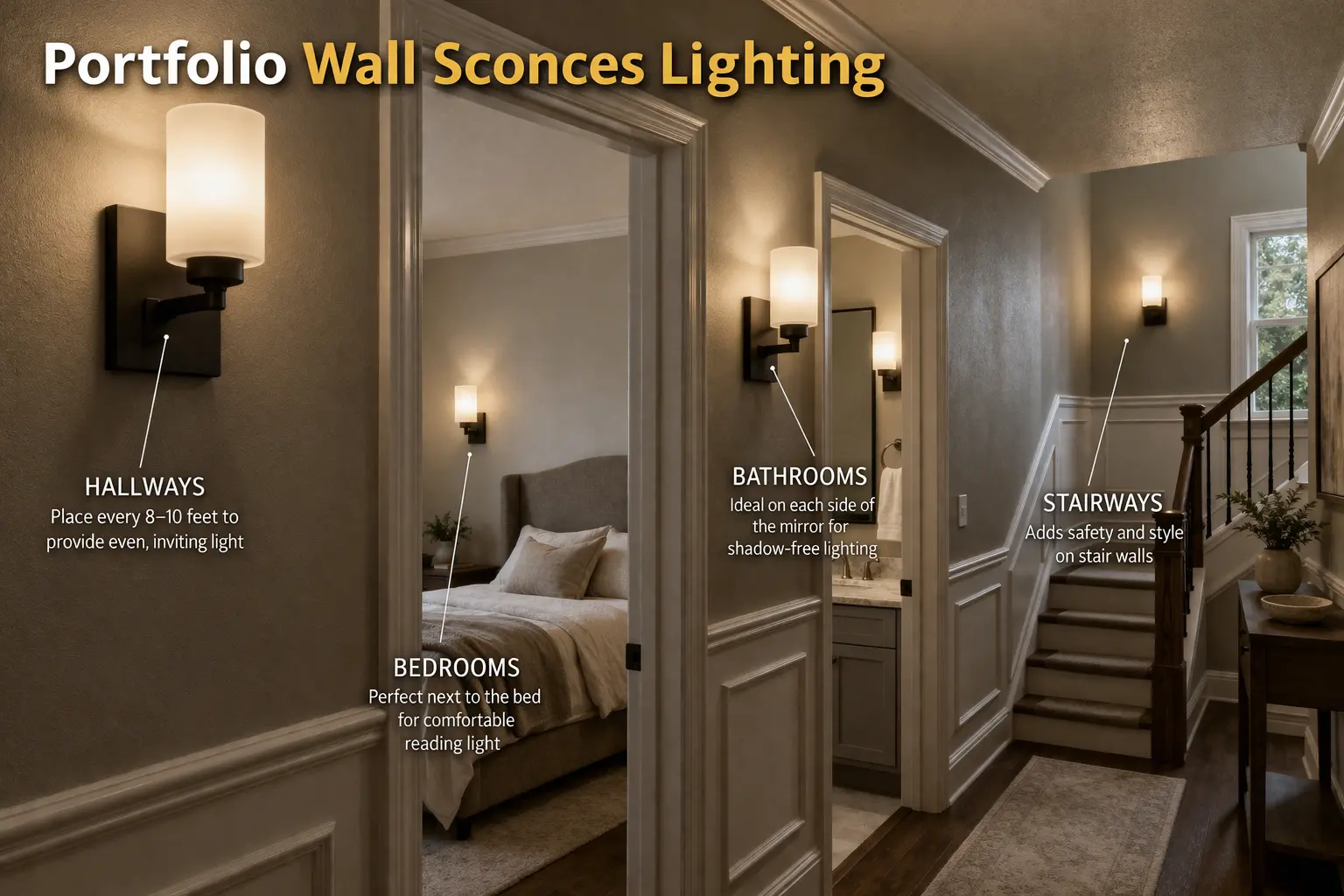
Hallway
Best use: Even wall-level light and safer movement through long corridors.
Placement: 60–66 inches high, usually 6–8 feet apart.

Wall sconces are one of the most useful indoor fixture types when you want lighting without depending entirely on the ceiling. They add light at eye level, help shape the mood of a room, and often improve the look of hallways, bedrooms, bathrooms, stairways, and living areas in a way overhead fixtures alone cannot.
Whether you're replacing an older Portfolio wall sconce or planning a new installation, this guide walks through where sconces work best, how to mount them correctly, how far apart to space them, and how to choose compatible replacement parts.Think of this guide as a practical homeowner lesson. Start at the top if you are comparing fixture types, or use the jump links if you already know you are planning sconces and want help with placement rules, LED options, installation basics, or replacement parts.
Visitors using this guide often also compare sconces with broader indoor fixture categories. You can explore the full cluster on Portfolio indoor lighting and review replacement help on Portfolio lighting parts and accessories.
See the Indoor Lighting HubMost wall sconces should be mounted 60–72 inches from the floor and spaced about 6–8 feet apart in hallways. Bathroom sconces usually work best beside the mirror at eye level, while bedroom sconces should line up with seated reading height instead of standing height.
Wall sconces are usually added when ceiling lighting is not enough. A hallway may need better wall-level light, a bedroom may need bedside lighting without lamps, or a bathroom may need lighting beside the mirror instead of overhead. The key is placing sconces at the right height and spacing so the light looks even and works the way you expect.
If you are deciding whether wall sconces are the right choice, this page will help you figure that out quickly. You will see when sconces work best, when another fixture might be a better option, and how they fit into a complete indoor lighting setup so your room looks balanced and functions the way you expect.
Wall sconces are strongest when they solve a specific lighting problem: face-level light, hallway rhythm, bedside reading, mirror lighting, stairway guidance, or wall accent lighting.
Best use: Even wall-level light and safer movement through long corridors.
Placement: 60–66 inches high, usually 6–8 feet apart.
Best use: Face lighting that reduces harsh shadows from overhead fixtures.
Placement: Beside the mirror, near eye level, with matching height on both sides.
Best use: Bedside reading without table lamps or crowded nightstands.
Placement: Slightly above shoulder height when seated in bed.
Best use: Guidance lighting and safer vertical movement.
Placement: Keep projection low enough that the fixture does not crowd the path.
Best use: Soft accent light on fireplaces, built-ins, artwork, or feature walls.
Placement: Match the furniture, mantel, or wall feature instead of centering randomly.
Best use: Warm side lighting that supports a chandelier or pendant without overpowering it.
Placement: Keep brightness soft and symmetrical so it supports the room, not competes with it.
Two sconces can have the same finish and bulb wattage but make a room feel completely different depending on how they throw light.
Send light toward the ceiling and make the room feel softer and taller. Good for hallways, dining rooms, and living rooms.
Send light downward and work better when the fixture has a task, such as bedside reading or small-area illumination.
Create a stronger wall pattern and are useful on feature walls, stairways, and modern rooms where the light effect is part of the design.
Reduce glare and make the fixture more comfortable at eye level. These are usually better for hallways and bedrooms than exposed bulbs.
A wall sconce is a lighting fixture mounted directly to a wall rather than the ceiling. It typically provides accent lighting, ambient lighting, or decorative lighting and is commonly used in hallways, bedrooms, bathrooms, and stairways to add both illumination and style.
Portfolio wall sconce lighting fits into the indoor lighting category as a fixture type that helps fill the visual gap between ceiling light and lamp light. It can soften a room, spread light more evenly across walls, and provide illumination where a ceiling-mounted fixture would feel too harsh, too plain, or simply out of place.
Wall sconces work best when you need light along a wall or at eye level. They are not always the best choice for full room lighting. In many cases, they are used alongside ceiling lights, recessed lighting, or lamps to create a balanced lighting plan.
If you are deciding between fixtures, compare options in the indoor lighting guide or explore other fixtures like pendant lighting and recessed lighting.
Wall sconces are often chosen when homeowners want lighting without adding or changing a major ceiling fixture. In some rooms they act mainly as accent lighting. In others they add useful ambient light. In still others, such as bathrooms or bedside walls, they may do a very practical job that improves how the room functions every day.
One reason sconces remain popular is that they work in many home styles. Traditional spaces often use decorative sconces with more detail. Modern rooms may use sleeker, simpler designs. Transitional spaces may use sconces that are subtle enough to blend in while still giving the room more depth than a plain ceiling fixture alone. The light itself can wash the wall, brighten a path, frame a mirror, or help balance light across a room.
This is also why wall sconces are a strong cluster page inside your indoor lighting architecture. They are not a replacement for every other fixture, but they often solve a problem that the other fixture types do not solve as elegantly.
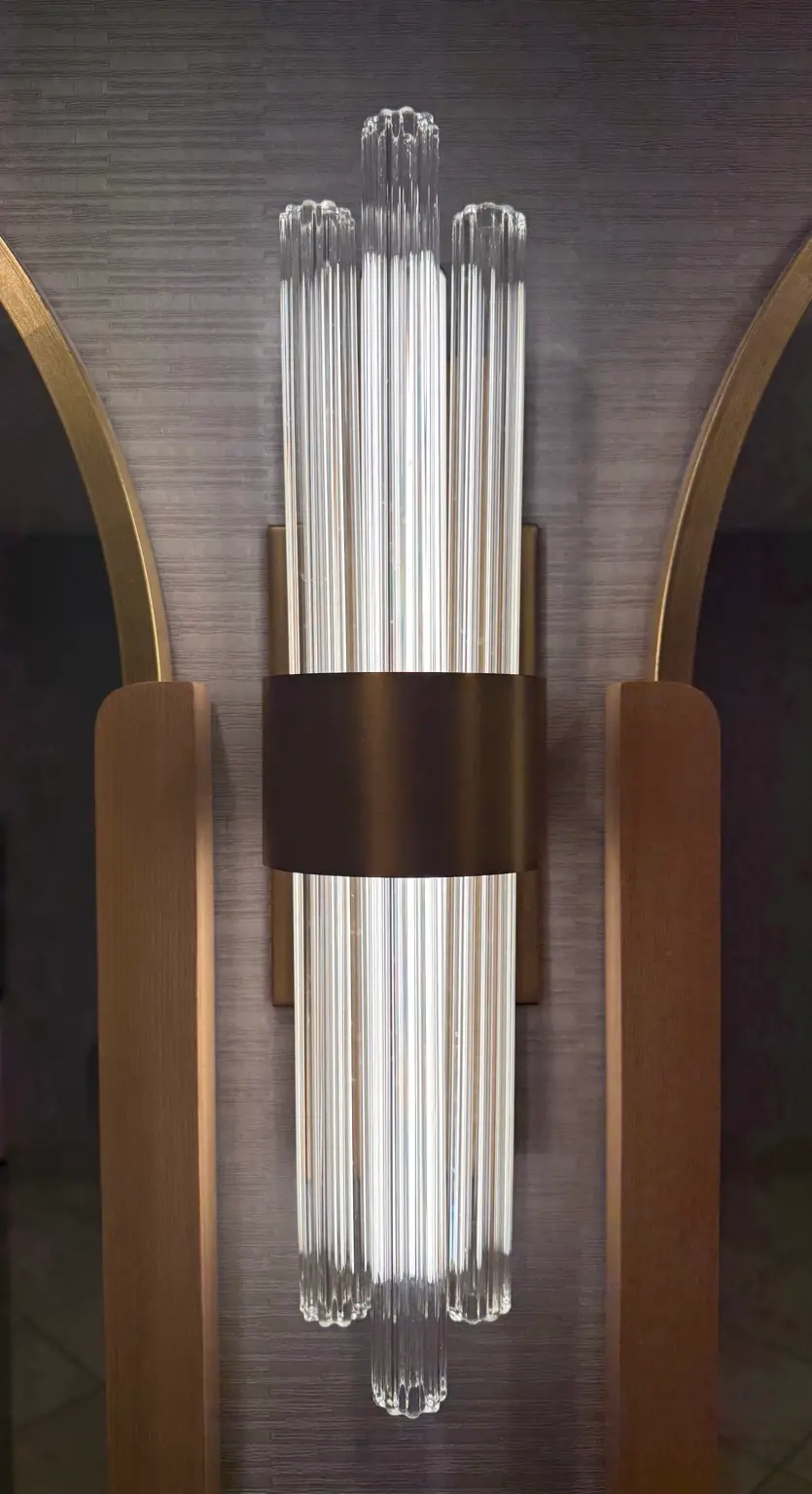
Wall sconces work best when the fixture shape and diffuser control the light instead of exposing a bare bulb. Ribbed glass, frosted glass, and layered shades can soften the output while still giving the wall a finished architectural look.
When comparing Portfolio-style sconces, look at the mounting height, glass condition, bulb type, finish, and how much direct glare reaches eye level from normal walking or seated positions.
Hallways are one of the classic places to use wall sconces because they help spread light along the wall and create a softer, more finished look than a single overhead fixture. In longer hallways, sconces can also break up blank wall space and make the area feel more intentional.
Wall sconces are a smart bedroom choice when you want bedside lighting without using nightstands or table lamps. They can free up surface space, give the room a cleaner look, and provide a more built-in feel around the bed.
Sconces are often used beside bathroom mirrors because side lighting can be more flattering and more useful than depending on ceiling light alone. When mounted well, they reduce some of the shadows that overhead lights can create on the face.
Stairways often benefit from wall sconces because they add light at a safer visual level and can help guide movement through the space. In homes with long stair walls, sconces also help turn a plain vertical wall into part of the design.
Wall sconces can also work in living rooms when you want extra light on a feature wall, fireplace wall, or conversation area. They are especially useful in rooms where layered lighting matters more than one bright overhead source.
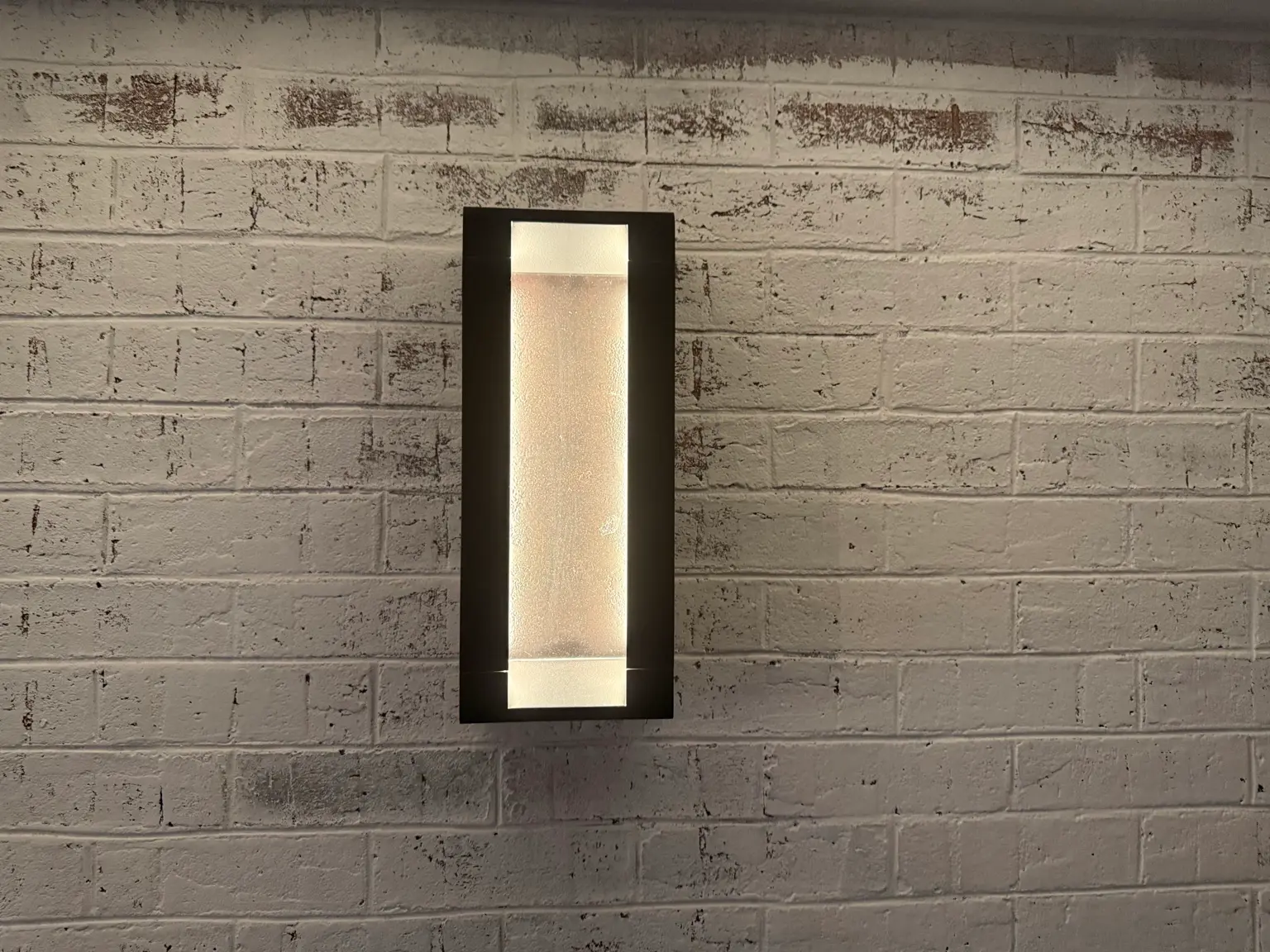
Wall sconces are not just decorative. They can soften a room, highlight wall texture, and reduce the need for harsh overhead lighting. The best sconces shield the bulb enough to make the light feel warm and intentional.
For Portfolio sconce lighting, look at the shade, diffuser, bulb color temperature, and wall surface. Brick, stone, and textured walls can make the light pattern more visible, which is useful for accent lighting but can also reveal glare or uneven spread.
A common starting height for many wall sconces is about 60 to 72 inches from the floor, but the exact mounting height should reflect the room, the fixture shape, and the job the light is doing. A hallway sconce may land differently than a bedside sconce or a pair of bathroom mirror sconces.
In most homes, the goal is to keep the fixture high enough that it does not glare directly into people’s eyes while still placing the light at a useful level. Ceiling height matters too. A low ceiling may require a slightly tighter, more controlled placement. Higher ceilings can support a little more flexibility.
Most wall sconce problems are not caused by the fixture itself. They happen because the fixture is mounted in the wrong relationship to the wall, mirror, bed, hallway, or viewer’s eye level.
Spacing depends on the wall length, fixture size, and how much light each sconce actually produces. In hallways, many homeowners start with roughly 6 to 8 feet between sconces, then adjust based on how the wall looks and how bright the fixtures are.
Check: Wall length, fixture brightness, and spacing rhythm.
Why it matters: Keeps the corridor feeling even and intentional.
Check: Bed width and headboard placement.
Why it matters: Helps the sconces frame the bed correctly.
Check: Mirror size and side clearance.
Why it matters: Improves mirror lighting and visual symmetry.
Check: Artwork, fireplace width, or furniture below.
Why it matters: Prevents the fixtures from feeling random.
Check: Wall length, step visibility, and fixture projection.
Why it matters: Adds safer light without crowding the walkway.
Use this quick planning method before cutting into drywall. It is not a code calculator; it is a visual spacing check for hallway rhythm and light coverage.
To estimate your own layout, divide the hallway length by 6 to 8 feet, then adjust so the first and last sconces do not sit awkwardly close to a doorway, corner, or trim line. A 24-foot hallway usually looks better with four evenly spaced sconces than with two fixtures pushed too far apart.
Ceiling lighting is usually the most direct way to provide broad room brightness, but it does not always create the most comfortable or layered lighting plan. Wall sconces are helpful when you want softer light, more wall-level illumination, or a fixture that adds style without relying entirely on the ceiling. Compare categories on the Portfolio indoor lighting guide.
Pendant lighting hangs from the ceiling and is often used over islands, tables, and counters where centered task lighting or decorative emphasis matters. Wall sconces are stronger when the wall itself is the natural lighting location or when you want to free the ceiling from additional fixture clutter. For that comparison, visit the Portfolio pendant lighting guide.
Recessed lighting gives you a cleaner built-in ceiling look and is often used for general light. Wall sconces are more visible, more decorative, and better suited for layered lighting or eye-level illumination. If you are weighing both options, see the Portfolio recessed lighting page.
If you are comparing different types of indoor lighting before choosing wall sconces, our Portfolio indoor lighting guide explains how sconces fit alongside other fixtures like pendant lighting, track lighting, and recessed lighting. Many homeowners review multiple lighting styles before deciding because room layout, ceiling height, and the type of lighting needed can all influence which fixture works best.
Wall sconce installation is often straightforward when you are replacing an existing wall fixture at the same electrical box, but it still requires careful placement and secure mounting. Because the fixture sits at eye level or near eye level, installation quality matters. A crooked sconce or poorly centered fixture is much more noticeable than a small mistake on the ceiling.
If you need broader help with setup and fixture instructions, go to the Portfolio lighting installation and instructions page.
A replacement wall sconce needs to fit the room, the wall box, the old mounting location, and the lighting purpose. Do not buy by style alone.
LED wall sconces are a strong choice for many homes because they use less energy, run cooler, and usually last longer than older bulb styles. That matters in hallways, bathrooms, and bedrooms where homeowners want dependable light without frequent bulb changes.
Another advantage is design flexibility. LED technology has made slimmer, more modern wall sconce designs possible, including fixtures that spread light up and down the wall in a cleaner way. If you are considering LED upgrades across indoor fixtures, the Portfolio LED lighting page is a good supporting guide.
Start with the breaker, switch, bulb, and wiring connections. If the fixture is completely dead, the problem may be at the switch leg, the box connection, or the fixture itself.
Flickering can be caused by a loose bulb, poor wiring connection, socket issue, or dimmer incompatibility. This is especially common when older sconces are updated with LED bulbs but the control switch was never changed.
A loose sconce usually points to bracket or fastener issues rather than a lighting problem. Because the fixture is wall mounted, it needs a secure box and properly tightened mounting hardware to stay straight and stable.
For broader diagnostic help, use the Portfolio lighting troubleshooting guide. That page is useful whenever the issue seems bigger than one fixture or when you are not sure whether the problem is the bulb, the wiring, or the fixture itself.
Many Portfolio wall sconces are worth repairing if the housing, backplate, wiring, and finish are still in good condition. The key is identifying whether the failed part is replaceable or whether the fixture itself has reached the end of its useful life.
Bulbs, glass shades, loose mounting hardware, simple socket issues, missing screws, and some backplate alignment problems are often cheaper to repair than replacing the full fixture.
Damaged sockets, hard-to-match glass, finish wear, and dimmer compatibility problems depend on part availability and fixture condition.
Cracked housings, scorched wiring, badly corroded sockets, failed integrated LED boards, and missing proprietary glass often push the fixture toward replacement.
Identify the model number, bulb base, glass dimensions, backplate shape, fixture width, and whether the sconce uses a replaceable bulb or integrated LED module.
For broader repair decisions, compare the Portfolio Lighting repair cost guide, the Portfolio Lighting failure database, and the replacement parts guide before buying a full replacement fixture.
Many wall sconce searches eventually become parts searches. Homeowners may be trying to replace a bulb, a glass shade, a mounting plate, a decorative trim piece, or a missing hardware part. Whether a repair is worth it depends on the fixture age, the availability of the part, and whether the existing fixture still suits the room.
Your best starting point is the Portfolio lighting parts and accessories page, especially if you are trying to identify a replacement piece before ordering. If you are shopping more broadly, you can also browse Portfolio lighting replacement parts on eBay and Portfolio lighting parts on Amazon.
If you are replacing a discontinued Portfolio wall sconce, start with the Portfolio model number lookup guide before ordering. Once the model is identified, use the parts and accessories guide to check bulbs, glass, sockets, backplates, and hardware. If the fixture still does not work after replacement, move to the Portfolio troubleshooting guide before assuming the full sconce is bad.
This is the main pillar page for the indoor lighting cluster and the best place to compare fixture categories side by side.
Read the hubCompare sconces with ceiling-hung fixtures when you are deciding where visual emphasis and task light should go.
Read the guideUse this guide when you need more directional beam control than a wall sconce can provide.
Read the guideExplore the cleaner ceiling alternative when you want light that stays visually quieter than wall fixtures.
Read the guideHelpful when you are comparing bulb types, efficiency, and LED upgrade choices for indoor fixtures.
Read the guideUse this page for broader setup help, instructions, and installation support across fixture categories.
Read the guideA common starting range is about 60 to 72 inches from the floor, but the right height depends on ceiling height, fixture size, and the job the sconce is doing.
Many homeowners start with roughly 6 to 8 feet apart in hallways, then adjust based on fixture brightness and wall length.
No. Wall sconces are still widely used because they add both light and decorative style without relying on ceiling space.
Yes, in some rooms they can provide a major part of the lighting plan, especially when used in pairs or combined with lamps and other fixtures.
Yes. Many wall sconces use LED bulbs or integrated LED designs, which are popular for energy savings and longer life.
Bedrooms often place sconces beside the bed, above nightstand height, or along feature walls when the goal is layered lighting without table lamps.
For bedside use, mount the sconce slightly above shoulder height when seated in bed. This usually places the center of the fixture around 55–65 inches from the floor, but the mattress height, headboard, and fixture shape matter more than a single universal number.
Bathroom sconces usually look best when placed evenly on each side of the mirror with enough clearance that the light frames the face instead of crowding the glass. Keep both fixtures at the same height and avoid placing them so far apart that the face falls into shadow.
Upward sconces create softer ambient light and make walls feel taller. Downward sconces give more direct task light. Up-and-down sconces are useful for accent walls because they create a stronger architectural light pattern.
Most bedrooms, hallways, and living spaces look best with warm white light around 2700K to 3000K. Bathrooms can use slightly brighter neutral light if the sconces are used for grooming, but overly cool bulbs can make indoor spaces feel harsh.
Yes, many can be repaired if the issue is a bulb, shade, mounting screw, socket, or simple wiring connection. Replacement is more likely when the housing is damaged, the socket is badly scorched, the integrated LED module has failed, or the original glass cannot be matched.
A simple planning method is to divide the hallway length by 6 to 8 feet, then adjust for doors, corners, and visual balance. A 24-foot hallway often works well with four sconces, but the final layout should follow the architecture of the wall.
This wall sconce guide is designed to help homeowners understand placement, spacing, installation, troubleshooting, and replacement decisions before buying or updating Portfolio wall lighting.