
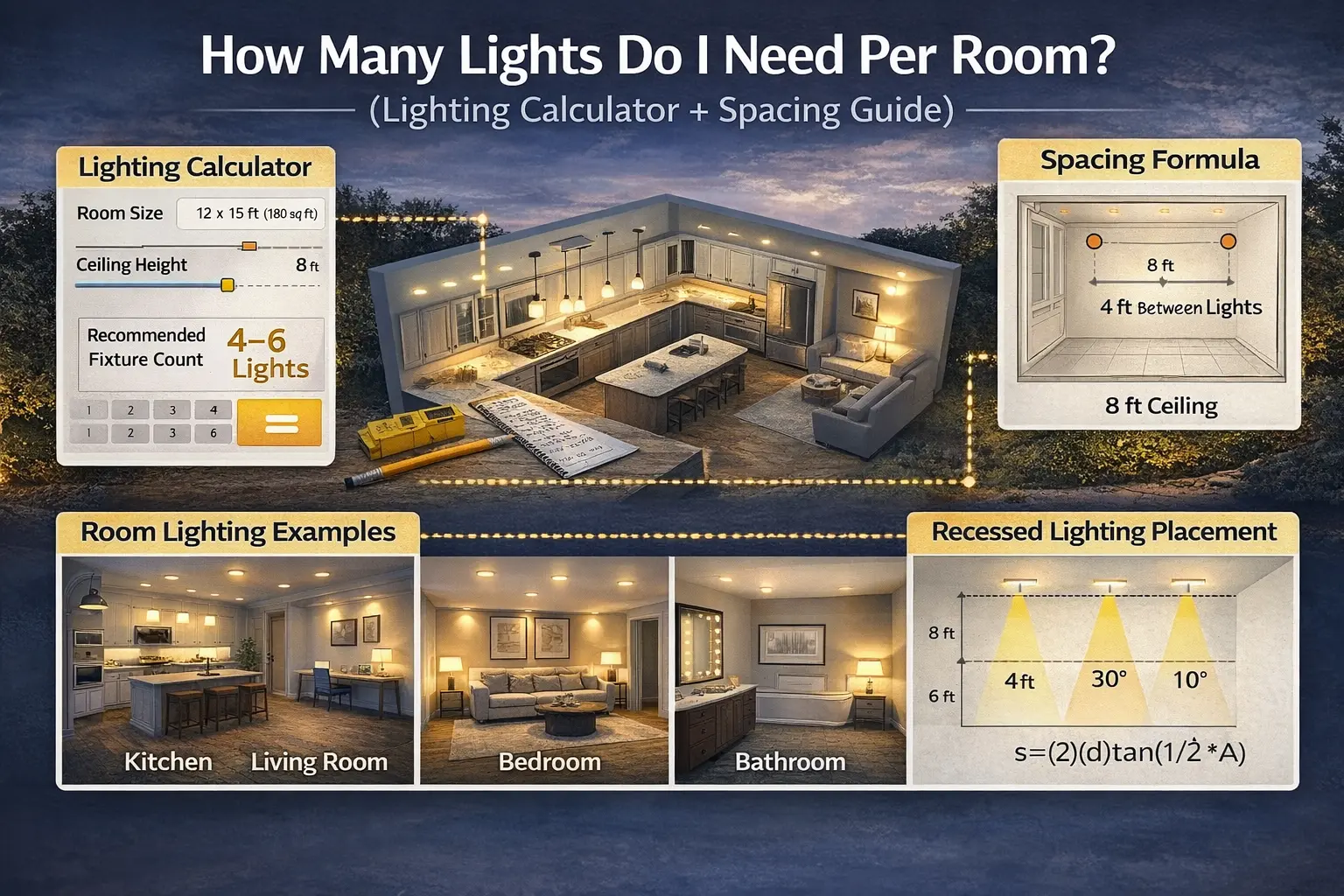
Quick Answer: My 7-Point Room Lumen & Fixture Spacing Protocol
Calculating exactly how many light fixtures a room needs is a matter of mapping foot-candle functional requirements and ceiling geometry, not just picking a random layout pattern. If you calculate your lighting by relying entirely on a single overhead dome light, you end up with dark corners, harsh shadows on your face, and a room that feels visually cramped, regardless of its actual size.
Whenever I draft a residential lighting blueprint or audit an existing room layout that feels dull and gloomy, I run through these seven crucial spacing and load calculations:
- 1. The Square Footage Foot-Candle Target: I start by multiplying the room's square footage by its task intent to establish a target lumen floor (for example, living rooms require about 20 lumens per square foot, while high-task kitchens require a denser 50 lumens per square foot).
- 2. The Ceiling Height Recessed Spacing Rule: When layout-planning recessed cans, I divide the total ceiling height by two to lock in the distance between fixtures (an 8-foot ceiling means placing cans exactly 4 feet apart to keep the beam pools overlapping cleanly).
- 3. Balancing Three Distinct Layers: I never rely on overhead light alone; I always combine ambient ceiling sources, focused task pendants over workspaces, and soft accent wall fixtures to give the room depth.
- 4. The 3-Foot Wall Boundary Buffer: To avoid throwing ugly, harsh shadows straight down your walls or clipping the top of tall furniture, I keep primary recessed housings at least 3 feet out from the wall edges.
- 5. Corner Shadows and Dark Zone Audits: I spot-check the dead corners of the room layout; adding low-level table lamps or dedicated eyeball spots there completely eliminates the visual "cave effect" that ruins large spaces.
- 6. Factoring Diode Beam Spread Angles: A narrow 25-degree spot bulb needs tighter spacing to illuminate a floor surface, whereas a wide 60-degree flood lens spreads light further and lets me place cans slightly wider apart.
- 7. Sinks and Counters Task Requirements: In high-focus zones like master bathrooms and kitchen islands, I position the fixtures directly above the front edge of the counters so you don't block your own light when leaning forward.
⚠️ CRITICAL CALCULATING RISK: Trying to use standard household spacing rules in open, high-ceiling work areas or vaulted garages will leave your floors completely dark. Taller ceilings cause rapid light dissipation, triggering severe visibility failures that I map out across our specialized calculators.
Workshops, deep garages, and warehouse-style rooms require an entirely different level of output compared to standard bedrooms. If you are dealing with a tall open ceiling, jump over to my high bay lighting lumen and spacing calculator guide to see exactly how structural height changes your beam spread and requires commercial-grade power levels to cut through the empty space.
Don't start cutting ceiling holes or purchasing multi-pack fixtures by guessing. Use my step-by-step room layout templates, kitchen task placement sheets, and recessed spacing calculators detailed further down this page to balance your light footprint perfectly.
Most rooms feel too dark or too harsh because the lighting layout was planned by guesswork instead of spacing, brightness, and room function.
A single fixture in the middle of the ceiling often leaves shadows, weak task lighting, and uneven coverage. The right number of lights depends on square footage, ceiling height, spacing, and what the room actually needs to do.
This page helps you estimate fixture count first, then adjust the layout so the room feels balanced instead of too dim or overlit.
Lighting Calculator
The easiest way to estimate how many lights you need is to start with room size and adjust based on how the space is used. This calculator-style guide helps you determine fixture count before you start installing anything.
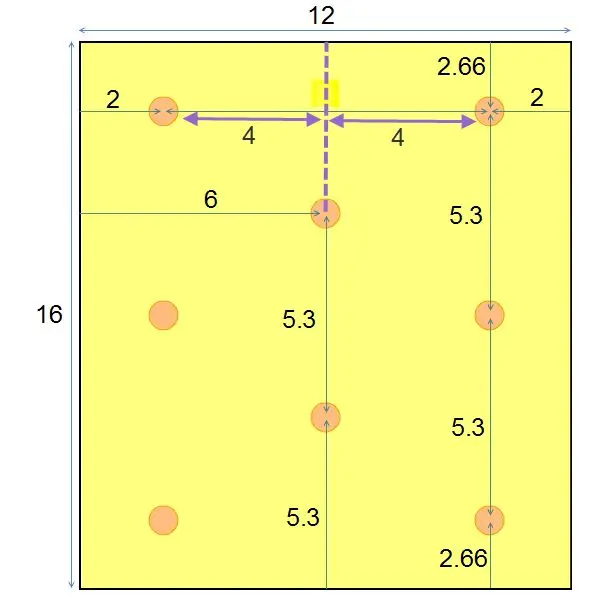
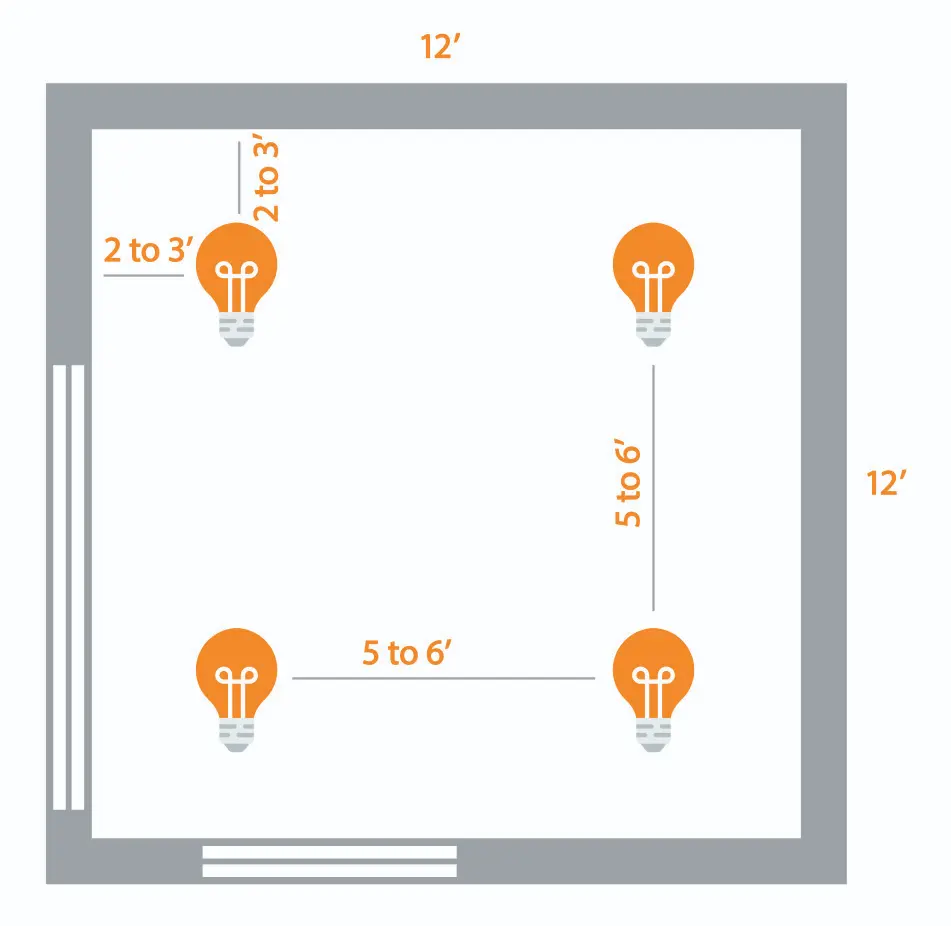
Recommended fixture count: 5
Estimated room area: 192 square feet
Spacing starting point: 4 feet apart
Planning note: Layered living room lighting usually works better than relying on one central ceiling fixture alone.
Calculator and Layout Visuals
Lights Per Square Foot
A useful way to think about room lighting is to start with lumens per square foot instead of fixture count alone. For general ambient lighting, a practical baseline is often around 20 to 30 lumens per square foot. From there, you adjust upward for kitchens, bathrooms, work zones, or higher ceilings.
That matters because two rooms with the same square footage may need very different lighting. A kitchen needs stronger task support than a bedroom. A bathroom mirror area needs more useful light than a hallway. That is why room function matters just as much as room size.
Once you estimate your lighting need in lumens, you can work backward into fixture count. For example, if a room needs 4,000 lumens total and each fixture contributes about 800 lumens, you are roughly in the range of five fixtures. The number still needs to be checked against actual layout and spacing, but that is the logic.
Recessed Light Spacing
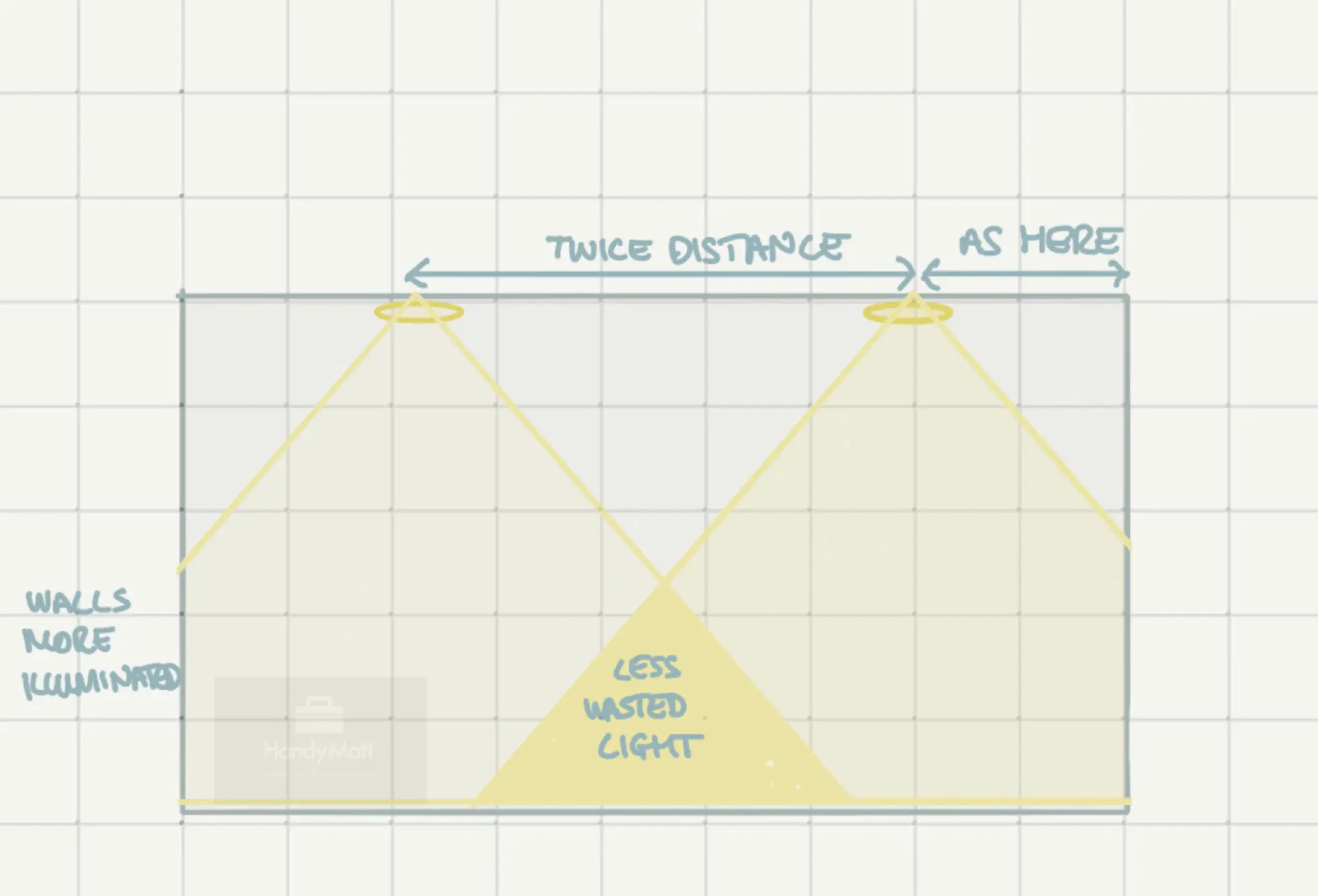
Recessed lighting is one of the most searched lighting topics because the spacing can make or break the room. A commonly used starting rule is to divide the ceiling height by 2. In an 8-foot room, that gives you roughly 4 feet between recessed lights as a baseline.
That rule is helpful, but it is not enough by itself. Beam spread matters. Wider beams cover more area. Narrower beams create more concentrated pools of light. Room layout matters too, because cabinets, islands, mirrors, and seating areas often matter more than a perfect grid.
The goal is to avoid harsh shadows, awkward dark zones, and a layout that looks mathematically even but functions poorly in real life.
Recessed Lighting Spacing Diagrams
How Many Recessed Lights Do I Need?
The number of recessed lights depends on room size, ceiling height, beam spread, and where task areas actually sit in the room.
A common starting rule is ceiling height divided by 2 for spacing, then adjusted for cabinets, islands, mirrors, seating areas, and dark corners.
Room-by-Room Breakdown
Kitchen
Kitchens usually need more lighting than many other rooms because they include prep zones, counters, islands, and task work. This is one reason the kitchen lighting layout guide matters so much. Kitchens usually need a stronger mix of general lighting and task lighting, not just an evenly spaced ceiling grid.
Living Room
Living rooms often need softer, layered lighting instead of maximum brightness. Recessed lights can work well, but lamps, sconces, and accent lighting often matter just as much. The room should feel comfortable, not clinical.
Bedroom
Bedrooms usually benefit from restraint. Too many ceiling lights can make the room feel harsh. Many bedrooms work better with fewer general fixtures supported by bedside or layered lighting.
Bathroom
Bathrooms need functional lighting, especially around the mirror. The room may not need as many general fixtures as a kitchen, but the mirror zone needs useful, flattering light that reduces facial shadows.
Room Example Diagrams
For small accent areas like open kitchen shelves, one cordless shelf lamp may be enough. See our battery operated table lamp guide for brightness and placement guidance.
Can You Have Too Many Lights in a Room?
Yes. Too many lights can make a room feel harsh, create glare, and produce a layout that looks crowded instead of balanced.
More fixtures do not always mean better lighting. Good spacing, correct brightness, and layered lighting matter more than simply adding more ceiling lights.
Common Mistakes
Many lighting problems come from simple planning mistakes rather than bad fixtures.
Too Many Lights
Too many fixtures can create glare, visual clutter, and a room that feels uncomfortable rather than bright in a good way.
Too Few Lights
Too few fixtures leave dark corners, weak task lighting, and rooms that still feel underlit even after the fixtures are installed.
Bad Spacing
Even the right number of lights can perform poorly if the spacing ignores beam spread, walls, cabinets, or room function.
Ignoring Room Function
A kitchen, bedroom, bathroom, and living room should not all be planned with the same formula.
If your lighting feels uneven, too dim, or overly bright, it may be due to layout or spacing issues. This lighting troubleshooting guide explains how to fix common problems.
How This Connects to Your Whole Home
Lighting should be planned across your entire home rather than room by room in isolation. This complete lighting guide helps connect indoor layout, outdoor lighting, and system planning into one cohesive design.
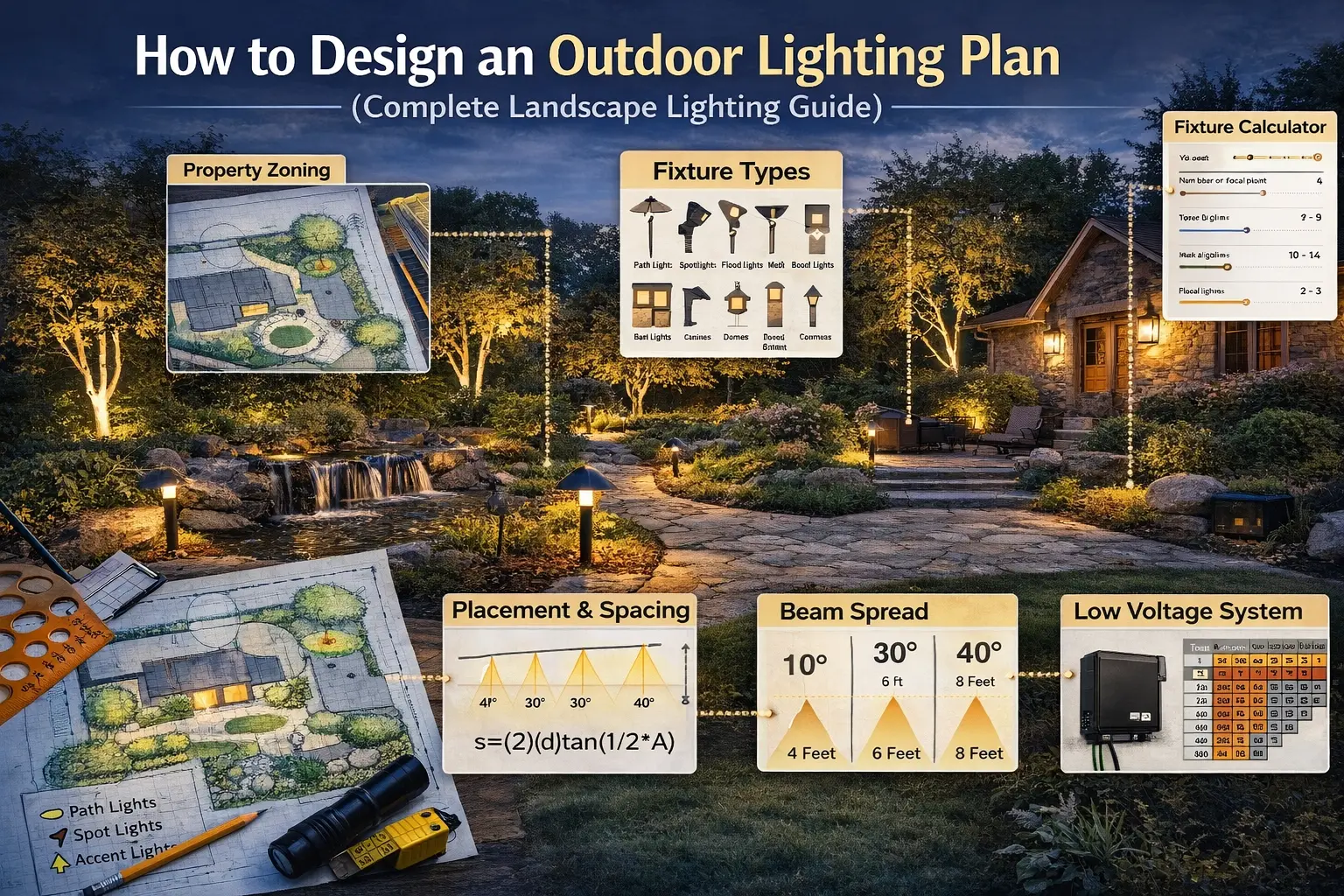
If you are also planning exterior lighting, this outdoor lighting plan guide shows how to calculate and place lights across your yard.
Bottom Line
The right number of lights depends on more than room size. Ceiling height, spacing, fixture type, and room function all change the answer.
The best lighting plan is not always the one with more fixtures. It is the one that gives the room even coverage, useful task light, and a layout that feels comfortable when you actually live in the space.
How Many Lights Per Room FAQ
How many lights per square foot do I need?
A common starting point is about 20 to 30 lumens per square foot for general ambient lighting, but task areas and higher ceilings often need more.
How far apart should recessed lights be?
A helpful starting rule is ceiling height divided by 2, but beam spread and room layout still matter.
Can you have too many lights in a room?
Yes. Too many lights can create glare, harshness, and a room that feels visually crowded instead of balanced.
What is the best spacing rule?
A common baseline is ceiling height divided by 2 for recessed fixtures, then adjusted for actual beam pattern and room use.
How do I calculate lighting for a room?
Start with room size, estimate lumens per square foot, adjust for room type and ceiling height, and then check the result against real-world spacing and layout.