
Apply this guide to Portfolio landscape lighting
When using Where to Put Kitchen Lights (Simple Layout, Spacing & Design Plan) with an existing Portfolio system, begin with the transformer output, fixture ratings, cable route and the model of each light. Existing Portfolio equipment may constrain wire sizing, replacement choices or layout changes.
Portfolio owner’s first step: Map the existing Portfolio fixtures and transformer first, then use the installation and troubleshooting guides for product-specific decisions.
Quick Answer: Kitchen Lighting Layout
A good kitchen lighting layout places lights over work areas—not just the center of the room. Recessed lights should support counters, pendants should light the island, and under-cabinet lighting should eliminate shadows.
- ✔ Recessed lights → 4–6 ft spacing
- ✔ Place lights over counters, not behind you
- ✔ Use pendants for island task lighting
- ✔ Add under-cabinet lighting for best results
Start Here: Simple Kitchen Lighting Layout
- ✔ Small kitchen → 4–6 recessed lights evenly spaced
- ✔ Medium kitchen → recessed + island pendants
- ✔ Large kitchen → layered lighting (recessed + pendants + under-cabinet)
A strong kitchen lighting layout makes the room easier to use, safer to work in, and better looking at every hour of the day. It helps you see food clearly while prepping, reduces shadows near knives and appliances, makes counters more useful, and gives the room more depth and visual balance instead of one harsh pool of overhead light.
This is why kitchen lighting deserves more planning than many other rooms. A bedroom can sometimes get by with a softer layout. A kitchen usually cannot. Work surfaces, islands, sinks, and cabinets all need light in the right places, and the room usually feels best when multiple fixture types work together instead of depending on one ceiling fixture alone.
How this subject supports Portfolio Lighting owners
Connect the topic to product identification, safe installation, repair, or replacement of existing Portfolio fixtures. Begin with the model and installed system rather than assuming all Portfolio products share one design.
What Most People Get Wrong
- Placing lights only in the center of the ceiling
- Ignoring shadows on counters and prep areas
- Using one fixture instead of layered lighting
- Spacing lights evenly instead of intentionally
- Not planning island lighting separately
Why Kitchen Lighting Layout Matters
Good kitchen lighting improves cooking visibility, safety, comfort, and the overall look of the room. It helps you see ingredients clearly, reduce shadows on prep surfaces, and move through the kitchen more confidently when using knives, heat, and appliances.
It also affects how the kitchen looks. Proper lighting highlights countertops, backsplashes, islands, cabinets, and finishes that would otherwise look flat or underlit. This is especially important in kitchens with an island, decorative pendants, open shelving, or strong material details that deserve to be seen clearly.
A well-planned layout is really what connects the kitchen’s working side and design side. It keeps the room practical without sacrificing appearance.
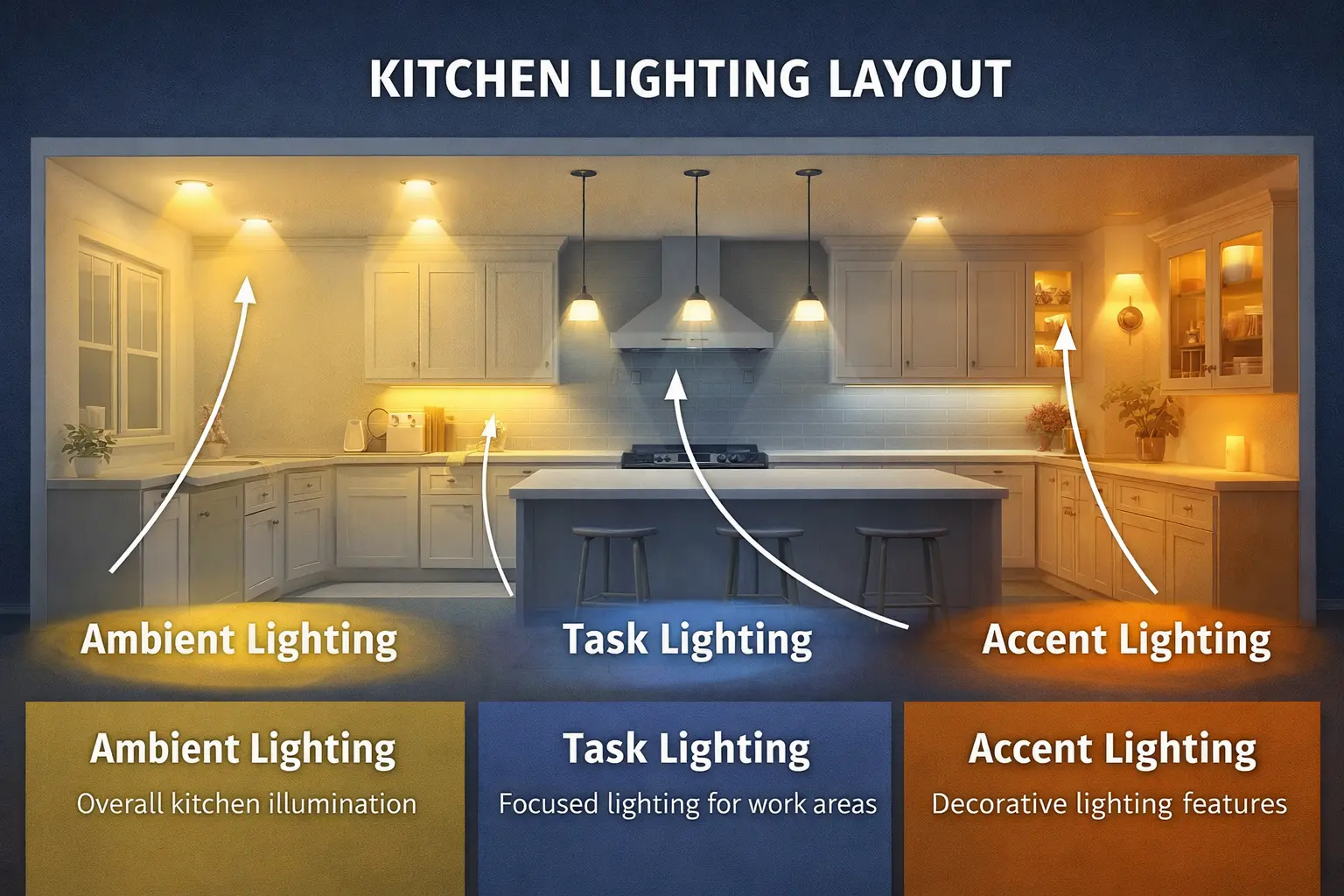
The Three Layers of Kitchen Lighting
Most strong kitchen layouts use layered lighting. That means the room uses more than one type of light, with each layer doing a different job.
Ambient lighting
Ambient lighting is the general room light that gives the kitchen its base brightness. In many kitchens this comes from recessed lights, ceiling fixtures, or both. The goal is even room coverage so the kitchen does not feel dark or patchy. For the fixtures that most often handle this role, visit Portfolio recessed lighting and Portfolio ceiling lighting.
Task lighting
Task lighting supports the places where real work happens. That includes counters, islands, and prep zones. Under cabinet lighting and pendant lights over the island are two of the most common task-lighting choices in a kitchen. Supporting pages include Portfolio under cabinet lighting and Portfolio pendant lighting.
Accent lighting
Accent lighting adds depth and highlights design details. This might include cabinet lighting, wall lighting, or decorative fixtures that bring attention to shelves, wall areas, or selected kitchen features. For related fixtures, see Portfolio sconces lighting.
Recessed Lighting Layout for Kitchens
Recessed lighting is one of the most searched kitchen-lighting topics because it usually forms the ambient base layer of the room. Recessed lights provide even overhead coverage and help the entire kitchen feel brighter without depending on one central fixture.
The biggest layout mistake is placing the lights only in the middle of the ceiling. When that happens, you may still cast shadows onto the counters because your body stands between the light and the workspace. A stronger layout often positions recessed lights so they better support the actual work zones, not just the center of the room.
Spacing recessed lights
Kitchen recessed light spacing depends on ceiling height, fixture beam spread, and room size, but many layouts begin with a starting range of about 4 to 6 feet between fixtures. The goal is even coverage without creating bright clusters in one area and dark spots in another.
Avoiding shadows
Recessed lights should help the counters, island, and sink instead of leaving them as shadow zones. This is why layout matters as much as the fixture itself.
For a deeper fixture guide, see Portfolio recessed lighting.
Kitchen Island Lighting Layout
The island is often one of the most important lighting zones in the kitchen because it may be used for prep work, serving, dining, conversation, or all of those at once. A strong island layout usually combines visual focus with practical task light.
Pendant lights over the island
Pendant lights are one of the most common choices because they direct light downward onto the work surface and also give the island a strong visual anchor. Two pendants often work well for a smaller island, while three pendants are common for a larger island. The final number depends on island size, fixture width, and how much light the pendants are expected to contribute.
Other island options
In some kitchens, track lighting or even a small chandelier may work better depending on style and layout. Track lighting can be especially useful when you want more directional control. For those fixture comparisons, see Portfolio pendant lighting and Portfolio track lighting.
If your kitchen has floating shelves without built-in wiring, use our battery operated table lamp guide for floating kitchen shelves to add warm shelf lighting without opening the wall.
Apply the information to an actual Portfolio installation
Check transformer ratings, fixture requirements, controls, and cable condition when the topic involves outdoor low-voltage equipment. Consult the original manual before substituting components.
Under Cabinet Lighting Placement
Under cabinet lighting is one of the most useful kitchen upgrades because it puts light exactly where many kitchens need it most: directly on the counter surface.
Overhead lights alone often leave the counters shadowed because your body blocks the light while you work. Under cabinet lighting solves that problem by moving the light source forward and down toward the surface itself.
Benefits of under cabinet lighting
- Reduces shadows on work surfaces
- Improves visibility during food prep
- Highlights the backsplash and finishes
- Adds another useful layer to the room
This is why under cabinet lighting is one of the most important task-lighting layers in a strong kitchen layout. For the dedicated page, visit Portfolio under cabinet lighting.
Kitchen Sink Lighting
The kitchen sink is often overlooked in layout planning even though it is used constantly. Whether the sink sits on a perimeter counter or in an island, it deserves enough light to make cleaning and prep tasks easier.
A recessed light above the sink is one of the most common solutions, but depending on the layout, a pendant light or a directional track head may also work well. The real question is simple: does the sink area have usable light, or is it relying too much on distant ambient light from somewhere else in the kitchen?
How Bright Should Kitchen Lighting Be?
Kitchen brightness is easier to plan when you think in lumens instead of watts. Lumens tell you how much visible light the fixtures actually produce.
| Kitchen Lighting Use | Common Brightness Range | Why It Matters |
|---|---|---|
| General kitchen lighting | About 3,000–4,000 lumens | Helps the room feel bright enough overall for everyday use |
| Task lighting | About 400–800 lumens per fixture | Supports prep areas, islands, and other focused work zones |
| Accent lighting | Usually softer and more selective | Adds depth and highlights features without overpowering the room |
These are starting points, not fixed rules. The right level still depends on room size, ceiling height, fixture output, and how bright or soft you want the kitchen to feel.
Common Kitchen Lighting Layout Mistakes
Using only one ceiling light
This is one of the biggest mistakes because it often leaves counters shadowed and work areas underlit even when the room seems bright enough overall.
Poor recessed light spacing
Bad spacing creates dark spots and uneven brightness. Good fixtures still need a good layout to work well.
No task lighting on counters
Kitchens are work-heavy rooms. If the counters do not have direct usable light, the room will not perform as well as it should.
Pendant lights hung too low
Pendants should provide task light over the island without blocking sightlines or making the room feel crowded.
Simple Kitchen Lighting Layout Example
A typical kitchen lighting layout might include six recessed lights across the ceiling, three pendants above the island, under cabinet lighting along the counters, and accent lighting inside selected cabinets or open shelving.
This works because each part of the room gets the type of light it actually needs. The recessed lights brighten the room overall. The pendants define and light the island. The under cabinet lights improve the work surfaces. The accent lighting adds depth and helps the kitchen feel more finished.
Kitchen lighting often requires more fixtures than other rooms because of task areas like countertops and islands. This lighting calculator guide explains how to estimate fixture count based on room size and function.
Planning Kitchen Lighting Before Installation
Kitchen lighting should be planned before fixtures are installed because wiring locations, switch placement, and dimmer control all affect how flexible and useful the finished room will be.
Planning early lets you decide which lights should be grouped together, where the switches should be located, and which layers of light should be dimmable. This is especially important in kitchens because the room may need different lighting moods for cooking, cleanup, dining, and evening use.
For installation help, see Portfolio lighting installation and instructions.
Find the next Portfolio-specific repair step
Use the product and troubleshooting references to move from general lighting information to model-specific maintenance and compatible replacements.
Choosing the Right Kitchen Lighting Fixtures
Fixture choice should support the layout rather than work against it. Recessed lights are often best when you need even ceiling coverage. Pendants are strong for islands because they combine task light with visual focus. Under cabinet lights are one of the best choices for counter task lighting. Track lighting is useful when you want more adjustability.
A well-designed kitchen lighting plan works best when it follows the same basic principles used in other rooms throughout the home. Understanding how ambient lighting, task lighting, and accent lighting work together makes it much easier to decide where recessed lights, pendants, and under-cabinet fixtures should go. If you want a broader explanation of how these lighting layers function and how to apply them in different spaces, visit the complete lighting guide for a deeper look at lighting design, placement, and fixture selection throughout the house.
This is why the kitchen layout page works best as a hub. Once you know what the room needs, you can move into the individual fixture guides that best support your design:
- Portfolio indoor lighting
- Portfolio recessed lighting
- Portfolio pendant lighting
- Portfolio track lighting
- Portfolio under cabinet lighting
- Portfolio sconces lighting
Related Indoor Lighting Guides
Portfolio Indoor Lighting
This is the broader indoor lighting hub and the best place to compare the kitchen with the rest of the indoor room-lighting cluster.
Read the guidePortfolio Recessed Lighting
Use this page when you want more detail on recessed fixture options, coverage, and planning decisions.
Read the guidePortfolio Pendant Lighting
Helpful for island lighting, focal-point fixtures, and pendant placement ideas in kitchen layouts.
Read the guidePortfolio Track Lighting
Explore adjustable lighting when you need more directional control than a standard ceiling layout provides.
Read the guidePortfolio Under Cabinet Lighting
This is one of the most important supporting pages for kitchen counter lighting and task-light performance.
Read the guidePortfolio Lighting Installation and Instructions
Use this page when you are moving from layout planning into actual fixture installation and switch planning.
Read the guideKitchen Lighting Layout FAQ
How many lights should be in a kitchen?
The number depends on kitchen size, ceiling height, fixture brightness, and how the room is used. Most kitchens need a combination of ambient, task, and accent lighting instead of one fixture alone.
Where should recessed lights go in a kitchen?
Recessed lights are usually placed to provide even room coverage while also supporting work areas such as counters, islands, and sinks.
How far apart should kitchen recessed lights be?
Spacing depends on ceiling height and fixture beam spread, but many kitchens use a starting range of about 4 to 6 feet between recessed lights.
What lights should go over a kitchen island?
Pendant lights are one of the most common choices for kitchen islands because they provide direct task lighting and also create a strong visual focal point.
What is the best lighting for kitchen counters?
Under cabinet lighting is often the best choice for kitchen counters because it reduces shadows and puts light directly where food preparation happens.
Should kitchen lights be warm or cool?
Many kitchens work well with light in the warm-to-neutral range, depending on the style of the room and how bright or crisp you want the space to feel.
This page is designed to be the main kitchen lighting planning hub in the indoor lighting cluster, helping you move naturally from room-layout questions into fixture pages, installation guidance, and deeper room-specific lighting help.