
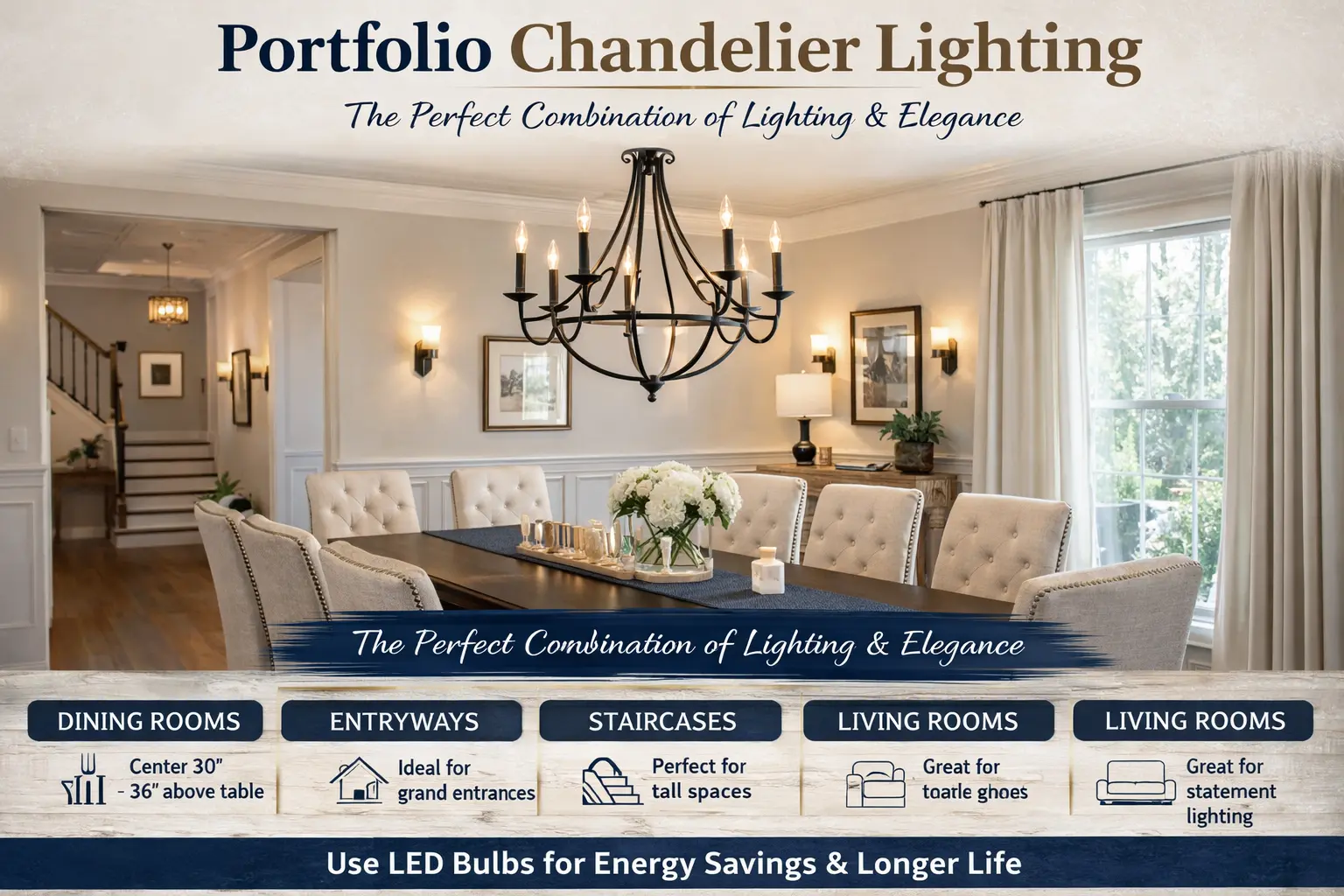
Quick Answer: My 7-Point Room & Table Sizing Protocol
Choosing the perfect chandelier scale is about balancing structural ceiling height and furniture geometry, not just following a basic math shortcut. While the classic "inches-to-feet" trick gives you a starting line, failing to account for visual mass, table width boundaries, and chain drop clearance will leave your dining room or entryway looking completely out of proportion.
Whenever I help map out a lighting layout or scale a fixture for a specific space, I follow these seven strict structural design rules to get the look exactly right:
- 1. The Baseline Room Dimension Formula: I start by adding the room's length and width together in feet, then swap that exact number directly to inches to find the target fixture diameter (for example, a 12 ft × 14 ft room means I source a 26-inch wide chandelier).
- 2. The 12-Inch Table Edge Safety Limit: If the chandelier hangs over a dining table, I measure the total width of the surface and ensure the fixture's diameter is at least 12 inches narrower than the table to prevent guests from bumping their heads when standing up.
- 3. The 30-to-36 Inch Table Surface Gap: For standard 8-foot ceilings, I always position the very bottom of the chandelier between 30 and 36 inches above the tabletop; this keeps the light focused on the dining space without blocking cross-table conversation.
- 4. High Ceiling Height Adjustment: For every extra foot of ceiling height above 8 feet, I add 3 inches to the hanging height, lifting the fixture slightly to balance the empty vertical space in taller rooms.
- 5. Open Space Vertical Floor Clearance: In open entryways, high foyers, or main walkways where people walk directly underneath, maintaining a strict minimum of 7 feet of clearance from the flooring to the bottom of the fixture is an absolute safety requirement.
- 6. Accounting for Visual Weight: A thin, airy wrought-iron frame can be sized slightly larger than the formula suggests, whereas a dense, solid crystal fixture carries heavy visual mass and needs to be scaled closer to your baseline minimums.
- 7. Multi-Fixture Multiplier Spacing: If I am hanging two or more smaller chandeliers over a single long island or table, I space them out by dividing the total table length by the number of fixtures plus one, ensuring perfectly balanced light pools.
⚠️ CRITICAL MOUNTING RISK: Hanging a heavy chandelier without inspecting your central ceiling junction box can lead to disaster. Standard blue plastic boxes are only rated for lightweight fixtures; hanging a unit over 50 pounds requires upgrading to a reinforced steel fan brace to prevent a structural drop.
Over the years, I’ve seen people rush into buying a light fixture just because they loved the style, only to find out it hung too low or looked like a tiny dot in an open room. In practice, spending ten minutes checking your table margins, clearing your walkway headroom, and verifying your ceiling box load is what makes a chandelier look intentional, premium, and perfectly integrated into the space.
Don't start measuring chain links or ordering fixtures blindly. Use my step-by-step room design layouts, table sizing tables, and high-ceiling calculation blueprints detailed further down this page to map out your layout.
Common Chandelier Sizing Mistakes
- Choosing a chandelier that is too small for the room
- Using room size but ignoring table size
- Hanging the fixture too high or too low
- Ignoring ceiling height when selecting size
- Picking style first instead of scale
Many homeowners start looking at chandeliers because a room needs something more than plain overhead lighting. A dining room may need a stronger centerpiece. An entryway may feel too empty. A living room may need a decorative ceiling fixture that makes the room feel more finished. Or an older chandelier may need to be replaced with something that looks cleaner, works better, or uses more efficient lighting.
This guide is part of our broader Portfolio indoor lighting guide, which covers the different types of fixtures used throughout a home. Chandeliers are a great option in certain rooms, especially where you want a decorative centerpiece along with general lighting. In other spaces, fixtures like pendant lights, recessed lighting, track lighting, or standard ceiling fixtures may be a better fit. Looking at chandelier lighting within the bigger picture of indoor lighting can help you choose the fixture that works best for your room and layout.
Before choosing a chandelier, it helps to understand how different lighting types work together. Start with the lighting guide for a full overview of indoor lighting planning.
What Is a Chandelier?
A chandelier is a decorative ceiling-mounted light fixture that typically features multiple light sources arranged on arms or branches extending from a central body. Chandeliers are commonly used in dining rooms, entryways, and living spaces where both illumination and decorative style are important.
Portfolio chandeliers lighting fits into the indoor lighting category as a fixture type that brings together ambient light and visual impact. Unlike more basic ceiling fixtures, a chandelier is usually meant to be seen and appreciated as part of the room design rather than disappearing into the background.
Understanding Portfolio Chandelier Lighting
Chandeliers are often chosen because they help a room feel more finished and intentional. In dining rooms they help anchor the table. In entryways they create a strong first impression. In living rooms they can act as a statement fixture that supports the style of the space. In bedrooms they sometimes add a softer, more decorative layer than a standard ceiling fixture would provide.
What makes chandeliers different from many other indoor fixtures is that they combine function and design in equal measure. They are meant to give light, but they are also meant to contribute to the look of the room. That is why sizing, hanging height, ceiling height, and room proportions matter so much more here than they do with a basic flush mount fixture.
This is why chandelier lighting deserves a closer look on its own. It solves a specific need in a home, but it also connects to other lighting choices you may be considering.
Best Places to Install Chandeliers
Dining rooms
Dining rooms are one of the most common places to install chandeliers because the fixture helps center the table and define the room. A chandelier over a dining table often becomes the visual anchor of the whole space, especially in homes where the dining area is open to other rooms.
Chandeliers work best when they are part of a full lighting layout. See the indoor lighting layout guide to understand spacing and fixture balance.
Entryways
Entryways are another classic chandelier location because a ceiling fixture in that space sets the tone for the home immediately. In taller foyers and open stair entries, a chandelier can fill vertical space in a way that smaller fixtures often cannot.
Living rooms
In living rooms, chandeliers work best when the goal is to make the ceiling fixture part of the room design instead of just a source of general light. They are especially effective in rooms with enough ceiling height and enough visual space for the fixture to feel intentional rather than crowded.
Staircases
Staircases and two-story spaces often benefit from chandeliers because the fixture can help light the vertical volume of the room while also making use of otherwise empty overhead space. This is one place where the scale of the chandelier can add real visual drama.
Bedrooms
Bedrooms sometimes use chandeliers when the goal is to create a softer or more decorative look than a plain ceiling fixture would offer. In these rooms, the chandelier often works as much for atmosphere as for brightness.
How to Choose the Right Chandelier Size
Chandelier size matters because a fixture that is too small can feel lost, while one that is too large can overwhelm the room. One common starting rule is to add the room width and room length in feet, then use that total as the approximate chandelier diameter in inches.
For example, if your room is 12 feet wide and 14 feet long, the total is 26. That suggests a chandelier around 26 inches wide as a reasonable starting point. It is not a hard rule, but it is a helpful way to narrow the options quickly.
You should also think about the table or furniture below the chandelier, ceiling height, and how bold or quiet you want the fixture to feel visually. A dining room chandelier should usually feel proportionate to the table, not just to the room by itself.
If you are planning lighting across an entire room, use the room-by-room lighting plan guide to build a complete layout before choosing fixtures.
How High Should a Chandelier Be Hung?
Hanging height changes both how the chandelier looks and how useful it is. The fixture should feel connected to the room without hanging so low that it blocks sightlines or creates a clearance problem.
| Location | Common Starting Rule | Why It Matters |
|---|---|---|
| Above a dining table | About 30 to 36 inches above the tabletop | Keeps the fixture visually connected without crowding the table |
| Entryway or open room | Keep at least 7 feet of floor clearance | Prevents head clearance problems and keeps the room feeling open |
| Two-story foyer | Place where it fills the vertical space naturally | Helps the chandelier feel scaled to the height of the room |
| Bedroom | High enough to feel open and comfortable | Avoids making the ceiling feel crowded |
| Stairwell | Plan around the stair path and sightline | Maintains safe clearance and better visual balance |
Glass Chandeliers Can Create Beautiful Shadows — or Unwanted Glare
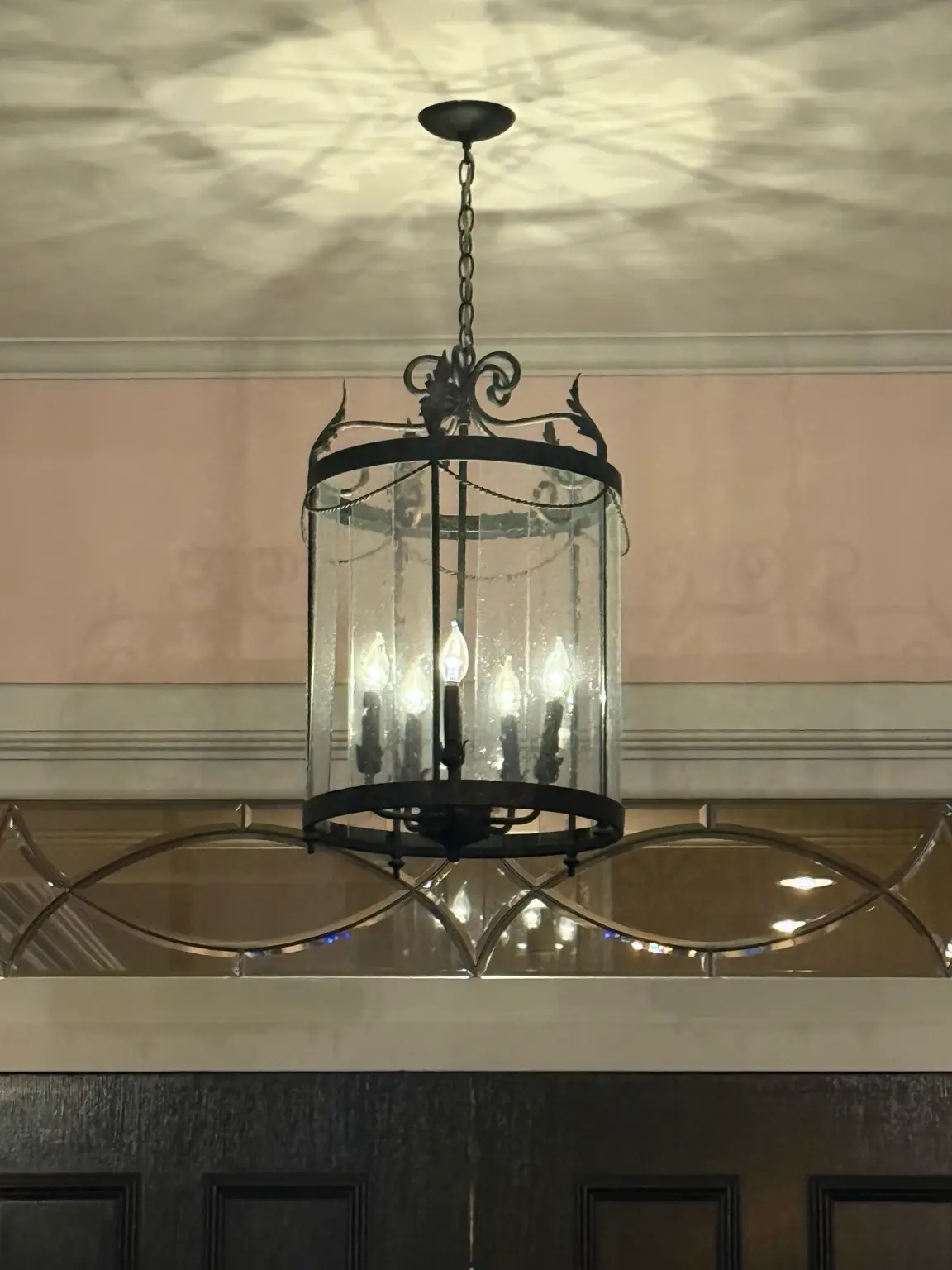
A chandelier is not just a decorative object. The glass, bulb shape, mounting height, and ceiling reflection all change the way the fixture performs in the room.
If a chandelier feels too harsh, try lower-lumen bulbs, warmer color temperature, frosted bulbs, or dimmer-compatible LEDs before replacing the fixture.
Chandeliers vs Other Indoor Lighting Fixtures
Chandeliers vs pendant lighting
Pendant lighting is usually more focused and often used over islands, bars, and smaller task-centered areas. Chandeliers are usually more decorative and broader in visual impact. If you are deciding between the two, the real question is whether the room needs a centerpiece or a more targeted hanging light. For that comparison, visit the Portfolio pendant lighting guide.
Chandeliers vs ceiling lighting
Basic ceiling lighting is often chosen for straightforward general brightness. Chandeliers do that too, but they are also meant to be part of the design statement. If you need simple everyday light, a ceiling fixture may be enough. If you want decorative emphasis, a chandelier often makes more sense. Compare both styles on the Portfolio ceiling lighting page.
Chandeliers vs recessed lighting
Recessed lighting creates a quieter ceiling look and is often better for distributed room brightness. Chandeliers are more visible and more decorative. In some homes the best result is not choosing one or the other, but using recessed lights for general coverage and a chandelier for focal-point lighting. If you are comparing both, see the Portfolio recessed lighting guide.
If you are comparing chandelier fixtures with other indoor lighting styles, our Portfolio indoor lighting guide explains how chandeliers fit alongside pendant lighting, track lighting, and recessed lighting. Reviewing multiple fixture types can help you choose the lighting style that works best for your room layout, ceiling height, and overall design goals.
If you are combining chandeliers with ceiling or recessed lighting, see how many lights you need per room to balance brightness correctly.
How to Install Portfolio Chandeliers
Chandelier installation is often manageable when you are replacing a ceiling fixture at the same electrical box, but it still requires planning and careful support. Chandeliers are often heavier and more visually sensitive than simple ceiling lights, so both the electrical connection and the physical mounting need to be done correctly.
- Turn off power at the breaker and confirm the circuit is dead.
- Inspect the ceiling box to make sure it is secure and properly rated.
- Install the mounting bracket and support hardware.
- Connect the fixture wiring and grounding path according to the instructions.
- Attach the chandelier body, chain, or rods and set the correct hanging height.
- Install bulbs or secure the integrated light assembly, then test power.
If you need broader help with setup and fixture instructions, go to the Portfolio lighting installation and instructions page.
Benefits of LED Chandelier Lighting
LED chandelier lighting is a strong choice for many homes because it uses less energy, runs cooler, and usually lasts longer than older bulb styles. That matters in chandeliers because many fixtures use multiple bulbs, and that can add up quickly in both energy use and maintenance.
Another practical advantage is lower heat output, which can matter in decorative enclosed or semi-enclosed fixtures. If you are considering LED upgrades across your indoor fixtures, the Portfolio LED lighting page is a useful supporting guide.
Common Chandelier Lighting Problems
Chandelier not turning on
Start with the breaker, wall switch, bulbs, and wiring connections. If the whole fixture is dead, the issue may be the switch feed, ceiling box connection, or the fixture itself.
Flickering chandelier lights
Flickering often points to a loose bulb, poor connection, socket issue, or dimmer compatibility problem. This is especially common when an older chandelier is updated with LED bulbs but the dimmer was not changed to match.
Loose ceiling mount
A loose chandelier is usually a mounting issue, not just a lighting issue. Because the fixture hangs down into the room, secure support matters. The box and mounting hardware both need to be correct for the weight and design of the chandelier.
For broader diagnostic help, use the Portfolio lighting troubleshooting guide. That page is useful whenever the issue seems bigger than one fixture or when you are not sure whether the problem is the bulbs, dimmer, wiring, or fixture itself.
If your chandelier flickers or dims, the issue may not be the fixture itself. See why lighting looks too dim and LED flickering issues for deeper troubleshooting.
Finding Replacement Parts for Portfolio Chandeliers
Many chandelier searches eventually turn into parts searches. Homeowners may be trying to replace bulbs, shades, chains, mounting hardware, sockets, decorative arms, or other fixture pieces. Whether a repair is worth it depends on the age of the chandelier, the availability of the part, and whether the fixture still suits the room.
Your best starting point is the Portfolio lighting parts and accessories page, especially if you are trying to identify a replacement part before you order. If you are shopping more broadly, you can also browse Portfolio lighting replacement parts on eBay and Portfolio lighting parts on Amazon.
Explore More Indoor Lighting Guides
Portfolio Indoor Lighting
This is the main pillar page for the indoor lighting cluster and the best place to compare fixture categories side by side.
Read the hubPortfolio Pendant Lighting
Compare chandeliers with pendant fixtures when you want to weigh focal-point style against more targeted hanging light.
Read the guidePortfolio Ceiling Lighting
Use this guide when you want to compare decorative chandeliers with simpler everyday ceiling fixtures.
Read the guidePortfolio Recessed Lighting
Explore the cleaner ceiling alternative when you want distributed light with less visible fixture presence.
Read the guidePortfolio LED Lighting
Helpful when you are comparing bulb types, efficiency, and LED upgrade choices for chandeliers and other indoor fixtures.
Read the guideInstallation and Instructions
Use this page for broader setup help, instructions, and installation support across fixture categories.
Read the guideChandelier Size Chart (Quick Reference)
- 10 x 10 room → ~20" chandelier
- 12 x 14 room → ~26" chandelier
- 14 x 16 room → ~30" chandelier
- Large open rooms → 32"+ chandelier
Large Chandeliers Need Scale, Bulb Control, and Room Balance
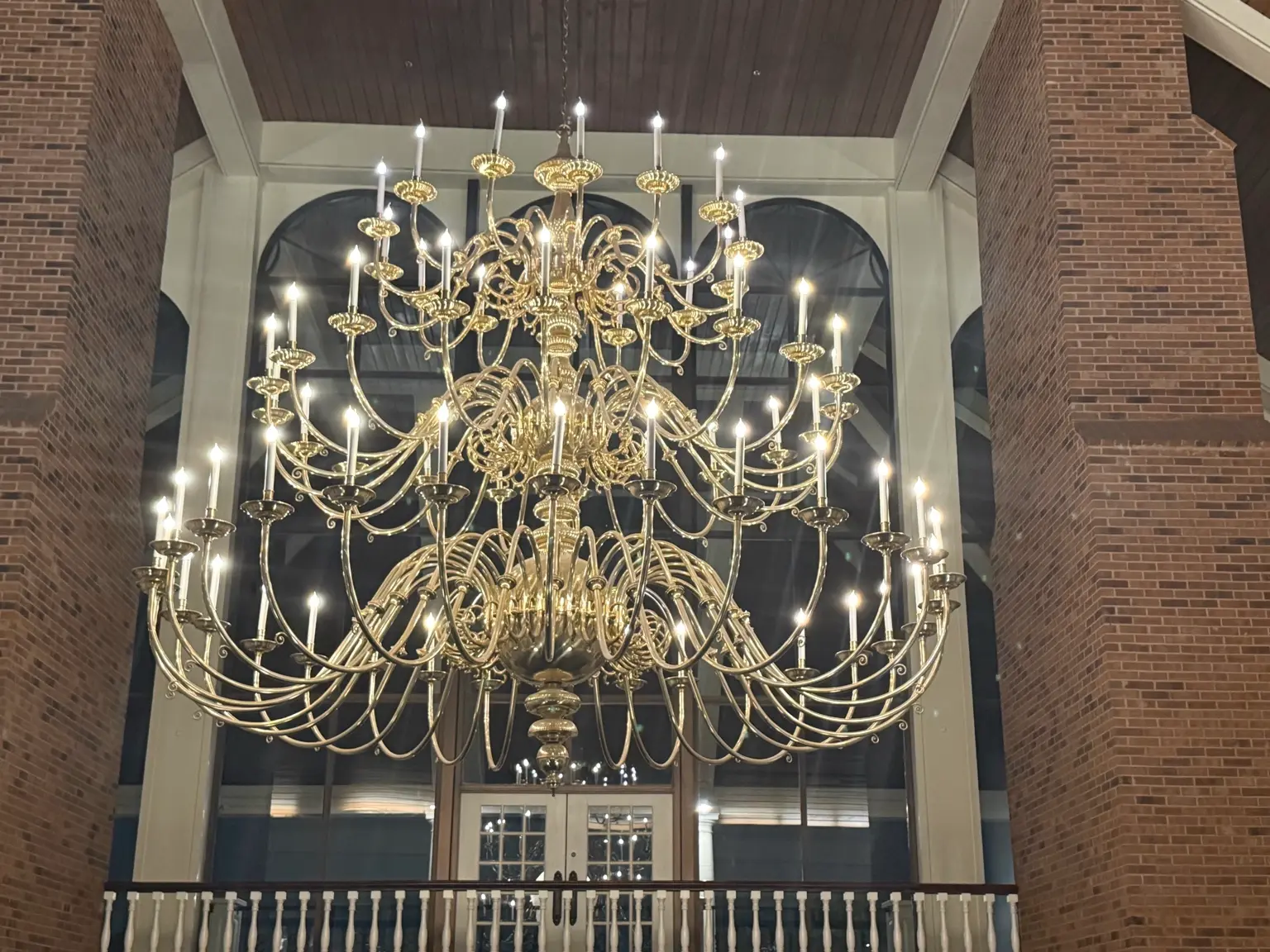
A chandelier this large is not just decorative. It becomes the visual center of the space, so the fixture needs to match the room scale, ceiling height, window placement, and viewing angles from below.
When upgrading older Portfolio-style chandeliers, I would check the bulb base type, total wattage, dimmer compatibility, LED color temperature, and whether exposed candle bulbs are creating glare. In many cases, matching lower-lumen warm LED bulbs can make the chandelier feel more comfortable without replacing the fixture.
Common Questions About Portfolio Chandeliers
What size chandelier should I use?
A common starting rule is to add the room length and width in feet, then use that total as the approximate chandelier diameter in inches.
How high should a chandelier hang above a table?
A common starting guideline is about 30 to 36 inches above the dining table, then adjust slightly based on ceiling height and fixture size.
Are chandeliers outdated?
No. Chandeliers are still widely used because they combine ambient light and decorative style in dining rooms, entryways, living rooms, and bedrooms.
Can chandeliers use LED bulbs?
Yes. Many chandeliers can use LED bulbs, which are popular for energy savings, lower heat, and longer life.
Can a chandelier be installed on a vaulted ceiling?
In many cases, yes, as long as the mounting hardware and canopy work with the ceiling angle and the fixture is installed safely.
Can a chandelier be dimmed?
Many can, but the bulbs or integrated LED components and the dimmer must be compatible to avoid flickering or poor dimming results.
This chandelier guide is designed to help homeowners understand sizing, placement, installation, troubleshooting, and replacement decisions before buying or updating Portfolio chandelier lighting.