
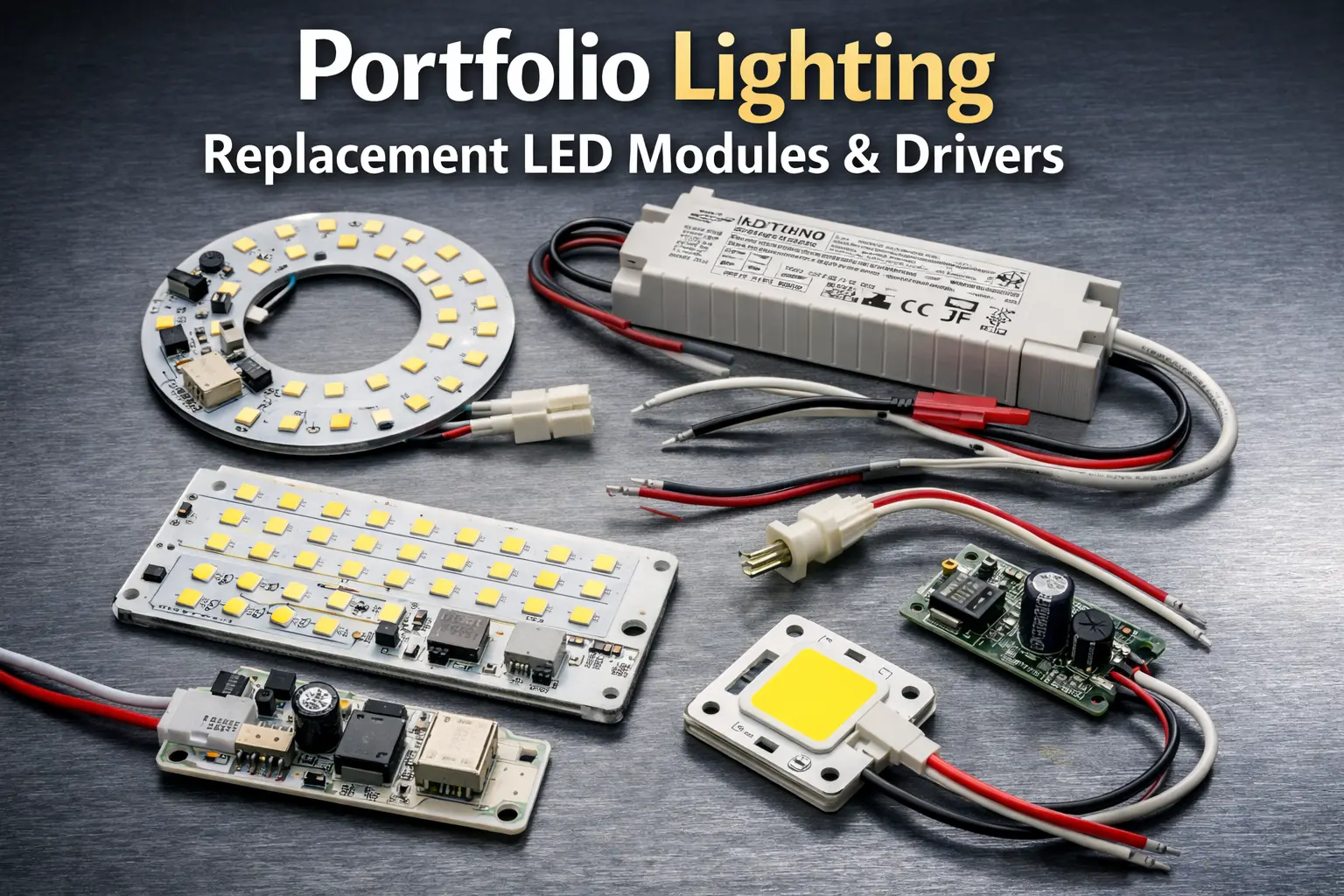
Quick Answer: My 7-Point Driver vs. Module Diagnostic Protocol
Fixing a dead integrated LED fixture requires separating the power control engine (the driver) from the actual light-producing diode board (the module). Unlike old screw-in bulbs, modern downlights rely on a two-part system to manage house current. If your light goes dark, it means one of these two internal blocks failed, and swapping just the broken component saves you from a total ceiling remodel.
Whenever I tear down a dead downlight on my test bench or diagnose an overhead fixture that won't strike, I isolate the issue using these seven solid-state troubleshooting steps:
- 1. Spotting Strobe-Like Flickering: If your ceiling lights turn into a rapid strobe or pulse consistently when you flip the switch, the driver's internal capacitor is failing to smooth out the power; your module is fine, but the driver needs a swap.
- 2. Testing Dim or Faded Light output: If the light turns on but looks incredibly faint, muddy, or only half of the small diode square glows, the LED module board has reached its end of life or suffered heat damage.
- 3. The Dead Silence Outage Test: When a fixture produces no light at all, I test the line voltage. If 120V power hits the driver input box but zero direct-current electricity exits to the bulb side, the driver is completely fried.
- 4. Matching Dimmer Control Protocols: Mismatching your wall switch with your fixture driver causes nasty hums and blinks; I make sure your wall switch perfectly matches the driver type (like standard forward-phase vs. 0-10V low-voltage lines).
- 5. Checking the Thermal Sinking Pad: When I pull out a scorched module, I always inspect the thermal paste or pad behind the board; if that boundary is dried up or missing, the light board will overheat and cook itself in months.
- 6. Tracing Low-Voltage Wire Harness Clips: Sometimes the fix is dead simple; I check the quick-connect plastic clip running between the driver housing and the trim ring to ensure it hasn't shaken loose inside the ceiling.
- 7. Identifying Ghosting Traps: If your lights glow faintly even when the wall switch is completely off, there is low-level phantom voltage leaking through your house lines, not a problem with your hardware components.
⚠️ CRITICAL RETROFIT RISK: Swapping a driver box with an unverified aftermarket model that puts out the wrong milliamp current will permanently cook your replacement LED light module the absolute second you flip the wall switch. Ignoring these component electrical balances triggers three critical failure points that I detail in my internal wiring tear-downs below.
Before you buy a new piece of hardware, you need to verify if your light is part of a commercial-spec Cooper architectural layout. If you are dealing with one of these heavy-duty setups, take a moment to look through my complete Portfolio architectural LED catalog guide where I break down ERM power modules, D010TE and DE010 driver wiring rules, safe replacement pathways, and how to match your factory trim finish perfectly.
Don't start pulling down drywall housings or buying replacement blocks blindly. Use my step-by-step diagnostic layout templates, driver current matching tables, and fixture troubleshooting schematics detailed further down this page to pinpoint your fix.
LED Module vs Driver Diagnosis Guide
| What You See | Most Likely Cause | What To Replace |
|---|---|---|
| No light at all | Driver or module failure | Test driver first |
| Flickering or pulsing | Driver instability | Replace LED driver |
| Dim output | LED module degradation | Replace LED module |
| Partial light working | LED board damage | Replace module |
| Worked for years then failed | Driver wear or LED aging | Start with driver check |
Identifying the failure type first saves time, money, and ordering the wrong part.
Two LED drivers with the same voltage and wattage rating can behave very differently when first energized. Input capacitance, inrush limiting, power-factor circuitry, source impedance, and cold-start temperature all influence the peak current pulse. Before replacing multiple drivers on one circuit, consult the landscape lighting LED-driver inrush database to understand why running watts alone cannot establish switching or transformer compatibility.
Start Here: Which Part Do You Need?
- Light flickers → replace driver
- Light is dim → replace module
- No light → check driver first
- Old fixture → consider both parts
Always identify the failure type before buying a replacement part.
What Portfolio LED Modules and Drivers Actually Do
In a traditional fixture, the bulb is the part that usually fails first. In an integrated LED fixture, the setup is different. Instead of a standard bulb you can remove and replace, the fixture often uses an internal LED board or module that creates the light and a separate driver that controls the power going to that module.
The LED module is the light-producing component. It may look like a circular board, a strip, or a flat panel with built-in LEDs. The driver is the power-management component. Its job is to convert and regulate the electrical current so the LEDs receive the correct output. If either part fails, the fixture may stop working properly even though the housing, finish, and mounting hardware are still perfectly usable.
That is what makes Portfolio lighting replacement LED modules and drivers such a valuable buyer category. A fixture that seems dead may not actually need to be thrown away. Sometimes the problem is isolated to one internal LED part that can be replaced if the right match can be found.
Common Signs a Portfolio LED Module or Driver May Be Failing
One reason buyers get stuck is that an LED driver problem and an LED module problem can look similar at first. The fixture just seems weak or dead. But some patterns point more clearly toward one component or the other.
If an integrated fixture is failing, the problem may be the LED module or the driver rather than the entire housing. Before replacing the whole fixture, many homeowners compare Portfolio lighting LED modules, drivers, and replacement parts to see whether a simpler repair is possible.
Before replacing an integrated LED module or driver, identify whether your Portfolio fixture is fully integrated or socketed using the Portfolio Lighting Master Model Technical Database.
| What You Notice | Possible Cause | Why It Matters |
|---|---|---|
| Fixture is completely dead | Driver failure or module failure | Either part may have stopped the light entirely |
| Light flickers or pulses | Often points to driver instability | Drivers commonly create inconsistent output when failing |
| Fixture is dimmer than before | LED module degradation or weak driver output | Helps narrow the problem to performance rather than total failure |
| Only part of the light output works | LED board or module damage | More often associated with the light-producing component itself |
| Fixture worked, then stopped after years | Aging internal electronics | Common with older integrated LED designs |
Why Buyers Search for LED Drivers and Modules Instead of New Fixtures
Buyers looking for these parts are usually trying to avoid the cost and hassle of replacing the full fixture. That makes sense. A ceiling light, vanity light, under-cabinet light, or integrated outdoor fixture may still look great and match the rest of the room or home. If the failure is inside the LED electronics rather than in the visible fixture body, a replacement part can be a much smarter move than a full swap.
This is especially true with discontinued Portfolio designs. Once a fixture style is no longer sold, replacing the entire unit can create a mismatch with nearby lights. A compatible LED module or driver gives buyers a chance to keep the original look while fixing the part that actually failed.
That is why this page is written as a buyer-intent guide. People searching for replacement LED modules and drivers usually already own the fixture, want to save it, and need practical help identifying the correct internal part.
If you are replacing an LED board or driver inside an older fixture, consider whether the repair can become a human-centric lighting upgrade. The Portfolio HCL retrofit guide explains how to choose emitters, low-flicker drivers, and night-safe amber or red channels for compatible housings.
How to Identify the Correct Portfolio Replacement LED Module or Driver
Unlike a standard bulb, an LED module or driver cannot usually be identified by a simple shape name alone. Buyers need to compare real technical details. That can sound intimidating at first, but it usually comes down to a few practical things: physical size, connector type, voltage or output information, mounting points, and how the part fits inside the fixture.
Look at the original labels
Many drivers and LED boards have printed markings that include wattage, voltage, output range, or part codes. Those numbers can be extremely helpful when comparing replacement options.
Check the connector and wiring layout
The replacement part still needs to connect to the fixture the same way. A driver with the wrong connector or a module with a different wire layout may not be practical even if the size seems close.
Compare the physical dimensions
The replacement has to fit within the existing fixture housing. A driver that is too large or a board with different mounting holes may create more work than expected.
Think about light output and color
Buyers also care about how the light looks. A replacement that is much cooler, warmer, dimmer, or brighter than the original may technically work but still change the fixture’s appearance in a way they do not want.
Best Search Approaches for Portfolio LED Modules and Drivers
Buyers usually get better results when they search for both the brand and the part category, then narrow by numbers from the original component if available. Because sellers describe these parts differently, trying multiple search phrases is often the best strategy.
| If You Need | Try Searching For | Why It Helps |
|---|---|---|
| General LED repair part | Portfolio lighting replacement LED module | Good broad starting point for integrated LED fixture repairs |
| Power-control component | Portfolio LED driver replacement | Useful when flickering or no-output behavior suggests driver failure |
| Internal light board | Portfolio integrated LED replacement board | Helps surface board-style module results |
| Hard-to-find internal part | Portfolio lighting replacement parts | Best broad search when exact part wording is unknown |
| Discontinued fixture electronics | Portfolio discontinued LED driver or module | Helpful for older fixture searches and resale inventory |
Where to Buy Portfolio Lighting Replacement LED Modules and Drivers
Since many Portfolio fixtures are older or discontinued, buyers often have the best luck on resale marketplaces where extra stock, salvaged parts, and compatible internal components still show up. This is especially true for LED drivers and LED boards, because those parts are not always sold through regular retail lighting channels once the original fixture line is gone.
Starting with a broad search usually makes the process easier. You can then refine by the type of part, the numbers printed on the original component, or the fixture style itself. This is often more effective than searching only for the exact fixture name, because sellers may list the internal component in a different way than the original fixture branding.
Start your search here: Portfolio lighting replacement parts on eBay.
Buyers who search both the general Portfolio replacement parts phrase and more specific terms like “LED driver,” “LED module,” or “integrated LED board” usually uncover better options.
Many Portfolio owners buy bulbs for fixtures that never used a replaceable bulb. Some models use sealed LED boards or integrated modules behind a fixed lens, which usually changes the repair path from bulb replacement to fixture-head replacement. If the model number is unfamiliar, compare it in the Portfolio Lighting Lost Models Archive before buying bulbs, LED modules, drivers, or full replacement fixtures.
LED Module vs LED Driver: What Buyers Need to Understand
Buyers often treat these parts as interchangeable, but they serve different roles. The LED module is the part that emits the light. The driver is the part that feeds and regulates power. If the module is damaged, the fixture may show dead sections, weak output, or no light at all. If the driver is failing, the fixture may flicker, pulse, or stop working even though the LED board itself still looks intact.
This distinction matters because ordering the wrong part will not solve the problem. That is why some buyers start by troubleshooting the fixture behavior before they shop. If the failure pattern points more strongly toward power regulation, the driver is a smarter place to focus. If the visible LED board shows clear damage or partial output loss, the module becomes the stronger suspect.
Buyers who need broader repair help before purchasing should also review our Portfolio Lighting Troubleshooting page and our Portfolio Lighting Compatibility Guide.
When a Compatible LED Driver or Module Makes Sense
With discontinued fixtures, buyers are not always going to find an exact original replacement. In many cases, a compatible driver or module is the more realistic path. What matters most is whether the replacement fits the fixture, matches the electrical requirements, and delivers light in a way that still looks right for the space.
This is where careful comparison matters. A compatible part may work very well, but it should not be treated like a random guess. Buyers need to compare the original numbers, layout, and function as closely as possible before ordering. If the replacement is too different in output or form factor, the repair can become more complicated than expected.
For buyers comparing broader options, this is a practical place to start: browse compatible Portfolio replacement parts on eBay.
Should You Replace the LED Part or Replace the Entire Fixture?
In many cases, replacing the failed LED component is the better value. If the fixture body still looks good, the finish still matches the room, and the mounting hardware is in good shape, a replacement module or driver can keep the original fixture in service without forcing a full replacement.
That is especially important in rooms with multiple matching fixtures. Replacing one integrated LED fixture with a different style can make the room look mismatched right away. Saving the original fixture through an internal LED part replacement often preserves both appearance and budget.
A full fixture replacement makes more sense when the housing is damaged, multiple internal parts have failed, or the cost and effort of sourcing a compatible LED component no longer make practical sense. But for many buyers, a targeted replacement part is exactly what keeps the project simple.
Portfolio Lighting Replacement LED Modules and Drivers FAQ
Where can I buy Portfolio lighting replacement LED modules and drivers?
Buyers often have the best luck on resale marketplaces where discontinued and hard-to-find parts still appear. A good place to start is this search for Portfolio lighting replacement parts on eBay.
What is the difference between an LED module and an LED driver?
The LED module is the light-producing part, while the driver manages and regulates the power going to that module.
Can I use a compatible LED driver instead of the exact Portfolio part?
In some cases, yes, but buyers should compare the original part numbers, physical fit, connector style, and output requirements carefully before ordering.
Should I replace the internal LED part or replace the whole fixture?
If the fixture body still looks good and the failure appears limited to the internal LED electronics, replacing the module or driver is often the more practical option.
Final Thoughts on Buying Portfolio Replacement LED Modules and Drivers
Integrated LED fixtures can feel harder to repair than traditional bulb-based lights, but that does not mean they are always disposable. In many cases, the real problem comes down to one internal component. Buyers who take the time to identify whether the failure points to the LED module, the driver, or a compatible internal replacement part usually have a much better chance of saving the fixture.
This page is designed for buyers who want a practical repair path instead of a vague overview. If your Portfolio fixture still fits the room, still looks good, and only needs the right internal LED part, a careful replacement can often restore the light without the cost of starting over.
More Portfolio Replacement Parts Guides
Portfolio Lighting Parts and Accessories
Visit the main replacement parts hub for LED modules, drivers, hardware, globes, diffusers, and more.
Read the guidePortfolio Lighting Replacement Hardware
Find mounting parts, canopy kits, sockets, and fixture hardware often needed during integrated LED repairs.
Read the guidePortfolio Lighting Compatibility Guide
Compare older and discontinued Portfolio models to better understand which replacement parts may cross over.
Read the guidePortfolio Lighting Troubleshooting
Work through common fixture problems first if you still need to confirm whether the issue is the module, the driver, or something else.
Read the guideWhere to Buy Portfolio Lighting Replacement Parts
Compare the best places to buy Portfolio replacement parts online, including hard-to-find internal LED components.
Read the guidePortfolio Lighting Bulb Replacement
Compare standard bulb-based fixes against integrated LED repairs so buyers can tell which type of fixture they actually have.
Read the guide