
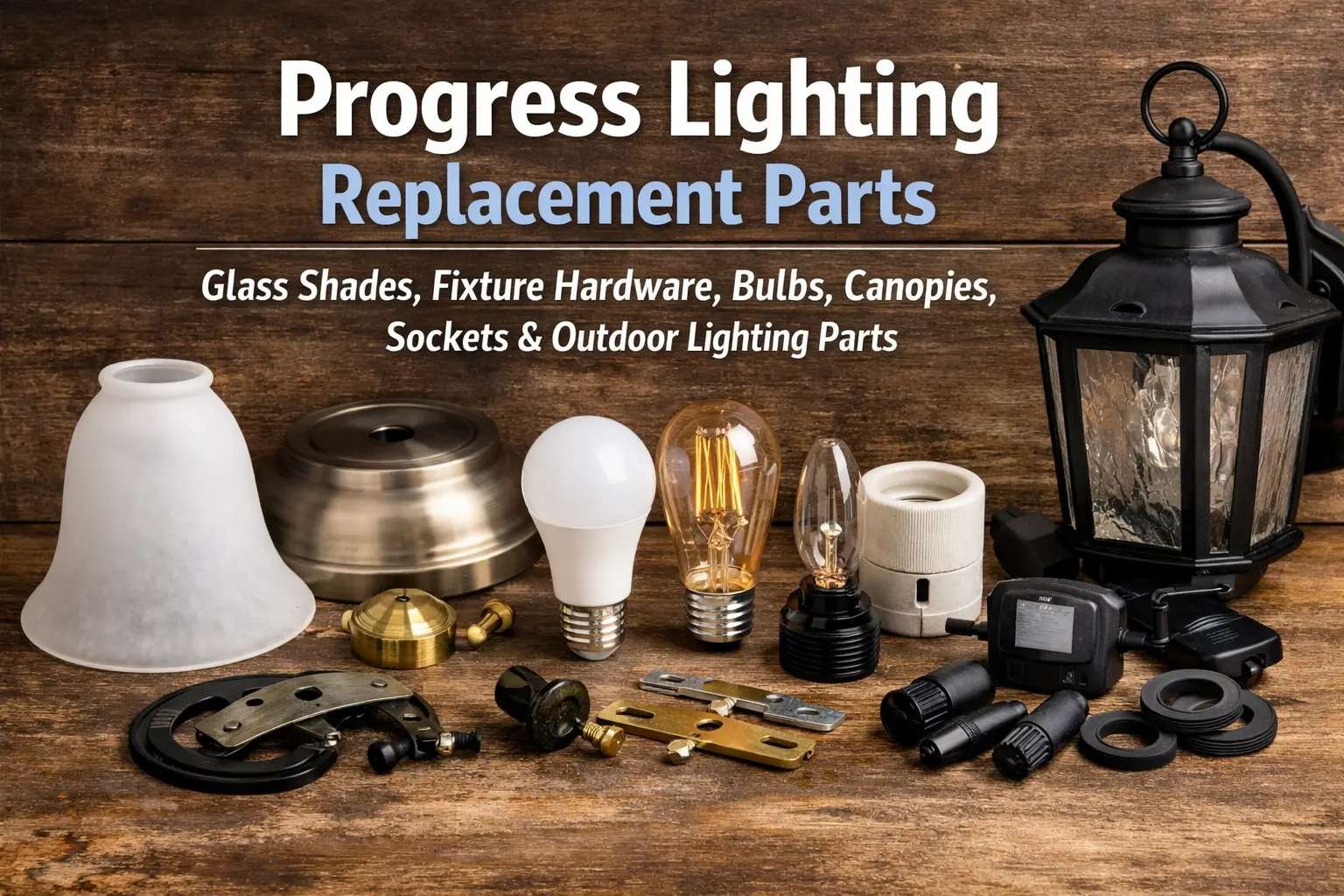
Quick Answer: My 7-Point Structural Integrity & Splicing Protocol
Tracking down the right Progress Lighting part comes down to drawing a hard line between visual damage and internal electrical breakdown. If your fixture is physically sagging or missing glass, you are hunting for mechanical hardware sizes; if the bulbs stay totally dead after a fresh swap, your problem is hidden inside the socket tabs or a buried canopy wire splice.
Whenever I step into a home to repair a drooping dining fixture or fix a dark hallway flush mount, I isolate the correct replacement part using these seven field rules:
- 1. Sizing Glass Replacement Fitters: When a glass shade breaks, don't waste hours digging for the collection name. I take a precise measurement of the neck's outer diameter lip—Progress fixtures almost always use standard 2-1/4 inch or 3-1/4 inch universal shade collars that accept third-party glass perfectly.
- 2. Replacing Stripped Swivels and Loops: If a heavy chain pendant is hanging crookedly, the cast-zinc loops or threaded crossbars are stripped out. I replace these with universal steel 1/8-IP or 1/4-IP lamp pipe nipples from my truck, which fit Progress frames seamlessly.
- 3. Rebuilding Dead Screw-In Sockets: If a fresh bulb won't light up but your circuit breaker is fine, the internal socket contact is flat or charred. I pull the housing wrapper back and slide in a standard Edison E26 threaded porcelain sleeve to make the fixture safe and operational again.
- 4. Swapping Blown Integrated LED Modules: If your modern Progress LED flush-mount or vanity bar goes completely black or starts flashing, the light board itself is usually fine. The culprit is the small black power driver hidden inside the ceiling box; I match the input voltage and milliamp (mA) rating to wire in a universal driver.
- 5. Stabilizing Loose Ceiling Canopies: If the metal plate up against your ceiling drywall is wobbling, the universal mounting bracket inside the junction box has loosened over time. I back out the decorative canopy locknuts and tighten the primary alignment screws directly to the structural ceiling box.
- 6. Upgrading Weather-Beaten Porch Sockets: Outdoor wall lanterns take a beating from humidity and rain. When fixing these, I cut out the old corroded wire lines and install wet-rated phenolic sockets with integrated rubber compression boots to lock out moisture for good.
- 7. Identifying Parts via Hidden Factory Stamps: If you absolutely must have an identical factory part, skip the consumer brochures. I pull down the ceiling canopy or look inside the metal backplate to find the hidden 5-digit factory item number or design family stamp.
• Cracked, chipped, or missing glass? → Measure your collar lip and match the fitter diameter.
• Light bulb won't turn on? → Rebuild the screw socket module or swap out the internal 12V driver.
• Whole fixture wobbly or saggy? → Tighten the bracket crossbar or renew the 1/8-IP pipe threads.
• Modern LED light flashing continuously? → Check the mA output and drop in a new power block.
⚠️ CRITICAL WIRING RISK: Forcing an unmatched commercial power driver onto a sensitive residential LED light board or using unrated indoor socket switches inside damp outdoor porch lanterns will short out your electrical panel and create a major fire hazard. Disregarding these hardware boundaries triggers three distinct circuit failures that I map out step-by-step inside our wiring schematics below.
Don't guess at thread measurements or spend days looking through dead web links for outdated catalogs. Use my step-by-step socket teardown guides, canopy crossbar installation sheets, and precise shade fitter charts detailed further down this page to get your Progress fixtures running beautifully and safely.
Progress Lighting Parts Diagnosis Guide
| What Happened | Most Likely Part | What To Check First |
|---|---|---|
| Fixture looks broken | Glass shade or trim | Measurements and shape |
| Light won’t turn on | Bulb or socket | Bulb and connection |
| Fixture hangs wrong | Chain or stem | Mounting hardware |
| Fixture loose at ceiling | Canopy or bracket | Mounting plate |
| Outdoor fixture worn | Glass panels or hardware | Weather exposure areas |
Most Progress Lighting repairs are small-part fixes once you identify the correct category.
Start Here: Fix Your Fixture Fast
- Looks damaged → replace glass or trim
- Not working → check bulb and socket
- Loose or crooked → fix mounting hardware
- Outdoor wear → replace exposed parts
Most fixtures can be repaired without replacing the entire unit.
The easiest way to find the right Progress Lighting replacement part is to decide whether the failed piece is visible, electrical, or structural. If it changes how the fixture looks, start with glass, trim, canopy, chain, or decorative hardware. If it changes how the fixture works, start with the bulb, socket, wiring, or internal part.
In many cases, replacing a $10–$30 part can save you from replacing a full fixture.
If you are comparing similar fixture brands while deciding what to repair, you may also want to review Portfolio lighting alternatives, Kichler lighting replacement parts, Hampton Bay lighting replacement parts, and allen + roth lighting replacement parts. If your issue is more practical or utility-focused than decorative, our Utilitech lighting replacement parts page may also be helpful.
What Progress Lighting Replacement Parts Usually Fail First
On Progress Lighting fixtures, the most common replacement part searches usually fall into a few predictable categories. The first is glass. The second is sockets and electrical light-holding parts. The third is visible fixture hardware such as canopies, chains, stems, and decorative trim. The fourth is mounting hardware. The fifth is outdoor-specific parts like lantern glass panels, lenses, caps, or weather-exposed hardware.
Glass Shades and Covers
Glass is one of the biggest Progress Lighting replacement categories because many Progress fixtures are chosen for style and finish. A broken bell shade, cracked bowl, chipped outdoor glass panel, or missing diffuser can make an otherwise good fixture feel unusable.
Sockets and Electrical Fixture Parts
If the fixture still looks fine but the light will not operate correctly, the issue is often the socket, bulb connection, or another small electrical component. This is common on fixtures that have been in service for years, especially in bathrooms, kitchens, and entry areas where lights see frequent daily use.
Canopies, Chains, Stems, and Decorative Hardware
One overlooked repair category is suspension and trim hardware. A pendant or chandelier may only need a canopy part, chain, stem, or decorative connector to be usable again.
Outdoor Fixture Parts
On Progress outdoor lanterns and wall lights, parts wear differently because weather changes everything. Glass, seals, screws, caps, and exposed hardware often become the first visible failure points.
👉 Need help placing or identifying parts? Start with parts categories here.
Exact Resources for Progress Lighting Replacement Parts
The best Progress Lighting replacement-part searches usually come from combining the right source with the right repair category. Decorative fixture brands are easier to work with when you search by part function rather than by a vague brand-only phrase.
1. Fixture Labels, Manuals, and Old Product Information
The first useful resource is always the product label if you still have it. Progress Lighting fixtures often include model information that makes it much easier to identify the exact family, finish, and configuration. If you still have installation instructions or an old invoice, that helps even more.
2. Progress Dealer and Specialty Lighting Sellers
Progress Lighting parts are often easier to track through specialty lighting sellers than through general mass-market searches, especially when the part is specific to a decorative fixture family. This matters for glass, trim, canopy pieces, and finish-matched hardware.
3. Replacement Glass and Shade Matching
Glass matching usually comes down to measurements more than branding. If the exact Progress piece is discontinued, a matching fitter size, diameter, height, and glass style can often solve the repair without needing the original brand packaging.
4. Marketplace Listings for Older or Discontinued Parts
Marketplace sellers can be especially useful for older Progress glass shades, outdoor panels, chains, hardware, and donor fixtures used for parts. This is often where discontinued items surface after normal retail channels have moved on.
5. Compatible Hardware and Fixture Components
Many Progress repairs do not need an exact branded replacement. Compatible chains, stems, bulbs, sockets, screws, mounting brackets, and some glass pieces can work well if the dimensions, finish, and function line up correctly.
| Resource Type | Best For | What to Verify First |
|---|---|---|
| Fixture labels and manuals | Model identification, finish, original assembly details | Model number, finish, part layout, fixture family |
| Lighting dealers and specialty sellers | Brand-specific glass, hardware, and fixture-family parts | Fixture line, finish, part description |
| Replacement shade and glass sources | Bowls, bell shades, diffusers, outdoor glass panels | Fitter opening, diameter, shape, mounting style |
| Marketplace and donor fixture listings | Discontinued shades, hardware, canopies, chains, panels | Measurements, condition, photos, seller notes |
| Compatible hardware and electrical parts | Sockets, bulbs, chains, stems, screws, brackets | Fit, finish, thread type, electrical rating |
Glass Shades, Bowls, Lenses, and Other Visible Progress Parts
This is where many Progress Lighting repairs begin. If the fixture still functions but looks incomplete or damaged, the issue is often a visible part rather than an electrical failure.
Bell Shades and Decorative Glass
Bathroom vanity lights, chandeliers, pendants, and wall sconces often rely on glass shades that are both functional and decorative. If one breaks, the whole fixture can look wrong even if the rest of the hardware is in great shape.
Bowls and Flush-Mount Covers
Flush-mount fixtures often need a correctly sized bowl or diffuser. The most important details are the opening size, overall width, height, and how the bowl mounts to the fixture body.
Outdoor Lantern Glass Panels
On exterior fixtures, the issue may be a side panel, front glass panel, lens, or cap section rather than the full body of the lantern. These pieces matter because they affect both weather protection and appearance.
When One Visible Part Is Worth Replacing
If the fixture still matches your space well and the body is in good condition, replacing one broken glass piece often makes more sense than changing the whole light. This is especially true when the fixture is part of a coordinated set and you want to preserve the look.
Sockets, Canopies, Chains, Stems, and Mounting Hardware
Some Progress Lighting repairs are less visible but just as important. A worn socket, missing canopy screw, damaged chain link, stem issue, or mounting bracket problem can be all it takes to make an otherwise good fixture frustrating to live with.
Sockets and Bulb-Holding Parts
If the fixture looks intact but bulbs no longer seat correctly, flicker, or stop working reliably, the socket may be the real issue. This is common on older fixtures that have seen years of bulb changes and daily use.
Canopies and Suspension Hardware
On pendants and chandeliers, the canopy and hanging hardware matter more than many people realize. A missing or damaged canopy part can keep a fixture from mounting cleanly and safely even when the light body itself is fine.
Chains, Stems, and Decorative Connectors
If the fixture hangs incorrectly or has missing suspension hardware, replacement chain, stems, or matching connectors may be the only parts you need. This is one of the most practical repairs on decorative fixtures because it restores both structure and appearance.
If you are comparing other decorative lighting brands with similar repair patterns, it may help to review Kichler lighting replacement parts, Hampton Bay lighting replacement parts, and allen + roth lighting replacement parts.
Outdoor Progress Lighting Replacement Parts
Outdoor Progress Lighting fixtures face a different kind of wear than indoor lights. Sun, moisture, insects, temperature swings, and corrosion all push exterior parts harder than interior hardware.
Glass Panels, Caps, and Exterior Trim
One of the most common outdoor repair needs is visible enclosure parts. A lantern may still work electrically but look worn, open, or vulnerable because one glass panel or cap piece has been damaged.
Mounting Hardware and Weather-Exposed Parts
Exterior screws, brackets, and mounting parts can wear out faster than many people expect. If the fixture is loose, crooked, or no longer seals the way it should, the hardware side may need just as much attention as the light source.
Bulbs and Electrical Basics Outdoors
Outdoor fixtures can also have perfectly ordinary bulb and socket issues. If the fixture body still looks sound, start with the simplest electrical checks before assuming the entire lantern has failed.
If your repair question overlaps with broader outdoor lighting systems, you may also want to read Malibu lighting replacement parts, Paradise lighting replacement parts, and Volt landscape lighting review.
What to Verify Before Ordering Progress Lighting Replacement Parts
This is the step that saves the most time and money. Before ordering anything, confirm the exact category of part and the details that actually have to match.
- identify whether the failed part is glass, hardware, electrical, or outdoor trim
- check for a model number or old installation paperwork
- measure shades, bowls, panels, canopies, and hardware carefully
- confirm bulb base, socket type, and electrical rating if the issue is functional
- match finish and hardware style where appearance matters
- check mounting method and thread type for suspension hardware
- compare seller photos and dimensions closely for discontinued items
If you are deciding between repairing a decorative fixture and switching directions entirely, our Ring smart lighting alternatives page is useful if you want a more modern control setup, while Lithonia lighting troubleshooting can help if your other lighting questions lean more utility than decorative.
Many homeowners searching for Progress Lighting replacement parts are actually dealing with hidden transformer problems instead of failed fixtures. Dim lights, flickering LEDs, random shutdowns, buzzing transformers and intermittent outdoor lighting often point to overload, voltage drop, moisture intrusion or surge damage somewhere else in the system. Before replacing multiple fixtures unnecessarily, review these bad landscape lighting transformer symptoms to help separate true fixture failure from larger low-voltage power problems affecting the entire lighting run.
Final Thoughts on Progress Lighting Replacement Parts
Progress Lighting replacement parts are usually easiest to find when you stop treating the fixture as one giant problem and start narrowing the issue by category. Glass problems are measurement problems. Hanging and canopy issues are hardware problems. Socket and bulb issues are electrical problems. Outdoor lantern repairs are often a mix of enclosure, hardware, and weather-related wear.
If the fixture still fits the space and only one part has failed, repair often makes a lot of sense. If several parts are missing, the finish is badly worn, or the cost of the repair is getting close to the cost of a better replacement, then full replacement may be smarter. Either way, the search goes much smoother once you know exactly what kind of part you are trying to replace.
Progress Lighting Replacement Parts FAQ
Where can you find Progress Lighting replacement parts?
Useful sources include fixture labels, manuals, dealer support, specialty lighting sellers, replacement glass sources, marketplace listings, and compatible hardware that matches the original dimensions and function.
What Progress Lighting parts fail most often?
Common replacement searches include glass shades, bowls, sockets, canopies, chains, stems, outdoor glass panels, bulbs, and mounting hardware.
Can older Progress Lighting fixtures still be repaired?
Yes. Many older fixtures can still be repaired by replacing glass, sockets, canopies, hardware, or other small parts instead of replacing the entire fixture.
Do you need exact Progress Lighting parts?
Not always. Compatible shades, bulbs, chains, brackets, and hardware often work well if the fit, finish, size, and electrical requirements are checked first.