
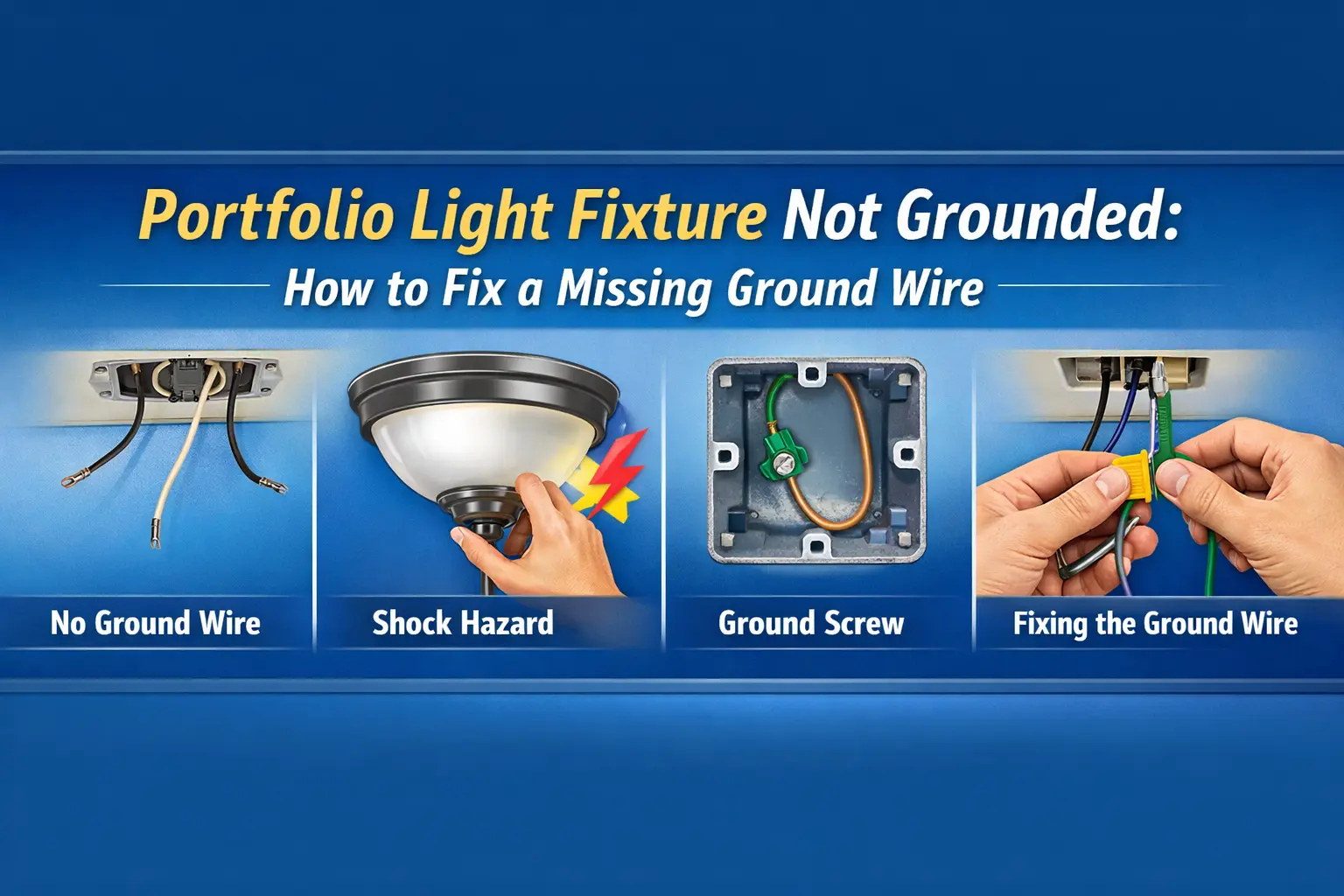
What Should You Do If a Light Fixture Is Not Grounded? (Quick Answer)
If a light fixture is not grounded, first turn off power and check whether the electrical box already has a grounding path. If the fixture has a green wire but the box has no visible ground, do not guess. Some boxes are grounded through metal conduit, while others may need repair or professional evaluation.
- Ground wire is present: connect it correctly
- No visible ground: inspect box and mounting hardware carefully
- Shock, sparks, or heat: stop and call an electrician
Missing Ground Wire Decision Guide
| What You See | What It Probably Means | Best Next Step |
|---|---|---|
| Fixture has green wire and box has bare copper wire | Ground is available | Connect ground correctly |
| Fixture has green wire but no visible ground in box | Ground may be hidden or missing | Inspect the box carefully before proceeding |
| Metal fixture gives shock or tingle | Potential grounding or wiring fault | Stop and call an electrician |
| Breaker trips during install | Wiring problem, not just missing ground | Shut power off and recheck wiring |
| Old box with unclear hardware | Older grounding method or missing hardware | Confirm grounding path before mounting fixture |
Most grounding confusion comes from not knowing whether the box is already grounded or whether the circuit truly lacks a safe grounding path.
Start Here: What Should You Do Next?
- If you see a bare copper or green wire → connect the fixture ground correctly
- If the box is metal but no loose ground is visible → confirm whether the box is grounded before proceeding
- If the fixture is metal and the grounding path is unclear → pause and verify the wiring safely
- If the fixture shocks, sparks, or trips the breaker → stop and call an electrician
Grounding problems are not just installation questions. They are safety questions.
A missing ground wire can be confusing because the light fixture may still turn on, but the safety side of the installation may not be complete.
The goal is not just to make the light work. It is to make sure the fixture is connected the right way so the installation is safer and more reliable.
What Does Grounding a Light Fixture Mean?
Grounding a light fixture means connecting the fixture’s grounding point to the home’s grounding path so that, if an electrical fault happens, excess current has a safer route to travel. In most residential fixtures, the ground wire is usually green or bare copper. On many Portfolio fixtures, you will also see a green ground screw or a grounding point on the mounting bracket.
In simple terms, the ground connection is there for protection. It does not usually power the light. The black wire handles the hot side, the white wire handles the neutral side, and the ground adds a safety path in case something goes wrong inside the fixture or wiring. That is why modern electrical systems expect grounded connections, especially on metal fixtures and metal boxes.
Most Portfolio fixtures include some version of these grounding parts:
- Green ground wire from the fixture
- Green grounding screw
- Grounding bracket or mounting plate connection point
Signs Your Light Fixture Is Not Grounded
Homeowners usually notice grounding problems during installation, replacement, or after a fixture starts behaving in a way that does not feel right. Sometimes the issue is obvious as soon as the old light comes down.
Grounding issues often appear at the fixture box or splice point, so also review our outdoor lighting junction box requirements for proper enclosure and connection practices.
No Ground Wire in the Electrical Box
One of the most common signs is opening the box and seeing only a black wire and a white wire. That happens more often in older homes, where wiring systems may not have been grounded the way modern installations are.
The Fixture Has a Ground Wire but Nothing to Attach It To
Another common situation is that the new Portfolio light fixture clearly has a green ground wire, but the electrical box has no visible ground wire, no green screw, and no obvious grounding point. That often stops homeowners in the middle of the install because they know the fixture expects something that the box does not seem to provide.
Metal Fixture Causes a Small Shock
If a metal fixture causes even a minor electrical tingle or shock, that is a warning sign that something is wrong with the wiring or grounding. That is not a “wait and see” issue.
Breaker Trips During Installation
Improper wiring can trip the breaker. While that does not automatically mean the issue is only grounding, it is a sign that something about the fixture connection needs to be rechecked before power is restored again.
Is It Dangerous If a Light Fixture Isn't Grounded?
This depends on the wiring situation, the fixture type, and the condition of the rest of the circuit, but it is not something to ignore. Many older homes were built without modern grounding in every location, so a missing ground is not unusual. But modern electrical practice expects grounding because it adds an important layer of safety.
The risk tends to be higher with metal fixtures because the fixture body can become energized during a fault if there is no proper ground path. Plastic fixtures reduce the shock risk somewhat because there is less exposed conductive material, but grounding is still recommended when the fixture and wiring are designed for it.
LED fixtures may run cooler and can reduce some types of heat-related stress, but LED does not replace proper grounding. Safety is still the bigger issue. If you are not confident in what you are seeing inside the box, this is one of those situations where it is smart to slow down and involve a licensed electrician.
How to Fix a Portfolio Light Fixture That Isn't Grounded
The right fix depends on what is actually in the electrical box, but this step-by-step approach helps you work through the most common scenario.
Step 1 – Turn Off Power
Shut off power at the breaker before touching any wires. Do not rely only on the wall switch. The breaker is the safer place to disconnect power fully.
Step 2 – Check the Electrical Box
Look for a bare copper wire, a green grounding screw, or a metal box that may already be part of a grounded metal conduit path. Sometimes the ground is present but tucked behind the other wires or attached to the back of the box.
Step 3 – Attach the Fixture Ground Wire
If the house wiring includes a ground wire, connect the fixture green wire to the house ground wire using a proper wire connector. Make sure the connection is secure and not loosely twisted together.
Step 4 – Ground the Mounting Bracket
Many fixtures also ground through the mounting bracket. If the fixture instructions call for the bracket to be grounded, do not skip that step. The bracket may include a ground screw location for exactly that reason.
Step 5 – Secure and Test
Once the ground, hot, and neutral connections are all secured correctly, mount the fixture, restore power, and test it. If the breaker trips or anything seems wrong, turn power back off and recheck the wiring before trying again.
What If Your Electrical Box Has No Ground Wire?
This is one of the most common search situations because homeowners often expect a ground wire and then do not see one. If the box has no visible ground wire, you usually have a few possibilities.
Install a Grounding Wire
In some cases, the solution may involve running a proper grounding path back to the panel or to the correct grounding point in the circuit. This is usually where the project starts moving out of “simple fixture swap” territory and into more serious electrical work.
Use a Grounded Metal Box
Some metal conduit systems provide grounding through the metal box and conduit path itself. That means the absence of a loose bare copper wire does not always mean there is no grounding at all. The box itself may be grounded. But that is something to confirm, not assume.
Replace the Electrical Box
If the box is old, damaged, or missing proper grounding hardware, replacement may be part of the solution. Newer boxes and hardware typically include grounding screw provisions that make the connection clearer and more secure.
Portfolio Fixtures and Grounding Requirements
Most Portfolio fixtures are built with standard grounding connections in mind. That usually means the fixture includes a green screw, a green fixture wire, or a mounting plate with a grounding point. In other words, the fixture expects to be installed into a wiring setup that can support proper grounding.
This is one reason missing hardware can become frustrating during installation. You may have the fixture itself, but if the mounting hardware, ground screw, or bracket parts are missing, the install becomes harder than it should be. For related hardware and parts support, use Portfolio lighting parts and accessories.
Replacement Parts for Grounding Hardware
Sometimes the problem is not the house wiring itself. It is the missing or damaged grounding hardware. Common parts homeowners end up needing include ground screws, mounting brackets, wire connectors, and fixture hardware kits that restore the proper grounding path through the fixture assembly.
If the grounding screw or mounting hardware is missing, many homeowners search online marketplaces for Portfolio lighting replacement parts on eBay when original hardware cannot be found.
For a broader parts hub, use Portfolio lighting parts and accessories.
When to Call an Electrician
There are times when this is not a smart DIY project. If the home has aluminum wiring, no ground wire in the circuit, repeated breaker trips, sparks, overheating, or anything that makes the circuit feel unpredictable, bringing in an electrician is the better move. The same is true if you are unsure whether a metal box is actually grounded or whether the existing wiring method meets what the fixture needs.
A fixture swap is one thing. Diagnosing an older ungrounded circuit is something else. When the project crosses that line, professional help is worth it.
Preventing Grounding Problems
The best way to avoid grounding problems is to inspect the wiring carefully before the fixture is fully mounted. A lot of frustration comes from getting halfway through the install and only then noticing the missing ground connection.
- Inspect the box and wiring before attaching the fixture.
- Use compatible mounting hardware and do not skip the ground screw point.
- Follow the fixture installation instructions step by step.
- Use proper wire connectors instead of loose improvised connections.
- Replace missing or damaged hardware instead of forcing the install.
For the broader install side of the process, compare this page with Portfolio lighting installation. If you are dealing with a newer LED fixture, it may also help to review Portfolio LED lighting.
Final Thoughts on a Portfolio Light Fixture Not Grounded
A missing ground wire does not always mean the fixture will stop working, but it does mean you need to pay attention to the safety side of the installation. The right goal is not just getting the light to turn on. It is making sure the fixture is connected in a way that protects the home and the people using it.
Start by checking whether the box is grounded, whether the house wiring includes a ground path, and whether the fixture hardware is complete. If the answer is still unclear or the circuit shows any warning signs, it is a good time to bring in an electrician instead of guessing.
Portfolio Light Fixture Not Grounded FAQ
Do all light fixtures need a ground wire?
Most modern fixtures require grounding to meet electrical safety standards.
Can a light fixture work without a ground?
Yes, but grounding is recommended for safety.
What color is the ground wire?
Usually green or bare copper.
Are plastic fixtures safer without grounding?
Plastic fixtures reduce shock risk, but grounding is still recommended when the fixture and wiring are designed for it.
Portfolio light fixture not grounded, light fixture not grounded fix, missing ground wire light fixture, how to ground a light fixture, light fixture ground wire missing, electrical box grounding screw, and fix missing ground wire ceiling light.