

Quick Answer: Where Should a Floor Lamp Be Placed?
A floor lamp works best beside a sofa, next to a reading chair, or in a dark corner that needs more light. The goal is to place the lamp where it improves comfort and visibility without relying only on overhead lighting.
For brightness, most floor lamps use about 800–1,600 lumens for general room lighting or 400–800 lumens for reading and task use. The exact placement and brightness depend on how the lamp is used in the room.
Placement → beside seating or dark corners
Reading → 400–800 lumens
Room lighting → 800–1,600 lumens
Goal → balance the room, not replace ceiling lighting
For full room planning, use the room-by-room lighting plan guide.
Floor lamps are popular because they solve a very real problem in ordinary rooms. Many spaces look acceptable during the day and then feel flat, dim, or uneven at night. A single ceiling fixture often leaves corners underlit, makes a reading chair uncomfortable to use, or creates a room that feels bright in the center but darker around the edges. A floor lamp is often the easiest way to fix that without changing the room permanently.
This page is designed as a supporting guide inside your Portfolio indoor lighting pillar page, not as a disconnected article. That means it helps you understand when a floor lamp is the right answer, how it fits into layered lighting, and how it works alongside ceiling fixtures, wall lighting, and other indoor lighting categories across the home.
What Is a Floor Lamp?
A floor lamp is a freestanding lighting fixture designed to stand directly on the floor and provide light at a height that works for reading, relaxing, or general room lighting. Unlike ceiling fixtures or wall-mounted lights, a floor lamp can be moved easily and usually does not require permanent installation.
Most floor lamps have a base, a pole or stand, a lamp shade or light head, and a bulb or LED light source. Some are meant to spread light softly across a room, while others are designed to aim focused light at a chair, sofa, or workspace.
That flexibility is what makes floor lamps so useful. They are not limited to one room type, and they can often solve lighting problems quickly without changing the room wiring or committing to a built-in fixture.
Where Floor Lamps Work Best
Living rooms
Living rooms are one of the most common places to use a floor lamp because they often need more than one type of light. A ceiling fixture may provide general brightness, but a floor lamp beside a sofa or chair adds a more comfortable layer for reading, relaxing, or evening lighting.
Bedrooms
Floor lamps also work well in bedrooms, especially when you want more light near a chair, dresser, or bed area without adding another ceiling fixture. In some bedrooms, a slim floor lamp can do the job that a bedside table lamp would normally do while taking up less visual space around the furniture.
Home offices
In home offices, floor lamps can support desk lighting or help brighten an area that feels dull after sunset. Adjustable floor lamps and task lamps are especially useful when you need light aimed in a specific direction rather than spread broadly around the room.
Dark corners
One of the easiest uses for a floor lamp is brightening a darker corner that ceiling lighting never seems to reach well. This can make the whole room feel more balanced without changing the ceiling fixture at all.
Use Floor Lamps to Add Warm Task Lighting Without Overlighting the Room
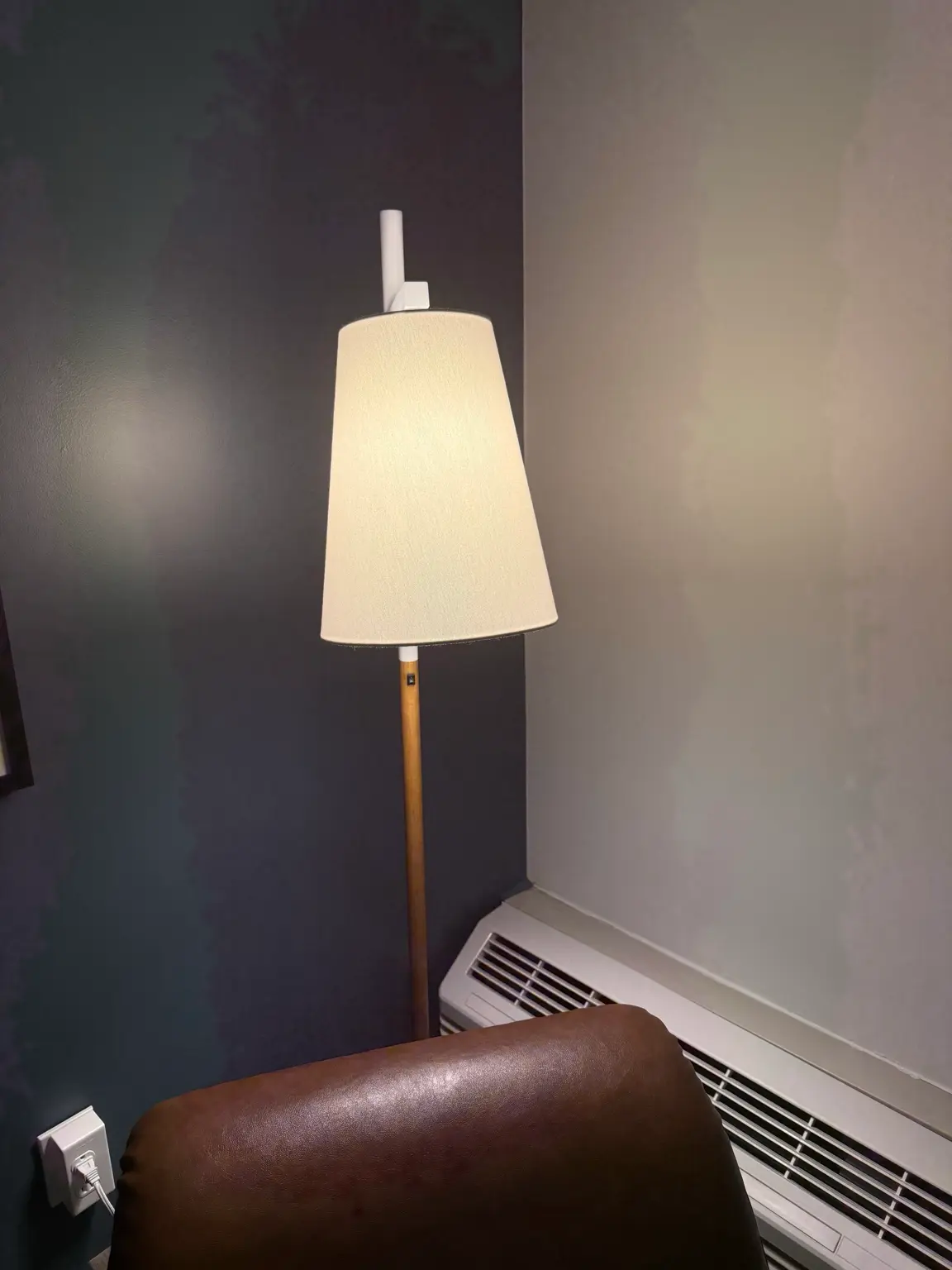
Floor lamps are useful when a room needs softer, more controlled light instead of one bright ceiling fixture. A warm-shaded lamp beside a chair can create a comfortable reading zone while keeping glare lower and the rest of the room calmer.
When choosing a Portfolio-style floor lamp, pay attention to shade height, bulb brightness, color temperature, and whether the light is aimed at the task area or directly into the eyes.
Types of Floor Lamps
Reading floor lamps
Reading floor lamps are designed to provide focused light where you need it most. They are often placed beside a chair, sofa, or bed and may have a narrower beam or adjustable light head that helps direct the light onto a page or work surface.
Arc floor lamps
Arc floor lamps use a curved arm to extend light out over a seating area. This makes them useful when you want the light source to reach over a sofa or table without placing a lamp directly underneath the center of the fixture.
Torchiere floor lamps
Torchiere lamps send light upward toward the ceiling, where it reflects back into the room. This creates a softer ambient effect and can help a room feel brighter overall without producing a harsh glare at eye level.
Adjustable task lamps
Adjustable task lamps are useful when the light needs to move with the person using it. These lamps often have flexible arms, adjustable necks, or pivots that allow you to direct the light where it is most useful.
How Bright Should a Floor Lamp Be?
It helps to think in lumens instead of wattage when choosing floor lamp brightness. Lumens tell you how much light the lamp is actually producing, which makes them much more useful when comparing bulbs and lamp performance.
| Floor Lamp Use | Typical Brightness Range | Why It Matters |
|---|---|---|
| Reading lamps | About 400–800 lumens | Provides focused light for books, screens, and detail tasks |
| General room lighting | About 800–1,600 lumens | Helps supplement overhead lighting and brighten the room |
| Accent lighting | Usually lower and softer output | Creates mood and visual warmth rather than strong task light |
| Larger rooms | May need multiple light sources | One lamp alone often does not balance the entire room well |
| Layered lighting plans | Combine lamp light with ceiling or wall lighting | Creates a more comfortable, flexible room overall |
Best Bulbs for Floor Lamps
LED bulbs
LED bulbs are a strong choice for most floor lamps because they are energy efficient, long lasting, and available in a wide range of brightness levels. They also tend to run cooler than older bulb types, which can be useful in lamps that are used for longer periods each day.
Warm light for living spaces
Warm light in the 2700K to 3000K range often works well in living rooms and bedrooms because it creates a softer, more comfortable feel in the evening.
Neutral light for work areas
Neutral light in the 3000K to 4000K range may work better in home offices or reading areas where clarity matters more and the room benefits from a brighter, cleaner feel.
If you are comparing LED options more broadly, the Portfolio LED lighting page is a helpful next read because it connects bulb choice with indoor fixture performance across the rest of the site.
Floor Lamps vs Other Indoor Lighting
Floor lamps vs table lamps
Table lamps are useful when you already have a side table or nightstand and want light at a lower height. Floor lamps are better when you need more height, more reach, or do not want to depend on a table surface for the lamp to work.
Floor lamps vs ceiling lighting
Ceiling lighting usually provides the main room brightness, but it often does not create the most comfortable or flexible lighting plan by itself. Floor lamps are one of the easiest ways to support ceiling lighting by adding warmth, task lighting, or more balanced illumination to the edges of a room. If you want to compare those categories directly, see the Portfolio ceiling lighting page.
Floor lamps vs wall lighting
Wall lighting is more fixed and often more decorative, especially when it uses sconces or other mounted fixtures. Floor lamps are portable and easier to reposition, which makes them especially useful for changing furniture layouts or rental spaces. If you want to compare them more closely, the Portfolio wall sconce lighting guide is a strong follow-up.
If you are comparing multiple indoor lighting styles before choosing a floor lamp, our Portfolio indoor lighting guide explains how floor lamps fit alongside ceiling fixtures, wall lighting, pendants, recessed lights, and other room-lighting choices.
Decorating With Floor Lamps
A floor lamp should not only light the room well. It should also feel right next to the furniture and within the style of the space. Lamp height, shade size, and overall shape all affect whether the lamp feels balanced or awkward in the room.
Height and furniture scale
The lamp should feel proportionate to the chair, sofa, or corner where it sits. A very tall lamp next to low furniture can feel awkward, while a lamp that is too short may not cast useful light where you need it.
Shade size
Shade size affects both style and performance. A larger shade can create softer ambient light, while a more focused head or smaller shade may work better for reading and directed task lighting.
Room style
Floor lamps come in many styles, including modern, traditional, industrial, minimalist, and transitional designs. The best choice is the one that supports the room without feeling disconnected from the rest of the furniture and fixtures.
If you are looking for more decorative or novelty-style lighting, see our Portfolio lava lamp guide for ambient lighting options that focus more on atmosphere than brightness.
Common Floor Lamp Problems
Lamp not turning on
Start with the bulb, plug, outlet, and switch. A floor lamp that suddenly stops working is often caused by a failed bulb, loose plug, switched outlet, or worn inline switch.
Flickering light
Flickering can happen because of a loose bulb, a poor socket connection, a failing switch, or an LED bulb that does not work well with the lamp or dimmer setup.
Weak or disappointing light
Sometimes the lamp works fine electrically but still does not do the job you expected. That often comes down to using the wrong bulb brightness, placing the lamp in the wrong part of the room, or asking one lamp to light too much of the space by itself.
For broader diagnostic help, use the Portfolio lighting troubleshooting guide. It is especially useful when you are not sure whether the problem is the bulb, the lamp, the switch, or the room’s overall lighting plan.
Replacement Bulbs and Parts
Floor lamps may need replacement bulbs, shades, switches, or other small parts over time. In many cases, replacing one wear item is enough to keep a lamp useful for years longer, especially if the lamp body and style still work well in the room.
Your best starting point is the Portfolio lighting parts and accessories page, especially if you are trying to identify a compatible bulb or accessory before ordering. If you are shopping more broadly, you can also browse Portfolio lighting replacement parts on eBay and Portfolio lighting parts on Amazon.
How Floor Lamps Fit Into a Lighting Plan
Most rooms work best with layered lighting, which means combining more than one light source so the room can handle different tasks and different times of day. A ceiling fixture may provide general light. A floor lamp may support reading or soften the room in the evening. Wall lighting or accent lighting may help add character and depth.
That is why floor lamps are so useful. They are often not the only answer in the room, but they are very often the easiest way to make the room more comfortable and more usable. If you are building a full room-lighting plan rather than choosing only one item, the Portfolio indoor lighting hub is the best next step because it connects floor lamps with the broader fixture categories across the site.
Explore More Indoor Lighting Guides
Portfolio Indoor Lighting
This is the main pillar page for the indoor lighting cluster and the best place to compare room-lighting strategies across fixture categories.
Read the hubPortfolio Ceiling Lighting
Compare floor lamps with overhead fixtures when you are building a more balanced, layered room-lighting plan.
Read the guidePortfolio Wall Sconce Lighting
Explore wall lighting when you want a more decorative or built-in alternative to portable lamp light.
Read the guidePortfolio LED Lighting
Helpful when you are comparing bulb types, brightness, and energy-saving options for floor lamps and other indoor lighting.
Read the guidePortfolio Lighting Troubleshooting
Work through flickering, dead lamps, bulb issues, and other common lighting problems that affect rooms and fixtures.
Read the guideBuy Portfolio Lighting
Browse the broader buying hub when you are ready to compare fixtures, room categories, and replacement choices.
Read the guideCommon Questions About Portfolio Floor Lamps
Where should a floor lamp be placed in a living room?
A floor lamp usually works best beside a sofa, next to a reading chair, or in a darker corner that needs more ambient light.
How tall should a floor lamp be?
Many floor lamps range from about 58 to 64 inches tall, but the right height depends on the furniture nearby and how the lamp will be used.
How bright should a floor lamp be?
Reading floor lamps often work well in the 400 to 800 lumen range, while general room floor lamps may use about 800 to 1,600 lumens.
Are LED bulbs good for floor lamps?
Yes. LED bulbs are a strong choice for floor lamps because they are efficient, long lasting, and available in many brightness levels.
Can a floor lamp replace ceiling lighting?
In some situations it can provide much of the usable light, but most rooms work better with layered lighting that combines ceiling fixtures with lamps and other light sources.
What type of floor lamp is best for reading?
Reading floor lamps and adjustable task lamps are often the best choices because they direct light where it is needed instead of spreading it too broadly.
This floor lamp guide is designed to help homeowners understand room placement, brightness, bulb choices, troubleshooting, and replacement decisions before buying or updating Portfolio floor lamps.