
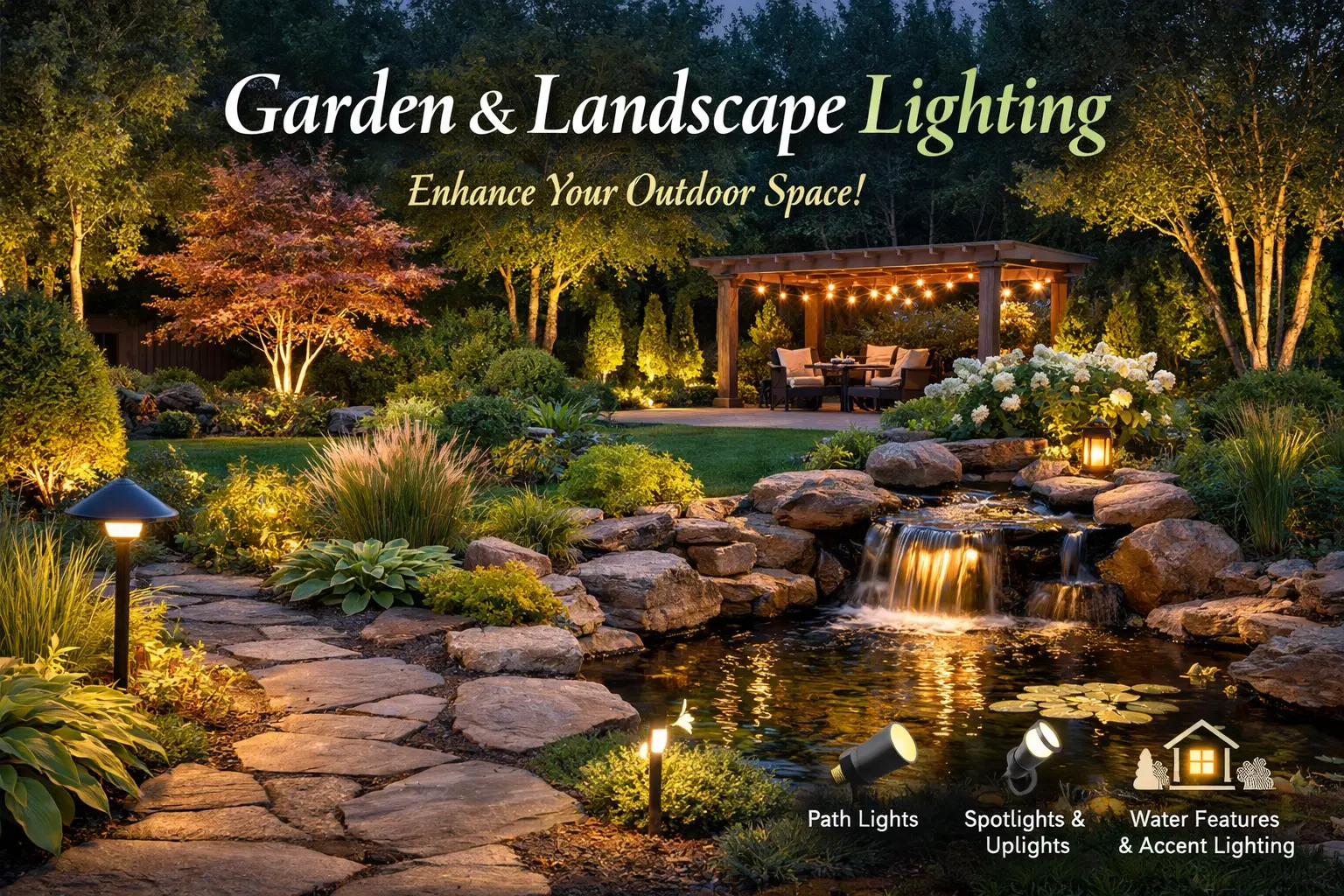
Quick Answer: How Do You Light a Garden?
The best garden lighting uses layered lighting with path lights, accent lights, and selective spotlights. Focus on highlighting plants, edges, and focal points instead of lighting everything evenly.
- ✔ Use path lights for walkways and edges
- ✔ Use accent lights for garden beds
- ✔ Use spotlights for trees or focal plants
- ✔ Keep lighting soft (100–300 lumens)
👉 Planning a full system?
View layout design guide
👉 Need spacing help?
See spacing guide
Garden Landscape Lighting Ideas That Actually Work
Light the Edges, Not the Whole Garden
Use path lights and edge lighting to define shape instead of flooding the entire space.
Highlight One or Two Key Plants
Use spotlights sparingly to create focal points instead of lighting everything.
Create Depth with Layers
Light foreground, mid-level plants, and one background feature to add dimension.
Use Warm Light (2700K)
Warm lighting looks more natural on plants and garden beds.
Keep Lighting Low and Hidden
Use low-profile fixtures so the light effect is visible, not the fixture.
Avoid Over-Lighting
Too much light flattens the garden and removes depth.
A strong garden lighting plan usually feels calm, layered, and intentional. Instead of treating the entire yard the same, it focuses on how people move through the space, where the eye naturally lands, and which plants or features deserve attention after sunset.
That is what makes this page different from a broad yard lighting guide. The focus here is on flower beds, planting areas, garden borders, pathways, focal plants, and smaller outdoor spaces where softer lighting almost always works better than more lighting.
Simple Garden Lighting Plan (Start Here)
- Place path lights along edges or walkways
- Add 1–2 spotlights for focal plants
- Use accent lights in garden beds
- Keep brightness low and spacing balanced
👉 Build a full plan here: Landscape lighting layout design
Garden Lighting Help Center
If you are planning a new garden layout or improving an older low voltage system, these guides can help you with design, spacing, wiring, troubleshooting, and replacement decisions.
Why Garden Landscape Lighting Matters
A garden changes dramatically at night. During the day, texture, color, layers, and plant shape are easy to notice because sunlight does most of the work. After dark, those details disappear unless the lighting is planned with intention. Good garden landscape lighting brings those features back in a way that still feels soft and natural.
The right garden lighting can do several things at once. It can improve walkway visibility, create a more welcoming mood, highlight certain plants or decorative features, and make the space feel deeper and more complete. That matters in both large and small yards because a well-lit garden often looks more organized and more inviting than one where the beds disappear into darkness.
Garden areas also benefit from selective lighting more than many other outdoor spaces. In a driveway or wide front yard, you may need broader coverage. In a garden, too much brightness usually works against you. The better strategy is to use the main landscape lighting guide as your overall hub, then build a more focused plan for beds, borders, pathways, and planting areas so the lighting feels balanced instead of overpowering.
Best Types of Garden Lighting Fixtures
The best fixture for a garden depends on what you are trying to light. Some fixtures are better for guiding people through the space, while others are better for highlighting vertical texture, plant form, or decorative features. Most good garden lighting plans use more than one fixture type.
Path Lights
Path lights are one of the most useful garden fixtures because they help define edges and guide movement through the space. They work especially well beside walkways, along curved borders, and near entry points into a planting area. The key is not to line them up too tightly. Garden pathways usually look better when the light appears rhythmic and gentle rather than rigid. If you want a more precise way to think through placement, the landscape lighting spacing guide is a good companion resource.
Spotlights
Spotlights are best for focal plants, small trees, statues, trellises, and other vertical features that deserve attention at night. In a garden, they should usually be used sparingly. One or two well-placed spotlights often look better than many smaller beams aimed everywhere at once.
Well Lights
Well lights are useful when you want uplighting without seeing much of the fixture itself. They can work well near taller plants, specimen shrubs, and architectural garden elements where a hidden source creates a cleaner look.
Accent Lights
Accent lights are helpful for flower beds, low shrubs, edging areas, and smaller details where a narrow, softer effect works better than a strong spotlight. These can be especially effective in layered planting beds where the goal is to create depth rather than brightness.
Where to Place Garden Landscape Lighting
Placement matters more than fixture count. A garden with six well-placed fixtures usually looks better than a garden with twelve lights installed without a real plan. Before placing anything, think about the garden as a composition. Where do people walk? Which plants stand out? Which areas need a little visibility, and which areas should stay darker for contrast?
If you are moving from design ideas into installation, our landscape lighting wiring guide explains how to route cable through beds and connect multiple fixtures without creating messy or unreliable runs.
Along Garden Beds
Beds usually look best when the lighting supports the shape of the planting instead of outlining every inch of it. One common approach is to place a few small fixtures where the bed curves, widens, or features a stronger planting cluster. The goal is to create gentle emphasis without turning the entire border into a row of identical bright spots. The landscape lighting layout design guide can help if you want to think through bed structure and overall balance.
If your garden beds are part of the entry or front foundation planting, our front yard landscape lighting design guide can help you blend garden lighting with the rest of the home’s nighttime curb appeal.
Around Pathways
Pathways should be lit for guidance first and appearance second. People do not need runway lighting to move through a garden safely. They usually just need enough light to understand the edge, direction, and rhythm of the path. Soft pools of light from offset fixtures often feel more natural than perfectly symmetrical lights placed on both sides.
If your garden design includes walkways or bed edges, our path light placement guide can help you space fixtures correctly and avoid the harsh runway effect that makes a garden look overlit.
Highlighting Trees and Plants
Trees, ornamental grasses, and focal shrubs often deserve selective uplighting because they create height and structure in a garden. The beam should support the plant’s shape, not bleach out the leaves. Narrower beams usually work better for specimen plants, while wider beams can help with fuller shrubs or small layered groupings.
Near Decor or Water Features
Decorative pots, garden sculptures, benches, and small water features can become nighttime focal points when they are lit with restraint. One fixture placed thoughtfully can be enough to anchor a section of the garden and make the surrounding plantings feel intentional.
When you are lighting a specimen plant, sculpture, or textured shrub, beam angle matters as much as brightness. Use our landscape lighting beam spread guide to choose the right spread for narrow accents or wider plant groupings.
Garden lighting becomes stronger when it is planned as part of the full backyard, not just the planting bed. The backyard landscape lighting plan shows how garden accents, patio zones, tree uplighting, and walkway lighting work together.
Common Garden Lighting Goals and Best Approaches
| Goal | Best Approach | Why It Works |
|---|---|---|
| Guide people along a path | Use soft path lights with balanced spacing | Improves visibility without making the garden feel harsh |
| Highlight a focal plant | Use one carefully aimed spotlight or accent light | Draws the eye without over-lighting the whole bed |
| Create depth in layered beds | Light the foreground, middle, and one background feature | Adds dimension instead of a flat wall of brightness |
| Keep fixtures less visible | Use well lights or low-profile accent fixtures | Lets the plants remain the main visual focus |
| Support a low voltage layout | Plan cable runs and fixture groups before installation | Makes the system easier to wire, expand, and troubleshoot |
Garden Lighting Spacing, Brightness, and Color Temperature
In garden lighting, softer is usually better. One of the biggest mistakes homeowners make is assuming that more brightness creates a better result. In reality, gardens usually look more attractive when the light is warm, controlled, and selective.
Spacing Tips
Fixture spacing should be based on output, beam spread, fixture height, and the shape of the area. Lights that are too close create hot spots. Lights that are too far apart leave awkward dark gaps. The right spacing often creates a gentle rhythm that feels natural to the eye instead of mathematically perfect. The dedicated landscape lighting spacing page is useful if you want more detailed layout help.
How Bright Should Garden Lighting Be?
For many garden areas, 100 to 200 lumens is enough for soft guidance or subtle emphasis. Around 200 to 400 lumens may work for stronger accents, focal plants, or small trees. The important point is not to use brightness just because it is available. Gardens almost always benefit from restraint.
Best Color Temperature for Gardens
Warm white light around 2700K often looks the most natural in planting beds because it complements greenery, bark, mulch, stone, and flowers without feeling sterile. Around 3000K can also work well when you want a slightly brighter and cleaner look. If you want a more detailed breakdown, read the landscape lighting color temperature guide.
If you are deciding between warm white and cleaner white tones for flowers, foliage, and pathways, see our landscape lighting color temperature guide for a deeper breakdown of 2700K, 3000K, and where each look works best.
Creating Depth in Garden Lighting
The best garden lighting usually feels layered. Instead of putting the same type of light at the same intensity across the entire space, layer the scene so the eye has something to read in the foreground, mid-level space, and background.
For example, the foreground may be a path edge or low bed near the viewer. The middle zone may include flowering plants or a border curve. The background may be a small tree, arbor, wall, or taller shrub group. When each of those layers receives a different kind of emphasis, the garden feels deeper and more visually interesting at night.
This is one reason broad, even lighting so often looks disappointing in a garden. It removes contrast. Layering creates contrast, and contrast is what helps the space feel dimensional.
For more precise help with fixture distance and balanced coverage, review our landscape lighting spacing guide to plan garden lights without creating dark gaps or overly bright clusters.
Example Garden Lighting Layout
A simple garden lighting layout does not need to be complicated to work well. For example, a medium-size garden area might use six path lights to guide a curved walkway, two spotlights aimed at small ornamental trees, and three accent lights placed in planting beds to add depth and highlight texture.
That kind of layout works because each fixture group has a job. The path lights guide movement. The spotlights create vertical focal points. The accent lights give the beds shape and make the garden feel more layered. This type of approach is usually more successful than placing the same fixture everywhere and hoping the result looks balanced.
If you want to scale this up across a larger yard, pair your garden layout planning with the broader landscape lighting layout and landscape lighting design guide pages so the garden connects naturally to the rest of the property.
Common Garden Lighting Mistakes
Garden lighting problems are often design problems before they become fixture problems. A few mistakes show up again and again.
Over-Lighting the Garden
Too much brightness makes plants look flat and can erase the calm nighttime mood most people actually want from a garden.
If you want your garden lighting to look good without being harsh on the surrounding environment, see our wildlife-friendly outdoor lighting guide for tips on softer color temperatures and lower-impact nighttime lighting choices.
Poor Spacing
Fixtures placed too close together create cluttered light patterns and hot spots. Fixtures placed without a visual rhythm make the bed feel random.
Lighting Everything Evenly
Gardens usually look better when some areas are emphasized and others remain softer. Even lighting often removes depth.
Ignoring Focal Points
If the eye has nowhere to go, the garden can feel visually busy without actually feeling designed. One or two focal features often improve the entire layout.
The landscape lighting mistakes guide is worth reading if you want to avoid the most common design and placement errors before you start installing fixtures.
Low Voltage Garden Lighting Systems
Many garden lighting setups are low voltage, and that makes sense for planting beds, pathways, and multi-fixture outdoor layouts. Low voltage systems are flexible, easier to expand, and well suited to smaller fixtures spread across a landscape.
A typical system includes a transformer, cable, connectors, and the fixtures themselves. That may sound simple, but the layout still matters. Transformer location, run length, fixture count, and grouping choices all affect how well the system performs. The page on how landscape lighting works gives a strong foundation if you want to understand the full system before you build or upgrade one.
Most garden lighting systems use low voltage because they are flexible, safer to expand, and easier to customize. For a broader overview, see our low voltage landscape lighting guide.
Wiring Garden Lighting
Good wiring starts with good planning. Think through the route before installation, keep fixture groups logical, and avoid making the system harder to service later. The best time to fix cable-run problems is before the fixtures are installed. For more detailed guidance, use how to wire landscape lighting and landscape lighting cable guide.
Avoiding Voltage Drop
Voltage drop becomes more important as runs get longer or fixture counts increase. It can cause dim lights, inconsistent brightness, and frustrating performance issues that are easy to mistake for bad fixtures. If your garden plan stretches across a wider yard, read landscape lighting voltage drop before finalizing the layout.
Troubleshooting Garden Lighting Problems
If a garden lighting system is already installed and not working correctly, start with the basics. A light that does not come on may have a bulb issue, connector issue, transformer problem, or a wiring problem somewhere along the run. Flickering can point to loose connections, moisture issues, failing components, or voltage inconsistency.
Two helpful places to start are landscape lights not working and landscape lights flickering. Those pages can help you narrow the problem before you start replacing fixtures that may not actually be bad.
If the issue turns out to be a failed part instead of a layout problem, the Portfolio lighting parts and accessories page can help you think through replacement options for bulbs, lenses, connectors, transformers, and related components.
Before you install anything, review the most common landscape lighting mistakes so you can avoid overlighting plants, aiming fixtures too high, or creating glare that ruins the garden effect at night.
Garden Landscape Lighting FAQ
What is the best lighting for garden beds?
The best garden bed lighting is usually a mix of soft path lighting, small accent fixtures, and selective focal lighting. Most beds look better when only the strongest plants, shapes, or edges are highlighted instead of illuminating every part of the planting.
How far apart should garden lights be?
Spacing depends on the fixture output, beam spread, and what you want the area to look like at night. The goal is usually balanced coverage and a gentle rhythm, not perfectly even brightness everywhere.
What color light is best for gardens?
Warm white light around 2700K is a strong choice for many garden spaces because it feels natural and flattering on plants and hardscape. Around 3000K can also work well when a slightly brighter look is preferred.
How do you light plants at night?
Plants are usually lit best with gentle uplighting, accent lighting, and layered placement that supports shape and texture without creating glare or harsh hot spots.
Are garden lights low voltage?
Many are. Low voltage systems are common in garden areas because they work well for multi-fixture layouts, pathways, beds, and other outdoor spaces where flexible placement matters.
How Garden Lighting Fits Into a Full Lighting Plan
Garden lighting works best when it is not treated as an isolated project. It should support how the rest of the property looks and functions at night. A garden bed near the front walk may connect visually to path lights, a porch area, or uplighting on nearby trees. A backyard garden may need to relate to patio lighting, deck lighting, or a wider landscape plan.
That is why this page fits best as part of your larger lighting structure rather than replacing it. Use the Lighting Guide as the main schema and authority page, then connect this garden page with your broader landscape lighting guide, spacing pages, layout pages, and troubleshooting content. That creates a stronger plan for the visitor and a stronger content structure for SEO.