
Quick Answer: Why Are My Landscape Lights Dim?
Landscape lights are usually dim because of voltage drop, which happens when power weakens as it travels through long cable runs or overloaded wiring. The farther lights are from the transformer, the more likely they are to lose brightness.
The most effective fixes are shortening wire runs, splitting lights into multiple zones, using thicker cable, or improving transformer placement so power is distributed more evenly.
Shorten long cable runs
Split lights into multiple runs
Use thicker wire (12/2 or 10/2)
Move transformer closer to lights
If your entire system is struggling, follow the landscape lighting troubleshooting guide.
Voltage Drop Is a Whole-System Problem
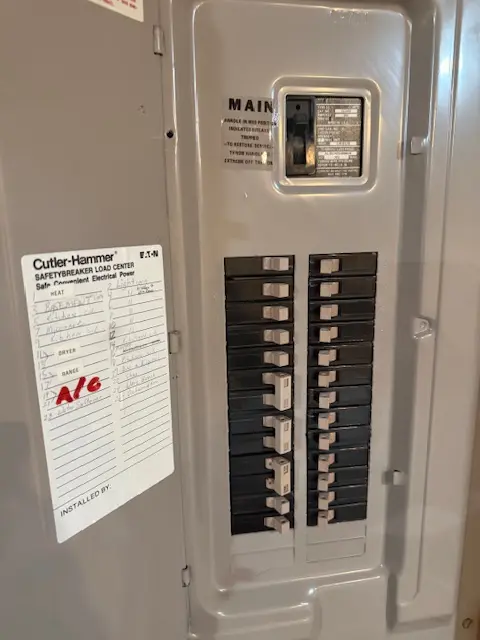
Most voltage drop problems show up at the farthest fixture, but the cause is not always only the cable length. The source circuit, transformer capacity, transformer tap, cable gauge, connector quality, and total fixture load all contribute to the final voltage reaching the light.
A red, white, and blue lighting display is one of the easiest ways to see voltage drop because the far end of the run may look dim, pink, purple, or weak. The Patriotic July 4th Outdoor Lighting Guide explains how this shows up in real RGBW holiday lighting.
A weak connector can create the same symptoms as voltage drop. The low-voltage plug and limited-energy connector guide explains how moisture leakage, loose terminals, and poor splice connections can make LED fixtures dim, flicker, glow faintly, or shift color.
That is why I test voltage under real load instead of relying only on transformer ratings. If the panel circuit, transformer, or cable run is stressed, the lights may dim, flicker, shift color, or fail earlier than expected.
Voltage problems are not always caused by undersized wire or excessive fixture loads. Damaged cable insulation can also contribute to electrical faults that affect system performance. Learn more in our Landscape Lighting Insulation Breakdown Guide.
What Landscape Lighting Voltage Drop Really Means
In simple terms, voltage drop happens when low voltage power loses strength as it travels through the cable from the transformer to the fixtures. The farther the electricity has to travel, and the more strain placed on that run, the harder it becomes for the last fixtures in line to receive the same level of power as the first ones.
That matters because landscape lighting is supposed to feel consistent. A walkway should not start bright at one end and look dull by the time it reaches the street. A row of accent lights should not illuminate one tree beautifully while the next tree looks half-lit and flat. When voltage drop becomes noticeable, the whole lighting design feels less polished.
This is one of the most common issues in low voltage landscape lighting because the system depends on cable distance, transformer output, fixture load, and layout design all working together. If even one of those pieces is off, the quality of the light can suffer.
Voltage drop can occur when lighting systems have long cable runs, too many fixtures on one circuit, or transformers that are undersized for the total electrical load. When a transformer struggles to supply enough wattage, lights farther from the power source may appear dim or uneven. Understanding how transformer capacity affects system performance can help prevent these issues. This Portfolio transformer wattage guide explains how to estimate fixture load and select a properly sized transformer.
Before installing your system, follow this <step-by-step landscape lighting wiring guide to ensure proper connections and performance.
One of the best ways to manage voltage drop on long runs is using a multi-tap transformer. This Portfolio 200W transformer guide shows how to use higher voltage taps to correct dim lighting issues.
If you are calculating voltage drop but still unsure how to correct it, use the voltage tap calculator to determine the exact transformer tap needed to restore brightness across your lighting run.
If you are weighing voltage drop against solar performance limitations, see the solar vs low voltage energy efficiency guide to compare system losses from wiring versus battery and charging limitations.
If you want to go beyond fixing dim lights and focus on long-term efficiency, see how to minimize voltage drop and reduce energy waste for a deeper breakdown of system performance and energy loss.
Voltage-drop troubleshooting uses the same kind of cause-and-effect reasoning found in engineering and programming. The problem-solving through lighting diagnostics guide explains how outdoor lighting systems teach structured technical thinking.
Voltage drop does more than create dim fixtures — it also wastes energy across the entire lighting system. Poor cable sizing, overloaded transformers, and inefficient fixture layouts force low-voltage systems to consume more power than necessary. The landscape lighting carbon footprint guide explains how proper system design reduces electrical losses and improves long-term outdoor lighting efficiency.
Voltage drop problems can sometimes trigger transformer protection warnings or smart-system fault indicators that look unrelated to wiring distance at first glance. This landscape lighting transformer fault code guide explains how overloads, thermal protection, low output voltage and wiring stress conditions appear across different transformer brands and low-voltage systems.
How to Fix Voltage Drop Fast
- Split long wiring runs into multiple shorter runs
- Use thicker cable like 12/2 or 10/2
- Move transformer closer to lighting zones
- Reduce fixtures on overloaded lines
Most voltage drop problems come from layout, not the fixtures themselves.
If you are planning a long underground run, pair your voltage-drop calculations with the trenching rules in our landscape lighting wire burial depth code guide.
Voltage drop can look worse when smart dimming is added because LED drivers have a minimum stable voltage floor. The smart dimming voltage drop guide explains why lights may work at full brightness but flicker below 20 percent.
Voltage drop calculations become much easier when you know the safe load limits for each wire size. Use the low-voltage landscape wire ampacity chart to compare wire distance, wattage load, and cable performance across different outdoor lighting layouts.
Why Voltage Drop Happens in Low Voltage Landscape Lighting
Most voltage drop problems can be traced back to a handful of design choices. Some are easy to overlook during installation, especially if the lights turn on during the first test and seem fine at a glance. But once the system runs at night on a full layout, those small planning issues become much easier to see.
If you want the advanced technical solution to voltage drop beyond wire size and layout corrections, read AI transformer voltage load balancing. That guide explains how AI-managed transformers use dynamic amperage allocation, zone-priority logic, and real-time correction to reduce dimming in low-voltage landscape lighting systems.
Severe voltage drop can cause lights to flicker, struggle to start, or fail intermittently at the far end of a run. The intermittent landscape lighting diagnosis guide explains how unstable voltage affects outdoor lighting reliability.
| Cause | What It Means | Why It Matters |
|---|---|---|
| Long cable runs | Power has to travel a greater distance from the transformer | Distant fixtures are more likely to look dim |
| Too many fixtures on one run | One cable line is carrying too much load | The full run becomes harder to power evenly |
| Wire that is too small | The cable is not ideal for the length or load of the run | Efficiency drops as the system stretches outward |
| Poor transformer placement | The transformer is too far from major lighting zones | Run lengths become longer than necessary |
| Unbalanced layout | One side of the yard gets a much heavier run than the other | Brightness becomes uneven from zone to zone |
Transformer location can affect cable length, voltage drop, and service access. Before moving a transformer closer to a lighting zone, review the outdoor transformer mounting code requirements so the new location is still safe and weather protected.
Voltage drop and transformer buzzing are often connected because overloaded cable runs force transformers to work harder under unstable load conditions. Our guide to buzzing landscape lighting systems explains how resistance buildup, excessive current draw, and poor voltage balancing create audible transformer vibration and electrical hum.
Voltage drop calculations are only one part of building a reliable low-voltage system. Our detailed landscape lighting load calculation and code compliance guide explains how transformer sizing, NEC Article 411 considerations, startup inrush current, fixture grouping, and wire gauge selection all work together to prevent dimming, overheating, and long-term system instability in residential landscape lighting installations.
Voltage Drop Can Overlap With Noise, Warranty, and Placement Problems
Voltage drop is not always an isolated electrical math problem; it often appears alongside smart-control glitches, fixture failures, wet-area design issues, and user complaints about glare. If dimming or flicker appears near cameras, hubs, or data wiring, the low-voltage lighting EMI guide explains how driver noise and cable routing can mimic or compound voltage problems. If the affected run serves a spa area, the outdoor lighting around hot tubs guide helps evaluate whether the layout is safe, low-glare, and appropriate around water. If a failed fixture may need warranty support, the voltage drop warranty documentation guide shows how to capture transformer, mid-run, farthest-fixture, and suspect-fixture readings. If brighter corrected voltage makes lights spill toward bedrooms, the dark-sky bedroom light trespass solution guide explains how to shield and dim exterior lighting after repairs.
Why Voltage Drop Often Shows Up in Otherwise “Working” Systems
One reason landscape lighting voltage drop frustrates so many homeowners is that the system usually does not fail all at once. Everything can appear functional. The transformer powers on, the timer still works, and every fixture may technically light. But the farther the power travels, the more performance can fade across the run.
That creates a situation where the install looks acceptable in daylight and disappointing after dark. A homeowner may assume the fixtures are poor quality when the real problem is simply that the system was wired in a way that makes even light output difficult. This is especially common in long front walks, wide backyard layouts, and installations where more fixtures were added later without rethinking the original cable design.
That is also why voltage drop cannot be solved by guessing. It needs to be viewed as a layout issue, not just a fixture issue. In many cases, a better transformer location or a better cable plan makes a bigger difference than replacing the lights themselves.
Voltage drop is not just a performance issue. In advanced systems, it can also be an early warning sign that load balance, cable resistance, or connector health is starting to drift in the wrong direction. To see how AI uses voltage, thermal, and impedance patterns to forecast these issues before visible failure, visit AI predictive maintenance for outdoor lighting.
Voltage drop is one of the most common electrical patterns behind dim or uneven lighting, but it can also look similar to wiring faults, overload, or bad splices. When you need to separate those issues more clearly, see AI fault isolation logic for landscape lighting for the diagnostic side of the system.
If you want to estimate whether your cable length, wire size, and total fixture load are pushing the run too far, use the Landscape Lighting Voltage Drop Calculator. It gives you a quick way to check whether your layout is still in a safe range before replacing parts.
Voltage drop is often only part of the problem in older landscape lighting systems. High-resistance connections, oxidized copper, overloaded transformers, and hidden moisture intrusion can create “ghost voltage” conditions where a meter shows power even though the fixture cannot carry electrical load. The low-voltage landscape lighting failure points guide explains these hidden failure behaviors in much greater detail.
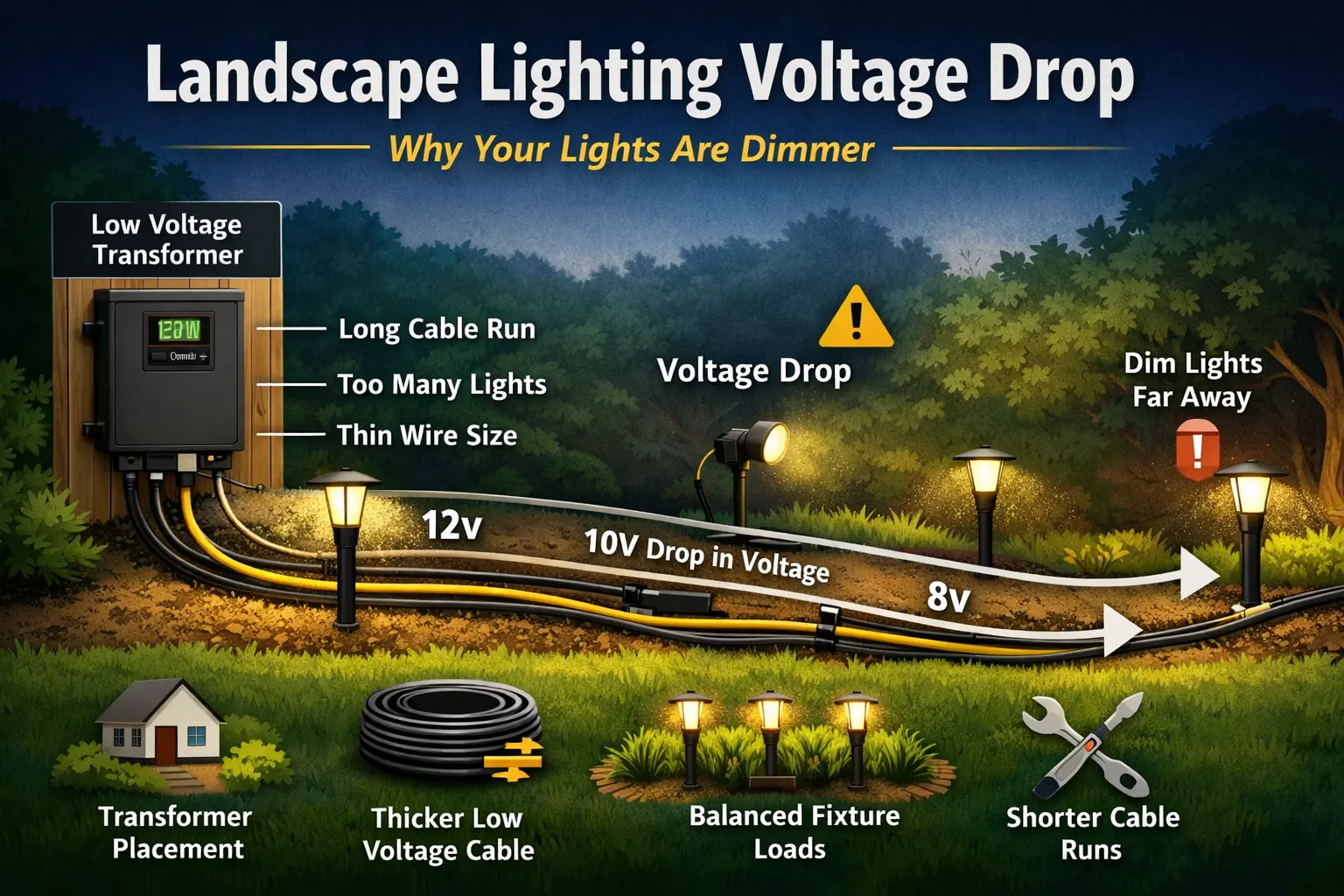
Landscape Lighting Voltage Drop Diagram
Voltage drop happens when electricity loses strength as it travels through a low-voltage landscape lighting wire run. In plain terms, the fixtures farther away from the transformer may receive less voltage than the fixtures closest to it. That is why the lights at the end of the line often look dimmer, weaker, or less consistent.

Diagram: Example of voltage drop in a low-voltage landscape lighting system. As cable distance increases and more fixtures are added to a run, the voltage reaching the farthest lights can decrease, causing dim or uneven lighting.
This diagram shows a simple example of how voltage can slowly decrease across a run of landscape lighting fixtures. The transformer may start at 12 volts, but long cable distance, smaller wire gauge, and too many fixtures on one line can lower the voltage by the time power reaches the final light. When that happens, homeowners often notice dim lights, flickering lights, or uneven brightness across the system.
What causes voltage drop in landscape lighting?
The most common causes are long wire runs, wire that is too small for the load, too many fixtures on one cable run, and poor connections that add resistance. In a real yard, voltage drop is often a combination problem instead of a single issue. That is why it helps to think about wire distance, fixture wattage, and transformer placement together instead of looking at only one part of the system.
How to reduce voltage drop
In most systems, the best fixes are to shorten the wire run, upgrade to thicker cable such as 12/2 or 10/2, split the lights into separate zones, or use a multi-tap transformer if the system design supports it. These changes help more of the original voltage reach the fixtures, which improves brightness and creates a more even lighting pattern across the yard.
If you are troubleshooting dim fixtures, also review our landscape lighting cable guide, landscape lighting wire gauge guide, and landscape lighting troubleshooting guide.
Spring moisture and frost movement can make voltage-drop problems worse by weakening already stressed cable runs and connectors. The Portfolio Easter & Spring Lighting Maintenance Guide explains how to identify dim spring fixtures, moisture-related failures, and unstable transformer behavior after winter.
Common Signs of Voltage Drop in Landscape Lighting
The most obvious sign of voltage drop is dimness at the end of a run, but it can show up in a few different ways. Sometimes the difference is dramatic. Other times it is subtle enough that you only notice the system feels uneven or less impressive than expected.
Lights closest to the transformer look brightest
If the fixtures near the transformer glow cleanly while the farthest ones look weaker, voltage drop becomes one of the first things to investigate.
One section of the yard looks noticeably duller
This often happens when one zone is placed on a long or overloaded run while another section sits much closer to the transformer.
Lights appear warm and attractive in one area but weak in another
Even if every fixture turns on, uneven output can make the landscape design feel patchy and inconsistent.
Performance gets worse after adding more fixtures
Adding a few path lights or spotlights later can quietly push an already stretched run into a more obvious voltage drop problem.
Voltage drop happens when electricity travels long distances through landscape lighting cable, which can cause fixtures at the end of a run to appear dimmer. To better understand how wiring length and layout affect power distribution, review the low voltage landscape lighting system diagram, which shows how the transformer, cable runs, and fixtures connect in a typical system.
Voltage drop can cause lights at the far end of the system to dim first and eventually shut off after the system starts. This can look like a full system failure even though the issue is actually distribution-related. If your lights turn on and then some or all shut off shortly after, compare your setup with diagnose landscape lights that turn on then off to determine whether voltage drop or overload is the real problem.
If voltage drop keeps limiting your layout, compare heavier wire, better transformer taps, and fixture upgrades in the commercial-grade landscape lighting upgrade guide.
Voltage drop becomes much more dangerous when it crosses from a performance issue into a code-compliance problem. Our detailed landscape lighting voltage drop code and NEC requirements guide explains how NEC Article 411 recommendations, transformer tap management, wire gauge sizing, and maximum allowable voltage-loss percentages affect long-term fixture performance, LED lifespan, and low-voltage system reliability.
Transformer Placement Has More to Do With Voltage Drop Than Most People Realize
A landscape lighting transformer is not just a power box on the side of the house. Its location affects the entire system. If the transformer sits too far from the main lighting zones, every run starts with a built-in disadvantage because the cable has to travel farther before it even reaches the first fixture.
That is why transformer placement should be part of the original lighting plan rather than an afterthought. A convenient wall location may seem practical at first, but if it creates one extra-long run around the house to reach the front path or backyard beds, it may be making voltage drop harder to avoid from day one.
If you are still deciding where to mount the transformer or how large the unit should be, our Landscape Lighting Transformer Guide walks through the parts of transformer planning that affect long-term system performance.
Voltage Drop Problems and Their Most Likely Fixes
The right fix depends on what is creating the imbalance. Sometimes the answer is simple. Other times it requires stepping back and improving the overall run design rather than trying to patch one weak section.
Voltage drop can make LED drivers work harder and shorten their life. The 4-hour LED driver heat test guide shows how driver temperature affects long-term landscape lighting reliability.
| Problem You See | Likely Cause | Most Helpful Fix |
|---|---|---|
| Last few path lights are dim | Run is too long or overloaded | Split the run or shorten the distance |
| Backyard lights are weaker than front yard lights | Transformer sits too far from backyard zone | Improve transformer placement or rebalance runs |
| All lights worked until more fixtures were added | Run load increased beyond good balance | Create an additional run or redesign layout |
| Only far fixtures look dull | Voltage loss over cable distance | Review cable size and run structure |
| System feels uneven overall | Layout is unbalanced from the start | Rework fixture grouping and wiring design |
Voltage drop affects more than brightness alone. The outdoor lighting voltage drop fixture impact guide explains how low voltage changes LED color stability, driver behavior, startup reliability, and long-term fixture lifespan across low-voltage landscape systems.
Uneven voltage behavior often becomes obvious when one lighting zone goes dark while nearby zones still operate normally. The landscape lighting one-zone failure guide explains how high-resistance connectors, damaged cable runs, and downstream voltage collapse can isolate a single section of the lighting system even though the transformer still tests normally.
How to Reduce Voltage Drop in Landscape Lighting
The best way to reduce landscape lighting voltage drop is to improve the system before it becomes overloaded or stretched too far. That usually means thinking about the lighting as a complete network instead of a simple chain of fixtures.
Use shorter, smarter cable runs
Shorter runs usually perform better than longer ones. If one cable path snakes across the whole yard, it may be better to split the system into multiple runs that each serve a smaller area.
Balance fixture groups more evenly
Do not let one side of the property carry all the load while another run has very little on it. A more balanced layout generally leads to a more consistent lighting result.
Choose cable with the run in mind
The wire itself matters. The longer the run and the heavier the fixture load, the more important cable choice becomes. That is why our Landscape Lighting Cable Guide is such a useful follow-up to this page.
Think through the transformer location early
Putting the transformer closer to the main zones can reduce unnecessary cable length and improve overall performance across the system.
Test the system before finalizing the install
A quick test at dusk often reveals what paper plans miss. If the far fixtures already look weaker before the cable is buried and the layout is finished, that is the best time to improve the design.
If you are trying to solve voltage drop, it helps to look at the entire lighting layout instead of only one dim fixture. A weak fixture at the end of a run is often connected to the way the system was wired, how the path lights were spaced, or how the transformer load was divided across zones. For a full wiring overview, read our how to wire landscape lighting guide. If you want a brand-specific wiring example, see our Portfolio lighting wiring diagram. If your fixtures are installed along a walkway, our landscape lighting spacing guide explains how poor spacing can make uneven brightness stand out even more. You should also review our low voltage landscape lighting zones guide to see how splitting the system into separate runs can help reduce voltage drop and create more even lighting across the yard.
Voltage drop affects brightness, but fixture wattage and runtime determine what the system costs to operate. The landscape lighting kWh calculator helps estimate power use for LED, halogen, and mixed low-voltage systems.
Voltage drop does not just affect fixture brightness — it also increases wasted energy across the entire lighting system. The landscape lighting carbon footprint guide explains how poor cable sizing, overloaded transformers, and inefficient runtime schedules increase both electrical losses and long-term operating costs.
How Wiring Layout Affects Voltage Drop
Voltage drop is closely tied to wiring design. A rushed wiring layout may technically connect every light, but that does not mean it distributes power well. In many yards, wiring is the difference between a system that feels polished and one that looks uneven from the first week.
This is why low voltage landscape lighting wiring deserves more attention than it usually gets. A single long run can be easy to install, but it is not always the best structure. Sometimes the smarter choice is creating separate runs for the front walk, foundation beds, backyard patio, or side yard accents. That gives each area a more reasonable cable distance and helps prevent the outer fixtures from being starved for power.
If you are still planning the installation or want to rework a weak design, our How to Wire Landscape Lighting guide explains layout thinking in a more step-by-step way. It pairs naturally with this page because wiring design is one of the main tools for controlling voltage drop.
Why Voltage Drop Gets Worse as a System Grows
A lot of outdoor lighting systems start small and then expand. A homeowner adds a few path lights, then decides to illuminate the mailbox, then adds a tree spotlight, then adds deck lights in the backyard. Over time, what began as a simple low voltage lighting system becomes a much heavier network than the original cable plan was designed to support.
That is when voltage drop often becomes more noticeable. The first version of the system may have looked fine because the run was short enough and the load was still manageable. But once the same run is asked to carry more fixtures and more distance, brightness starts to fade at the far end.
Planning for future growth is one of the easiest ways to avoid this. If the yard may expand later, leave space in the design for additional runs, a better transformer strategy, and a cleaner cable map. Our Landscape Lighting Layout Design Guide can help with that broader planning side.
Voltage drop is often caused by long runs and load imbalance, but power source limitations can also play a role. Our solar hybrid lighting optimization guide explains how combining solar and transformer power can help stabilize brightness in difficult conditions.
When Voltage Drop Looks Like a Fixture Problem
Not every dim light is caused by voltage drop, but voltage drop often gets mistaken for a bad fixture, weak bulb, or faulty connector. That is especially true when one area of the yard looks disappointing and the homeowner naturally focuses on the fixtures they can see rather than the wiring and layout hidden in the ground.
The key is to step back and compare the whole system. Are the first fixtures on the run noticeably stronger than the last ones? Did the issue begin after adding more lights? Does one zone always look weaker than another even after replacing parts? Those clues often point back to power delivery and layout rather than a defective light.
If you are trying to sort out whether the issue is wiring, transformer load, timer behavior, or bad connections, our Landscape Lighting Troubleshooting Guide is a strong next read because it helps connect symptoms to likely causes across the full system.
If you are comparing different brands on long runs, not all fixtures handle voltage variation the same way. See our LeonLite vs Portfolio comparison to understand how newer fixtures may behave differently than older Portfolio systems.
Landscape Lighting Voltage Drop FAQ
What is voltage drop in landscape lighting?
It is the loss of electrical strength as low voltage power travels through cable from the transformer to the fixtures, often causing distant lights to look dimmer.
Why are my farthest landscape lights dim?
The most common reason is voltage drop caused by long cable runs, too many fixtures on one line, or a layout that does not distribute power evenly.
Can a transformer help reduce voltage drop?
Yes. Proper transformer sizing and better transformer placement can make it easier to build shorter, more balanced runs with better overall performance.
Is voltage drop a wiring problem?
Often it is partly a wiring layout problem. Cable distance, fixture grouping, and overall run design all play a major role.
Final Thoughts on Landscape Lighting Voltage Drop
Landscape lighting voltage drop is one of those problems that can quietly lower the quality of an outdoor lighting system without making the failure obvious. The lights still come on, but the design loses the balance, clarity, and impact that make low voltage landscape lighting look professionally planned.
The good news is that voltage drop is often fixable through better decisions rather than expensive guesswork. Smarter transformer placement, stronger cable planning, cleaner wiring design, and more balanced fixture grouping can all improve performance in a meaningful way. Once those parts start working together, the yard usually looks brighter, more even, and much more intentional at night.
More Low Voltage Landscape Lighting Guides
Landscape Lighting Transformer Guide
Learn how transformer placement, sizing, and control features affect low voltage system performance.
Read the guideHow to Wire Low Voltage Landscape Lighting
Plan better cable runs, organize fixture groups, and build a cleaner wiring layout for outdoor lighting.
Read the guideLandscape Lighting Timer Setup Guide
Set up timer controls correctly and avoid schedule mistakes that affect your lighting system.
Read the guideLandscape Lighting Cable Guide
Compare cable basics, wire planning, and layout considerations that connect directly to voltage drop.
Read the guideLandscape Lighting Layout Design Guide
Build a more balanced outdoor lighting plan with better spacing, run design, and future expansion in mind.
Read the guideLandscape Lighting Troubleshooting Guide
Diagnose dim fixtures, dead runs, poor connections, and other common low voltage lighting issues.
Read the guideThis guide explains why landscape lighting voltage drop happens, what causes dim lights, and how to fix common low voltage wiring and layout problems.