
Quick Answer: How to Design Landscape Lighting
A good landscape lighting design places lights where they are actually needed — not just evenly across the yard.
- Light paths and steps first for safety
- Highlight 1–3 focal points like trees, entryways, or key features
- Use fewer lights with better placement
- Layer lighting instead of making everything bright
Start Here: Simple Landscape Lighting Layout Plan
- Small yard → path lights + 1–2 accent lights
- Medium yard → path + accent + patio lighting
- Large yard → layered zones across the property
Quick links: Lighting layout • Spacing guide • Path light placement • Common mistakes
If you want your yard to look professionally lit at night, the goal is not simply adding more fixtures. The goal is creating a lighting plan that improves safety, establishes focal points, and makes the space feel natural after dark.
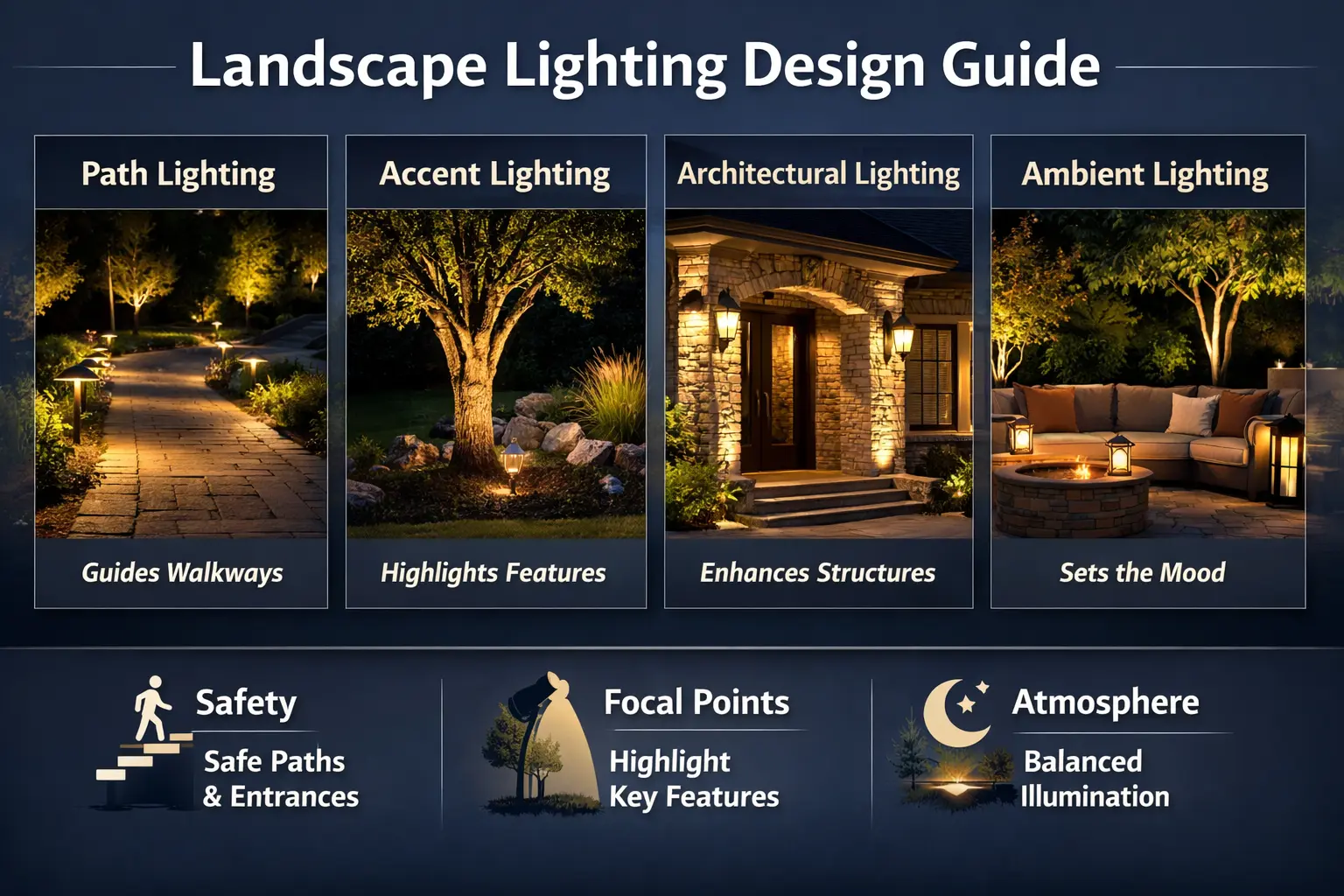
In practical terms, good landscape lighting design ideas usually combine several lighting layers: path lighting to guide movement, accent lighting to highlight plants or focal points, tree uplighting to add depth, architectural lighting to reveal walls and textures, and ambient lighting to support patios, decks, and outdoor gathering spaces.
One of the most common landscape lighting design goals is creating a system that highlights the entire home instead of only lighting individual garden areas. Strategic placement of path lights, spotlights, and accent fixtures can highlight architecture, trees, and walkways while improving nighttime visibility. See our complete guide to landscape lighting around a house for practical layout ideas and fixture placement tips.
What Most Homeowners Get Wrong
- Using too many lights instead of better placement
- Spacing fixtures evenly instead of intentionally
- Making everything the same brightness
- Ignoring focal points like trees and entryways
- Installing lights before planning the layout
Lighting design should also consider current code requirements. Review NEC 2026 landscape lighting code updates before finalizing your layout.
How Landscape Lighting Design Works
Professional-style outdoor lighting design usually focuses on three goals: safety, visual hierarchy, and atmosphere. When these three goals are balanced well, the yard feels intentional instead of scattered.
During the design stage, confirm whether buried cable, transformer placement, or hardscape crossings require approval by reviewing low voltage lighting permit requirements.
Safety
The first job of landscape lighting is making steps, pathways, transitions, and entries easier to navigate after dark. Good design supports movement without turning every walkway into a row of bright runway lights.
Visual Hierarchy
A yard looks best when some elements are more visually important than others. This might mean highlighting a specimen tree, the front entry, stone columns, a garden edge, or an outdoor seating area while leaving secondary areas quieter.
Atmosphere
The most memorable residential landscape lighting design creates mood. Instead of treating the entire yard the same, it uses contrast, softness, and layered light to make the property feel welcoming at night.
The Main Lighting Layers Used in Landscape Design
One of the biggest differences between average and excellent low voltage landscape lighting design is layering. Instead of using one fixture type everywhere, better designs combine several lighting roles.
Path Lighting
Path lighting guides movement and helps people safely navigate walkways, entries, and transitions through the yard. Proper path light placement improves safety without creating harsh glare or a crowded look.
Accent Lighting
Accent lighting draws attention to selected features like ornamental trees, specimen plants, boulders, or focal landscape elements. One of the most popular versions of this is tree uplighting, which adds depth and nighttime structure to the yard.
Architectural Lighting
Architectural lighting highlights walls, textures, columns, entry details, and other built features. This is where techniques like wall washing become useful for creating smooth, even visual emphasis.
Planning a Landscape Lighting Layout
Before you install fixtures, it helps to build a basic lighting plan. The strongest how to design landscape lighting process usually starts on paper or in a simple site sketch before anything is bought or wired.
Identify Focal Points
Start by deciding what matters most after dark. This could be the front entry, a signature tree, a stone wall, a path to the patio, or a garden feature. If everything is treated as a focal point, nothing actually stands out.
Map Pathways and Movement Routes
Think about how people move through the space. Walkways, steps, driveway edges, gates, and transition areas often deserve some of the earliest design attention.
Plan Zones
Breaking the property into zones helps you think more clearly. A front-yard zone, backyard zone, and patio zone may each need different fixture types and brightness levels. Our Landscape Lighting Layout Guide and Zone Planning Guide explain how to divide outdoor spaces into functional lighting zones.
If the project is focused on a backyard instead of the front of the house, use the backyard outdoor lighting layout guide to plan patio lighting, garden accents, privacy fence lighting, tree uplighting, and low-glare entertainment zones.
Choose Fixture Types by Purpose
Pick fixtures based on what they need to do, not just what they look like in a catalog. A path light, spotlight, well light, and step light each solve a different design problem.
Fixture layout is only one part of successful landscape lighting design. Brand-specific differences in beam spread, connector style, LED drivers, operating voltage, and construction quality can dramatically affect long-term performance. The Landscape Lighting Brands Specifications Guide compares these characteristics across today's most common manufacturers so you can build a system that performs consistently for years.
Balance Brightness Levels
A yard usually looks better when not every element is equally bright. The design should have contrast, softer transitions, and a clear sense of what the eye should notice first.
If you are designing a full outdoor space, start with the gazebo lighting guide and then connect it with your overall layout using the landscape lighting design guide.
Modern outdoor designs often use hidden lighting instead of traditional fixtures to create cleaner lines and better visual flow. This hardscape lighting guide shows how to plan glow lines under steps, walls, and seating areas.
A good landscape lighting design uses different brightness levels for safety, accent, and mood lighting. The landscape lighting brightness by area guide shows how lumen ranges change between walkways, trees, walls, patios, and focal points.
Why Landscape Lighting Spacing Matters
Spacing is one of the most overlooked parts of residential landscape lighting design. Poor spacing can make even good fixtures look wrong. Too much distance creates dark gaps. Too little distance creates clutter, glare, and unnecessary cost.
Path Light Spacing
Path lights should guide movement without looking mechanical or overcrowded. In many cases, careful placement matters more than sheer fixture count. Use landscape lighting spacing guidance before buying fixtures.
Wall Washing and Architectural Spacing
Fixtures aimed at walls, columns, or textures need spacing that creates smooth visual coverage. Poor spacing can cause hot spots instead of a clean wash effect.
Tree and Accent Lighting Spacing
Tree lighting placement depends on canopy size, beam spread, and the effect you want. A specimen tree may need one carefully placed fixture or several, depending on trunk structure and viewing angle.
Choosing Fixture Types for the Design
A strong landscape lighting design guide should help you match fixture type to design purpose. The most important question is not “Which fixture is best?” but “Which fixture solves this design need best?”
Path Lights
Best for guiding movement along walkways, entries, and garden edges without creating direct glare.
Path lighting plays a major role in both safety and visual flow across a landscape. If you are planning walkway or entry lighting, our Portfolio path lights guide breaks down spacing, fixture styles, and how to create a more balanced layout without over-lighting the area.
Spotlights
Best for targeted accent work on trees, columns, statues, and specific focal features.
Step Lights
Best for stairs, level changes, and edges where safe footing matters.
Area and Living-Space Fixtures
Useful for patios, decks, and outdoor gathering areas where the goal is comfort rather than strong focal emphasis.
Beam Spread and Color Temperature
Two design choices that shape the final look more than many homeowners expect are beam spread and color temperature. These are not just technical details. They directly affect how professional the lighting feels.
Color Temperature
Color temperature affects the tone of the light itself. Warmer light often feels more natural in residential landscapes and works well with plants, stone, and architecture. Cooler light can feel harsher if overused. For deeper guidance, read the landscape lighting color temperature guide.
Designing Landscape Lighting for Different Areas
Not every area of a property needs the same lighting strategy. A strong design adapts to the function and visual role of each area.
Front Yard Lighting Design
Front yards usually focus on curb appeal, entry visibility, and highlighting the best architectural or planting features near the home.
Backyard Lighting Design
Backyard lighting often emphasizes usability, seating zones, entertaining areas, privacy planting, and selected focal points.
Driveway Lighting Design
Driveway lighting usually combines wayfinding, edge definition, and selective architectural support. The goal is visibility without making the approach feel overlit. See driveway landscape lighting.
Common Landscape Lighting Design Mistakes
One reason homeowners search for a landscape lighting design guide is to avoid spending money on a layout that looks wrong after dark. These are some of the most common design mistakes.
Too Many Lights
Over-lighting is one of the fastest ways to lose atmosphere. More fixtures do not automatically create a better result.
Poor Spacing
Uneven fixture spacing can create patchy paths, visual clutter, and awkward dark gaps.
Overly Bright Fixtures
Fixtures that are too strong for the space create glare and flatten the nighttime look instead of adding depth.
Ignoring Focal Points
If a design does not establish what matters most, the eye has nowhere clear to land. A yard should have emphasis, not just general brightness.
Uneven Lighting Balance
When one part of the yard is extremely bright and another disappears completely, the design feels disconnected. Balance matters as much as fixture choice.
For a more detailed list of problems to avoid, visit landscape lighting mistakes.
Portfolio Landscape Lighting and Design Planning
Many homeowners use Portfolio landscape lighting fixtures when building residential outdoor lighting systems. Portfolio low-voltage systems follow the same design principles discussed in this guide, using path lights, accent fixtures, and transformers to create balanced outdoor illumination.
A driveway often has a bigger effect on nighttime curb appeal than homeowners expect because it frames the first view of the home after dark. If you want a page focused specifically on balancing driveway safety, spacing, and front-yard aesthetics, the driveway landscape lighting guide is a strong companion resource.
One of the best ways to give a backyard more nighttime character is to light a structure that people actually gather around, such as a gazebo or covered sitting area. For a more focused guide on balancing structure lighting, ambiance, and low voltage system planning, visit Portfolio gazebo lighting.
A well-designed outdoor lighting system combines multiple fixture types to create balance and visual appeal. Strategically placing Portfolio path lights, along with spotlights and accent fixtures, helps guide walkways, highlight landscaping features, and improve overall nighttime visibility.
If you are working with Portfolio lighting products, these guides may be helpful:
Landscape Lighting Design FAQ
How do you design landscape lighting?
Landscape lighting design starts by identifying focal points, lighting paths and steps for safety, dividing the yard into zones, and layering fixture types so the space feels balanced rather than overly bright.
How many landscape lights should a yard have?
The right number depends on yard size, focal points, pathways, and how much of the property you want to light. Smaller yards may only need a few well-placed fixtures, while larger properties often need multiple zones.
Should landscape lights overlap?
Yes, slight overlap usually creates a smoother and more natural look. Good overlap reduces harsh dark gaps and makes the design feel more intentional.
What color temperature is best for landscape lighting?
Warm white light around 2700K to 3000K is a common choice for residential landscape lighting because it looks natural with plants, stone, and architecture.
What is the biggest mistake in landscape lighting design?
One of the biggest mistakes is using too many bright fixtures without a clear plan. This often creates glare, uneven lighting, and a cluttered nighttime look.
Final Thoughts on Landscape Lighting Design
A strong landscape lighting design guide should help you think beyond fixtures and wiring. Good design is really about choosing where light belongs, how much emphasis each area deserves, and how the yard should feel after dark.
The best outdoor lighting plans are layered, balanced, and selective. They improve safety, highlight the right focal points, and support the way people actually use the property at night.
If you are planning a new system or improving an existing one, start with layout, spacing, fixture roles, beam spread, and color temperature before buying more lights. That design-first approach usually creates the best-looking result.
Landscape Lighting Design Planning, Fixture Placement, and Outdoor Lighting Ideas
This page is designed to serve as the main design hub for the landscape lighting section of PortfolioLighting.net. Use it to understand how lighting layers work together, how to plan a better outdoor lighting layout, and which supporting guides to read next based on your project type.
If you are still early in the process, the best next step is usually choosing your focal points and building a simple layout plan before deciding on fixture count or exact placement.