
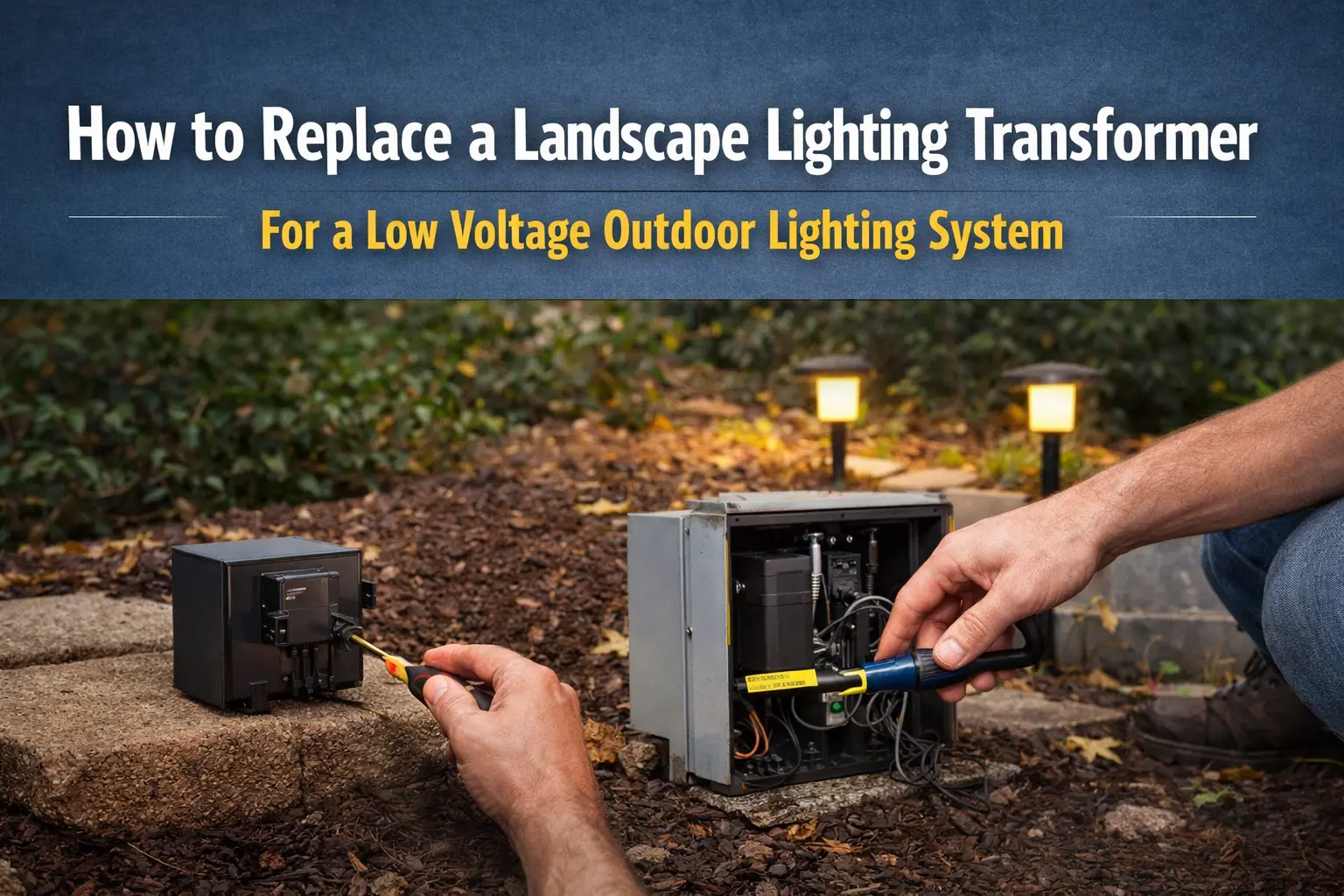
Quick Answer: How to Replace a Landscape Lighting Transformer
Turn off power, confirm the transformer is actually the problem, disconnect the old unit, label the wires, install the replacement transformer, reconnect the low-voltage wires, and test the system. Before replacing anything, always check the outlet, timer, GFCI, and wiring first.
- No power at all: check outlet, breaker, and GFCI first
- Lights flicker or timer acts strange: confirm transformer failure before replacing
- Transformer is bad: replace with the correct wattage and capacity
- Some lights still do not work after replacement: check wiring and voltage drop
Start Here: What Problem Are You Seeing?
- All lights stopped working → check transformer power first
- Transformer buzzes or hums loudly → transformer may be failing
- Lights flicker across multiple fixtures → transformer or main wiring issue
- Timer acts strange → check controls before replacing the transformer
The fastest repair starts with identifying whether the problem is really the transformer, the power source, or the wiring run.
Step-by-Step Transformer Replacement Table
| Step | What To Do | Why It Matters |
|---|---|---|
| 1 | Turn off power to the transformer. | Prevents electrical shock and reduces the chance of wiring mistakes. |
| 2 | Check the outlet, GFCI, timer, and any reset features. | Confirms the transformer is actually the failed component before replacing it. |
| 3 | Photograph and label the existing wiring. | Makes reconnecting wires faster and helps avoid wiring errors. |
| 4 | Disconnect the low-voltage wires and remove the old transformer. | Safely prepares the system for installing the replacement unit. |
| 5 | Mount the new transformer securely. | Keeps the transformer stable, properly supported, and protected from vibration or movement. |
| 6 | Reconnect the wiring and restore power. | Returns the lighting system to normal operation for testing. |
| 7 | Test every fixture and look for dim or non-working areas. | Confirms the replacement solved the problem and helps identify any remaining wiring or voltage-drop issues. |
Landscape lighting transformers are the central power source behind most low-voltage outdoor lighting systems. When a transformer begins to fail, the entire system can stop working, lights may flicker, or timers may behave unpredictably.
If you have multiple landscape lights that suddenly stopped working together, the transformer is one of the first components worth checking. A transformer converts standard household voltage into the lower voltage used by path lights, spotlights, and deck lighting fixtures. When that conversion stops working correctly, the entire lighting run may lose power.
This guide explains how to replace a landscape lighting transformer safely and correctly, how to determine if the transformer is actually the problem, and how to choose a replacement that matches your lighting system. If you are still diagnosing the issue, it may also help to review our detailed transformer troubleshooting guide or the broader landscape lighting troubleshooting resource before replacing parts.
Common Reasons Transformers Fail
- Overloaded system from adding too many lights
- Water damage or corrosion inside the unit
- Tripped GFCI or power supply issues
- Timer or photocell failure
- Wiring damage or voltage drop problems
How Landscape Lighting Transformers Work
Most outdoor landscape lighting systems use low-voltage electricity for safety and efficiency. Instead of sending standard household power directly to each fixture, the system runs through a transformer first. The transformer converts normal 120-volt power into a lower voltage output that can safely power outdoor lighting fixtures.
From there, power travels through landscape lighting cables to multiple fixtures throughout the yard. A single transformer may power path lights along a walkway, spotlights aimed at trees, deck lighting, and accent fixtures around landscaping features.
Because the transformer sits at the beginning of the entire lighting system, problems at that location can affect every fixture connected to it. When several lights fail at the same time, it is often helpful to inspect the transformer before assuming that bulbs or fixtures are the issue. This concept is also explained in the Portfolio lighting wiring diagram guide, which shows how power moves through outdoor lighting systems.
Signs Your Landscape Lighting Transformer Needs Replacement
Transformers usually fail gradually rather than instantly. The system may continue working intermittently for weeks or months before failing completely. Understanding the warning signs can help prevent unnecessary troubleshooting.
Common symptoms include lights flickering across multiple fixtures, landscape lights turning on and off unexpectedly, a timer that stops working, or lights that suddenly stop receiving power even though the outlet still works.
Another common symptom is a buzzing sound coming from the transformer. While a faint hum can be normal for some units, loud buzzing or vibration often indicates that internal components are wearing out or that the transformer is overloaded. If you notice that type of behavior, our guide on why landscape lighting transformers buzz explains the possible causes in more detail.
Sometimes a transformer appears to fail when the real problem is something else. Outdoor lighting cables may become damaged underground, connectors may corrode, or fixtures may suffer from voltage drop along long cable runs. If your system still partially works, it is often worth checking the wiring layout using the landscape lighting wiring guide before replacing the transformer.
Many homeowners replace the transformer immediately when every landscape light goes dark, but total system outages are not always caused by a failed transformer. The landscape lighting all-lights-out troubleshooting guide explains how GFCI trips, overloaded branches, timer failures, hidden cable shorts, and downstream resistance problems can mimic transformer failure symptoms.
How to Tell if the Transformer Is the Real Problem
Before replacing a transformer, check whether the whole system is dead, whether the outlet still has power, and whether the timer or photocell is blocking normal operation. If only one fixture is out, the transformer is usually not the problem. If multiple zones fail together, the transformer becomes much more likely.
- One fixture out → check bulb, connector, or fixture first
- Several lights out → transformer or main run issue
- Transformer hums loudly → possible overload or internal failure
- Lights work in manual mode only → timer or control issue
Before Replacing the Transformer
Before installing a new transformer, take a few minutes to confirm that the existing unit is truly the problem. This step prevents unnecessary replacement and can save time and money.
Start by checking the outlet supplying the transformer. Many outdoor transformers plug into a GFCI outlet, which may trip during storms or moisture exposure. If the outlet has reset buttons, confirm that it has not tripped.
Next, inspect the timer settings. Some transformers include built-in timers or photocell sensors that control when the lights turn on. Incorrect timer settings can make a perfectly good transformer appear broken. The landscape lighting timer setup guide explains how these timers operate.
If the transformer has a reset button or overload protection feature, try resetting it before replacing anything. Overloaded systems may shut themselves off to protect internal components. This can happen when additional lights have been added to a system that was originally designed for fewer fixtures.
Not every buzzing transformer needs immediate replacement. Some transformer noise is caused by loose mounting hardware, overloaded lighting zones, poor airflow, or unstable voltage taps rather than internal transformer failure. The landscape lights buzzing troubleshooting guide explains how to diagnose transformer noise correctly before replacing expensive low-voltage equipment.
Step-by-Step: How to Replace a Landscape Lighting Transformer
1. Turn Off Power
Safety always comes first. Disconnect the transformer from power before touching any wiring. If the unit plugs into an outdoor outlet, unplug it. If it is connected to a dedicated circuit, switch off the breaker controlling that circuit.
2. Photograph the Existing Wiring
Before disconnecting anything, take a clear photo of the wiring layout. This helps ensure the new transformer is connected correctly and prevents confusion later.
3. Disconnect the Low Voltage Wires
Remove the wires that feed the lighting cables. These wires usually run to the landscape lighting cable that distributes power across the yard. If you have multiple lighting branches, label them so they can be reconnected easily.
4. Remove the Old Transformer
Transformers may be mounted to a wall, post, or stake in the ground. Remove any mounting hardware and carefully detach the unit. If the housing shows corrosion or water damage, consider relocating the replacement transformer to a better protected location.
5. Install the Replacement Transformer
Mount the new transformer securely. Connect the landscape lighting wires to the low voltage output terminals according to the manufacturer's instructions.
If the transformer includes multiple voltage output options, choose the setting that best matches the cable distance and fixture load. Longer cable runs may require slightly higher output to compensate for voltage drop. More information about this concept is explained in the landscape lighting voltage drop guide.
6. Restore Power and Test the System
After installation, restore power and turn on the lighting system. Walk through the yard and verify that each fixture illuminates properly. If some lights appear dimmer than others, the issue may be related to wiring distance rather than the transformer itself.
Once you know how to remove the old transformer and reconnect the low voltage wiring, the next step is choosing the right replacement. Many homeowners find that a complete replacement kit is the easiest option because it bundles the main components needed for a fresh installation and often includes updated timing or control features. To compare options and understand what to look for before you buy, visit our Portfolio landscape lighting transformer replacement kits guide for sizing tips, compatibility information, and practical advice for replacing an older Portfolio transformer.
Choosing the Right Replacement Transformer
Selecting the correct replacement transformer is just as important as installing it correctly. The new unit should be able to handle the total wattage of all fixtures connected to the system.
Start by estimating the wattage of each light. LED landscape lights often use much less power than older halogen fixtures, but the transformer still needs enough capacity to power every fixture simultaneously.
For example, if a system includes ten lights rated at 6 watts each, the system uses roughly 60 watts. A transformer rated for at least 75 to 100 watts would provide sufficient operating margin.
If you plan to expand your lighting system later, selecting a transformer with additional capacity can make future upgrades easier. Many homeowners eventually add new fixtures such as path lights, landscape spotlights, or deck lighting as their landscape design evolves.
When the Transformer Is Not the Real Problem
It is common for homeowners to assume the transformer has failed when the real issue is elsewhere in the system. Outdoor lighting systems contain several components that can interrupt power flow.
Damaged underground cables are one of the most frequent causes of lighting failure. Lawn aeration, digging, or landscaping work can damage wiring without it being obvious from the surface.
Loose connectors are another frequent problem. Outdoor moisture can cause connectors to corrode or lose contact with the cable. Replacing connectors or cleaning corroded connections often restores power without replacing the transformer.
If you suspect connector issues, our guide to low voltage wire connectors for landscape lighting explains how those connections work and how to repair them.
Maintaining Your Landscape Lighting System
Replacing a transformer can restore power to a lighting system, but long-term reliability depends on regular maintenance. Outdoor lighting systems operate in harsh conditions that include moisture, temperature changes, and soil movement.
Inspect fixtures periodically to ensure they remain secure and properly aligned. Check connectors for corrosion and verify that cables remain buried and protected from damage. Periodically reviewing the entire system can help identify small issues before they become larger repairs.
If you are planning a full system upgrade or redesign, the landscape lighting layout design guide provides helpful advice on fixture placement, cable routing, and lighting balance across outdoor spaces.
Landscape Lighting Transformer Replacement FAQ
How long do landscape lighting transformers last?
Most transformers last between 8 and 15 years depending on usage, weather exposure, and electrical load.
Can I replace a transformer with a higher wattage model?
Yes. In many cases a higher capacity transformer provides better reliability, especially if additional lights may be added later.
Why did all my landscape lights stop working at once?
When multiple lights fail simultaneously, the most common causes are transformer failure, tripped power supply, or damaged main wiring.
Do LED landscape lights need a special transformer?
Most LED landscape lighting systems still use standard low-voltage transformers, although some newer systems include integrated drivers.