
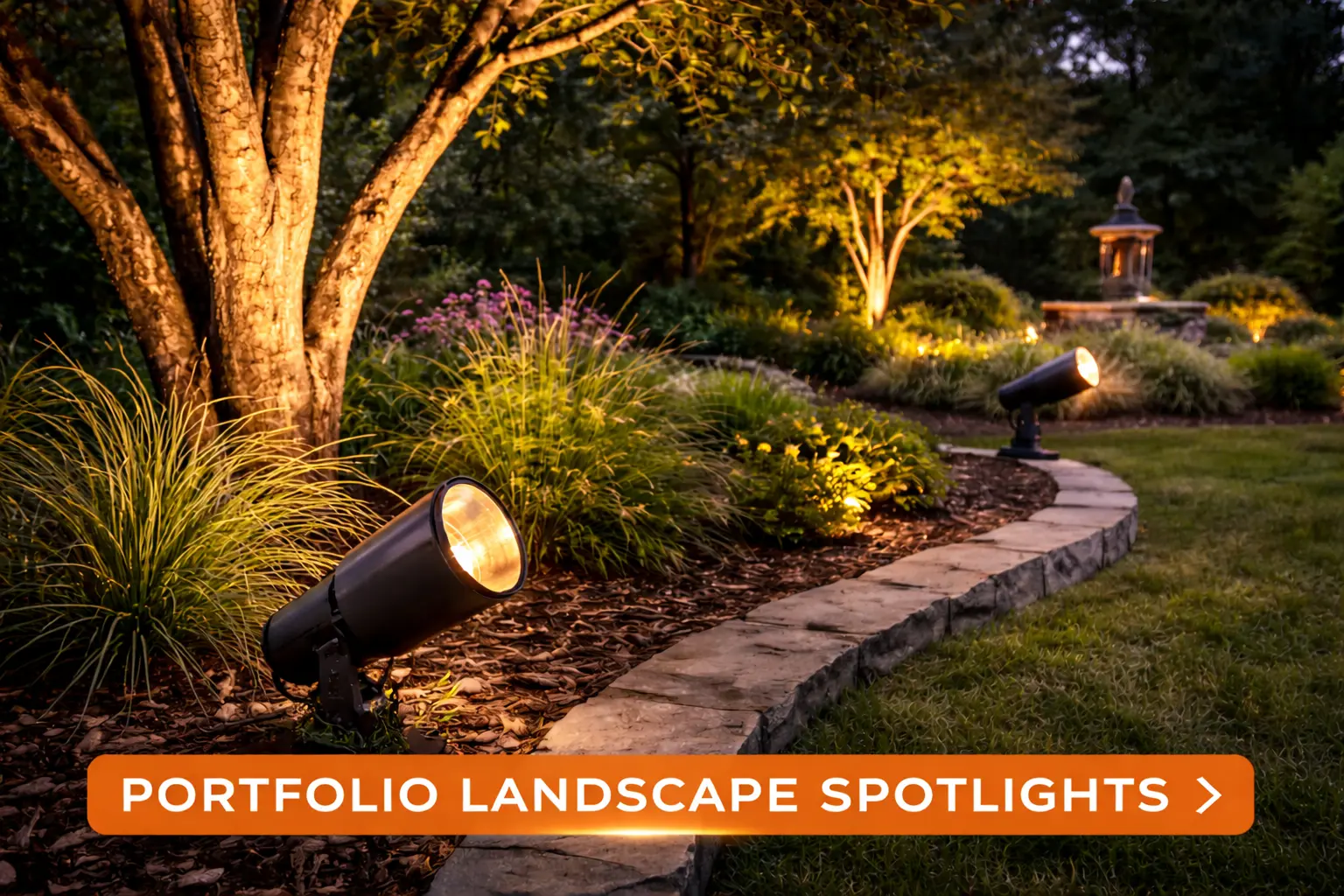
Quick Answer: Where Should You Use Landscape Spotlights?
Landscape spotlights work best on trees, textured walls, architectural details, garden beds, and other focal points that need directional light. They are not the best choice for general walkway lighting or broad area coverage.
- Best use: trees, walls, focal planting, and stone features
- Not ideal for: full path coverage or even ground lighting
- Most common mistake: aiming every spotlight straight up
- Best result: one or two focused accents instead of too many beams
Quick Decision: Should You Use Spotlights?
- Use spotlights if: you want to highlight trees or focal features
- Use spotlights if: your yard looks flat at night
- Avoid if: you need walkway lighting
- Avoid if: you need wide-area brightness
Landscape Spotlight Decision Guide
| If You Want To Highlight... | Use Spotlights? | Best Approach |
|---|---|---|
| Large tree or ornamental tree | Yes | Aim one or two spotlights upward with some distance |
| Walkway or front path | No | Use path lights instead |
| Stone wall or architectural feature | Yes | Use a focused beam at an angle |
| Patio seating zone | Sometimes | Use subtle accents, not harsh beams |
| Whole yard visibility | No | Combine fixture types instead of relying on spotlights alone |
Start Here: What Are You Trying to Highlight?
- Tree or tall planting → spotlight is usually the right choice
- Walkway → use path lights instead
- Wall, stone, or entry feature → spotlight can work very well
- Large dark area → use a layered lighting plan, not just spotlights
The best spotlight layouts start with one clear focal point instead of trying to use spotlights everywhere.
For a complete outdoor layout strategy, use the landscape lighting layout design guide to position spotlights and other fixtures correctly.
A good spotlight can completely change how a yard looks at night. It can bring out the shape of a tree trunk, highlight the texture of stone or brick, add dimension to ornamental grasses, and make the entire landscape feel more intentional and professionally designed.
The strongest landscape spotlight page answers practical homeowner questions, so this guide focuses on real-world spotlight uses, beam direction, low voltage setup, placement ideas, replacement concerns, and how to build a better outdoor lighting layout around the fixtures that matter most.
Why Portfolio Landscape Spotlights Work So Well
Landscape spotlights do something that many outdoor fixtures cannot do well: they create focus. Instead of trying to illuminate everything equally, they guide the eye to one strong feature at a time. That might be a mature tree, a garden wall, a flagstone edge, or a section of landscaping that deserves more attention after dark.
This focused style of outdoor lighting adds depth to a yard. During the day, a yard may already look layered because of plants, structures, and natural shadows. At night, those details can disappear unless the lighting plan is designed to bring them back. Spotlights help solve that problem by creating dimension where flat lighting would otherwise make the yard feel dull or unfinished.
Portfolio landscape spotlights are especially useful for homeowners who want the yard to look more polished without flooding the entire space with bright light. A spotlight can create drama and warmth at the same time, which is exactly why it remains one of the most important fixture types in outdoor lighting design.
Best Places to Use Portfolio Landscape Spotlights
The best spotlight locations are usually the places that already have visual character during the daytime. Trees, large shrubs, textured walls, columns, and sculptural plants often look great in sunlight, but they need directed lighting to stay visible and attractive after dark.
Spacing matters just as much as placement. See landscape lighting spacing to avoid uneven or cluttered layouts.
Trees and Tall Plantings
One of the most common spotlight uses is uplighting for trees. A spotlight placed near the base of a tree can highlight the trunk, reveal branch structure, and bring out the shape of the canopy. This is especially effective on multi-trunk trees, ornamental trees, and mature specimen trees that deserve to stand out at night.
Color temperature affects how trees and walls appear at night. See landscape lighting color temperature to choose the right tone.
Garden Beds and Landscape Features
Spotlights can also be used to bring attention to layered planting beds, retaining walls, boulders, decorative grasses, or landscape sculptures. In many cases, only one or two well-placed fixtures are needed to make a whole section of the yard feel more complete. Check out our garden landscape page at garden landscape lighting to assist in focusing your spotlights around your garden.
Architecture and Stonework
Outdoor spotlights are a strong choice when the goal is to highlight columns, stone facades, entry walls, or other textured surfaces. They can help show off materials that already look great during the day but disappear at night without directional light.
Path and Entry Transitions
Spotlights are not a replacement for Portfolio path lights, but they work well beside them. Path lights help people move through the yard, while spotlights help define the larger focal points around those walkways and entries.
Spotlights Should Highlight the Plant, Not the Eyes
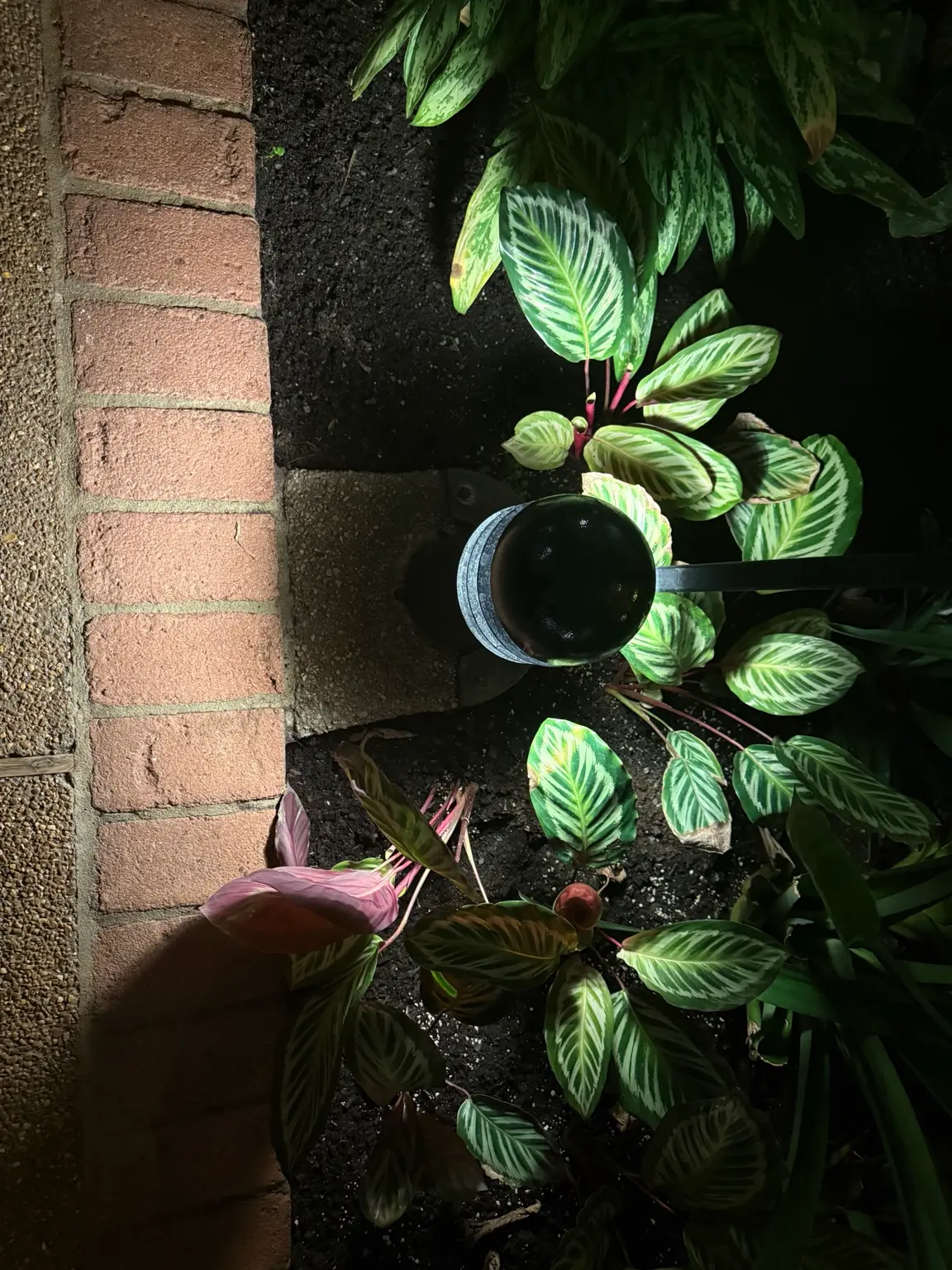
Landscape spotlights are useful near paths, planting beds, trees, and architectural features, but aiming is everything. A small change in angle can turn a useful accent light into glare.
When adjusting Portfolio landscape spotlights, stand where people actually walk or sit and look back toward the fixture. If you see the bright lamp directly, lower the angle or shield the source.
What Landscape Spotlights Do Best — and What They Do Not
- Best for highlighting trees, texture, and focal points
- Best for adding vertical depth to the yard
- Not ideal for lighting entire walkways
- Not a replacement for path lights or broad area lighting
A spotlight is strongest when it creates emphasis. It usually performs poorly when used as a general-purpose fixture for every outdoor lighting job.
Landscape Spotlight Buying Guide: What to Compare First
Choosing the right spotlight is not just about brightness. Beam angle, fixture durability, finish, adjustability, and system compatibility all affect whether the light will actually work the way you want once it is installed.
Beam spread determines how wide or narrow the light appears. See beam spread guide to choose the right spotlight effect.
Wire size affects performance more than most homeowners expect. See wire gauge guide for proper sizing.
| Buying Factor | Why It Matters | What to Check |
|---|---|---|
| Beam spread | Controls how focused or wide the light appears | Narrow beams highlight trunks; wider beams cover larger features |
| Brightness | Affects how visible the feature becomes at night | Too bright can feel harsh; too dim may disappear |
| Fixture adjustability | Lets you fine-tune the spotlight angle | Important for trees, columns, and changing landscape layouts |
| Outdoor durability | Spotlights stay exposed to weather year-round | Check finish, moisture protection, and build quality |
| Low voltage compatibility | Most landscape spotlights run on transformer systems | Match fixtures to the outdoor lighting layout and power plan |
How to Place Portfolio Landscape Spotlights Correctly
Placement is everything with spotlighting. A great fixture placed poorly will still look bad. One of the most common mistakes is placing the spotlight too close to the feature. When that happens, the beam can become harsh and unnatural, especially on trees or textured surfaces.
In many cases, it is better to give the spotlight a little distance so the beam has room to spread and create a softer effect. That often leads to a more natural-looking result and better balance in the yard. Another smart approach is cross-lighting, where two spotlights are aimed from different directions to reduce hard shadows and create more depth.
You should also think about sight lines. A spotlight may look great from one angle and awkward from another. Before finalizing the installation, step back and view the scene from the walkway, patio, driveway, and main windows of the home. That extra check can make a big difference.
Common Landscape Spotlight Problems
- Harsh beams: fixture too close to feature
- Glare: aimed directly upward or outward
- Flat lighting: no angle variation
- Overlighting: too many spotlights in one area
Landscape Spotlight Mistakes That Make a Yard Look Worse
- Using too many spotlights in one area
- Aiming every fixture straight up
- Placing fixtures too close to the feature
- Using spotlights where path lights would work better
The best spotlight designs feel selective and intentional. Most bad spotlight layouts come from using more light instead of better light placement.
How Portfolio Spotlights Fit Into a Low Voltage Outdoor Lighting Plan
Most landscape spotlights are part of a low voltage system. That means they work alongside a transformer, outdoor cable, connectors, and other fixtures throughout the yard. If you are building or expanding a lighting system, it helps to think of the spotlight as one piece of a larger design rather than as a standalone product.
If spotlights look dim at the end of a run, see voltage drop guide to fix brightness issues.
A common layout might use spotlights for trees and architecture, path lights for walkways, and deck lights for outdoor living spaces. That type of layered plan creates a more complete result than relying on a single fixture category alone.
If you are setting up a new system or troubleshooting an older one, it is worth reviewing Portfolio outdoor transformer lighting, Portfolio low voltage lighting, and the broader Portfolio landscape lighting hub so the entire layout works together.
Spotlights vs Path Lights vs Flood Lights
Homeowners sometimes compare these categories because they all belong to outdoor lighting, but they are not really interchangeable. Spotlights are meant for targeted emphasis. Path lights are meant for guiding movement along the ground. Flood lights cover wider areas and are often used when stronger general illumination is needed.
If your main goal is to highlight a tree, wall, or layered planting bed, a spotlight is usually the right answer. If the goal is making a walkway safer, use path lights. If the goal is broad visibility around a large area, that is where flood-style lighting may make more sense.
In practice, the strongest outdoor lighting designs often use all three in moderation, each for the role it does best.
Spotlights vs Other Outdoor Lighting
| Fixture | Best Use |
|---|---|
| Spotlights | Highlight trees and focal points |
| Path lights | Guide walkways |
| Flood lights | Large area lighting |
Maintenance, Replacement Parts, and Troubleshooting
Outdoor lighting fixtures eventually deal with dirt, moisture, mulch, shifting soil, and seasonal wear. That does not always mean the whole spotlight needs to be replaced. In many cases, the issue is a bulb, a connection, a wire splice, or a transformer-related problem elsewhere in the system.
If a spotlight stops working, start with the simple things first. Check the connection, check whether nearby lights are still working, and confirm the transformer is functioning correctly. If you are tracking down worn or broken components, visit Portfolio lighting parts and accessories. For broader problem-solving, use Portfolio lighting troubleshooting. And if you are replacing or expanding fixtures, review Portfolio lighting installation and instructions.
Portfolio Landscape Spotlights FAQ
What are Portfolio landscape spotlights best used for?
They are best used to highlight trees, garden beds, architectural details, entry features, and focal points that need directional light at night.
Do spotlights work with path lights?
Yes. Spotlights and path lights serve different purposes and often work best together in a layered outdoor lighting plan.
Are most landscape spotlights low voltage?
Many are. Low voltage outdoor spotlight systems are common because they work well with transformers and broader landscape lighting layouts.
How close should a spotlight be to a tree or wall?
It depends on the feature and beam spread, but placing the spotlight too close usually creates a harsher effect. A little distance often looks better.
More Portfolio Landscape Lighting Guides
Portfolio Landscape Lighting
Explore the main outdoor lighting hub for trees, walkways, transformers, path lights, and complete landscape lighting plans.
Read the guidePortfolio Path Lights
Compare path lights with spotlights if you are lighting walkways, garden edges, and front entry routes.
Read the guidePortfolio Post Lighting
See how post lights can work with landscape spotlights around driveways, entries, gate areas, and patios.
Read the guidePortfolio Outdoor Transformer Lighting
Understand how transformers support low voltage spotlight systems and broader outdoor lighting layouts.
Read the guidePortfolio Deck Lighting
Helpful if your spotlight project connects to a patio, deck, pergola, or outdoor living area update.
Read the guideBuy Portfolio Lighting
Browse more Portfolio lighting categories if you are comparing spotlights with other outdoor fixture types.
Read the guide