
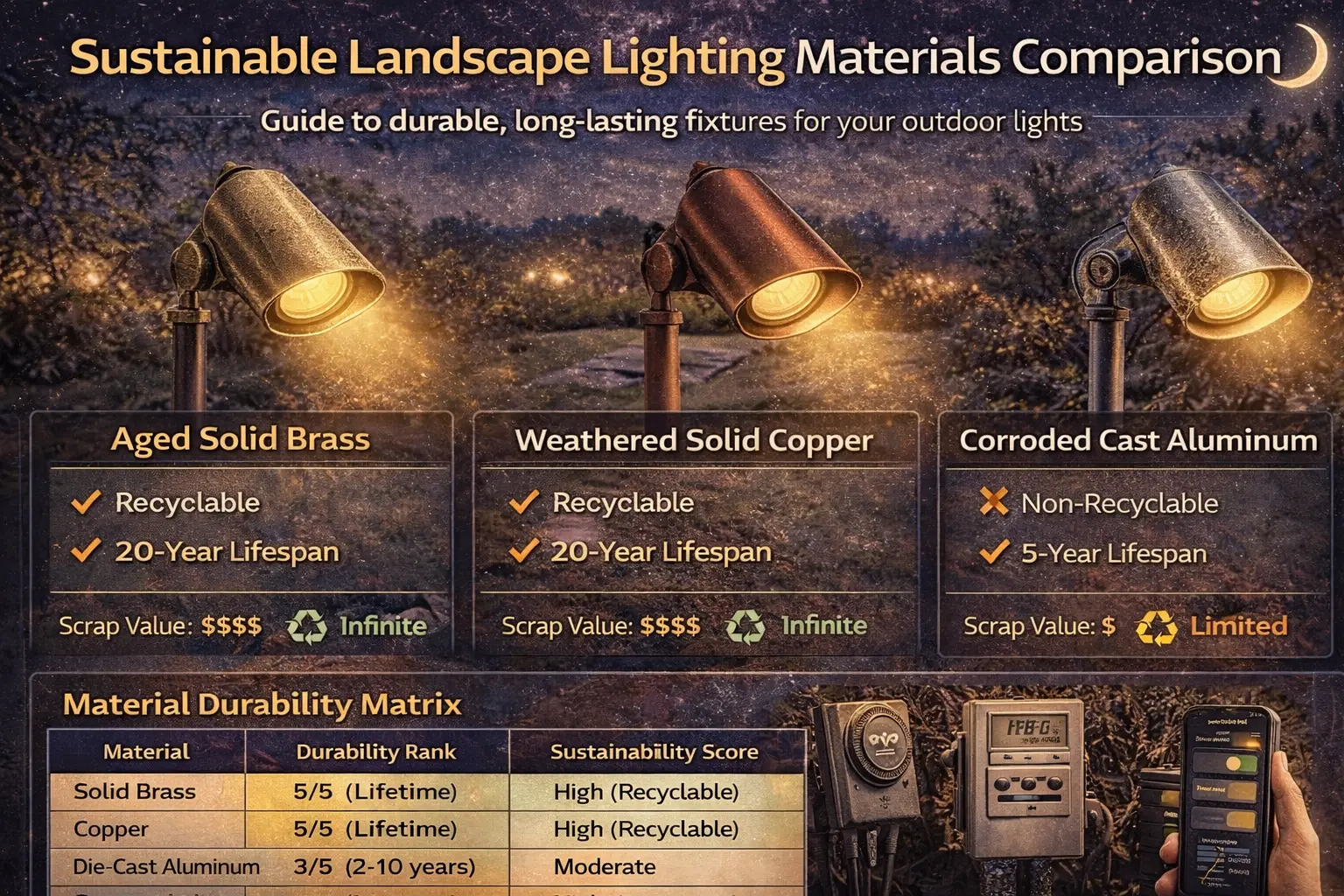
Quick Answer: What Is the Most Durable and Sustainable Landscape Lighting Material?
For most long-term residential landscape lighting, solid brass is usually the most durable all-around material, with solid copper close behind. Both outperform cheap plastic and low-grade composite housings because they resist corrosion better, last longer, and are far more likely to remain worth repairing over time.
- Best long-term material: solid brass
- Best natural-aging material: solid copper
- Best budget metal: die-cast aluminum
- Worst long-term choice: thin composite or plastic housings
Lifecycle sustainability matters more than spec-sheet marketing. A fixture is only truly sustainable if it survives long enough to justify the materials used to make it.
Metals such as copper, brass, and aluminum are recyclable materials, and the EPA continues to track metal recovery as part of broader materials and recycling programs. That does not automatically make every metal fixture sustainable, but it does matter when comparing long-lived metal hardware to short-lived disposable plastic products.
In practical homeowner terms, the question is not just “Which fixture costs less today?” It is “Which fixture keeps you out of the replace-and-trash cycle for the next 10 or 20 years?”
Durable materials help fixtures last longer, but electrical efficiency also affects long-term performance. See how to minimize voltage drop and energy waste to reduce strain on your system.
Landscape Lighting Material Durability Matrix
| Material | Durability Rank | Sustainability Score | Best Use Case |
|---|---|---|---|
| Solid Brass | 5/5 (lifetime-grade) | High (durable, repairable, recyclable) | Coastal areas, exposed paths, high-value long-term installations |
| Solid Copper | 5/5 (lifetime-grade) | High (durable, recyclable, ages naturally) | Natural patina aesthetics, premium gardens, wet environments |
| Die-Cast Aluminum | 3/5 (varies by coating and environment) | Moderate | Inland areas, budget-conscious systems, lower-corrosion conditions |
| Composite / Plastic | 1/5 (short-life in harsh conditions) | Low | Temporary lighting, very low-cost projects, low-impact seasonal use |
Environmental Stressors That Shorten Fixture Life
Coastal and salt-spray conditions
For homes within about 10 miles of the ocean, look for Marine Grade specifications when comparing outdoor lighting materials. This often points to higher-content brass, more durable copper construction, or specially treated finishes designed to handle salt-heavy air better than standard exterior fixtures.
Coastal installations are the fastest way to expose weak materials. Salt-heavy air and moisture accelerate corrosion and can quickly expose poor coatings, weak housings, and low-grade fasteners. In these environments, brass and copper are usually the safest long-term material choices because they are naturally corrosion-resistant metals and do not depend entirely on a thin painted finish for survival.
Soil conditions and electrolysis
Direct-burial components do not just fight water. They also live in soils that vary by pH, mineral content, and conductivity. When low-grade alloys, poor connectors, or mixed metals are pushed into wet soil, corrosion and electrochemical wear can accelerate. That is one reason virgin solid materials often outperform thin plated parts or bargain mixed-alloy accessories in the long run.
If you are already seeing rust, pitting, white oxidation, or failing connectors, read landscape lighting corrosion next. It explains how moisture, soil chemistry, and metal choice combine to shorten fixture life.
Material selection influences far more than appearance and corrosion resistance. The lifespan of the fixture housing often determines how many replacement cycles a lighting system experiences over decades of operation. A fixture that survives for twenty years may ultimately cost less and generate less waste than several lower-cost replacements. Our lighting life-cycle cost analysis guide explains how durability, maintenance, replacement frequency, and operating expenses affect the true long-term cost of outdoor lighting ownership.
The longest-lasting fixture material depends heavily on where it will be installed. Brass may perform extremely well in humid and coastal environments, while UV-stabilized polymers can be useful where corrosion is more threatening than impact damage. Freeze-thaw movement, salt deposition, direct irrigation, intense sunlight, and clay-soil moisture can also cause the fasteners, gaskets, stakes, and connectors to fail before the fixture body. The Outdoor Lighting Climate Performance Guide compares these failure patterns by climate and shows which materials, seals, connectors, and maintenance intervals make the most sense in each environment.
UV degradation
In hot, sunny climates, plastic shrouds, acrylic lenses, thin polymer housings, and bargain finishes often break down much faster than homeowners expect. Cracking, yellowing, brittleness, and seal failure are common outcomes. Once the outer shell starts to fail, water gets in, optics cloud up, and the fixture often becomes throwaway hardware rather than something you can service.
If your main concern is rain, irrigation overspray, or wet installation zones, compare this guide with Portfolio waterproof lighting so you can evaluate sealing, enclosure quality, and long-term weather resistance together.
Total Cost of Ownership: Why Better Materials Can Cost Less Over 10 Years
Durable materials often look expensive until you compare their true service life. This is where the buying logic changes.
A single higher-grade brass or copper fixture may cost more upfront, but if it outlasts multiple lower-grade replacements, the long-term cost can be lower. That is especially true when replacement requires labor, digging, rewiring, or repeated trips to buy new fixtures.
Material quality matters most when it is paired with basic upkeep. See landscape lighting maintenance for simple steps that help durable fixtures stay in service longer and avoid preventable corrosion or seal failure.
The 10-year math homeowners should think about
- 1 brass fixture that stays in service
- vs. 2 or 3 lower-grade replacements over the same period
- plus the labor of swapping failed housings, lenses, stakes, or corroded fasteners
- plus the cost of dealing with water damage, wiring issues, or fixture inconsistency across the yard
That is the real sustainability story. Long-lived materials reduce waste, reduce labor, and reduce the chance that you throw away an entire fixture just because one weak part failed first.
Serviceability: Component-Level Repair vs Fixture-Level Waste
Durable materials matter even more when the fixture is designed to be serviced. A strong brass or copper body makes much more sense when you can replace the lens, socket, hardware, gasket, or stake instead of tossing the whole unit.
Good fixture bodies still fail early when the hardware does not hold up. If screws, brackets, aiming hardware, or mounting pieces are the weak point, review Portfolio lighting replacement hardware before replacing the entire fixture.
This is where better materials connect directly to sustainability. A repairable fixture reduces material waste and lowers replacement costs. A flimsy fixture with a cracked body or warped plastic shield usually turns one small problem into full fixture disposal.
Fixture durability and lamp choice often go together. If you are deciding between replaceable lamps and more disposable fixture designs, compare LED vs halogen landscape lighting before committing to a long-term upgrade path.
Need Housings?
Compare replacement body options before replacing an entire lighting run.
View housingsNeed Lenses or Covers?
Good lenses and covers extend fixture life when the body is still worth saving.
View replacement lensesNeed General Repair Help?
Moisture, corrosion, and bad housings often show up first as “mystery failures.”
View troubleshootingHow Durable Materials Improve Outdoor Lighting Performance
Choosing better materials is not just about how long a fixture lasts. It also affects how well your outdoor lighting actually performs over time.
Fixture durability is not only about brass, aluminum, stainless steel, or composite housings. The internal light engine matters too. Socketed fixtures introduce replaceable bulbs and contact points that may be easier to service but can also become moisture and corrosion entry points over time. Integrated LED fixtures reduce bulb changes and can improve sealed-system reliability when properly built. Our integrated LED vs. socketed lifespan data guide compares the long-term maintenance and reliability differences behind those two fixture designs.
- High-quality brass fixtures often include better-designed housings and shields that help keep light controlled and consistent, which matters when you are considering BUG ratings.
- Stronger metal components hold their position better, making it easier to keep lights aimed correctly when you need to fix light trespass.
- Many electrical issues start with water getting into the fixture. Cheap housings, cracked plastic, and failing seals can lead directly to problems that show up later in the troubleshooting process.
Which Material Should You Choose?
- If you want the best long-term value → choose solid brass
- If you want a premium natural-aging finish → choose solid copper
- If you need a lower-cost metal option → choose coated die-cast aluminum
- If you only need short-term or temporary lighting → plastic may work, but it is usually the least durable choice
For most homeowners, brass is the best balance of durability, repairability, and long-term value, especially when the fixture will stay outdoors year after year.
What to Look For When Shopping for Sustainable Fixtures
- Check whether the metal is solid or only plated
- Look for silicone O-rings and proper gaskets for weather sealing
- Prioritize heat-tempered glass lenses over acrylic where possible
- Check the finish system: natural finish, brass, copper, or a high-quality powder coat
- Look for serviceable construction rather than sealed throwaway bodies
- Inspect the stake, fasteners, and aiming hardware, not just the visible housing
- Serviceability: Prioritize fixtures with replaceable LED bulbs such as G4, MR11, or MR16 over integrated LED units. If an integrated light engine fails, the entire durable metal housing often has to be discarded, which works against long-term sustainability.
If your current fixtures are already too far gone to justify repair, compare options in replacement for Portfolio landscape lighting before buying another short-life fixture with the same weak materials.
If you are trying to compare durable fixture families before buying, use Portfolio landscape lighting, LED landscape lighting, and best replacement for Portfolio landscape lighting as your next step.
Editorial Note: This guide is based on long-term homeowner durability concerns, repairability, and practical outdoor lighting performance in wet, coastal, and high-UV environments. The goal is to help readers avoid short-life disposable fixtures and choose materials that hold up over time.
Durable Landscape Lighting Materials FAQ
Does brass landscape lighting turn green?
Brass can weather and darken outdoors, and some surface patina is normal. That weathering is usually cosmetic rather than a sign that the fixture is failing structurally.
What is the most eco-friendly landscape lighting material?
For most long-term residential use, solid brass and copper are the strongest sustainability choices because they last longer, are more serviceable, and are recyclable metals.
How long do aluminum outdoor lights last?
That depends heavily on coating quality, water exposure, and environment. In mild inland conditions they can last for years, but in aggressive coastal or wet environments poor-quality aluminum fixtures may degrade much faster.
Why do plastic landscape lights fail so quickly?
UV exposure, cracking, brittleness, heat, and water intrusion are all common failure paths. Once the housing starts to degrade, the fixture often stops being worth repairing.
What is the best landscape lighting material for coastal areas?
In most coastal environments, solid brass and solid copper are the safest long-term choices because they resist corrosion better than lower-grade aluminum or plastic fixtures. Marine-grade specifications are especially worth looking for near the ocean.
Final Thoughts
The most sustainable landscape lighting material is not the one with the lowest upfront price. It is the one that survives real weather, holds up to maintenance, and avoids becoming waste after a short service life.
For most homeowners, that means thinking beyond brightness and style. Brass and copper usually win when long-term durability matters most. Aluminum can still be a useful budget material in the right environment. Cheap plastic and composite fixtures usually lose the sustainability argument because they fail early and are rarely worth repairing.
If your goal is to buy once, repair when possible, and avoid sending broken fixtures to the landfill every few years, material quality should be one of the first things you evaluate, not one of the last.