
What Maintenance Do Landscape Lights Need? (Quick Answer)
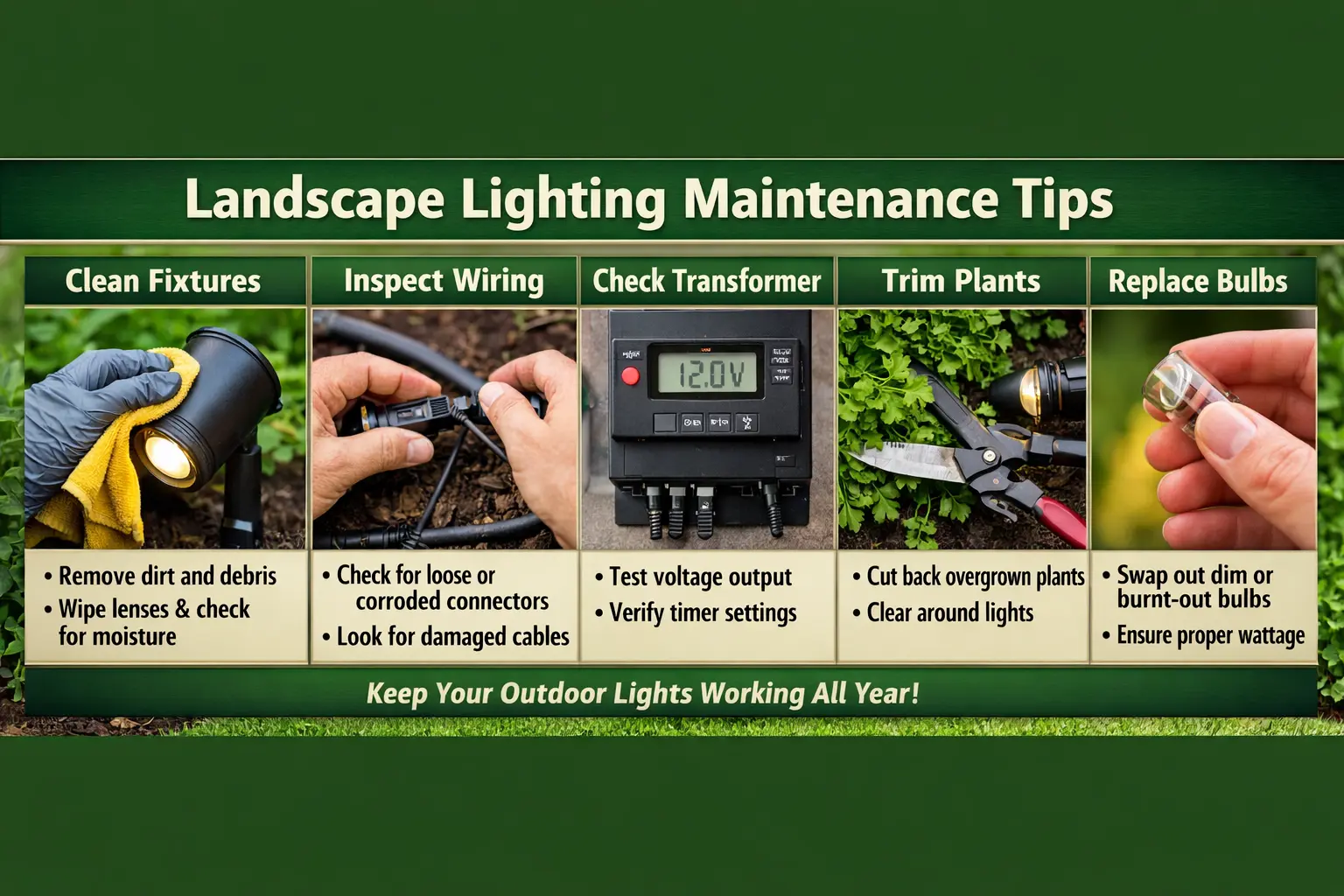
Landscape lighting maintenance includes cleaning fixtures, checking connectors, inspecting wiring, trimming plants, and verifying transformer performance. Most systems only need simple checks once or twice per year to stay reliable.
- Clean fixtures: improves brightness immediately
- Check connectors: prevents flickering and outages
- Inspect wiring: catches damage early
- Check transformer: avoids overload problems
In most cases, maintenance takes less than an hour and prevents the most common lighting failures.
Maintenance Problem Prevention Guide
| If You Notice | What It Means | What To Check First |
|---|---|---|
| Lights look dim | Dirty lenses or voltage drop | Clean fixtures and check wiring |
| Lights flicker | Loose connectors or weak wiring | Inspect connectors and cable runs |
| Lights fail after rain | Moisture in connectors or fixtures | Check waterproof connections |
| Only part of system works | Branch wiring issue | Trace connectors in that section |
| Transformer runs hot | Possible overload | Check total wattage and load |
Most lighting failures follow predictable patterns. Recognizing the symptoms early makes maintenance faster and easier.
Start Here: What Should You Check First?
- If lights look dim → clean fixtures
- If lights flicker → check connectors
- If lights fail after rain → inspect for moisture
- If system is inconsistent → check transformer and wiring
Start with the symptom you see. This avoids unnecessary work and helps you fix the real problem faster.
Landscape lights usually do not fail all at once without warning. More often, dirt builds up on lenses, connectors weaken, plants grow over fixtures, and small moisture issues slowly turn into bigger performance problems.
Good maintenance is what keeps a low-voltage lighting system from drifting into dim lights, flicker, uneven brightness, and hard-to-find wiring failures. A simple seasonal checklist can prevent many of the most common outdoor lighting problems.
Maintaining landscape lighting becomes much easier when you understand how the entire system is designed. Our Complete Landscape Lighting Guide explains how layout planning, fixture spacing, wiring, transformers, and system design all connect so homeowners can maintain outdoor lighting systems more effectively.
Why Landscape Lighting Maintenance Matters
Outdoor lighting systems face weather, irrigation, soil moisture, temperature swings, mulch, insects, and yard work all year long. That constant exposure slowly affects fixtures, wiring connections, transformer settings, and bulb performance.
Regular landscape lighting maintenance matters because it helps catch small weaknesses before they become bigger failures. A dirty lens can reduce brightness. A loose connector can cause flickering. A transformer running hot can signal overload. Plants growing around fixtures can block light and trap moisture where it does not belong.
What Maintenance Prevents
- dim lights from dirty lenses
- flickering from weak connectors
- partial outages from damaged cable
- transformer stress from ignored issues
What Maintenance Improves
- brightness and beam quality
- fixture alignment
- connector reliability
- overall system lifespan
What Outdoor Exposure Causes
- lens dirt and debris buildup
- connector corrosion
- soil moisture around cable runs
- plant growth over light output
Best Times to Inspect
- spring startup
- mid-season check
- after major storms
- after mulch or edging work
Landscape Lighting Maintenance Checklist
This simple checklist works well for most residential low-voltage landscape lighting systems and gives homeowners a useful routine to follow throughout the year.
Regular maintenance can extend the useful life of an outdoor lighting system, but every component eventually reaches the end of its expected service period. Our outdoor lighting component life expectancy guide explains typical lifespans for fixtures, transformers, LED modules, connectors, and wiring so homeowners can plan future repairs and replacements.
| Maintenance Task | Suggested Frequency | Why It Matters | Helpful Guide |
|---|---|---|---|
| Clean fixture lenses and housings | Twice per year | Improves brightness and beam clarity | Cleaning landscape lighting fixtures |
| Inspect wiring and connectors | Yearly, plus after storms | Prevents connection failures and flicker | Landscape lighting connectors guide |
| Check transformer performance | Yearly | Confirms timer settings and stable output | Landscape lighting transformer guide |
| Replace worn bulbs or failed fixtures | As needed | Maintains even light output | Landscape lights not working |
| Trim plants around fixtures | Seasonal | Prevents blocked light and moisture traps | Landscape lighting layout design |
| Check for moisture problems after rain | After major storms | Helps catch wet connectors and fixture leaks early | Landscape lights not working after rain |
Maintenance becomes easier when fixtures are matched correctly to their outdoor exposure level. The landscape lighting enclosure-protection guide explains how IP ratings affect corrosion, gasket lifespan, fogged lenses, and moisture intrusion.
Seasonal maintenance should include checking for cracked fixtures, exposed wire, wet connectors, and GFCI trips after storms. The landscape lighting GFCI maintenance checklist explains what to inspect when the system keeps shutting off.
Cleaning Landscape Lighting Fixtures
Cleaning fixtures is one of the easiest maintenance tasks and one of the most noticeable in terms of brightness improvement. Dirt, mulch dust, pollen, hard water spots, and spider webs all reduce how much useful light reaches the yard.
Dirty lenses, tilted fixtures and exposed LED glare can create unsafe walking conditions for seniors. The Senior Safety Lighting Guide explains how proper fixture maintenance supports safer nighttime path visibility and contrast.
Remove dirt and debris
Wipe the lens, housing, and nearby surface areas so light can pass through clearly again. Even a thin layer of grime can make a fixture look weaker than it really is.
Check lenses and covers
While cleaning, look for cracks, moisture, or lens damage that may let water in later. This is especially important for well lights and low-mounted path fixtures.
Re-align fixtures
Maintenance is also a good time to confirm that the fixtures are still aimed where you want them. Yard work, settling soil, and plant growth often shift fixture position over time.
Inspecting Wiring and Connectors
Connectors and cable runs are some of the most important parts of a maintenance routine because they are also some of the most common failure points. One weak connection can cause a whole branch of the system to flicker, dim, or stop working.
Check for loose connectors
Outdoor connectors can shift or weaken over time. Inspect them for secure contact and signs that the connection is no longer holding tightly.
Look for corrosion
Moisture and soil exposure can slowly corrode metal connection points. Once corrosion starts, resistance increases and the connection becomes less reliable.
Inspect cable for damage
Edging, digging, pets, mulch work, and seasonal yard care can all damage low-voltage cable. Look for cracked insulation, exposed wire, pinched sections, or disturbed branches.
For deeper help with these maintenance checks, review landscape lighting connectors, landscape lighting cable guide, and landscape lighting wire gauge guide.
Maintenance records can matter when outdoor lighting is part of a walkway, rental property, business entrance, or shared access area. The landscape lighting maintenance and liability guide explains why documenting repairs, failed fixtures, and exposed wiring can reduce risk.
Checking the Landscape Lighting Transformer
The transformer is the central power source for a low-voltage landscape lighting system, so regular maintenance should always include a quick transformer check.
Check transformer output and behavior
Pay attention to whether the transformer seems unusually hot, noisy, or inconsistent. Buzzing, overheating, and unstable performance can all be early signs that the system is stressed.
Review timer settings
Seasonal daylight changes, power outages, and accidental manual override changes can all affect when the system turns on and off. Maintenance is a good time to confirm the schedule still matches your needs.
Look for overload clues
If more fixtures were added over time, the transformer may be carrying more load than it should. Maintenance checks can reveal this before it turns into dim lights, flicker, or full shutdown.
For deeper transformer care, compare your system to landscape lighting transformer guide, landscape transformer overload, and landscape transformer buzzing.
Preventing Common Landscape Lighting Problems
Good maintenance is really about prevention. Instead of waiting for dim lights, flickering fixtures, transformer overload, or rain-related failures, you use regular checks to catch the conditions that cause those problems.
Prevent dim lights
Keep lenses clean, check for cable stress, and make sure the system is not overloaded. If dimness is already appearing, compare it to landscape lights dim.
Prevent flickering lights
Check connector strength, fixture moisture, and branch stability. Most flickering problems begin at the small connection points. For symptom-specific help, read landscape lights flickering.
Prevent transformer overload
Recalculate the load whenever fixtures are added and leave room for future growth instead of running the transformer right at its limit.
Prevent rain-related failures
Inspect lower fixtures, wet connector areas, and branch points after storms so moisture damage does not quietly develop into a full outage later. For exact wet-weather help, review landscape lights not working after rain.
Add in-ground fixtures to your seasonal inspection list. The Portfolio in-ground well light maintenance guide explains how to prevent fogged lenses, sinking housings, corroded connectors, and heat-trapped LED failures.
Add These Checks to Your Landscape Lighting Maintenance Routine
Good maintenance should include more than wiping lenses and resetting timers. Once a year, inspect fixture sockets for rust, mineral buildup and weak contact pressure using this Portfolio corroded socket repair guide, check whether the transformer should be protected with the Portfolio transformer surge protector installation guide, and review fixture aiming with the dark-sky compliance vs. IDA certification guide so the system stays reliable, efficient and less disruptive at night.
Seasonal Maintenance Ideas for Homeowners
Many homeowners find it easier to maintain outdoor lighting by tying it to the seasons instead of waiting for a failure. A spring check, a mid-season summer walk-through, and a post-fall cleanup inspection usually cover most systems well.
- spring: clean fixtures, re-aim lights, inspect winter damage
- summer: trim plants, check for irrigation-related moisture issues
- fall: clear debris, confirm timers, inspect cable after yard work
- after storms: check wet connectors, transformer behavior, and pooled water areas
Portfolio Systems and Landscape Lighting Maintenance
Many outdoor lighting systems installed over the past two decades used Portfolio low-voltage transformers and fixtures sold through Lowe’s. If your landscape lighting system includes Portfolio components, regular maintenance of wiring, connectors, and transformers can help prevent many common problems. You can explore troubleshooting help in our Portfolio lighting troubleshooting guide, learn more about outdoor system layouts in Portfolio landscape lighting, diagnose transformer issues in Portfolio transformer troubleshooting, or review wiring layouts in our Portfolio lighting wiring diagram guide.
Maintenance works best when the fixture body is worth maintaining in the first place. The Durable Landscape Lighting Materials Guide explains how material choice affects corrosion resistance, repairability, and long-term service life.
Landscape Lighting Maintenance FAQ
How often should landscape lighting be maintained?
Most landscape lighting systems should be checked at least once or twice a year, with additional quick seasonal inspections after storms, heavy rain, or major yard work.
How do you maintain low voltage landscape lighting?
Maintain low-voltage landscape lighting by cleaning fixture lenses, checking bulbs, inspecting connectors and cable, trimming plant growth, and monitoring transformer settings and performance.
Why do landscape lights stop working over time?
Landscape lights usually stop working over time because of moisture, corrosion, loose connectors, damaged cable, transformer wear, dirty lenses, and normal outdoor exposure.
Do landscape lighting systems require yearly maintenance?
Yes. Yearly maintenance helps prevent common lighting failures by catching weak connectors, dirty fixtures, overgrown plants, and transformer issues before they become bigger problems.
How do you clean landscape lighting fixtures?
Turn off the system, wipe dirt and debris from the fixture housing and lens, check for trapped moisture, and confirm the fixture is still aligned correctly after cleaning.
Final Thoughts on Landscape Lighting Maintenance
Landscape lighting maintenance is one of the easiest ways to keep an outdoor lighting system reliable year after year. Most common failures begin as small issues that could have been spotted earlier with simple fixture, connector, cable, and transformer checks.
For homeowners, the goal is not complicated service work. It is building a simple routine that keeps the system clean, connected, and performing well before small problems become larger repairs.
More Landscape Lighting Maintenance and Troubleshooting Guides
Landscape Lighting Connectors
Connector health is one of the most important parts of preventative landscape lighting care.
Read the connectors guideLandscape Lighting Cable Guide
Review cable basics so maintenance checks can catch run problems before they become outages.
Read the cable guideLandscape Lighting Wire Gauge
Use this page if weak brightness may be tied to cable size and voltage loss over time.
Read the wire gauge guideHow to Wire Landscape Lighting
Review the full wiring layout if maintenance checks reveal recurring connection or branch issues.
Read the wiring guideLandscape Lighting Transformer Guide
Check transformer care, output, and load planning as part of your yearly maintenance routine.
Read the transformer guideLandscape Lights Not Working
Use this guide if maintenance revealed a full or partial outage in the system.
Fix landscape lights not workingLandscape Lights Not Working After Rain
Moisture problems often show up during maintenance checks after storms and wet weather.
Fix rain-related failuresLandscape Lights Dim
Use this guide if maintenance improves some fixtures but brightness still looks weak or uneven.
Fix dim landscape lightsLandscape Lighting Maintenance, Outdoor Lighting Maintenance, and Low Voltage Landscape Lighting Maintenance Help
This page is designed to help readers maintain outdoor lighting systems by combining preventative care, wiring checks, transformer review, and troubleshooting awareness into one practical guide. Use the checklist and maintenance sections above to keep the system more reliable throughout the year.
Because many outdoor lighting failures develop slowly, this page focuses on the small routine checks that prevent larger problems later. That makes it a strong maintenance reference page and a helpful bridge between installation and troubleshooting content.