
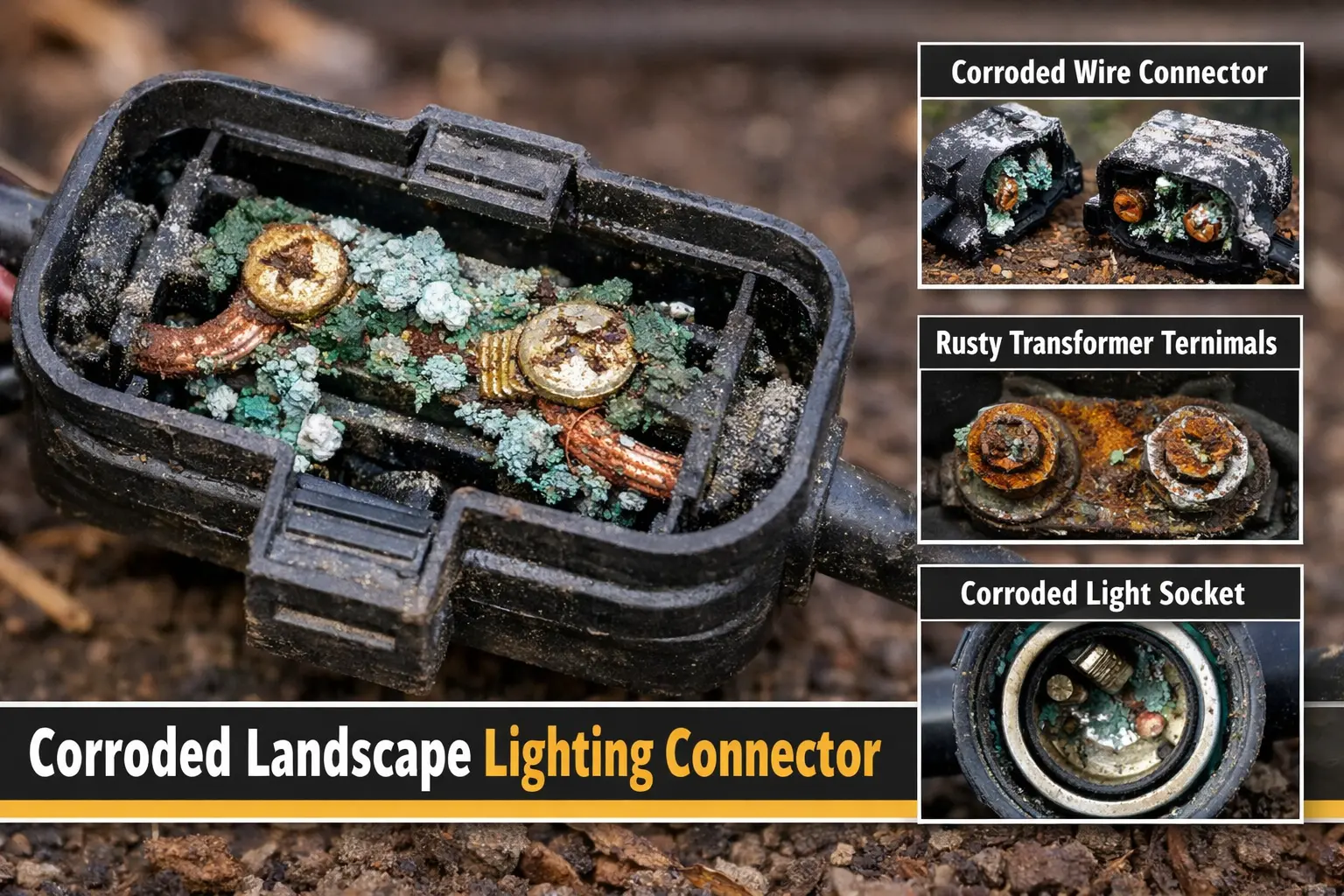
Quick Answer
If corrosion is causing your landscape lights to flicker, dim, or fail, the problem is usually at a connector, splice, socket, or transformer terminal where moisture has damaged the metal connection.
- Open the suspect connection and inspect for green, white, rusty, or black buildup
- Cut back damaged wire to clean copper
- Replace weak connectors with waterproof splices
- Replace fixtures or terminals if corrosion is severe
- Use sealed connectors to prevent the problem from returning
Landscape lighting corrosion is usually caused by moisture reaching connectors, wires, sockets, or transformer terminals. The fastest fix is to find the damaged connection, cut back corroded wire if needed, and rebuild it with a waterproof splice or replacement part.
Corrosion in landscape lighting is not just a cosmetic issue. It is an electrical reliability issue. Once connectors, wire ends, sockets, or terminals begin to corrode, resistance increases, current flow becomes unstable, and the whole system can start behaving unpredictably.
This page assists in your troubleshooting and supports the full problem-diagnosis-to-repair path. A homeowner may start with flickering lights, dim lights, or dead sections of the yard, then trace the issue back to corroded connectors, degraded wire, or transformer terminals that can no longer deliver stable power.
Preventing corrosion requires protecting outdoor lighting components from prolonged moisture exposure. Properly functioning gaskets, O-rings, and seals help keep water away from electrical connections and internal fixture components. See our outdoor lighting gaskets, O-rings, and seals guide for more information about weather protection.
What Causes Corrosion in Landscape Lighting?
Corrosion in landscape lighting usually starts with moisture, but moisture alone is not the whole story. Outdoor electrical systems sit in soil, mulch, fertilizer residue, irrigation overspray, and temperature changes that repeatedly stress connectors and exposed metal surfaces. Once water and oxygen get into a weak connection, corrosion can begin. Once minerals, fertilizer salts, and soil contaminants join in, the deterioration can accelerate.
Moisture and Wet Conditions
Water is the biggest driver. Connectors buried too shallow, splices exposed to standing water, and fixtures installed where irrigation repeatedly hits them all have a higher risk of corrosion. This is one reason properly installed low-voltage lighting systems depend on protected connections and good installation habits.
Corrosion often starts where moisture enters the fixture, and that usually means the housing, lens seal, or outer body has already begun to fail. If you are seeing rust, oxidation, or water-related damage around the fixture itself, our page on Portfolio landscape light housings explains how housing problems develop and when replacing the fixture body may be the best long-term fix.
Soil Minerals and Fertilizer
Soil chemistry matters more than many homeowners realize. Mineral-rich soil, clay-heavy conditions, and fertilizer runoff can create a harsher environment around wire splices and terminals. Even a decent connector may fail early if it lives in chemically aggressive soil year after year.
Poor Connectors and Exposed Wiring
Cheap or poorly installed connectors are a major failure point. If the connector does not seal properly, moisture reaches the metal conductor and starts degrading the connection. The same thing happens when wire insulation is nicked, cut, or left exposed. For wiring fundamentals, compare how to wire landscape lighting.
Common Places Corrosion Occurs
Wire Connectors
This is the most common failure point in low-voltage systems. Connectors that were installed quickly, buried poorly, or not sealed well enough often corrode before the fixtures themselves fail.
Corrosion often starts where outdoor wiring is not properly sealed. Compare your setup with our outdoor lighting junction box requirements to prevent moisture from reaching the connection.
Corrosion does not only attack sockets and connectors. On metal Portfolio landscape fixtures, oxidation and mineral deposits can lock threaded collars together until they behave like one solid piece. That is when a homeowner tries to replace a bulb and accidentally breaks the fixture body. The Portfolio stuck corroded fixture opening guide shows how to use thermal shock, penetrating lubricant, and strap-wrench pressure before resorting to replacement.
Transformer Terminals
Corrosion at the transformer can weaken the system at its source. Terminal block corrosion can create unstable output, intermittent performance, or full circuit failure. If you are already shopping for power-side parts, compare Portfolio lighting transformer replacement parts.
Light Sockets
Fixtures exposed to water intrusion often develop socket corrosion. That can lead to dim output, flickering, or bulbs that seem to fail repeatedly.
Path Light Stakes and Fixture Bases
Path lights are especially vulnerable because they sit low, often in mulch or soil, and are frequently exposed to sprinklers. Corrosion around the base, stake, or wire entry can lead to recurring intermittent problems.
Splice Connectors and Junction Points
Any place where one run branches to another is vulnerable if the splice was not sealed properly. This is one reason buyers often move from diagnosis into landscape lighting replacement parts once the system has been opened up and inspected.
Symptoms of Corroded Landscape Lighting
Corrosion often shows up as “weird” system behavior before it causes a complete failure. The electrical path still exists, but it is unstable. That makes the system harder to diagnose unless you know the common warning signs.
Corrosion problems often start with the wrong fixture material for the environment. The Durable Landscape Lighting Materials Guide compares brass, copper, aluminum, and plastic so you can choose a housing that better resists long-term outdoor exposure.
Corrosion is especially confusing when it creates wet-only operation. If the copper is oxidized enough to fail dry but still responds when moisture is present, follow this rain-only landscape lighting troubleshooting guide before replacing fixtures unnecessarily.
- Lights flicker or pulse unexpectedly
- Some lights are dimmer than others
- A section of the system works only part of the time
- Lights come on randomly and then go dark again
- The transformer seems active, but some or all fixtures stay off
- Outdoor fixtures fail again shortly after a “repair”
If those symptoms sound familiar, compare this page with landscape lighting troubleshooting, landscape lighting voltage drop, and Portfolio lighting troubleshooting to separate corrosion problems from overload or transformer problems.
Corrosion and insulation damage often occur together in aging outdoor lighting systems. Once insulation begins to crack or deteriorate, moisture can reach conductors and connectors, accelerating electrical failures. Learn how these problems develop in our Landscape Lighting Insulation Breakdown Guide.
Can Corrosion Make Landscape Lights Stop Working?
Yes. Corrosion can block or weaken the electrical connection enough to make lights flicker, dim, or stop working completely.
In low-voltage systems, even one badly corroded connector or splice can interrupt power to part of the run and make it look like the fixture or transformer failed.
Corrosion problems often begin when outdoor fixtures allow moisture and debris to enter the housing. The outdoor lighting IP protection comparison guide explains how enclosure ratings affect water entry, oxidation risk, and long-term fixture durability.
How to Fix Corroded Landscape Lighting Connections
Good corrosion repair is not just about wiping dirt off a connector and hoping the problem disappears. The real goal is to remove degraded material, restore a clean electrical path, and rebuild the connection using components that can survive outdoor conditions better than the failed setup did.
1. Open and Inspect the Connection
Disconnect power, expose the suspect splice or terminal, and inspect it closely. If the metal looks green, white, blackened, rusty, or powdery, corrosion is already affecting performance.
2. Clean If the Damage Is Minor
If the corrosion is light and limited to a surface contact point, cleaning may help. But if the connector is brittle, cracked, badly rusted, or the copper conductor itself is degraded, cleaning alone is usually not enough.
3. Cut Back Damaged Wire
If wire ends are corroded, cut back to clean copper. Do not leave compromised conductor under a new connector and expect the repair to last.
4. Install a Fresh Waterproof Splice
Rebuild the connection with a waterproof connector designed for outdoor low-voltage use. This is one reason landscape lighting installation technique matters even for repairs.
5. Test Transformer Output and Fixture Operation
Once the connection is rebuilt, test the system. If the lights still behave unpredictably, inspect nearby splices and transformer terminals too. Corrosion problems often occur in more than one location.
When Corrosion Means You Should Replace Parts
Some corrosion damage is too far gone for a reliable repair. That is especially true when the fixture body is rusting, the socket is breaking down, the connector housing is cracked, or transformer terminals have been repeatedly exposed and degraded. At that point, spending more time trying to save the part can cost more than replacing it correctly.
Replacement becomes the better move when you find:
- Rusted or structurally weakened fixtures
- Wire insulation that is cracked or brittle over a long section
- Transformer terminals that are heavily degraded
- Cracked connectors with repeated moisture intrusion
- Corrosion returning quickly after multiple temporary repairs
When the system has reached that point, compare landscape lighting replacement parts, replacement for Portfolio landscape lighting, Portfolio lighting transformer replacement,
How to Prevent Landscape Lighting Corrosion
Prevention starts with installation quality. Outdoor lighting systems cannot avoid weather, but they can be built to resist it much better. The goal is to keep moisture away from exposed conductive surfaces and reduce the chance that contaminants collect at the connection.
- Use waterproof or gel-filled connectors
- Protect splices from direct standing water
- Install fixtures at appropriate depth and in stable soil
- Use sealed components where possible
- Keep irrigation overspray off fixtures and connectors when possible
- Check vulnerable areas during routine system maintenance
Good prevention also means choosing better overall system components. Compare Portfolio low-voltage lighting and Portfolio landscape lighting when planning upgrades or replacements in corrosion-prone areas.
How Do You Fix Corroded Landscape Lighting Connectors?
The best fix is to remove the damaged connector, cut back to clean wire if needed, and install a new waterproof or gel-filled connector.
Cleaning alone may help for very minor buildup, but badly corroded connectors usually need to be replaced for a reliable repair.
Best Connectors for Preventing Corrosion
Connector choice matters more than many homeowners realize. A weak connector can turn a good landscape lighting system into a repeat repair project. A better sealed connector can dramatically reduce future failures.
Gel Connectors
Gel-filled connectors help seal out moisture and are one of the most practical upgrades for outdoor low-voltage systems.
Waterproof Splices
Waterproof splice systems are designed specifically for wet conditions and are often the smartest choice when rebuilding a corroded connection.
Heat Shrink Connectors
Heat shrink solutions can work well when used correctly and when they are appropriate for the specific low-voltage system.
Sealed Terminals
On systems with exposed terminal areas, better sealing and cleaner terminal protection can reduce repeated corrosion problems.
Buyers looking for these kinds of upgrade components should compare landscape lighting replacement parts and Portfolio lighting parts and accessories.
Landscape Lighting Systems Most Vulnerable to Corrosion
Not every property exposes outdoor lighting to the same level of corrosion risk. Some environments are simply harder on low-voltage systems than others.
Coastal Homes
Salt air accelerates metal deterioration and makes outdoor electrical connections more vulnerable.
Irrigation Zones
Repeated sprinkler overspray can keep fixtures and connectors wet far more often than the system was designed to handle.
Clay Soil and Heavy Moisture Retention
Slow drainage increases how long buried or low-mounted components stay damp.
Heavy Fertilizer Areas
Garden beds with repeated fertilizer use can become more chemically aggressive around connections and fixture bases.
Layout and placement choices also affect corrosion risk. Compare landscape lighting around a house and landscape lighting layout when planning systems in high-moisture or chemically active environments.
Corrosion, Diagnosis, Repair, and Replacement Work Together
Corrosion is one of the most common reasons landscape lighting starts to flicker, dim, or stop working. Once you open the connection and see the damage, the next step is deciding whether to clean it, cut back the wire, rebuild the splice, or replace the failed part.
The goal is not just to understand the problem, but to fix it the right way. Some situations call for a simple repair, while others require new connectors, fresh wiring, or replacement fixtures and transformer parts to restore reliable performance.
Bottom Line
Landscape lighting corrosion usually starts small but causes bigger problems over time. If your lights flicker, dim, or fail unexpectedly, inspect connectors, wire splices, sockets, and transformer terminals before replacing working fixtures.
The best long-term fix is not just cleaning the damage. It is rebuilding the weak point with clean wire, better connectors, and parts that can handle outdoor conditions.
Landscape Lighting Corrosion FAQ
What causes corrosion in landscape lighting?
Landscape lighting corrosion is usually caused by moisture, soil minerals, fertilizer, poor connectors, exposed copper, and outdoor components that are not sealed well enough for repeated weather exposure.
Can corroded landscape lighting wires be repaired?
Yes, many corroded landscape lighting wires can be repaired if the damage is localized. The usual fix is to cut back damaged wire, install a fresh waterproof splice, and test the system again.
How do you prevent low voltage lighting corrosion?
The best prevention methods include using waterproof connectors, sealing splices properly, keeping fixtures installed at the right depth, using quality low-voltage components, and protecting exposed connections from standing moisture.
Should I replace corroded landscape lighting fixtures?
If corrosion is limited to a connector or short wire section, repair may be enough. If the fixture body, socket, transformer terminals, or major wire runs are badly degraded, replacement is usually the smarter long-term solution.
Are waterproof connectors worth it?
Yes. Waterproof and gel-filled connectors are one of the best ways to prevent repeat corrosion problems in outdoor low-voltage lighting systems.
Why do landscape lighting connectors corrode?
Landscape lighting connectors corrode because they are often buried or installed in damp areas where water, oxygen, fertilizer residue, and soil contamination attack exposed metal over time.
More Landscape Lighting Repair and Replacement Guides
Landscape Lighting Troubleshooting
Use the main troubleshooting hub to compare corrosion with other common outdoor lighting failures.
Read the GuideLandscape Lighting Voltage Drop
Compare corrosion symptoms with dim-light problems caused by cable size and long run length.
Read the GuideLandscape Lighting Replacement Parts
Browse replacement parts when corroded connectors, stakes, sockets, or fixture components are too far gone to trust.
View Replacement PartsReplacement for Portfolio Landscape Lighting
Compare compatible replacement fixtures and parts when corrosion damage makes repair impractical.
See Replacement OptionsPortfolio Transformer Replacement
Use this page when corrosion or age has affected the transformer side of the system instead of just the fixture connections.
Replace TransformerPortfolio Parts and Accessories
Use this page when you need connectors, bulbs, hardware, or other support components for older low-voltage systems.
See Parts and AccessoriesLandscape Lighting Corrosion, Connector Failure, Repair, and Replacement Help
This page is designed to help readers move from symptom to diagnosis faster when outdoor low-voltage lights flicker, dim, or fail because of corrosion. It also supports the next step after diagnosis by linking into the replacement-parts and transformer pages that matter when a repair is no longer enough.
Corrosion is one of the strongest examples of a troubleshooting topic that naturally overlaps with buying intent. Some homeowners only need a better splice. Others need connectors, new wire ends, transformer parts, or full replacement fixtures. This page is meant to support both decisions clearly.