
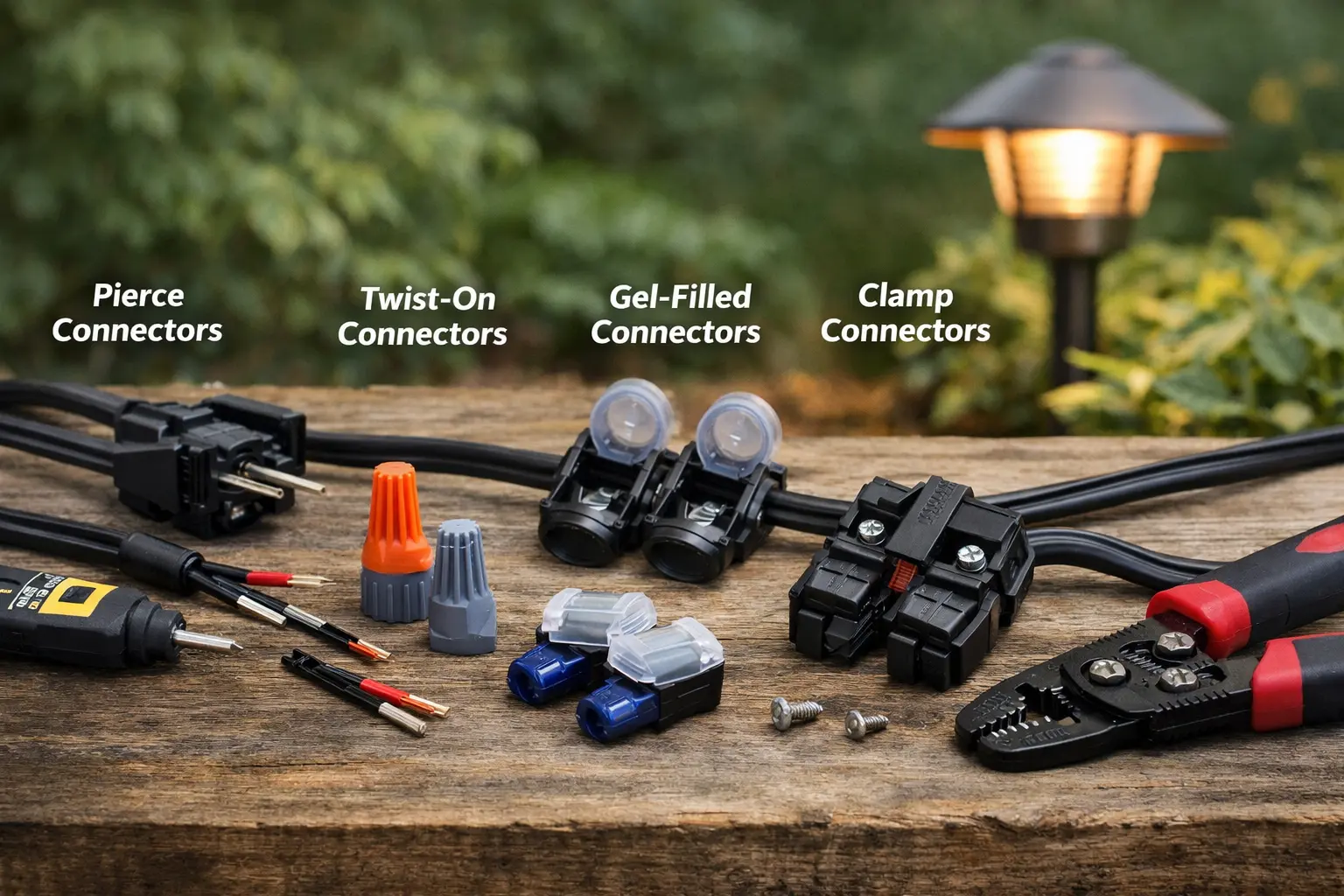
What Is the Best Connector for Landscape Lighting? (Quick Answer)
The best connectors for landscape lighting are waterproof, outdoor-rated connectors such as gel-filled connectors. They provide a more reliable connection and resist moisture, which is one of the most common causes of lighting failure.
- Best overall: gel-filled waterproof connectors
- Quick installs: pierce connectors (less reliable long-term)
- Repairs: outdoor-rated twist connectors
Most landscape lighting problems are caused by weak or wet connectors, not the transformer or fixtures.
Corroded connectors can create localized voltage drop that affects only part of a lighting run. The fixture voltage-loss and connector resistance guide explains how bad splices change LED brightness, startup, and dimming performance.
Connector Problem Diagnosis Guide
| What You See | What It Means | What To Do |
|---|---|---|
| Lights flicker or dim | Loose or corroded connector | Replace or tighten connector |
| Lights stop working completely | Broken or disconnected connection | Check and reconnect wiring |
| Lights fail after rain | Moisture inside connector | Replace with waterproof connector |
| Only one section fails | Bad connector in that branch | Inspect connections along that run |
| System works intermittently | Weak or shifting connection | Replace connector and secure wiring |
Connector problems are often mistaken for transformer or fixture failure. Always check connections first.
Start Here: Choose the Right Connector Fast
- If you want the most reliable option → use gel-filled waterproof connectors
- If you need a quick install → use pierce connectors
- If you are fixing a connection → use sealed outdoor-rated connectors
- If your system has moisture issues → upgrade all connectors to waterproof
For most homeowners, upgrading to waterproof connectors solves the majority of long-term lighting problems.
Connectors are one of the smallest parts of a low-voltage lighting system, but they have a big effect on reliability. A single weak connector can cause dim lights, flickering, or an entire branch of the system to stop working.
The best connector choice depends on moisture exposure, cable type, fixture layout, and how permanent the connection needs to be. Start with the connector types below, then use the installation and troubleshooting sections to avoid the most common outdoor wiring mistakes.
If you are trying to connect Portfolio fixtures with another landscape lighting brand, read this Portfolio connector compatibility guide. It explains why mixed-brand systems often fail at the connector, how wire size affects fit, and when direct splices are more reliable than clip-style connections.
Malibu quick-clip connectors were one of the most common underground failure points in older low-voltage systems. The Malibu Top 40 Model Database explains why many homeowners now replace the original snap-style connectors with modern waterproof gel-filled splices and Portfolio-style piercing connectors.
Many low-voltage connectors are designed for only certain wire sizes and can fail when oversized cable is forced into the connection. The landscape wire gauge compatibility database explains how connector choice and wire size affect long-term reliability.
Types of Landscape Lighting Connectors
Several connector types are commonly used in low-voltage outdoor lighting systems. Each one has strengths and weaknesses depending on the install style, exposure to moisture, and whether the connection needs to be quick, serviceable, or highly weather-resistant.
Pierce connectors
Pierce connectors are popular in quick landscape lighting installations because they clamp onto the main cable and make contact by piercing the insulation. They are fast to install, but the connection can weaken over time if the connector shifts, corrodes, or was not seated properly.
Twist-on connectors
Twist-on connectors are common in smaller systems and simple repairs. They can work well in the right situation, but dry interior-style versions are usually not ideal for exposed outdoor use unless they are specifically rated and sealed for wet locations.
Waterproof gel-filled connectors
Gel-filled connectors are one of the strongest choices for outdoor lighting because they help seal out water, soil moisture, and irrigation spray. They are often preferred in more permanent or professional-looking low-voltage systems.
Clamp connectors
Clamp-style connectors can create a strong connection when installed carefully. They are useful in more permanent systems, but they need proper fit and careful installation to avoid loose contact or poor sealing.
Connector choice matters most when a system has intermittent wet/dry behavior. If a light turns on after rain but fails once the yard dries out, the problem may be a moisture bridge inside a corroded low-voltage connection, not the transformer or bulb.
Landscape Lighting Connector Comparison
This table gives a practical side-by-side look at common connector types used in low-voltage landscape lighting systems.
| Connector Type | Best Use | Pros | Cons |
|---|---|---|---|
| Pierce connectors | Quick installations | Fast installation, common in many kits | Can loosen over time, moisture can become an issue |
| Twist connectors | Small systems and basic repairs | Inexpensive, easy to use | Less waterproof unless outdoor-rated and sealed |
| Gel-filled connectors | Professional installs and wet locations | Water-resistant, reliable outdoors | Slightly higher cost |
| Clamp connectors | Permanent systems | Strong connection when installed well | Requires careful installation |
One weak connector can cause an entire section of landscape lights to work unpredictably. The landscape lighting random failure guide explains how loose, wet, or oxidized low-voltage connectors create intermittent lighting problems.
How to Install Landscape Lighting Connectors
1. Turn off transformer power
Always begin by shutting off the transformer so the low-voltage run is not active while you work on the connection. This keeps the process cleaner and reduces the chance of partial contact during installation.
2. Strip wire insulation if needed
Some connector styles require stripped wire while others pierce the insulation directly. Follow the connector type you are using and make sure you do not nick or weaken the wire strands during preparation.
3. Connect fixture wires to the main cable
Join the fixture wires to the main low-voltage cable carefully. Confirm the wire is seated fully, the copper contact is clean, and the connector is matched to the wire size being used.
4. Secure a waterproof connection
Outdoor lighting runs are exposed to rain, irrigation, mulch, and soil moisture. A connection that feels acceptable in dry weather may fail later if it is not sealed properly. That is why weather-resistant connectors matter so much in low-voltage landscape systems.
5. Test the system before burying the wire
Once the connector is installed, test the fixture and the run before covering the cable or finalizing the layout. It is much easier to correct one weak connection now than after everything is buried and hidden.
For a deeper full-system wiring walkthrough, continue with how to wire landscape lighting.
Landscape lighting connectors are used to attach each fixture to the main low voltage cable that runs through the yard. If you want to see how those connectors fit into the full system layout, the low voltage landscape lighting system diagram illustrates how transformers, cables, connectors, and fixtures work together in a typical outdoor lighting installation.
Common Connector Problems
Bad connectors are one of the most common reasons landscape lighting systems develop intermittent or partial failures. In many cases the transformer and fixtures are still fine, but the connection between them is not.
Loose connectors
A connector that is not fully seated can create weak contact and unstable voltage delivery. That often shows up as flickering, dim output, or one section of the system working only part of the time.
Corrosion
Outdoor metal connections naturally face moisture and oxidation over time. Once corrosion begins, resistance rises and the connection becomes less reliable.
Moisture intrusion
Rain exposure, irrigation water, and wet mulch can all shorten connector life if the connection is not sealed well. This is one of the biggest reasons outdoor lights fail after storms or seasonal weather changes.
Damaged wire insulation
Connectors depend on sound cable beneath them. If the insulation is cracked, cut, or worn, even a good connector may not hold a dependable connection.
For deeper cable-side troubleshooting, compare your system to landscape lighting cable guide.
Connector Problems Can Affect the Whole Lighting System
Low-voltage connectors are often the weak point between a healthy transformer and a failing fixture. If a homeowner cannot tell whether the problem is a connector, transformer, fixture, or discontinued Portfolio part, the Portfolio Lighting AI diagnostic assistant can help organize the symptoms into a step-by-step repair path. When the connector contains green powder or blue-green crust, the green dust lighting connector repair guide explains how corrosion travels into copper strands and creates resistance. If the connector repair is part of a larger outdoor lighting upgrade, the property-line light trespass measurement guide helps make sure repaired fixtures are not aimed into neighboring windows or across boundary lines.
Waterproof Connectors for Outdoor Lighting
Waterproof connectors are usually recommended for landscape lighting because outdoor systems are constantly exposed to rain, irrigation water, soil moisture, and changing temperatures. Even if a connection looks fine on the day it is installed, moisture can slowly weaken it over time if the connector is not designed for wet conditions.
This is why gel-filled connectors and other sealed outdoor-rated options are so popular in reliable low-voltage lighting systems. They help reduce corrosion, protect the copper connection, and lower the chance of moisture-related failures.
If moisture protection is a major concern, also review Portfolio waterproof lighting.
Connector Placement and Wiring Layouts
Connector quality matters, but connector placement matters too. The same connector may perform differently depending on whether it is used in a daisy chain, T-layout, hub setup, or a heavily loaded branch at the end of a long run.
Good connector placement reduces strain on one branch of the system and helps keep voltage more even across the lighting run. That is why connector planning works best when it is tied to the full wiring layout rather than treated as a separate decision.
For deeper layout planning, compare your setup to landscape lighting layout design, landscape lighting wire gauge guide, and how to wire landscape lighting.
Wire Gauge
Connector performance is stronger when the cable size matches the run length and fixture load.
View wire gauge guideCable Type
Good connectors still need the right direct-burial cable and outdoor-rated insulation to perform well.
View cable guideWiring Method
Layout method affects how much stress one branch and its connectors must handle.
View wiring guideSystem Diagram
Seeing the full path from transformer to fixture helps you place connectors more intentionally.
View system diagramWhen Connectors Cause Troubleshooting Problems
One reason connector issues are frustrating is that they often look like other problems at first. A bad connector can resemble a weak bulb, a dim fixture, a failing transformer, or a damaged cable run. That is why connector checks belong near the beginning of almost every outdoor lighting troubleshooting process.
If lights flicker, blink, dim, or fail after rain, the connector is one of the first places worth checking. In many systems, that small wiring point is where reliability is won or lost.
Wet or corroded connectors can leak current to ground and cause repeated GFCI trips, especially after irrigation or heavy rain. The landscape lighting wet connector GFCI guide explains how bad splices create protection-device shutdowns.
Portfolio Systems and Landscape Lighting Connectors
Many landscape lighting systems installed over the past two decades used Portfolio low-voltage transformers and fixtures sold through Lowe’s. If your outdoor lighting system includes Portfolio components, proper connectors and wiring layout can affect overall system performance. You can explore troubleshooting help in our Portfolio lighting troubleshooting guide, learn more about system layouts in Portfolio landscape lighting, diagnose wiring issues in our Portfolio lighting wiring diagram guide, or review transformer troubleshooting in Portfolio lighting transformer troubleshooting.
Landscape Lighting Connectors FAQ
What connectors are used for landscape lighting?
Common landscape lighting connectors include pierce connectors, twist-on connectors, waterproof gel-filled connectors, and clamp-style connectors. The best choice depends on the wiring layout, moisture exposure, and how permanent the connection needs to be.
Are landscape lighting connectors waterproof?
Some are, and some are not. Waterproof gel-filled connectors and properly sealed outdoor-rated connectors are usually the best choice for landscape lighting because they handle rain, soil moisture, and irrigation better than basic dry connectors.
Why do landscape lighting connectors fail?
Landscape lighting connectors usually fail because of loose installation, corrosion, moisture intrusion, damaged wire insulation, or connectors that were not designed for long-term outdoor use.
Can bad connectors cause landscape lights to stop working?
Yes. One weak or corroded connector can cause dim lights, flickering, intermittent power loss, or a whole section of landscape lights to stop working.
What is the best connector for low-voltage lighting?
For most outdoor low-voltage lighting systems, waterproof gel-filled connectors or other weather-sealed outdoor-rated connectors are usually the most reliable long-term choice.
Final Thoughts on Landscape Lighting Connectors
Landscape lighting connectors are small parts, but they have a major impact on system reliability. Strong connectors help keep voltage stable, reduce moisture problems, and prevent the frustrating branch failures that show up later.
For most homeowners, the best long-term approach is to use outdoor-rated connectors, install them carefully, and test every connection before covering the wire. That simple process makes the whole lighting system more dependable.
More Landscape Lighting Wiring and Installation Guides
Landscape Lighting Cable Guide
Learn the basics of direct burial cable, outdoor-rated insulation, and practical cable choices.
Read the cable guideHow to Wire Landscape Lighting
Review full low-voltage wiring steps, layout methods, and installation basics for homeowners.
Read the wiring guideLandscape Lighting Wire Gauge Guide
Choose the right cable size so your connectors and wire runs can support the lighting load properly.
Read the wire gauge guideLandscape Lighting Layout Design
See how layout choices affect connector placement, branch balance, and long-term system performance.
Read the layout guideLandscape Lights Flickering
Use this guide if weak connectors may be causing unstable brightness or intermittent power.
Fix flickering landscape lightsLandscape Lights Not Working After Rain
Connector moisture is one of the biggest reasons outdoor lighting fails after storms and wet weather.
Fix rain-related failuresLandscape Lighting Wire Gauge
Compare cable sizes before choosing connector types for longer runs and higher fixture loads.
View wire gauge guideLandscape Lighting System Diagram
See how transformers, cable paths, connectors, and fixtures fit together in a complete system.
View the system diagramLandscape Lighting Connectors, Low Voltage Landscape Lighting Connectors, and Outdoor Lighting Wire Connectors Help
This page is designed to help readers choose, install, and troubleshoot landscape lighting connectors by focusing on real outdoor wiring conditions such as moisture, branch layout, and long-term connection strength. Use the connector comparison and installation guidance above before replacing fixtures or rebuilding a full lighting run.
Because connector problems often look like bigger system failures, this page focuses on the small wiring points that frequently cause dim lights, flickering, and branch outages. That makes it a useful installation page and a practical troubleshooting reference at the same time.