
Quick Answer: Do You Need a New Transformer?
If all your landscape lights stopped working at once, the transformer is likely the issue. If only some lights are out, the problem is usually wiring, connections, or bulbs—not the transformer.
- All lights out: check transformer first
- Some lights out: check wiring or fixtures
- Lights dim: possible overload or voltage drop
- New transformer needed: match wattage to load
Step-by-Step Transformer Replacement Guide
| Step | What to Do | Why It Matters |
|---|---|---|
| 1 | Confirm all lights are out | Identifies transformer vs fixture issue |
| 2 | Check outlet and GFCI | Rules out power supply problems |
| 3 | Inspect transformer for heat or damage | Confirms failure signs |
| 4 | Calculate total wattage | Prevents undersizing |
| 5 | Install correct replacement | Restores system safely |
Transformer vs Wiring Problem Guide
| Symptom | Likely Cause | Fix |
|---|---|---|
| All lights off | Transformer failure | Replace transformer |
| Some lights off | Wiring or connection issue | Inspect cable |
| Lights dim | Overload or voltage drop | Upgrade transformer or wiring |
| Transformer hot or buzzing | Internal failure | Replace unit |
| Timer not working | Control failure | Replace or upgrade |
Start Here: What’s Your Situation?
- Entire system dead → replace transformer
- Only some lights out → check wiring first
- Lights dim → check load and voltage drop
- Old system → consider full upgrade
Start with the symptom, then choose the correct fix instead of replacing parts blindly.
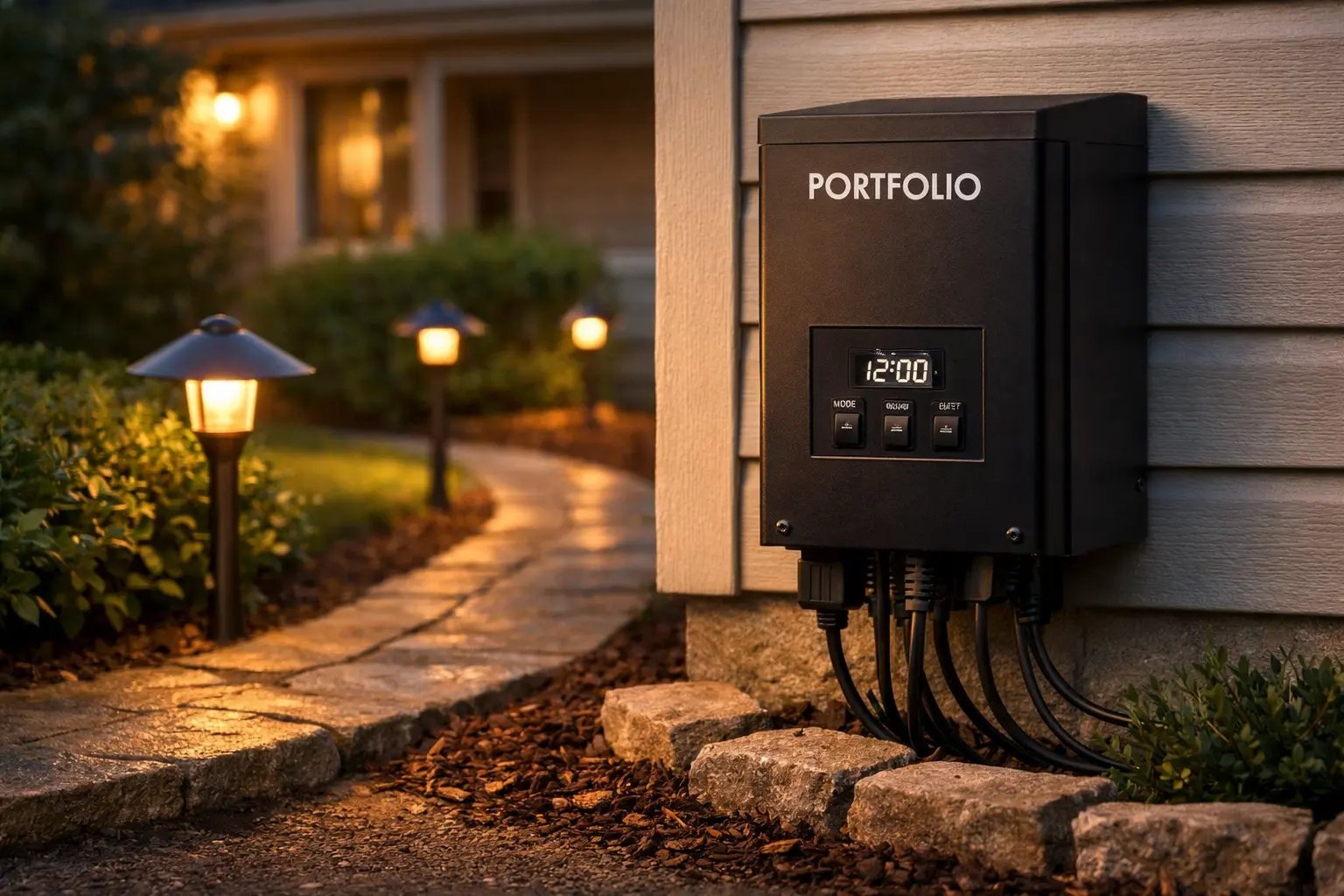
Replacing a Portfolio lighting transformer is one of the most common fixes for an aging low voltage landscape lighting system. Many older Portfolio systems are still solid, but transformers take a lot of wear over time. Heat, moisture, overloaded runs, timer issues, and internal component failure can all lead to a power pack that simply stops doing its job. The good news is that you usually do not need to replace your entire lighting setup. In many cases, swapping in the right Portfolio transformer replacement can bring path lights, spotlights, and accent lights back to life without rebuilding the whole system.
Before replacing the transformer, check our terminal block repair guide since many failures are caused by damaged output connections rather than the transformer itself.
If your lights are dim or uneven even with a new transformer, the issue may be voltage drop in your landscape lighting system, not the transformer itself.
Should You Replace Your Transformer or Upgrade?
If your system is older and still uses halogen bulbs, replacing the transformer may not solve everything. In many cases, upgrading to LED fixtures along with a new transformer gives better performance and longer life.
Transformer issues are often confused with wiring problems. Before replacing the unit, review how to wire landscape lighting correctly to rule out connection or cable issues.
If your original transformer is discontinued, compare older model numbers in the Portfolio technical archive before choosing a replacement.
Before installing a replacement transformer in the same spot as the old one, check the outdoor transformer mounting requirements for height above grade, GFCI protection, airflow, siding heat, drip loops, and clearance from pool or gas equipment.
On this page, you will find practical advice that is actually useful for homeowners, not just vague product copy. We will cover how to confirm the transformer is the problem, what wattage you need, how to avoid under-sizing or overloading a new unit, and where to look for discontinued Portfolio power packs and compatible replacements.
Common Transformer Replacement Mistakes
- Choosing a transformer that is too small
- Not calculating total fixture wattage
- Ignoring voltage drop on long runs
- Replacing the transformer when wiring is the issue
- Overloading a new transformer immediately
When Replacing the Transformer Won’t Fix the Problem
- Damaged underground wiring
- Loose or corroded connectors
- Too many fixtures on one line
- Severe voltage drop
Many failed replacements happen because the transformer was never the real issue. Always check the full system.
Signs Your Portfolio Lighting Transformer Needs Replacement
A bad bulb, loose wire connection, or corroded fixture can make it seem like the transformer is the problem, so it helps to slow down and look at the full system. That said, there are some common warning signs that point to a failed or failing transformer rather than an isolated fixture issue.
1. The entire system is dead
When every light on the run goes out at the same time, the transformer becomes the main suspect. A single broken fixture usually will not kill the whole system, but a failed power pack absolutely can.
2. The transformer hums, overheats, or smells burnt
A little warmth is normal. Excessive heat, buzzing, a burnt odor, or visible discoloration is not. Those are all signs the internal components may be breaking down.
3. The timer or photocell no longer works consistently
Many older Portfolio transformers included built-in timing or dusk-to-dawn functions. If your settings will not hold, the lights cycle unpredictably, or the transformer never turns on at dusk anymore, the control section may be failing even if the wiring is still fine.
4. Resetting the breaker does not solve anything
If your GFCI outlet is good, the circuit breaker is not tripped, and you still have no output to the lighting line, the transformer may no longer be converting household voltage down to the low voltage your fixtures need.
For a deeper diagnostic walk-through, start with Portfolio lighting transformer troubleshooting. That page is useful if you want to test the system step by step before spending money on a replacement.
If your entire system is not working, start with landscape lights not working troubleshooting before replacing the transformer.
Before replacing a failed transformer, it helps to compare wattage capacity, timer features, photocell options, and voltage output so the new unit fits your system correctly. Many homeowners review available Portfolio lighting transformer replacement options to find a model that supports their existing low-voltage layout.
If you're upgrading to a higher-capacity unit, multi-tap transformers provide more flexibility for larger systems. This 200W wiring and setup guide shows how to install and configure one correctly.
What to Check Before You Buy a New Transformer
The most common mistake homeowners make is replacing a transformer too quickly or buying the wrong size. Before you order anything, it helps to gather a few basic details about your existing setup.
Before choosing a replacement, use the Portfolio lighting transformer master guide to confirm your model, load requirements, and system setup so you select the correct unit the first time.
Check the label on the old transformer
Look for the wattage rating, voltage output, timer features, and any model information still visible on the unit. Even if the exact Portfolio model is discontinued, the rating can still tell you what type of replacement you need.
Count your fixtures and bulbs
Add up the wattage of each light on the line. If you have LED replacement bulbs now, your total load may be much lower than it was when the system was first installed. That can open up more replacement options than you might expect.
Fixture spacing affects total load and transformer demand. See landscape lighting spacing guidelines to plan your system more accurately.
Inspect the wiring condition
If the main cable is brittle, splices are corroded, or connectors are loose, a brand-new transformer alone may not solve the problem. A weak wire path can cause dim lights, intermittent operation, and voltage drop that looks like transformer failure.
If your fixtures also need attention, you may want to review landscape lighting replacement parts, Portfolio bulb replacement, and Portfolio replacement stakes while planning your repair.
How to Choose the Right Transformer Wattage
This is the part that matters most. A transformer that is too small may overheat, trip internally, or never drive the system correctly. A transformer with too much unused capacity is not always a problem, but you still want a size that makes sense for your actual fixture load and future expansion.
Transformer sizing also depends on layout. If your system has long runs or multiple zones, review landscape lighting layout design to avoid overload and uneven brightness.
| System Size | Typical Number of Lights | Suggested Transformer Size | Best Use Case |
|---|---|---|---|
| Small setup | 1 to 6 lights | 45W to 60W | Short walkway runs, a few path lights, small accent zones |
| Medium setup | 6 to 12 lights | 75W to 120W | Average front yard lighting and modest landscape layouts |
| Large setup | 12 to 20 lights | 150W to 200W | Multiple path lights, spotlights, and garden accent fixtures |
| Expanded system | 20+ lights | 300W to 600W | Large yards, multiple zones, or systems with future expansion in mind |
A good rule of thumb is to keep the total connected lighting load under about 80 percent of the transformer's rated capacity. That gives you a little breathing room and helps avoid unnecessary heat and premature wear.
If you are replacing an older transformer, do not choose the next one based only on the old label. Review our Portfolio lighting transformer sizing guide first so you can match the new transformer to your actual fixture load, layout, and future expansion plans.
Before replacing your transformer, consider upgrading control instead. This smart lighting bridge guide shows how to modernize your system without a full replacement.
Best Portfolio Transformer Replacement Options
There are usually three routes people take when replacing a Portfolio landscape lighting transformer: finding the same original model, buying a used or discontinued Portfolio power pack, or moving to a compatible low voltage transformer from another brand. Which one is best depends on whether you care more about matching the original setup or simply getting the system working again.
Option 1: Exact Portfolio replacement
If you can find the same wattage and model family, this is often the simplest choice. Mounting, controls, and output configuration may be familiar, which makes installation easier. The downside is that many Portfolio models are discontinued, so availability can be hit or miss.
Option 2: Used or discontinued Portfolio transformer
This can work well if you want to stay close to the original design. Just make sure the unit is clean, not rusted out, and clearly labeled. Used transformers can be a practical option for matching an older system, especially when buying brand-new OEM parts is no longer realistic.
Option 3: Compatible low voltage replacement
In many cases, you do not need an exact Portfolio-branded replacement. A compatible low voltage landscape lighting transformer with the correct output and enough wattage can often do the job just fine. This is especially true when your current goal is simply restoring power to an older set of Portfolio fixtures.
If you cannot find the exact original Portfolio transformer, a compatible replacement from another brand is often the most practical solution. Many low voltage landscape lighting systems use standard wiring and 12-volt output, which makes it possible to switch to a modern transformer without rebuilding the entire system. Our guide to Portfolio lighting transformer alternatives explains what to look for in a compatible replacement, how to compare wattage options, and which types of transformers work best with existing Portfolio landscape lighting setups.
Portfolio 60W Transformer
Good fit for smaller path light systems, compact front beds, and low-load LED conversions.
Search eBayPortfolio 120W Transformer
Popular size for average home landscape lighting systems with a mix of path and accent fixtures.
Search eBayPortfolio 200W Power Pack
Better for larger runs, more fixtures, or older halogen-heavy systems with higher power demand.
Search eBayIf your current transformer has built-in timing functions, it may also help to search for: Portfolio timer transformers or compatible low voltage landscape transformers.
Quick Comparison: What Replacement Type Makes the Most Sense?
| Replacement Type | Best For | Pros | Things to Watch |
|---|---|---|---|
| Exact Portfolio model | Homeowners who want the closest match | Familiar layout, easy swap, original brand fit | Can be hard to find and sometimes overpriced |
| Used Portfolio transformer | Discontinued system repairs | Often cheaper, good for older matching setups | Condition varies, check for corrosion and labeling |
| Compatible replacement transformer | People who simply want the lights working again | Wider availability, newer features, easier sourcing | Confirm wattage, voltage output, and outdoor rating |
How to Replace a Portfolio Lighting Transformer
A transformer swap is usually manageable for a homeowner who is comfortable with a basic outdoor electrical component, but it still deserves care. The transformer plugs into household power, and the low voltage side must be connected properly to keep the lighting run safe and stable.
Step 1: Unplug and shut down the old unit
Disconnect the transformer from power completely. If it is hardwired or connected through a protected outlet setup, make sure you understand how your existing installation is configured before removing anything.
Step 2: Label the low voltage wires
If your transformer serves more than one lighting line, label the wires before disconnecting them. That makes it much easier to reconnect zones correctly.
Step 3: Remove the old transformer
Take down the unit and inspect the mounting surface. Clean off dirt, insect debris, and any rust flakes if the old transformer has been in place for years.
Step 4: Mount the new transformer
Install the replacement in a location appropriate for outdoor use and follow the manufacturer's spacing guidance so the unit can dissipate heat properly.
Step 5: Reconnect the low voltage cable
Tighten the cable securely and make sure there is good clean conductor contact. Loose terminal connections are a common reason new transformers perform poorly right away.
Step 6: Test the system before final cleanup
Plug the new transformer in, test the lights, and confirm the timer or photocell settings work before you consider the job done.
If your fixtures are old enough that multiple components are failing at once, it may also be worth comparing replacement options for Portfolio landscape lighting and Portfolio path light replacement so you can decide whether a full refresh makes more sense than repeated one-off repairs.
If your old transformer has failed completely, it may be easier to replace it with a complete kit instead of buying a single component and trying to reuse outdated controls. Many homeowners prefer a kit because it often includes the transformer itself along with built-in timing or control features that make the system easier to manage. For a closer look at compatible replacement options, visit our Portfolio landscape lighting transformer replacement kits guide, which explains what comes in a kit, how to choose the right size, and what to look for when replacing an older Portfolio low voltage transformer.
When a Full System Refresh Makes More Sense Than a Transformer Swap
Sometimes the transformer really is the only failed part. Other times it is just the most obvious symptom of a system that is wearing out across the board. If you have broken stakes, missing glass, rusted shades, dim fixtures, and brittle cable on top of a dead transformer, you may be at the point where replacing several components together is the better long-term move.
That does not mean you need to rip everything out right away. It just means you should think strategically. A new transformer paired with a few smart part replacements can extend the life of an older Portfolio installation without wasting money on one repair at a time.
Replace Broken Shades
Fix worn or damaged fixture tops before assuming the entire light needs to be replaced.
Read the guideReplace Cracked Glass
Broken lens glass affects both performance and appearance, especially in older landscape fixtures.
Read the guideReplace Bulbs First
Sometimes the simplest answer is still the right one, especially with older halogen systems.
Read the guideWhere to Buy a Portfolio Lighting Transformer Replacement
Because Portfolio lighting products are often discontinued or inconsistently stocked, homeowners usually have the best luck checking resale marketplaces and parts searches rather than relying only on big-box inventory. That is especially true if you want an older power pack that matches your existing system more closely.
These searches can help you narrow down what is actually available right now:
Hampton Bay transformers are often considered when older Portfolio power packs fail because both brands are common in homeowner low-voltage systems. The Hampton Bay landscape lighting transformer replacement guide explains what to check before swapping brands.
General Transformer Search
Best starting point if you are still comparing wattages and model styles.
Search eBayPower Pack Replacements
Useful if your old unit is labeled as a power pack instead of a transformer.
Search eBayDiscontinued Models
Good option when you are trying to match an older setup as closely as possible.
Search eBayFrequently Asked Questions
Can I replace a Portfolio transformer with a different brand?
Yes, in many cases you can. The most important factors are correct low voltage output, enough wattage for your fixture load, and an outdoor-rated design that fits your installation. An exact Portfolio brand match is helpful, but it is not always required.
How do I know what size transformer I need?
Add up the total wattage of all fixtures on the line, then choose a transformer with extra capacity above that total. Keeping the load below full capacity helps the transformer run cooler and more reliably over time.
Is it better to repair the old transformer or replace it?
For most homeowners, replacement is the better route. Once a transformer starts overheating, losing output, or failing internally, replacing it is usually more practical than trying to repair aging internal components.
Why are my lights still dim after replacing the transformer?
Dim lights after a transformer replacement usually point to voltage drop, poor cable connections, corroded terminals, damaged wire, or too many fixtures on the line. The transformer may be new, but the rest of the system still matters.
Where can I find discontinued Portfolio lighting parts?
Start with discontinued Portfolio lighting, buy Portfolio lighting, and Portfolio lighting parts and accessories. Those pages are designed to help you locate older fixtures, parts, and replacement components.
Affiliate Disclosure
Some links on this page are affiliate links. That means this site may earn a small commission if you click through and make a purchase, at no extra cost to you. These links help support the site and allow us to continue creating helpful Portfolio lighting guides, replacement part resources, and troubleshooting content.