
Quick Answer: Do You Need a Light Kit?
Use a light kit if your fixture body is still good and only the lighting section needs replacement. If multiple parts are failing or compatibility is unclear, replacing the entire fixture is often the better choice.
- Use a light kit for targeted fixes or upgrades
- Avoid if the fixture has multiple issues
- Always confirm model and mounting before buying
Start Here: Should You Use a Light Kit?
- Only one part failed → yes, use a kit
- Fixture still looks good → yes
- Multiple issues → no, replace fixture
- Not sure about fit → check model first
The value of a light kit is simple: if the main fixture still works for the space, a compatible kit can be a smarter and more affordable solution than replacing the whole thing. The key is knowing when that is actually true and when a full replacement is the better move.
This page fits naturally with Portfolio lighting parts and accessories, Portfolio lighting compatibility guide, Portfolio lighting model number lookup, Portfolio lighting replacement hardware, and where to buy Portfolio lighting replacement parts. If the real issue involves visible fixture pieces rather than the light kit itself, also use Portfolio lighting replacement glass, Portfolio lighting replacement shades, and Portfolio lighting replacement LED modules and drivers.
What Most Homeowners Are Trying to Do
- Replace a broken or outdated light kit
- Upgrade the lighting without replacing the fixture
- Find a compatible replacement that actually fits
- Avoid buying the wrong kit that will not install correctly
- Decide whether a kit or full fixture replacement makes more sense
What a Portfolio Light Kit Actually Is
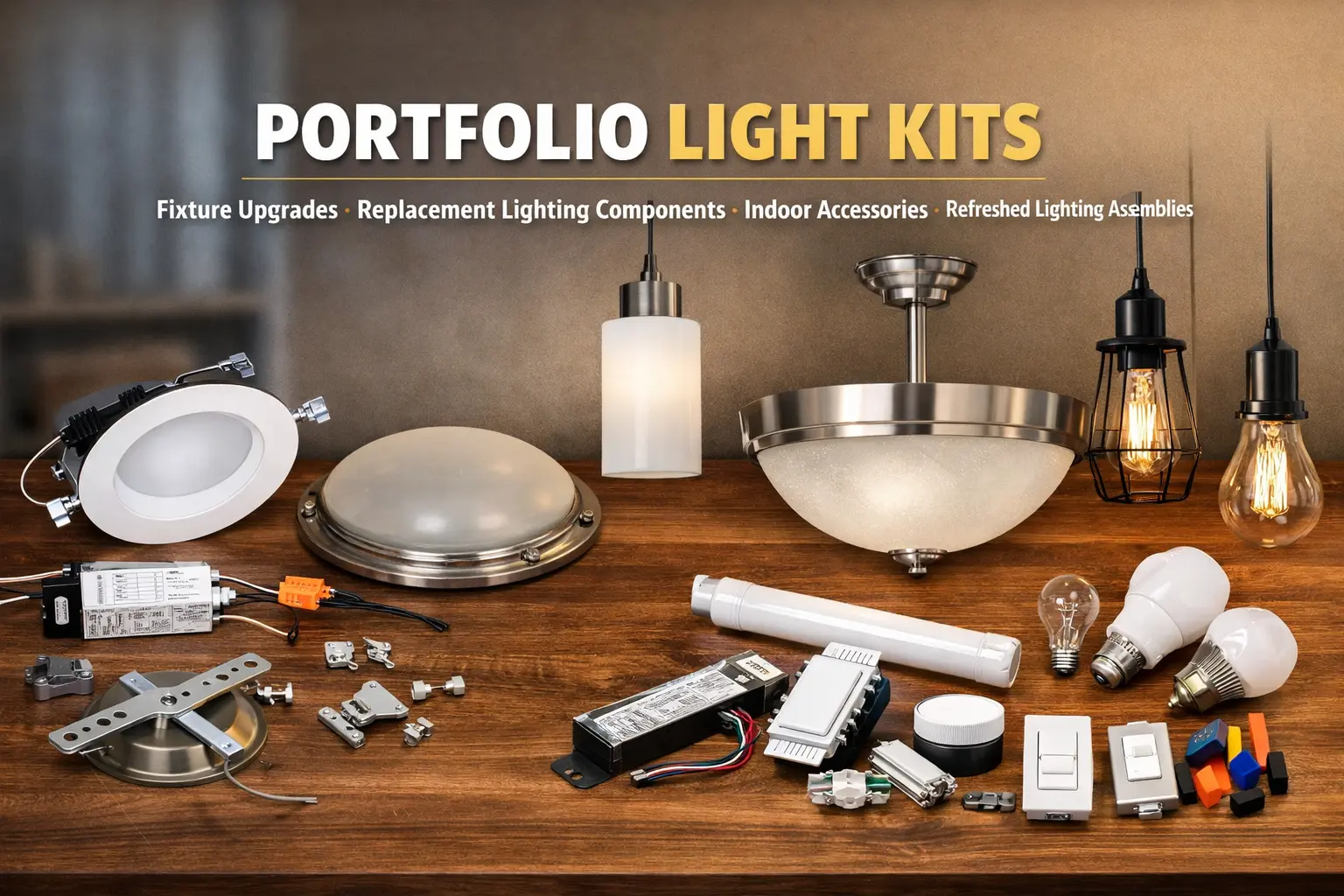
A light kit is best understood as the lighting assembly or add-on section that helps a fixture produce or direct light the way it is supposed to. Depending on the design, that may involve a lamp housing section, a shade-related assembly, a replaceable lighting module, a connection piece, or a grouped accessory package that restores or updates the active lighting portion of the fixture.
The reason this matters is that “light kit” can sound broader than it really is. Some people use the term when they mean almost any replacement part. Others use it only for a very specific add-on assembly. In real-world shopping, that can cause confusion quickly. A homeowner may think they need a light kit when the real issue is a broken glass shade, a missing piece of mounting hardware, or a failed LED driver.
→ Use the model number lookup here
When a Light Kit Makes Sense
The best reason to use a light kit is that it lets you preserve what is still working. If the base fixture still looks good, mounts correctly, and fits the room or style of the home, replacing just the lighting assembly can be a practical move. This is especially true when the alternative is replacing a full fixture that is mostly fine except for one failed or outdated section.
When the fixture body still works for the room
One of the biggest advantages of a light kit is that it can keep a fixture in service without forcing a complete redesign decision. If the fixture size, finish, and general shape still make sense in the room, a kit may save time and money compared with starting over.
When the update is functional, not dramatic
Sometimes a homeowner is not trying to reinvent the room. They just want the light to work again or look a little more current. A compatible light kit can be a very practical solution when the goal is refresh, not transformation.
When replacement parts are still realistically available
A light kit makes more sense when there is still a clear path to compatibility. That is why this page belongs so closely with Portfolio lighting compatibility guide, Portfolio lighting model number lookup, and where to buy Portfolio lighting replacement parts.
In other words, the best light kit situation is usually a fixture that still deserves to stay, paired with a replacement or upgrade path that is realistic and well-matched.
When It Makes More Sense to Replace the Whole Fixture
There are also times when a light kit is the wrong answer. If the fixture body is damaged, dated beyond what you want to keep, missing multiple parts, or creating recurring reliability problems, replacing the entire fixture may be the cleaner and more sensible move.
If the main fixture is already in poor condition
A new light kit will not solve a bent, worn, rusted, cracked, or otherwise declining main fixture. If the body is already on its way out, investing further in a partial fix may not offer much long-term value.
If multiple parts are failing at once
A light kit may fix one section, but if you are also dealing with broken glass, missing hardware, failing LED components, or an overall design you no longer want, the simplest answer may be replacement rather than layered repairs.
If compatibility is too uncertain
Sometimes the biggest warning sign is uncertainty. If the model is unclear and every part match feels like a guess, it may be smarter to step back and evaluate whether a full replacement is a better use of time.
If your issue is more about fixing a light that is not working rather than replacing a kit, start with Portfolio lighting troubleshooting before buying anything.
That is where pages like buy Portfolio lighting, discontinued Portfolio lighting, and Portfolio lighting alternatives become useful. They help when the original replacement path is getting harder rather than easier.
Compatibility Checklist Before You Buy a Portfolio Light Kit
Compatibility is the whole game with light kits. A kit that looks right in a photo but does not match the fixture physically or electrically is not really a good option. That is why smart replacement shopping usually starts with a simple checklist.
Start with the model number
This is the cleanest starting point whenever possible. If you can identify the fixture model, you are already in a much better position than someone trying to shop from memory or visual guesswork alone.
Check size and proportions
A light kit has to fit the real fixture, not just resemble it. Dimensions, mounting arrangement, and scale all matter. Even a kit that seems visually close can fail if the fit is off.
Think beyond the visible part
Some compatibility issues are hidden. Connection style, internal component layout, and the way the kit integrates with the fixture all matter. That is why it helps to compare this page with Portfolio lighting replacement hardware and Portfolio lighting replacement LED modules and drivers.
Separate cosmetic needs from functional needs
If what you really need is a globe, diffuser, shade, or cover, that is not the same as needing a light kit. That is why your parts cluster is so important. It helps users buy the right level of replacement instead of overbuying the wrong thing.
Common Portfolio Light Kit Mistakes
Most light kit problems begin before installation. They start with the buying decision. Homeowners often shop quickly because they want the fixture fixed fast, but light kits usually punish rushed assumptions. The more exact the match needs to be, the more patience helps.
| Mistake | What It Usually Causes | Best Next Page |
|---|---|---|
| Buying by appearance only | Parts that look close but do not fit properly | Compatibility Guide |
| Skipping model identification | More guesswork and higher chance of mismatch | Model Number Lookup |
| Confusing a light kit with a glass or shade issue | Buying a larger assembly than needed | Replacement Glass |
| Ignoring internal components | Electrical or functional mismatch after purchase | LED Modules and Drivers |
| Trying to save an overall failing fixture | More repair effort than long-term value | Lighting Alternatives |
The biggest takeaway is that light kits work best when they solve a clear, defined problem. They work worst when they are used as a vague rescue plan for a fixture with multiple unknowns.
Portfolio Light Kit Decision Table
Use this table to decide whether your next step is likely to be a light kit, a smaller replacement part, or a broader fixture decision.
| Your Situation | Best Likely Next Move | Best Supporting Page |
|---|---|---|
| Main fixture still looks good, lighting section needs help | Evaluate a compatible light kit | Portfolio Light Kits |
| Need to confirm fit before buying | Check model and compatibility first | Model Number Lookup |
| Issue appears cosmetic | Look at glass, shades, globes, or covers | Globes and Covers |
| Issue appears internal or electrical | Check LED modules, drivers, or related components | LED Modules and Drivers |
| Fixture has multiple aging problems | Consider full replacement or alternatives | Lighting Alternatives |
| Need general accessory shopping help | Work from the broader parts cluster | Parts and Accessories |
How Portfolio Light Kits Fit Into the Rest of Your Replacement Strategy
From here, your next best pages are Portfolio lighting parts and accessories, Portfolio lighting compatibility guide, Portfolio lighting replacement hardware, Portfolio lighting replacement glass, and Portfolio lighting replacement LED modules and drivers.
Portfolio Light Kits FAQ
What are Portfolio light kits used for?
Portfolio light kits are generally used to add, replace, or refresh the light-producing portion of a fixture setup. They can help with upgrades, repairs, style changes, or restoring illumination without always replacing the entire fixture.
When does a light kit make more sense than replacing the whole fixture?
A light kit often makes more sense when the main fixture body is still in good condition and the real issue is with the lighting component, shade section, or accessory assembly. Compatibility matters, so model details and replacement fit should always be checked first.
How do you know if a Portfolio light kit is compatible?
The most reliable way is to compare the fixture model, mounting style, size, connection type, and replacement part details before buying. Manuals, model number lookup pages, and compatibility guides are helpful starting points.
What is the biggest mistake when shopping for a light kit?
A common mistake is buying a kit based only on appearance without confirming model fit, dimensions, and connection details. That often turns a quick upgrade idea into a frustrating replacement problem.