
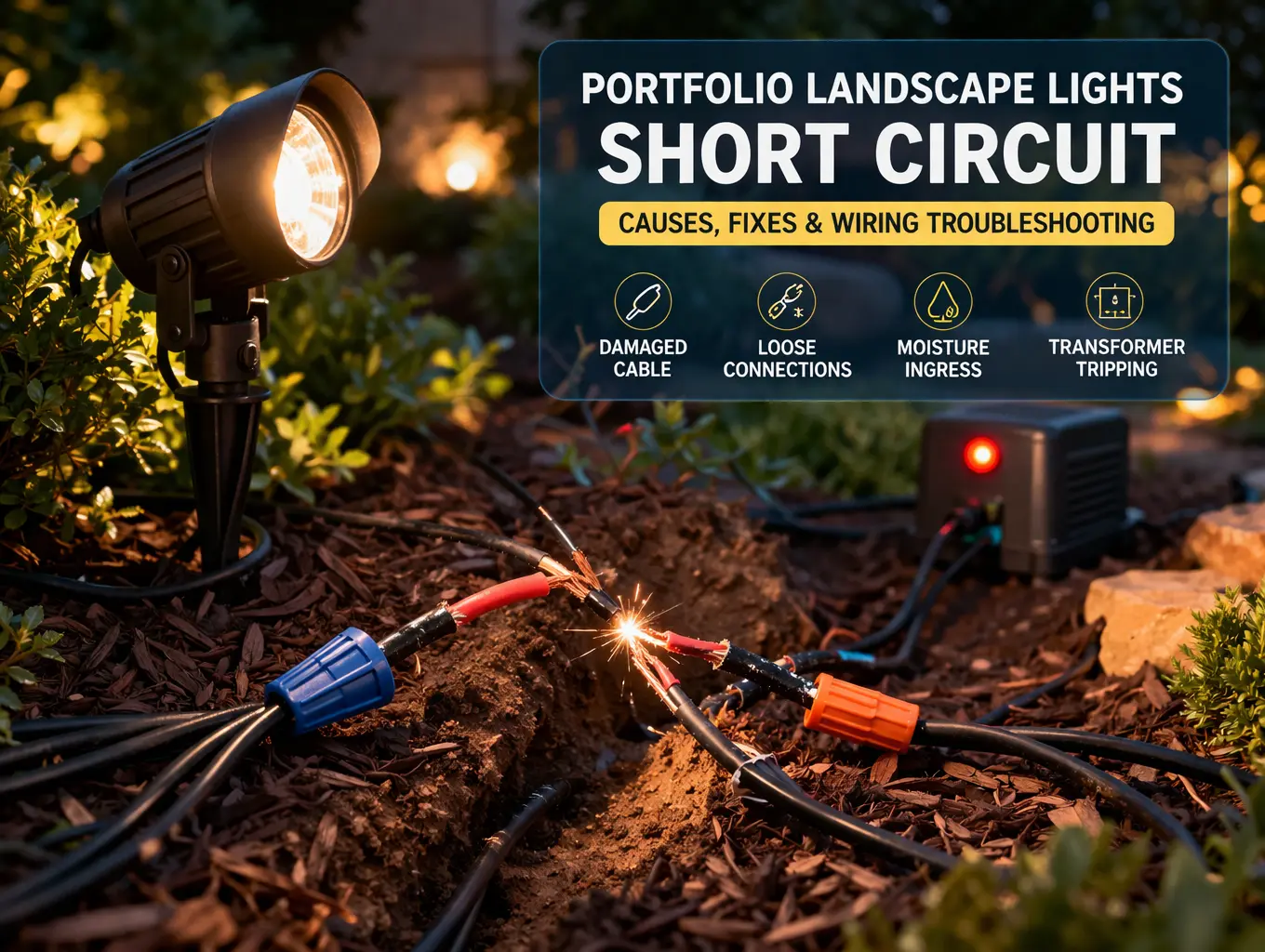
Why Do Portfolio Landscape Lights Short Circuit? (Quick Answer)
Portfolio landscape lights usually short circuit due to damaged cable, wet connectors, faulty fixtures, or overloaded transformers. The fastest fix is to isolate the wiring zone, inspect connectors, and check for moisture or cable damage.
- Transformer keeps tripping: wiring short
- Lights fail suddenly: damaged cable
- Flickering lights: loose or wet connection
Short Circuit Diagnosis Guide
| What You See | Most Likely Cause | What To Check First |
|---|---|---|
| Transformer reset keeps tripping | Short in wiring | Disconnect cable zones |
| Lights stop suddenly | Cut or damaged cable | Inspect recent yard work areas |
| Lights flicker | Loose or wet connector | Check all connections |
| Some lights off | Branch cable fault | Inspect affected run |
| Fails after rain | Water intrusion | Check fixtures and connectors |
Most short circuits come from one small section—not the entire system.
Start Here: Fix the Short Circuit Fast
- Transformer trips → isolate cable zones
- Lights fail after yard work → check cable damage
- Flickering → inspect connectors
- After rain → check for water intrusion
Always isolate the problem before replacing parts.
Short circuits are one of the more frustrating landscape lighting problems because they can make the system seem completely unpredictable. One night the lights work, the next night the transformer trips, and after rain the whole system may shut down again.
The key is to stop thinking about the whole yard as one mystery problem. In most cases, a short circuit is coming from one damaged cable section, one wet connector, one overloaded run, or one faulty fixture. Once you isolate that one weak point, the repair usually becomes much more straightforward.
Quick Diagnosis Table
If you want a fast starting point, use this table to match the symptom you are seeing with the most likely cause and the best first repair step.
| Problem | Possible Cause | Fix |
|---|---|---|
| Transformer reset keeps tripping | Short circuit in wiring | Inspect and repair damaged cable or connector |
| Lights stop working suddenly | Cut landscape cable | Locate the damaged section and repair or replace it |
| Lights flicker or shut off | Moisture in connector or fixture | Dry the connection and install a waterproof connector |
| Some lights work, others do not | Damaged fixture wiring or branch cable | Disconnect fixtures and replace the faulty light or connection |
| System trips after adding new lights | Overloaded transformer | Reduce the load or upgrade transformer capacity |
| Lights work only in dry weather | Water intrusion | Inspect wet fixtures, sockets, and buried connectors |
What Causes Portfolio Landscape Lights to Short Circuit?
In low-voltage lighting, a short circuit usually means electricity is taking a path it should not. That often happens because the cable insulation has been damaged, two conductors are touching, or water has created a conductive path inside a fixture or connection point.
Damaged Low-Voltage Cable
Landscape lighting cable is more vulnerable than many homeowners realize. It can be damaged by lawn aerators, edging tools, trenching, shovels, rodent activity, or even repeated pressure from hardscape movement. Sometimes the damage is obvious. Other times it is just a small cut in the insulation that eventually lets the conductors touch or take on moisture.
Even minor cable damage can cause major problems, especially after rain or irrigation. If your lights started failing after yard work, suspect cable damage early.
A short circuit tells you something is wrong, but it does not always tell you where the problem is located. In larger outdoor systems, narrowing the fault to the most likely zone or wire section can save a lot of repair time. For that step, read AI fault isolation logic for landscape lighting.
Loose Wire Connectors
Many Portfolio landscape systems use quick or piercing-style connectors. These are convenient, but they can loosen over time or become unreliable after years of temperature swings, soil shifting, and moisture exposure. A loose connector may create intermittent shorts, random flickering, or a transformer that trips only some of the time.
Water Inside Fixtures
Outdoor fixtures can short when water gets inside through a cracked lens, a failed seal, or poor drainage. A path light or spotlight that fills with water can create a direct fault and cause the transformer to shut down. This is especially common with older fixtures that still look fine from the outside but have internal corrosion or trapped moisture.
A short circuit can start at a wet or crowded splice point. Check our outdoor lighting junction box requirements to make sure outdoor connections are enclosed and protected correctly.
Overloaded Transformer
Sometimes what looks like a short is actually a transformer being pushed beyond its capacity. If too many fixtures are connected to the transformer, the internal protection may trip repeatedly and make it seem like the wiring is shorted. This is especially likely if problems started after adding more lights or swapping to higher-wattage lamps. For help calculating capacity, visit Portfolio lighting transformer sizing guide.
Signs Your Landscape Lighting Has a Short Circuit
Homeowners often see warning signs before they know exactly where the fault is. Recognizing those symptoms can save you time because they tell you to focus on wiring and fixtures instead of guessing at random parts.
- transformer reset button keeps tripping
- lights turn on and then immediately shut off
- some lights stop working suddenly while others stay on
- lights flicker or dim unexpectedly
- the system works only intermittently
- problems get worse after rain or sprinkler use
These symptoms usually mean there is a wiring issue somewhere along the low-voltage cable path. If everything fails at once, start at the transformer and main cable run. If only part of the system fails, focus on the branch serving those fixtures.
In-ground well lights can create shorts when water reaches the socket, connector, or lead wire. The Portfolio in-ground light short troubleshooting guide helps separate a fixture leak from a damaged cable run.
How to Find a Short Circuit in Portfolio Landscape Lighting
The most reliable way to find a short is to isolate the problem section rather than inspect the whole yard all at once. Working in steps keeps the job manageable and helps you avoid missing the real source of the fault.
Step 1: Turn Off the Transformer
Disconnect power before inspecting the wiring. Low-voltage systems are safer than line-voltage systems, but you still want the transformer off before opening connections or working around wet fixtures.
Step 2: Disconnect Lighting Zones
Remove cable runs from the transformer one at a time. This is one of the fastest ways to identify which zone contains the fault. If the transformer stops tripping when one specific cable run is disconnected, you have just narrowed the problem dramatically.
Step 3: Inspect Wire Connections
Check each connector for corrosion, looseness, broken insulation, or signs of moisture intrusion. Replace suspicious connectors instead of trying to “make them work” again. In outdoor systems, old questionable connectors are often future failures waiting to happen.
Step 4: Look for Damaged Cable
Follow the cable path through the yard, especially near recent landscaping work, edging, planting, or digging. Look around walkways, mulch borders, and areas where cable may have been pinched by rocks or hardscape materials. If you need help understanding the cable layout side of the system, see landscape lighting cable guide.
Step 5: Test Fixtures Individually
Sometimes the short is inside a single fixture. Disconnect fixtures one at a time from the affected run and retest the system. If the transformer stops tripping after one fixture is removed, that fixture is likely the problem. Water intrusion, internal corrosion, or damaged socket wiring are common causes.
How to Repair a Landscape Lighting Short
Once you find the fault, the repair usually falls into one of a few common categories. The right solution depends on whether the problem is in the cable, the connector, the fixture, or the system load.
Replace Damaged Cable Sections
If the cable insulation is cut, split, or otherwise compromised, replacing the damaged section is often the best fix. A proper repair restores the integrity of the run and reduces the chance of repeated failures in the same spot.
Install Waterproof Connectors
If water has been getting into a splice or branch connection, replace the old connection with outdoor-rated waterproof connectors designed for landscape lighting. This is one of the most effective upgrades you can make in older systems.
Replace Faulty Fixtures
If the short is coming from inside a fixture, replacing the fixture is often more practical than trying to rebuild a corroded socket or housing. This is especially true with older path lights and spotlights that have visible water damage.
Reduce Transformer Load
If the transformer is tripping because of overload, reduce the load, split the system into separate runs, or move up to a transformer with the right wattage capacity. That is different from repairing a wiring short, but it solves a similar symptom.
If breaker-style symptoms are part of the problem, compare this page with Portfolio transformer tripping breaker.
Preventing Short Circuits in Landscape Lighting
The easiest short circuit to fix is the one you never create. A little preventive maintenance goes a long way in low-voltage outdoor systems because most failures happen at predictable weak points.
- bury cables at a safe, consistent depth
- use waterproof connectors instead of questionable old splices
- protect cable near walkways, edging, and garden beds
- inspect the system after landscaping work
- replace cracked lenses or failing fixture seals
- keep transformer load within a realistic margin
Preventive maintenance matters most in systems that have already had one wiring problem. Once a yard has been dug up, re-edged, or reworked, it is worth doing a quick visual inspection before the next season starts.
Final Thoughts on Portfolio Landscape Lights Short Circuit Problems
If your Portfolio landscape lights short circuit, the most likely causes are damaged cable, loose or wet connectors, water inside a fixture, or a transformer that is overloaded and repeatedly shutting down. The most reliable fix is to isolate the affected run, inspect each connection, and work outward until you find the exact point of failure.
For many homeowners, the real breakthrough comes when they stop treating the whole system as one mystery and start breaking it into zones. Once you find the bad cable section, wet fixture, or overloaded run, the repair usually becomes much more manageable. And if you combine this page with your transformer and wiring troubleshooting guides, you can solve the problem much faster and with a lot less guesswork.
Portfolio Landscape Lights Short Circuit FAQ
What causes landscape lights to short circuit?
Short circuits usually happen when damaged cable allows wires to touch, when moisture enters fixtures or connectors, or when faulty wiring creates an unstable electrical path.
Why does my landscape lighting transformer keep tripping?
A tripping transformer usually indicates a wiring short, a wet connection, a faulty fixture, or an overloaded lighting run.
Can water cause landscape lighting to short out?
Yes. Water entering fixtures, sockets, or wire connectors can cause electrical shorts and make the system flicker, shut off, or trip the transformer reset.
How do I find a short in low-voltage lighting cable?
The best method is to turn off the transformer, disconnect lighting zones one at a time, inspect connectors and cable paths, and isolate the fixture or section of cable causing the fault.
Can I repair a landscape lighting cable?
Yes. Damaged cable sections can often be repaired or replaced using properly matched low-voltage cable and waterproof outdoor connectors.
Why do some lights work while others do not?
If only some lights fail, the problem is often in one branch of the cable run, one connector, or one faulty fixture rather than at the transformer itself.
Portfolio landscape lights short circuit, Portfolio landscape lighting short circuit, Portfolio low voltage short circuit, landscape lighting short circuit, Portfolio transformer short circuit, Portfolio wiring problem, Portfolio outdoor lighting short, and Portfolio landscape lighting troubleshooting.