
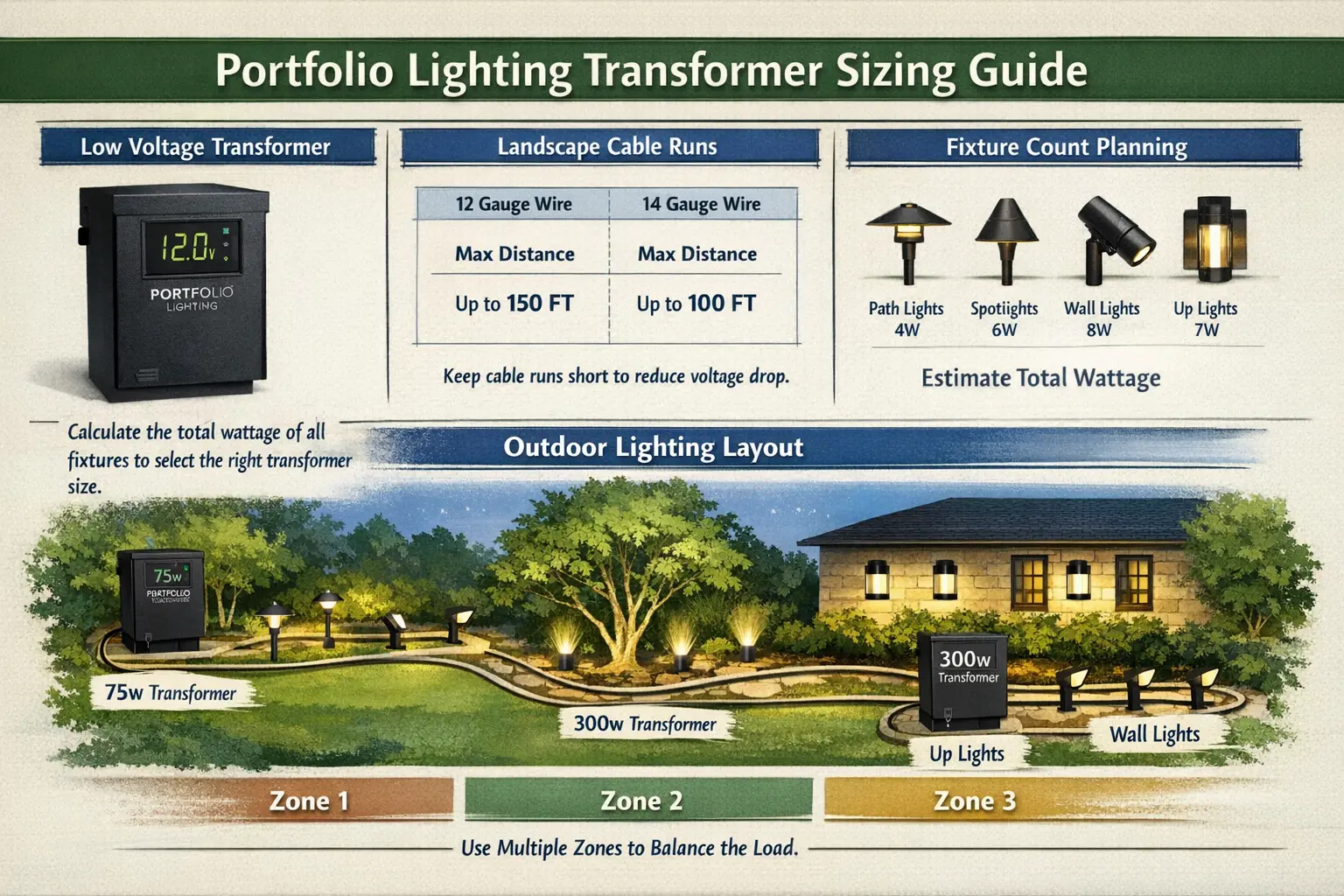
Quick Answer: What Size Landscape Lighting Transformer Do You Need?
To size a landscape lighting transformer, add up the total wattage of your fixtures and choose a transformer with extra capacity. Most systems should not run at full load, because undersized transformers cause dim lights, uneven output, and limited expansion.
- Small system: lower wattage transformer
- Medium system: mid-range capacity
- Large system: higher-capacity transformer
- Future expansion: always size up
Transformer Sizing Decision Guide
| Your Situation | What To Do |
|---|---|
| Lights are dim | Check total load and transformer capacity |
| System works but feels weak | Size up transformer |
| Adding more lights soon | Choose larger transformer now |
| Uneven brightness | Check voltage drop and layout |
| Transformer near max load | Upgrade to higher capacity |
Choosing the wrong transformer size can lead to overheating, cycling protection shutdowns and confusing warning indicators that homeowners often mistake for fixture failure. This lighting transformer error code database explains how many common transformer faults appear across low-voltage lighting systems and what those warnings usually mean in real-world installations.
The right transformer size is not just about today’s fixture count. It is about total system load, cable layout, efficiency, and giving yourself enough capacity so your Portfolio lighting system can run well now and still make sense later.
This page fits naturally with landscape lighting transformer guide, Portfolio outdoor transformer lighting, Portfolio low voltage lighting, landscape lighting voltage drop, and Portfolio landscape lighting wiring. If you are choosing between repair and replacement, also use Portfolio lighting transformer replacement and how to replace a landscape lighting transformer.
Start Here: What Problem Are You Trying to Solve?
- Lights too dim → transformer may be undersized
- Uneven lighting → check layout and voltage drop
- Adding more fixtures → size up now
- Planning new system → calculate total wattage first
Always match transformer size to real system load, not just fixture count.
Leaving continuous wattage headroom is important, but that margin does not directly predict startup performance. Transformer core inrush and connected LED-driver charging pulses occur on a much shorter time scale than the normal load calculation. The landscape lighting peak-load database explains how to evaluate startup current separately from transformer VA capacity.
Why Transformer Sizing Matters More Than Many Homeowners Expect
The transformer is the power heart of a low voltage landscape lighting system. It takes standard household power and steps it down so your outdoor fixtures can run safely. That means the transformer is not just another accessory. It is the foundation underneath the rest of the lighting design.
When the transformer is sized well, the system usually feels easier to live with. The fixtures have a better chance of looking consistent. Expansion later is simpler. Troubleshooting becomes clearer because you are not starting from an already stressed power source. The whole system feels more stable.
Incorrect transformer sizing can lead to overheating at the terminals. Use our terminal block repair guide to inspect for damage.
When the transformer is sized poorly, the opposite tends to happen. The lights may look weaker than expected. Some runs may perform better than others. The system may become less forgiving as bulbs age, cable runs lengthen, or new fixtures are added. That is why transformer sizing is not just an installation detail. It is one of the biggest planning decisions in the whole outdoor-lighting setup.
Sizing a transformer correctly involves more than simply matching the wattage of the current fixtures. A well-planned system leaves room for expansion and avoids running the transformer at its maximum capacity. If you want a more detailed breakdown of how fixture load affects transformer size, this Portfolio lighting transformer wattage guide walks through the process of calculating total load and choosing the right transformer capacity for outdoor lighting systems.
Choosing the right transformer size depends heavily on how many fixtures are connected to your system. Smaller setups may only include a few Portfolio path lights, while larger front and backyard layouts with multiple lighting zones will require a higher-capacity transformer and careful load planning to ensure consistent performance.
How to Calculate Your Lighting Load the Practical Way
The starting point for transformer sizing is total wattage. That means adding up the wattage of the fixtures you expect the transformer to serve. On the surface, that sounds easy, but it helps to slow down and think through the full layout instead of just counting the fixtures visible today.
Transformer sizing affects far more than brightness. Oversized startup voltage spikes, inrush current stress, thermal overload behavior, and unstable load balancing can all shorten the lifespan of low-voltage lighting systems. Our guide to hidden low-voltage landscape lighting failures explains why the 80% transformer loading rule matters in real-world outdoor systems.
Step 1: list every fixture on the run
Start with the real fixture count. Include path lights, spotlights, deck lights, step lights, wall lights, or any other outdoor fixtures that will be powered by the same transformer. If a lighting zone is split across different runs, that still matters because the transformer is carrying the overall load.
Step 2: note the wattage of each bulb or fixture
Once you know the fixtures, note the wattage for each one. If the system mixes fixture types, do not assume they all use the same wattage. This becomes especially important if part of the yard uses LED and another part still uses older lamps. If you are unsure what bulbs you are working with, compare this page with Portfolio lighting bulb replacement and Portfolio MR16 LED replacement bulbs.
Step 3: add the total load
Add the wattage together. That gives you the baseline load. But that should not be the final transformer size. It is just the starting number.
Step 4: think beyond the bare minimum
A transformer that exactly matches today’s total load can leave you with almost no flexibility. That is why many homeowners benefit from choosing a transformer with extra capacity rather than one that is mathematically exact and practically tight.
One of the first signs of an overloaded landscape lighting transformer is a louder-than-normal electrical hum or vibration. The landscape lights buzzing guide explains how excessive load, startup inrush current, poor ventilation, and unstable voltage taps create transformer noise that often appears before complete electrical failure.
How Much Extra Capacity Should You Leave?
In practical landscape lighting planning, a little extra capacity usually makes sense. You do not want the transformer pushed right to its limit from day one. Leaving room helps with reliability, future growth, and general peace of mind.
There are several reasons for that. First, systems often change. A homeowner starts with six path lights, then adds two more by the walkway, then another spotlight by the tree, then step lights by the patio. Second, some layouts become more demanding once the cable run and distribution are actually installed. Third, a transformer with some margin tends to be easier to live with than one that is constantly right at the edge.
This does not mean “buy the biggest transformer available and forget about it.” It means sizing intelligently. The right choice is usually the transformer that comfortably supports the current load while leaving enough room for realistic expansion.
Transformer-based systems are reliable, but they can be enhanced with hybrid power support. Our solar hybrid lighting optimization guide explains how solar and transformer power can work together to maintain consistent lighting even during low-sun conditions.
If your system requires more capacity and better voltage control, a multi-tap transformer is often the best upgrade. This Portfolio 200W transformer guide explains how to wire and configure it correctly.
Improper transformer loading can create unstable branch behavior where one zone experiences voltage collapse before the others. The guide to fixing one dead landscape lighting zone explains how overloaded runs, weak branch connections, and excessive cable resistance can isolate failures to a single section of the system.
Common Transformer Sizing Mistakes
Most transformer sizing problems are not caused by complicated math. They usually come from oversimplifying the system. A homeowner counts fixtures, chooses a transformer that seems close enough, and assumes the rest will take care of itself. That is where trouble begins.
| Sizing Mistake | What It Often Causes | Best Next Page |
|---|---|---|
| Choosing a transformer that barely matches the current fixture load | Little room for expansion and more stress on the system | Transformer Replacement |
| Ignoring cable length and layout | Uneven lighting or performance issues farther down the run | Landscape Lighting Voltage Drop |
| Forgetting about future lights | Having to replace the transformer sooner than expected | Guide, Plan and Placement |
| Mixing fixture types without rechecking total load | Confusing brightness differences and harder planning | LED vs Halogen |
| Assuming size alone solves every issue | Missing wiring, connector, or troubleshooting problems | Transformer Troubleshooting |
The key takeaway is that transformer size should support the overall system plan. It is important, but it is not isolated from the rest of the layout.
Choosing the correct transformer size depends on understanding how the entire lighting system connects together. The low voltage landscape lighting system diagram shows how the transformer supplies power to the main cable and how individual fixtures connect along the run, helping homeowners visualize how load and wiring layout affect system performance.
Transformer sizing is still critical, but output correction matters too once the system is running in real conditions. Our AI transformer voltage load balancing guide explains how AI can manage uneven load demand, reduce dimming, and protect important lighting zones when the transformer is under stress.
Simple Portfolio Transformer Sizing Table
This table gives you a practical way to think about sizing ranges. It is not a substitute for checking your exact fixture load, but it helps show how transformer sizing usually scales in real yard layouts.
| System Type | Typical Fixture Count | General Transformer Range |
|---|---|---|
| Small entry or walkway lighting | Few path lights or small accent fixtures | Lower-capacity transformer range |
| Moderate front-yard lighting layout | Path lights plus a few spotlights or accent lights | Mid-range transformer size |
| Larger front-and-back-yard setup | Multiple fixture types across several runs | Higher-capacity transformer size |
| System with planned future expansion | Current lighting plus likely added zones | Size up enough to leave growth room |
The important thing is not memorizing a specific chart. It is understanding the decision logic. Small systems may work with smaller transformers. Medium systems often need more margin than people expect. Larger systems nearly always benefit from more thoughtful sizing and better distribution planning.
Once you know how much wattage your lighting system needs, the next step is finding a compatible transformer that can handle that load reliably. Homeowners replacing an older Portfolio unit often discover that modern transformers offer better efficiency, updated controls, and a wider range of wattage options. To compare replacement choices and see which types of transformers are most compatible with existing Portfolio systems, visit our Portfolio lighting transformer alternatives guide.
Many outdoor systems start with a few walkway lights and expand over time, which is why proper transformer sizing matters. To see how these fixtures are typically arranged in real layouts, review our Portfolio path lighting examples and layouts.
Transformer Size and Voltage Drop Are Connected, But Not the Same
One of the most important things to understand is that transformer sizing and voltage drop are related, but they are not the same issue. A larger transformer does not automatically fix a poor cable layout. At the same time, a weakly sized transformer can make a marginal layout feel even worse.
Voltage drop becomes more noticeable when cable runs get longer, fixture count rises, or the system is distributed poorly across the yard. That means you cannot look at transformer size in isolation. You also have to think about how the power is being delivered after it leaves the transformer.
Sizing the transformer correctly is only part of the job. You also need to know how the cable run will behave once the full load is connected. The Landscape Lighting Voltage Drop Calculator helps estimate whether the layout is likely to suffer from voltage loss.
That is why this page works closely with Portfolio lighting transformer wiring diagram, Portfolio landscape lighting wiring, and landscape lighting cable guide. Those pages support the structural side of the decision, while this page helps you think through overall transformer capacity.
When It Makes Sense to Size Up
There are several situations where sizing up is usually the smarter decision. One is when you already know you will add more lights later. Another is when your system includes multiple lighting types across a broader yard layout. A third is when you are replacing an older transformer and do not want to repeat the same limitations that caused the replacement in the first place.
Sizing up also makes sense when you are trying to build a more future-friendly system. Many homeowners start with a minimal lighting plan, then realize how much better the house and yard look with a few more accents, path lights, or feature lights. A little extra capacity today can save you from needing a second transformer conversation too soon.
That said, the goal is still good planning, not just oversized equipment. The best answer is the transformer size that supports the load, respects the layout, and gives you enough margin to grow sensibly.
Gazebo lighting can add more load than many homeowners first expect, especially when the structure includes overhead lighting, accents, and nearby walkway fixtures on the same system. To see how that plays out in a real backyard application, read Portfolio gazebo lighting.
Choosing the correct transformer size involves far more than simply adding fixture wattages together. The load calculation and landscape lighting code compliance guide explains how startup surge, voltage drop, future expansion capacity, NEC load logic, and transformer efficiency margins influence long-term system reliability and safe electrical performance.
How This Page Fits With the Rest of Your Portfolio Lighting Planning
A transformer sizing guide should help you make a better decision before problems appear. That is what makes this page different from a troubleshooting page. If your transformer is already buzzing, failing, or not turning on, you need symptom-specific help. But if you are still planning, upgrading, or evaluating whether your current transformer is adequate, sizing becomes the smarter place to start.
Your next best pages from here are Portfolio lighting transformer troubleshooting, Portfolio lighting transformer not working, Portfolio lighting transformer buzzing, Portfolio lighting transformer timer not working, and Replacement Parts For Lighting Accessories.
The Portfolio GLA-200-12WF-1 shows why transformer sizing should include operating margin instead of matching fixture wattage exactly. Although the unit carries a 200-watt rating, about 160 watts is the better continuous design ceiling because the remaining capacity provides room for heat, voltage drop, startup behavior, and aging connections. The GLA-200-12WF-1 load and programming guide includes practical fixture-count examples and explains why a transformer can turn on at full load while still operating too close to its thermal limit.
Portfolio Lighting Transformer Sizing Guide FAQ
How do you size a Portfolio lighting transformer?
To size a Portfolio lighting transformer, add up the wattage of all fixtures on the system, then leave extra capacity so the transformer is not running at its limit. Cable length, voltage drop, and future expansion also matter.
What happens if a landscape lighting transformer is too small?
If a transformer is too small, the system may look dim, run unevenly, overload, or become harder to expand later. In some cases, the transformer may also run hotter or perform less reliably.
Should you leave extra capacity when choosing a low voltage transformer?
Yes. Leaving extra capacity is usually smart because it helps with performance, reduces stress on the transformer, and gives you room to add fixtures later without immediately replacing the transformer.
Is transformer size the only thing that affects landscape lighting performance?
No. Transformer size is important, but cable layout, voltage drop, fixture count, connector quality, and how the system is distributed across the yard all affect performance too.