
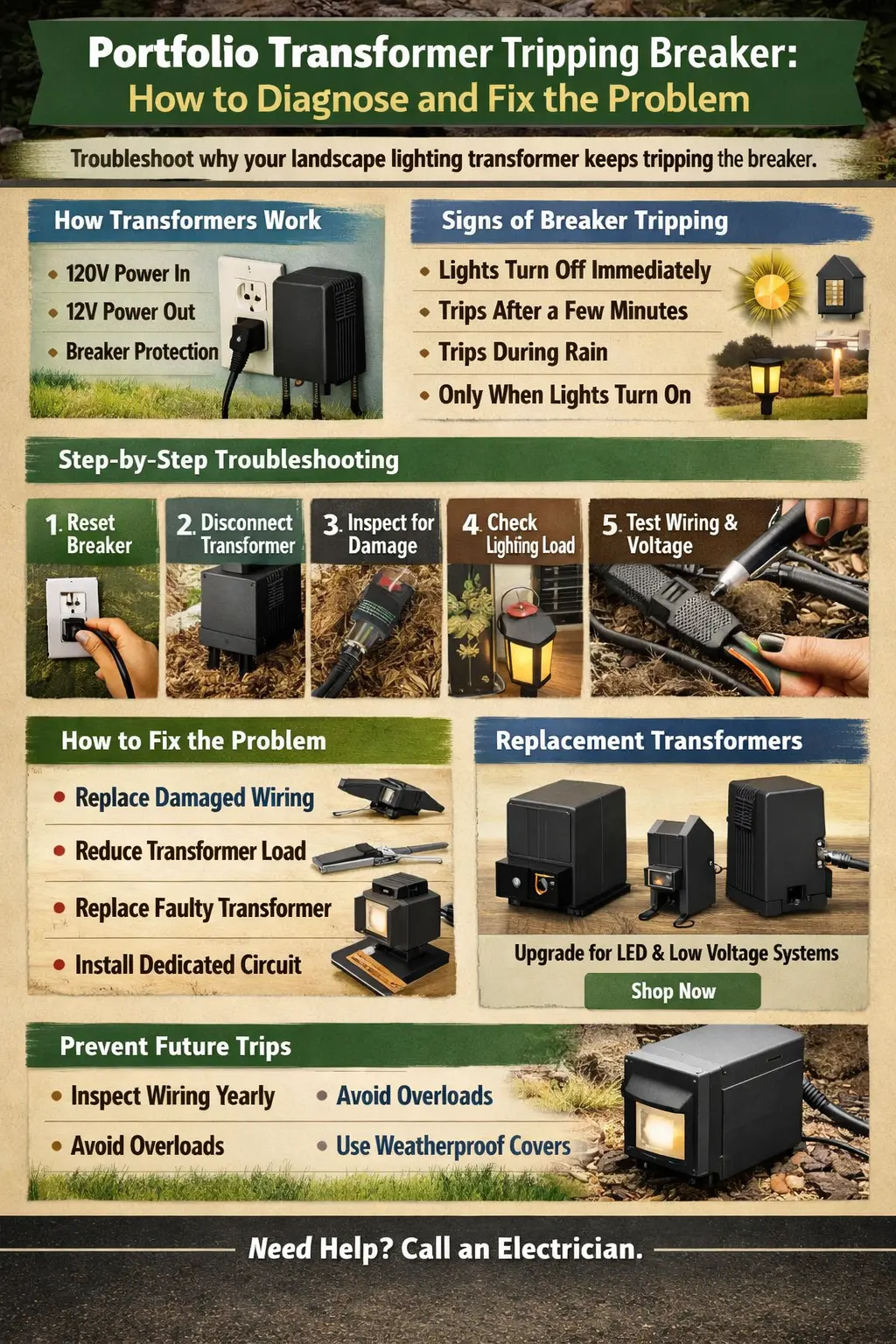
Quick Answer: Why a Portfolio Transformer Trips the Breaker
A Portfolio transformer usually trips the breaker because of a short circuit, too much load on the transformer, water intrusion in the wiring, damaged low-voltage cable, or internal transformer failure. The best first test is to unplug the transformer, reset the breaker, and see whether the breaker holds with the transformer disconnected.
- Immediate trip usually points to a short circuit or bad transformer
- Trip after a few minutes usually points to overload or overheating
- Trips after rain usually point to moisture in connectors, fixtures, or cable
- If the breaker holds with the transformer unplugged, the fault is in the transformer or lighting system
- If the breaker still trips with the transformer unplugged, the issue may be the house circuit or outlet
6 Most Common Causes of a Portfolio Transformer Tripping the Breaker
- Short circuit in the low-voltage cable
- Water intrusion in outdoor wire connectors
- Overloaded transformer with too many fixtures
- Damaged fixture socket or internal wiring
- Faulty timer or photocell creating startup issues
- Internal transformer failure
If you can match your symptoms to one of these six causes early, troubleshooting becomes much faster and the page becomes more useful for searchers looking for a direct answer.
A breaker that keeps tripping is usually a sign of a short circuit, overload, moisture problem, or failing transformer.
In a Portfolio landscape lighting system, the fastest way to narrow it down is to disconnect the transformer, confirm whether the breaker resets normally, and then inspect the wiring, connectors, fixtures, and total load one step at a time.
How Landscape Lighting Transformers Connect to Your Electrical System
A landscape lighting transformer plugs into standard 120-volt household power and converts that electricity down to about 12 volts for the outdoor lighting system. That lower voltage is what makes low voltage landscape lighting safer and easier to manage than line-voltage outdoor lighting.
The breaker that feeds the outlet protects the circuit from excessive current draw. If the breaker trips, it is because the electrical system detected a condition that could damage the wiring or create a hazardous situation. That usually means overload, short circuit, or internal equipment failure.
In a typical Portfolio setup, the transformer receives 120V input power, passes it through a timer or photocell control, then sends low voltage electricity through outdoor cable to the fixtures in the yard. If any part of that chain has a fault, the breaker may trip.
If you want a broader understanding of the system design, compare this page with Portfolio low voltage lighting.
Signs Your Transformer Is Tripping the Breaker
The exact timing of the breaker trip gives you useful clues. Pay attention to when it happens because that often points you toward the real problem faster.
Lights Turn Off Immediately
If the breaker trips the moment the transformer powers on, there may be a direct short, a serious transformer failure, or a wiring problem close to the transformer itself.
Breaker Trips After a Few Minutes
If the system runs briefly and then trips, overload or overheating becomes more likely. This can happen when the transformer is carrying too much load or when internal components start failing after they warm up.
Breaker Trips During Rain
If the problem shows up during or after rain, water intrusion becomes a strong suspect. Outdoor wiring connectors, damaged cable insulation, and poorly sealed transformer housings can all let moisture create a short.
Only Happens When the Lights Turn On
Some systems behave normally until the timer or photocell actually activates the lights. If that is what you are seeing, the timer-controlled startup is helping reveal a wiring or load issue that only appears under full power. If the controls themselves are acting strangely, compare this with Portfolio light timer not working.
What the Breaker Trip Timing Usually Means
Trips Immediately
This usually points to a direct short, damaged cable, wet connector, or transformer fault.
Trips After a Few Minutes
This usually points to overload, overheating, or a transformer that fails once it warms up.
Trips During or After Rain
This usually points to water intrusion in fixtures, splices, wire connectors, or damaged insulation.
Trips Only When the Timer Turns On
This usually means the fault only shows up when the full lighting load energizes at startup.
Step-by-Step Troubleshooting
This is the most efficient way to work through the problem. Start simple, isolate the transformer, and then move outward into the lighting system.
If your transformer keeps tripping because the system is overloaded or undersized, it may be time to review commercial-grade landscape lighting upgrades instead of repeatedly resetting the system.
Step 1 – Reset the Breaker
First, confirm the breaker really tripped and is not just sitting in the middle position. Switch it fully off, then back on. Turn the transformer on again. If the breaker trips again, continue with the next steps instead of repeatedly resetting it.
Step 2 – Disconnect the Transformer
Unplug the transformer completely and reset the breaker. If the breaker no longer trips, you know the problem is tied to the transformer or the outdoor lighting system connected to it rather than some unrelated issue elsewhere on the circuit.
Step 3 – Inspect the Transformer for Damage
Look for a burned smell, melted wiring, scorch marks, or obvious corrosion. These are strong signs of internal transformer damage. If the housing looks compromised or smells hot, replacement is often a better move than trying to force it to keep working.
Step 4 – Check for Overloaded Lighting System
Too many lights can overload the transformer, especially if the system grew over time and the transformer was never upgraded. A lot of homeowners add fixtures later without recalculating the load.
If the transformer trips after running, inspect the output terminals using our terminal block and lug repair guide for signs of overheating or poor connections.
| Transformer Size | Recommended Load |
|---|---|
| 60W | ~45W |
| 120W | ~90W |
| 300W | ~240W |
LED lighting reduces system load and is one of the easiest ways to take pressure off an older transformer. If you are still using older high-wattage lamps, compare them with Portfolio LED lighting.
If your landscape lighting system suddenly stops working or the transformer repeatedly trips its reset button, a wiring fault may be the cause. Damaged low-voltage cable, loose connectors, or water inside a fixture can create a short circuit that shuts down the entire lighting run. Our guide explains the most common causes of a Portfolio landscape lights short circuit and shows how homeowners can locate and repair the wiring problem safely.
Step 5 – Inspect Low Voltage Wiring
Check for cut cable, damaged insulation, loose connectors, and corroded wiring. Even small damage in the low voltage run can create shorting conditions, especially when water gets involved. Look closely where the cable exits the transformer, at splices, and anywhere landscaping work may have disturbed the wire.
Step 6 – Test the Transformer Output
Using a voltage tester, confirm whether the transformer output is stable. If the voltage is erratic, absent, or the unit trips the breaker as soon as it tries to energize the system, the transformer may be defective.
Common Causes of Breaker Trips
Short Circuit in Landscape Wiring
Buried cable can be damaged by lawn equipment, pets, roots, digging, edging, or landscaping tools. A short in the wiring can cause the breaker to trip immediately when the system energizes.
Water Intrusion
Outdoor connectors and transformer housings must stay weather resistant. If water gets into the wrong place, it can create a short that shows up during rain or right after wet weather.
Faulty Transformer
Internal transformer coils and components can fail with age, heat, overload, or surge damage. When that happens, the transformer may draw excessive current and trip the breaker.
Overloaded Electrical Circuit
Sometimes the transformer is not the only thing on the circuit. If multiple devices share the same outlet or branch circuit, the breaker may trip because the total load exceeds what the circuit can handle.
For model-specific overload limits, wiring guidance, and reset instructions, review Portfolio outdoor transformer manuals before replacing the unit.
How to Fix the Problem
Once you know what is causing the breaker trip, the right fix becomes much clearer.
Replace Damaged Wiring
If the low voltage cable is cut, corroded, or shorting out, repair or replacement of the damaged section is usually necessary. Temporary workarounds do not last long outdoors.
Reduce Transformer Load
If the system is overloaded, remove some fixtures, switch to lower-wattage LED lamps, or upgrade to a transformer with more capacity.
Replace a Faulty Transformer
If the transformer itself is causing the breaker to trip, replacement is often the most practical solution. An older transformer with internal electrical damage is not something you want to keep forcing into service.
Install a Dedicated Circuit
For larger lighting systems, a dedicated circuit can help if the existing outlet circuit is already shared with too many other devices.
Replacement Transformers for Portfolio Lighting
If your current transformer is failing, the replacement needs to match the low voltage system, total fixture load, and outdoor conditions. Most homeowners want something compatible with existing landscape fixtures and cables so they do not have to rebuild the whole system.
LED landscape lighting is usually easier on replacement transformers because the electrical load is lower. That can make the new setup more reliable and give you more headroom for future expansion.
When original components are difficult to locate, many homeowners search online for compatible hardware and replacement system parts. A common starting point is Portfolio lighting replacement parts on eBay. You can also compare options through Portfolio lighting parts and accessories.
Preventing Breaker Trips in the Future
A little maintenance goes a long way with landscape lighting systems. Breaker trips often happen after years of small problems building up rather than from one random event.
- Inspect landscape wiring annually
- Avoid overloading the transformer
- Protect wiring connections from moisture
- Use weatherproof covers and properly sealed connectors
- Check the system after storms or yard work
- Upgrade older bulbs to LED where possible
When to Call an Electrician
Some breaker trips are simple to diagnose. Others are not. If the breaker trips repeatedly, the wiring damage is extensive, the transformer shows electrical damage, or you are not comfortable testing the system safely, it is smart to bring in an electrician.
Final Thoughts on a Portfolio Transformer Tripping the Breaker
When a Portfolio transformer keeps tripping the breaker, the system is telling you there is more than just a simple “lights not working” problem. Most of the time the cause comes back to one of four things: overload, damaged wiring, moisture-related shorting, or transformer failure.
The best way to solve it is to isolate the transformer, inspect the wiring, test the output, and pay close attention to when the breaker trips. Once you know whether the issue happens at plug-in, at timer activation, or after a few minutes of runtime, the real cause becomes much easier to track down.
Portfolio Transformer Tripping Breaker FAQ
Why does my landscape transformer keep tripping the breaker?
Common causes include overloaded transformers, damaged wiring, short circuits, or transformer failure.
Can a bad transformer trip a breaker?
Yes. Internal transformer failure can draw excessive current and trip the breaker.
How do I test a landscape lighting transformer?
Use a voltage tester to measure output voltage at the transformer terminals.
Can water cause breaker trips in outdoor lighting?
Yes. Water intrusion can create electrical shorts that cause the breaker to trip.
Final Answer: Why Your Portfolio Transformer Keeps Tripping the Breaker
When a Portfolio transformer keeps tripping the breaker, the problem usually comes down to one of a few causes: shorted wiring, moisture intrusion, transformer overload, or internal transformer failure. The fastest way to solve it is to isolate the transformer first, then inspect the low-voltage side for damaged cable, wet connectors, overloaded fixtures, or failed components.
In most cases, the breaker trip pattern gives you the best clue. Immediate trips usually mean a short or bad transformer. Delayed trips usually point to overload or overheating. Rain-related trips usually point to moisture getting where it should not be. That is the pattern homeowners need most, and it is the pattern this page should answer clearly at the top.