
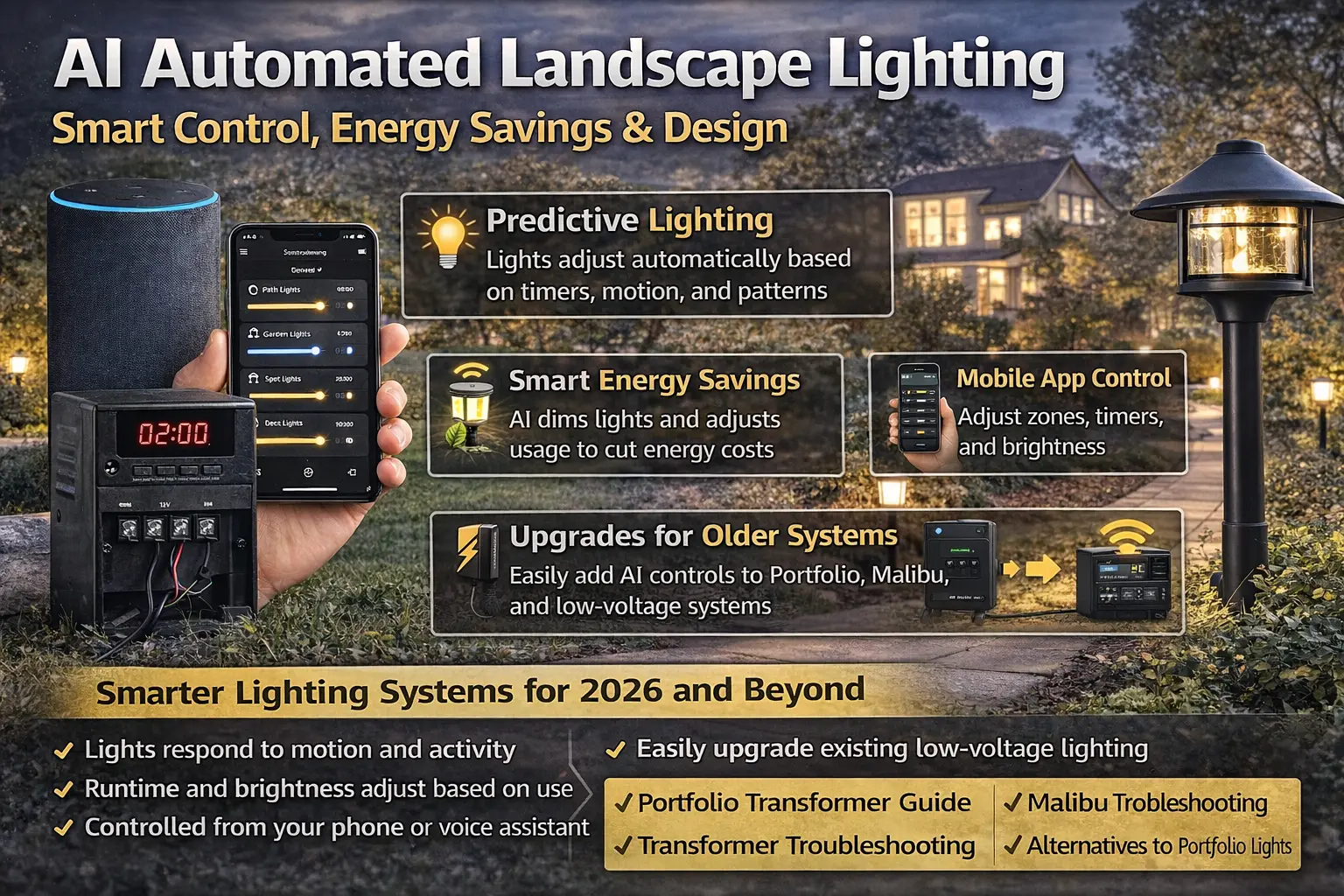
AI outdoor lighting systems automatically adjust brightness, timing, and zones based on motion, activity, and real-world conditions instead of using a fixed timer.
Quick Answer
AI outdoor lighting systems use smart controllers, sensors, and automation to adjust lighting automatically based on motion, schedules, and environmental conditions.
- Respond to activity instead of only following a timer
- Adjust brightness to save energy
- Allow zone-based lighting for walkways, patios, driveways, and security areas
- Can often be added to older low-voltage systems in stages
Is AI Outdoor Lighting Worth It?
Yes for most systems. If your lighting runs every night, uses a timer, or wastes power, upgrading to a smarter control system will improve performance and reduce unnecessary runtime.
- Best for: older low-voltage systems
- Best upgrade: smarter transformer or controller
- Biggest benefit: better control + less wasted energy
This page covers how to design, upgrade, and control outdoor lighting systems so they work better and are easier to manage. Whether you are improving an older setup or planning a new system, this guide gives you a clear path forward.
Traditional low-voltage lighting mainly runs on simple timers. Modern systems go further by improving how lighting looks, how it performs for safety, how much energy it uses, and how easy it is to control without constant adjustments at the transformer.
In practical terms, that means brighter walkways when needed, softer lighting later in the evening, less wasted runtime, and better use of light across the yard. For older systems, it can extend the life of what you already have. For new systems, it helps you build it the right way from the start.
How AI Outdoor Lighting Systems Work
- Controller: manages automation rules, schedules, and zone behavior
- Sensors: detect motion, light levels, and activity changes
- Transformer: powers the low-voltage system
- Zones: divide lighting into useful areas with different roles
These parts work together to create a system that responds to what is actually happening around the house instead of blindly following one timer setting every night. That is the main difference between an old-style landscape lighting system and a modern one. The old system has one basic instruction. The modern system has logic.
The controller acts as the brain. It decides what each zone should do. The transformer still matters because it provides the electrical foundation. The sensors matter because they supply the information that makes the system responsive. The zones matter because outdoor lighting is rarely one-size-fits-all. A front path, patio, side yard, and security area all deserve different lighting behavior.
When these pieces are planned correctly, the system becomes easier to live with. You get better visibility where you need it, less wasted output where you do not, and more flexibility when your routines change. That is why system architecture matters. It is not technical clutter. It is what makes the lighting feel intelligent instead of rigid.
If you want a more detailed look at how automated outdoor lighting works in real-world setups, see the AI automated landscape lighting guide. It breaks down how smart controllers, sensors, and zone-based lighting work together to improve control, reduce energy use, and upgrade older low-voltage systems without replacing everything.
If you are trying to connect an existing lighting system to a smart hub, the smart hub compatibility guide explains what works, what does not, and how to safely connect Portfolio transformers to Alexa, Google Home, HomeKit, or Matter.
How the System Thinks
- Detect activity → adjust brightness
- Check time of night → change output levels
- Evaluate zones → light only what is needed
This step-by-step logic is what separates modern lighting systems from basic timer-based setups.
Predictive Outdoor Lighting (Next-Level Automation)
Predictive lighting is where modern outdoor control becomes truly useful. Instead of reacting only after motion happens or only following a fixed schedule, a more advanced system can respond to patterns over time. It can learn that the front walk needs brighter light around normal arrival windows, that the backyard can shift lower later in the evening, and that some zones rarely need full output after a certain hour.
- lights activate based on routine timing instead of one rigid schedule
- brightness adjusts based on how frequently a space is used
- color temperature can shift warmer as the night gets later
- zones can stay active only where people are actually moving
This creates a more natural nighttime environment. The property feels prepared instead of overlit. Paths can be welcoming without the whole yard running at full strength. Accent lighting can stay attractive without wasting power. Security zones can become more targeted instead of throwing light everywhere all at once.
This is the section where smarter systems separate themselves from basic app timers. A timer is useful. Predictive behavior is better. It responds to how a home lives at night, and that is a much stronger long-term design approach.
Real-World Lighting Automation Examples
- walkway lights brighten when motion is detected near the drive or front gate
- backyard seating zones dim later at night after activity drops off
- security zones activate only when needed instead of running at high output all night
- accent lighting remains softer while primary path lighting becomes brighter for safe movement
These examples matter because they show how smart outdoor lighting actually helps a homeowner. It is not about adding gadgets for the sake of it. It is about matching light to purpose. Walkways need guidance. Patios need comfort. Security areas need rapid response. Accent zones need restraint.
The strongest outdoor lighting designs always had those goals. What has changed is the system’s ability to support them automatically. Instead of setting one brightness level and hoping it works for every use case, smarter systems can support different moods, different safety needs, and different activity patterns at different times of night.
Can Smart Lighting Work With Existing Landscape Lighting?
Yes, most low-voltage systems can be upgraded with better controllers or compatible transformers.
Many homeowners think upgrading outdoor lighting means starting over, but that is not usually the case. In many setups, the wiring can stay in place and some fixtures can still be used. The biggest improvement often comes from better control and more efficient lighting, not a full rebuild.
This is especially true for older Portfolio and Malibu systems. If you are deciding whether to repair or upgrade, review your setup using Portfolio Lighting model number lookup, Portfolio lighting transformer troubleshooting, Portfolio Lighting model 121408 transformer manual, and Malibu 8100-9120-01 troubleshooting. These will help you figure out if your system is a good candidate for an upgrade or if it needs repair first.
The key point is simple: if the wiring and transformer are in good shape, upgrading control is straightforward. If there are power issues, damaged wiring, or failing equipment, fix those first before adding new controls.
Why This Page Matters More Than a Typical Brand Guide
Brand pages are useful, but system pages are what create real authority. A homeowner with a mixed outdoor lighting setup does not think in perfect brand lines. They think in problems and goals. They want better control. They want less wasted power. They want zones that make sense. They want a path forward that does not turn into guesswork.
That is why this page works as a pillar page. It connects old systems, new upgrades, design planning, automation, compatibility, and replacement logic. It is not just about a part number. It is about how outdoor lighting works as a living system.
How to Design an AI Outdoor Lighting System
- Define the lighting zones: entry, walkway, patio, accent, and security.
- Choose the smart control path: controller, transformer, or both.
- Upgrade to LED fixtures or LED-compatible lamps where possible.
- Add sensors and automation rules based on how the property is actually used.
Design is where many outdoor systems either get stronger or become messy. A good layout separates function clearly. Path lights should not behave the same way as patio lights. Accent lighting should not be treated like security lighting. Once the zones are defined properly, the automation becomes much easier to program in a way that feels natural.
This is also why broader design pages matter. If you are still shaping the physical layout, use landscape lighting layout design, how to design outdoor lighting plan, landscape lighting spacing, and path light placement. Better automation always works better when the original placement plan is strong.
How to Upgrade Your Existing System
Most upgrades focus on replacing the transformer or adding a smart controller, not rebuilding the entire system. That is good news for homeowners because it turns a potentially expensive project into a phased improvement plan.
- replace a weak or outdated transformer first if the control side is the real bottleneck
- switch older lamps to LED to reduce load and improve dimming flexibility
- improve connectors, splices, and cable condition before adding more control logic
- add sensor-based triggers only after the base system is stable
The reason staged upgrades work so well is that each step improves the next one. A stronger transformer supports better zones. Better zones make automation more useful. Better automation reduces wasted runtime. Lower runtime and lower load help protect the rest of the system.
Traditional vs AI Outdoor Lighting
| Traditional Lighting | AI Outdoor Lighting System |
|---|---|
| Fixed timer | Adaptive automation |
| Same brightness all night | Dynamic dimming by zone and activity |
| Manual adjustments | App-based control and smarter response |
| All zones treated the same | Different logic for walkways, patios, security, and accents |
That comparison table is the heart of the shift. Traditional systems are functional. Smart systems are adaptive. The difference shows up in comfort, convenience, safety, and operating efficiency. The right setup does not just save power. It makes the property feel better at night.
Energy Savings Are Real, But Better Control Is the Bigger Win
Energy savings are part of the story, but they are not the only reason to upgrade. The bigger win is control. A smarter outdoor lighting system lets you decide how different parts of the property behave without setting the whole yard to the same pattern every night.
That said, energy improvements are still meaningful. Dimming zones that do not need full output, reducing late-night runtime, and using LED-based light sources all help reduce wasted power. Over time, those changes also tend to reduce stress on transformers, lamps, drivers, and connection points.
If energy use and load planning are part of your upgrade path, use Portfolio lighting transformer wattage guide, landscape lighting transformer size calculator, and landscape lighting voltage drop calculator. A smarter control system performs best when the underlying electrical design is still comfortably within range.
When a Full System Upgrade Makes More Sense Than One More Repair
Some outdoor systems are worth upgrading. Others are really asking to be replaced in a more organized way. If your transformer is already unstable, the fixtures are inconsistent, the cable has multiple bad sections, and the connectors have seen years of weather damage, one more patch may not move the system forward in a useful way.
- repeated transformer problems
- dim or unstable zones
- outdated fixture mix with rising maintenance needs
- water-related connection failures after storms or irrigation
- older control logic that makes modern automation difficult
In that situation, a cleaner upgrade path usually starts with a stronger transformer and a better control plan. Helpful next pages include best replacement for Portfolio landscape lighting, Portfolio lighting transformer alternatives, where to buy Portfolio lighting replacement parts, and replacement for Portfolio landscape lighting.
Related Guides
- Portfolio Transformer Guide
- Malibu Transformer Troubleshooting Guide
- Transformer Troubleshooting
- Lighting Alternatives
- Compatibility Guide
- Landscape Lighting Hub
These pages connect the key parts of outdoor lighting—troubleshooting, replacements, compatibility, and long-term control—so you can move through your system step by step instead of jumping between disconnected information.
Do I Need to Replace My Entire Lighting System?
No. Most systems can be upgraded by improving the control point first, without replacing all fixtures.
AI Outdoor Lighting Systems FAQ
What is AI outdoor lighting?
AI outdoor lighting uses smart controllers, sensors, schedules, and automation rules to adjust lighting automatically based on activity, timing, and changing conditions around the property.
Can I upgrade my old landscape lighting system without replacing everything?
Yes. Many older low-voltage systems can be improved with a better transformer, smarter controller, LED lamps, and zone planning without replacing every fixture.
Do smart outdoor lighting systems save energy?
Yes. They reduce wasted runtime, dim unused zones, and help limit full output to areas that actually need it.
Can smart control work with Portfolio or Malibu lighting?
In many cases, yes. Existing low-voltage systems can often be upgraded if the transformer, wiring, and connected fixtures are still in workable condition.
Is AI outdoor lighting worth it?
For many homeowners it is worth it because it improves convenience, energy use, visibility, and overall nighttime control across the property.
Final Note
AI outdoor lighting systems are less about adding complexity and more about improving control. When lighting responds to how a property is actually used, it becomes easier to manage, more efficient to run, and more useful at night. Whether you are upgrading an older system or starting fresh, the goal is a setup that works naturally instead of relying on a single timer.