
Quick Answer: How Deep Should Landscape Lighting Wire Be Buried?
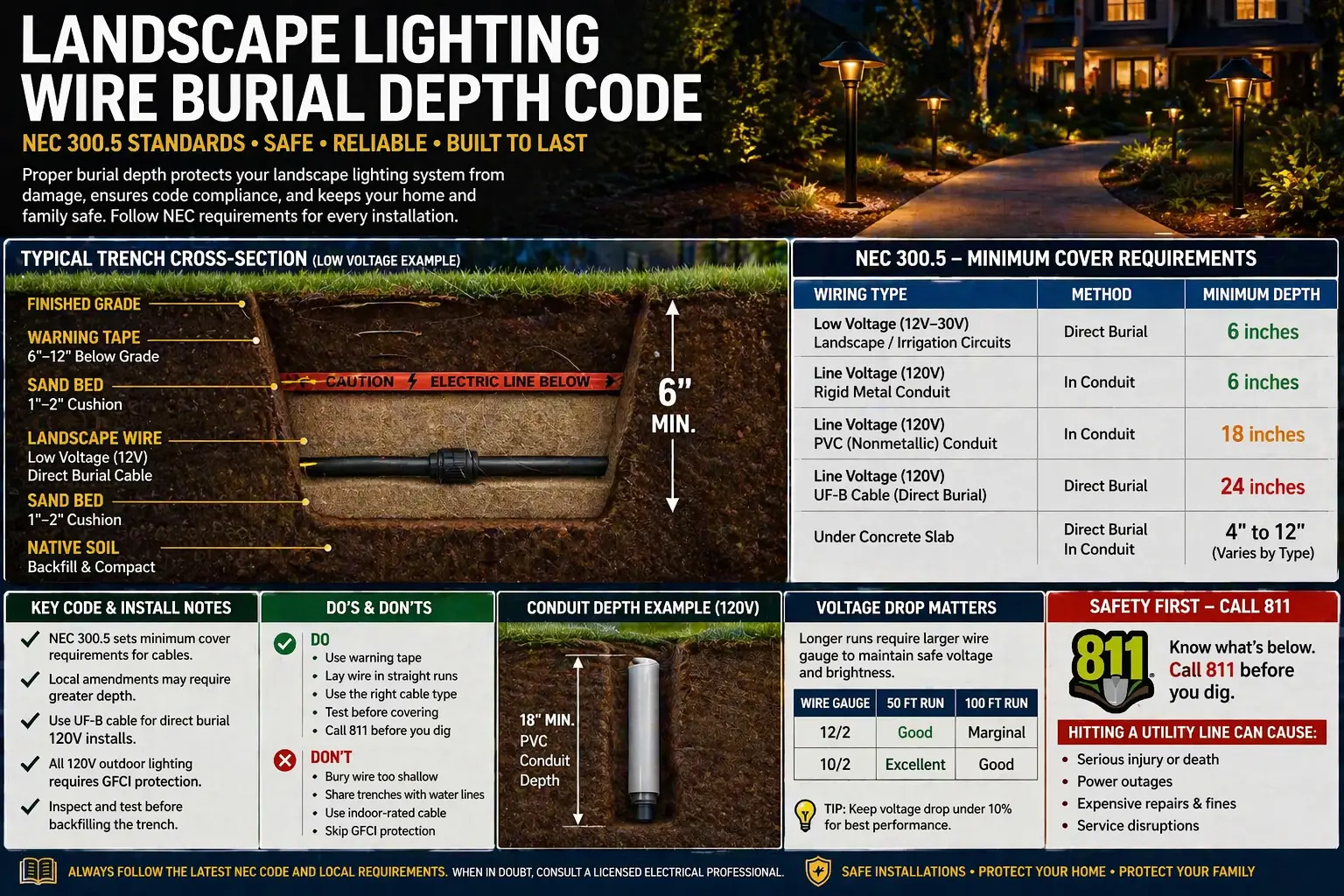
Use the wiring method first, then choose the trench depth. For most residential landscape lighting projects, low-voltage cable can be buried with 6 inches of cover, 120-volt wiring in PVC conduit usually needs 18 inches, and 120-volt direct-burial UF cable usually needs 24 inches.
- Low voltage (12V-30V): 6 inches minimum cover
- 120V rigid metal conduit: 6 inches minimum cover in common residential conditions
- 120V PVC conduit: 18 inches minimum cover
- 120V direct-burial UF cable: 24 inches minimum cover
- Under a 4-inch concrete slab: requirements vary by wiring method, so verify the exact installation condition before trenching
Logic summary: The right answer is not just “how deep,” but “how deep for this wiring method, this voltage, and this site condition.” That is why trench depth, cable type, conduit use, and protection at grade all have to be considered together.
Fast Code Answer
Low-voltage landscape lighting wire is typically buried at least 6 inches deep.
120-volt wiring usually needs 18 inches of cover in PVC conduit or 24 inches for direct-burial UF cable.
Final depth depends on the wiring method, voltage, site conditions, and local code enforcement.
Quick Reference Table: Landscape Lighting Burial Depth by Wiring Method
| Wiring Type | Method | Depth Required | Why It Matters |
|---|---|---|---|
| Low Voltage (12V-30V) | Direct burial identified cable or raceway | 6 inches | Standard NEC baseline for most residential landscape lighting circuits |
| Line Voltage (120V) | Rigid metal conduit | 6 inches | Allows shallow burial, but material and labor costs are higher |
| Line Voltage (120V) | PVC conduit | 18 inches | Common outdoor wiring method for durable branch-circuit protection |
| Line Voltage (120V) | Direct-burial UF cable | 24 inches | Requires the deepest trench of the common residential methods |
If you are planning the full run and not just the trench depth, also review how landscape lighting works, landscape lighting system diagram, and landscape lighting wiring guide.
If you want to see how burial depth fits into the full wiring path from transformer to fixture, review our landscape lighting system diagram.
For a deeper breakdown of wiring methods, trench planning, and low-voltage installation flow, see how to wire landscape lighting.
Correct burial depth protects low-voltage cable from aerators, edging tools, root disturbance, and surface damage, but an inspector or careful homeowner should also verify the full system path from transformer to fixture. After confirming cable depth, use the low-voltage lighting inspection checklist for NEC-style review to document cable type, connector rating, transformer location, GFCI protection, splice condition, fixture listing, and voltage readings so the underground portion of the project is tied to the rest of the installation evidence.
Landscape lighting wire burial depth sounds like a simple number question, but it is really a code-and-performance question. The burial depth that satisfies NEC cover requirements is not always the same depth that provides the best long-term protection in the field.
That is why this page covers both what the code allows and what experienced installers do in real yards with frost, edging, mulch movement, and long low-voltage cable runs.
Burial depth is only part of compliance. Before digging, review low voltage lighting permit requirements to see when a city permit, rough-in inspection, or 811 utility locate may be required.
Who This Burial Depth Guide Helps
- Homeowners who want the fastest safe trench depth answer
- DIY installers trying to avoid code mistakes and rework
- Pros and inspectors checking cover depth, protection at grade, and wiring method logic
If you are comparing trenching safety with broader outdoor code concerns, also see our landscape lighting electrical code and safety guide.
Proper burial depth protects wiring, but electrical safety also depends on GFCI protection. See outdoor lighting GFCI requirements to ensure your system is fully protected.
In dog runs, rabbit areas, and wildlife zones, burial depth is also a pet-safety issue. See landscape lighting wire safety for pets and wildlife before burying low-voltage cable.
Burial depth is only one part of compliance. For full code context, including GFCI and wiring updates, see NEC 2026 landscape lighting code updates.
Proper burial depth is only one part of building a safe and durable low-voltage lighting system. The landscape lighting load calculation and NEC compliance guide explains how wire gauge sizing, transformer loading, voltage-drop percentages, and startup current behavior influence underground cable heat, connector stress, and long-term system reliability far beyond simple trench depth requirements.
Burial depth is only one part of a safe underground lighting installation. The cable, connectors, transformer, and fixtures also need to be appropriate for the way they are being used. Our UL vs ETL landscape lighting guide explains how safety certification works and why seeing a familiar certification logo does not automatically mean every component is suitable for burial, wet locations, or every outdoor application.
The Low-Voltage Myth: Is 6 Inches Deep Enough?
For irrigation and landscape lighting circuits operating at 30 volts or less, the common residential benchmark is 6 inches of cover. That is why many homeowners hear the "6-inch rule" when installing low-voltage landscape lighting.
The problem is that minimum code cover is not always best-practice burial depth. In actual installations, professionals often choose 8 to 10 inches where soil conditions allow because it better protects cable from:
- edgers and shovel blades near walkways
- frost heave pushing wire toward the surface
- mulch and soil erosion exposing cable over time
- future landscape work that slices shallow runs
If you are still planning the cable route, see low-voltage landscape lighting, Portfolio low-voltage lighting, and landscape lighting cable guide.
Underground lighting cable work can create licensing questions when trenching, conduit, utility proximity, or line-voltage connections are involved. The landscape lighting contractor rules by project type guide explains how licensing can apply to outdoor lighting installations.
If you are choosing cable for a new trench, also review our landscape lighting cable guide before burying anything.
If you are burying a longer run, pair this page with landscape lighting wire gauge and landscape lighting voltage drop before finalizing trench depth.
Proper grounding and bonding are critical for code compliance and shock protection. For a detailed breakdown, see our landscape lighting grounding and bonding guide.
When 6 Inches Is Not Enough
Even when 6 inches meets the minimum code baseline for low-voltage landscape lighting, deeper burial is often the smarter long-term choice in real yards.
- Near lawn edging: shallow cable is more likely to get cut
- In freeze-thaw zones: soil movement can expose cable over time
- Near walkways or beds: future digging and planting can damage shallow runs
- At grade transitions: the cable is more vulnerable where it rises toward fixtures or transformers
Shallow buried wire is easier to nick with edging tools, aerators, shovels, or landscape staples, and damaged insulation can trigger repeated GFCI trips. The buried landscape wire GFCI fault guide explains how cable damage shows up as nuisance tripping.
For a broader safety view of trenching, routing, and outdoor wiring protection, review our landscape lighting electrical code and safety guide.
Conduit vs Direct Burial: When Does PVC Matter?
Conduit does two different jobs: it can satisfy a code-required wiring method for line-voltage runs, and it can also protect vulnerable sections of low-voltage cable where physical damage is more likely. Those are not the same thing.
Low-voltage landscape lighting
Most residential low-voltage lighting systems use direct-burial cable. Even so, short conduit sleeves are smart anywhere the wire rises out of the ground, crosses under hardscape, or runs through a high-risk damage area.
120-volt landscape lighting in PVC conduit
If you are installing line-voltage outdoor lighting using nonmetallic raceway such as PVC, the typical residential minimum cover is 18 inches. This is one reason professional 120-volt outdoor installs usually involve more trenching labor than low-voltage systems.
120-volt direct-burial UF cable
Direct-burial UF cable can be used in the right applications, but it usually requires 24 inches of cover. That deeper trench is one reason many installers prefer conduit in locations where serviceability and future upgrades matter.
Related planning pages: how to wire landscape lighting, landscape lighting connectors, and landscape lighting electrical code and safety guide.
Correct burial depth alone will not prevent electrical performance problems if voltage drop is ignored during system design. The landscape lighting voltage-drop and NEC compliance guide explains how cable resistance, conductor length, transformer taps, and fixture loading influence real-world voltage stability, underground cable heat buildup, and long-term low-voltage lighting reliability.
Proper burial depth protects the cable, but selecting the correct wiring method begins with understanding which NEC article governs your lighting system. Our NEC 411 vs. NEC 725 comparison explains why identical-looking installations may actually follow different electrical requirements.
GFCI Protection, 811, and Outdoor Safety Rules
Burial depth is only one part of a code-conscious install. Outdoor wiring safety also includes utility locating, proper protection at grade, and GFCI protection for outdoor outlets and equipment where required.
Always call 811 before trenching
Even a shallow trench for landscape lighting can hit electric, gas, water, communication, or irrigation infrastructure. Call 811 before you dig, wait for locates, and keep your trench route visible until marking is complete.
Cable routing becomes more important near ponds because the soil may stay saturated and the pond can overflow beyond its normal waterline during heavy rain. Burial depth alone does not make a connection suitable for repeated water exposure. See our Pond Lighting Code Requirements Guide for practical guidance on cable routes, splice locations, overflow zones, underwater fixtures, and keeping vulnerable connections out of predictable water-collection areas.
GFCI protection still matters
In many residential outdoor setups, the transformer or outdoor branch circuit is supplied from GFCI-protected equipment or outlets. That does not erase burial-depth rules, but it is a key part of the total safety picture for wet exterior environments.
Shallow or exposed landscape lighting wire can create damage, shock, and trip-risk concerns. Use the landscape lighting risk and insurance guide to understand why burial depth, routing, and documentation matter.
Local adoption can add requirements
811 Utility Marking Flag Colors Cheat Sheet
After you call 811, utility locators will usually mark your yard with color-coded paint or flags. Knowing what each color means helps you avoid dangerous trenching mistakes.
| Flag Color | Utility Type |
|---|---|
| Red | Electric power lines |
| Yellow | Gas, oil, or steam |
| Orange | Communication or fiber optic lines |
| Blue | Potable water |
| Green | Sewer and drain lines |
For the broader electrical safety side of trenching and outdoor wiring, see our landscape lighting electrical code and safety guide.
Buried Cable Needs Documentation Before It Disappears
Burial depth is difficult to prove after mulch, sod, concrete, or hardscape covers the cable path, which is why permit-ready documentation matters. Before covering the run, use the as-built lighting diagram requirements for permits to record cable routes, conduit sleeves, transformer location, and fixture positions. Then compare the project against the landscape lighting permit requirements by state, the common code violations found in landscape lighting, and the landscape lighting inspection failure database. If any solar fixtures are included along the buried system, the solar lighting UL 8750 performance guide helps verify product-level safety and reliability expectations.
How to Bury Landscape Lighting Wire Correctly
The best trench is the one that is measured correctly the first time, protects the cable for years, and does not have to be reopened because the route was rushed or poorly documented.
Step 1: Plan the route and verify the wiring type
Decide whether your run is low-voltage direct burial, line-voltage in conduit, or another approved method. Then map the full route, including fixture locations, crossings, and transformer location.
Step 2: Call 811 and mark utilities
Do not start trenching until all utility locates are complete. If the route changes, remark it before digging.
Step 3: Dig the trench to measured depth
Measure cover depth with a tape, not a guess. A trench that looks deep enough often is not. In lawn areas, professionals also account for future erosion and edging damage.
Step 4: Protect transitions and exposed sections
Use physical protection where cable emerges from grade, enters structures, or crosses vulnerable zones. This is where short sleeves, conduit sections, and careful routing prevent later damage.
When buried wiring transitions to fixtures, transformers, or above-grade connections, make sure the splice point follows our outdoor lighting junction box requirements.
Step 5: Backfill, test, and record the route
Test the system before final compaction. Take photos and simple measurements from permanent landmarks so the buried run can be found later without guessing.
If your lights still do not work properly after trenching and reconnecting the run, use our landscape lighting troubleshooting guide next.
If you are still planning the layout and want to avoid installation errors before trenching, review landscape lighting design guide and landscape lighting mistakes.
Wire Gauge, Long Runs, and Voltage Drop
Burial depth protects the cable, but wire gauge protects performance. A perfectly buried cable can still produce dim lights if the run is too long or undersized.
| Wire Gauge | Typical Use | Strength | Watch Out For |
|---|---|---|---|
| 12/2 | Short to moderate low-voltage runs | Common and flexible for many residential LED systems | Can show more voltage drop as distance and load increase |
| 10/2 | Longer runs or heavier low-voltage loads | Lower resistance helps maintain better voltage farther from the transformer | Costs more and is stiffer to route in tight spaces |
If you are laying a longer cable run, pair this page with landscape lighting wire gauge and landscape lighting voltage drop before burying anything.
Common Burial Depth Mistakes That Cause Callbacks
- burying low-voltage cable too shallow near edging zones
- using the wrong cable type for direct burial
- forgetting that line-voltage trench depth is different from low-voltage trench depth
- ignoring grade transitions where cable is easiest to damage
- planning the trench without checking wire gauge and voltage drop first
- backfilling before testing the full lighting run
If your layout is still evolving, these pages help avoid redesign mistakes later: landscape lighting layout and landscape lighting design guide.
What DIY Homeowners Usually Want to Know
DIY landscape lighting installers usually are not asking for code theory. They want to know whether they can cut a clean trench, protect the wire from damage, and avoid having to redo the yard next season.
For that audience, the practical answer is simple: use identified direct-burial cable for low-voltage systems, trench carefully, exceed the minimum depth when conditions justify it, sleeve vulnerable spots, and keep the transformer and connections consistent with the rest of the system.
If you need the bigger installation picture, start with landscape lighting guide and how to wire landscape lighting before laying cable.
Proper burial depth protects wiring from damage, but electrical safety also depends on circuit protection. See outdoor lighting GFCI requirements to ensure your system is protected against shock hazards.
What Pros and Inspectors Usually Look For
Professionals and inspectors typically care less about whether the trench was easy and more about whether the install matches the approved wiring method, minimum cover, protection at grade, safe routing, and the local version of the code being enforced.
That is why authoritative landscape lighting burial guidance should reference NEC Table 300.5 logic, explain the difference between low-voltage and branch-circuit installs, and acknowledge that local amendments can override assumptions.
Bottom Line
If you want the simplest practical answer, use 6 inches as the normal minimum for low-voltage landscape lighting wire, use deeper burial when the yard conditions are rough, and protect any section that rises out of the ground.
If the run is 120 volts, the correct depth depends on whether you are using PVC conduit, rigid metal conduit, or direct-burial UF cable.
For the broader code and safety side of outdoor trenching and electrical protection, see our landscape lighting electrical code and safety guide.
Related Underground and Outdoor Lighting Code Guides
Burial depth protects the cable, but fixtures above ground still need the right environmental rating. This wet-location listing guide for outdoor lighting explains why exposed fixtures, damp areas, and splash zones require proper listing.
Underground wiring should connect back to a transformer that can be safely serviced. This landscape lighting transformer disconnect guide explains why service access matters when troubleshooting buried cable runs.
Buried lighting wire near pools requires more caution because pool clearances are more restrictive. This swimming pool lighting clearance guide explains the NEC 680 concerns that can affect nearby landscape lighting.
Buried cable feeding fountains or water features needs careful planning because water exposure changes the risk profile. This submersible fountain lighting code guide explains the added protection needed around underwater lighting.
Underground lighting along paths should support safe movement, not create glare or dark gaps. This ADA pathway lighting compliance guide explains how route lighting should be planned for visibility and accessibility.
Many buried cable failures start where wires are joined. This landscape lighting splice connection guide explains how outdoor splices should be sealed before they are hidden underground.
Landscape Lighting Wire Burial Depth FAQ
How deep should low-voltage landscape lighting wire be buried?
In common residential conditions, low-voltage landscape lighting circuits operating at 30 volts or less are often buried with 6 inches of cover. Many installers still go deeper for better protection.
How deep should 120V landscape lighting wire be buried in PVC conduit?
A typical NEC-based reference point is 18 inches of cover for line-voltage wiring in nonmetallic raceway such as PVC conduit.
How deep should direct-burial UF cable be buried?
A common residential baseline is 24 inches of cover for direct-burial UF cable, which is deeper than the conduit option and one reason many installers prefer conduit when future service access matters.
Can I bury landscape lighting wire in the same trench as water lines?
Possibly, but only if local code, utility separation rules, and the specific installation method allow it. Shared trenches can create inspection and maintenance problems, so verify before digging.
Do I need a permit to bury low-voltage landscape lighting wire?
Permit requirements vary by jurisdiction. Some low-voltage residential lighting work may not need a permit, but local code can still require inspections, locates, or specific installation methods.
What happens if I do not bury landscape wire deep enough?
Shallow wire is easier to cut, expose, or move over time. That leads to nuisance failures, potential safety issues, and possible code problems if the installation is inspected.
Final Thoughts on Landscape Lighting Burial Depth
The best landscape lighting burial depth advice does two things at once: it gives the homeowner a fast trenching answer and gives the code-minded installer a defensible wiring-method answer. That is why NEC cover depth, cable identification, conduit choice, GFCI protection, voltage drop, and 811 locating all belong in the same conversation.
If you treat burial depth as a single number, you miss the real question. If you treat it as part of the whole lighting system, you install once and avoid digging twice.
Expert-Verified Troubleshooting
Every technical guide on PortfolioLighting.net is bench-tested in our Specialist Workshop. Our troubleshooting procedures are based on 25+ years of field experience and are maintained by Philip Meyer to ensure accuracy and electrical safety compliance.