
Quick Answer: My 7-Point Trim Seat & Driver Power Continuity Protocol
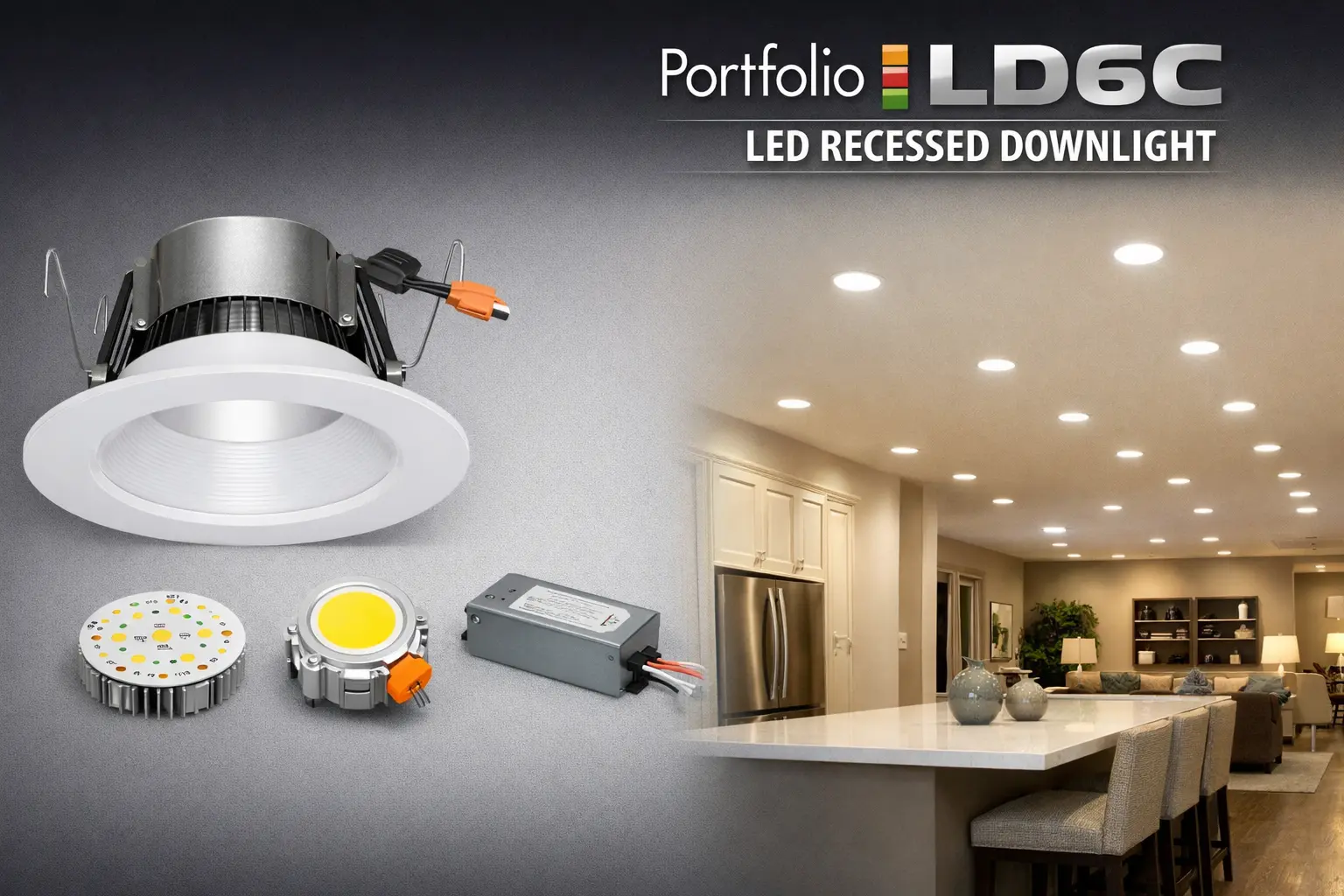
Fixing a dead or strobing Portfolio LD6C commercial architectural downlight is all about isolating the remote driver box, not tossing out the 6-inch metal ceiling housing. Because these high-output fixtures rely on external electronics to convert incoming building power, a sudden blowout usually means the independent driver pack inside the ceiling junction has overheated or stepped out of line with your wall switches.
Whenever I step onto a job site to deal with a dead commercial line or troubleshoot an older architectural layout, I pin down the component failure using these seven field rules:
- 1. Testing the Remote Driver First: If the light goes completely dark, I immediately bypass the LED array and test the independent driver block tucked inside the ceiling junction box; this standalone power converter fails long before the core LEDs ever wear out.
- 2. Spotting Dimmer Control Stutter: When these high-output lights start to strobe or flicker wildly, it means your wall controls are fighting the driver; I always check that the electronic dimmer matches the exact 0-10V or ELV protocol required by the system.
- 3. Measuring the Trim Ring Fit: The LD6C series uses proprietary reflector cones and mounting spring clips; forcing a standard residential home center trim onto these architectural frames leaves an uneven gap and drops the light engine out of alignment.
- 4. Tracking the Thermal Safety Switch: If the light runs fine for twenty minutes and then suddenly cuts out, the fixture is holding too much heat; I check the attic space to ensure loose insulation isn't smothering the non-IC rated metal canister.
- 5. Upgrading Retained Discontinued Castings: Since finding identical vintage factory replacement parts can be tough, I don't trace down obsolete stock; I drop a modern, high-efficiency commercial retro-fit engine directly into the existing 6-inch metal can.
- 6. Tracing Multi-Fixture Loop Breaks: When three downlights in a row go dark together, the trouble isn't inside the holes in your ceiling; I track back to the primary feed splice where the main power circuit joins the very first driver in the series.
- 7. Verifying Output mA Labels: If you do swap out a dead power pack, look closely at the label details; running a driver with incorrect milliamp output will permanently bake the delicate phosphor coatings off the main LED chip.
⚠️ CRITICAL ELECTRICAL RISK: Hooking an incorrect driver output up to a commercial downlight engine generates extreme heat friction, which permanently destroys the delicate circuit boards and creates a major fire hazard. Ignoring these power parameters triggers three distinct component failures that I map out inside our hardware guides below.
Whenever you are sizing up or comparing recessed ceiling systems, it helps to know exactly what hardware family you are holding. If you are weighing different options, take a quick look at my detailed DL and SL series specs guide to see exactly how those common residential setups differ from commercial LD-style architectural hardware when it comes to performance, framework depth, and trim fit.
Don't start pulling down heavy structural brackets or ordering random replacement parts blindly. Use my step-by-step wiring path diagrams, 0-10V control layout matrices, and direct retro-fit splicing instructions detailed further down this page to get your ceiling lights working flawlessly and safely.
Portfolio LD6C lighting is best understood as a targeted recessed-lighting search term. Most visitors using it are trying to confirm model identity, compare replacement options, or decide whether they need a bulb, trim, LED component, driver, or a full fixture change.
This page works best as a practical model-family guide. For related support, also review Portfolio recessed lighting, Portfolio adjustable downlights, Portfolio LED lighting, Portfolio lighting model number lookup, and Portfolio lighting compatibility guide. If your current fixture is flickering, dim, or not working correctly, go next to Portfolio LED lights flickering, Portfolio lighting too dim, or the main Portfolio lighting troubleshooting hub.
What Portfolio LD6C Lighting Usually Means
When people search for Portfolio LD6C lighting, they are usually talking about a recessed ceiling fixture family rather than a broad decorative category. In practical terms, that means this page should help you think about aperture size, downlight performance, trim style, ceiling application, and replacement strategy instead of wandering into unrelated indoor lighting categories.
That distinction matters because many Portfolio pages on this site are category-based. LD6C is different. It feels more like a model-driven search, and model-driven searches are often high-intent. The visitor is trying to solve a specific problem. Maybe you are replacing one failed unit in a room full of matching fixtures. Maybe you found an LD6C reference on a housing, trim, paperwork, or parts list. Maybe you want to know whether this is a recessed-lighting family worth keeping or a good moment to shift toward a more current LED solution.
What This Page Is Best For
- identifying where LD6C fits within indoor recessed lighting
- understanding whether your issue is bulb-related or fixture-related
- deciding whether trim, driver, LED component, or housing compatibility matters most
- sorting model-specific searches into the right replacement path
- linking you toward the correct recessed, LED, troubleshooting, or parts page next
If you are still not sure whether your ceiling setup belongs in this family, compare it against Portfolio recessed lighting, Portfolio cylinder lighting, and Portfolio flush mount lighting. Those pages help clarify whether you are truly working with recessed architecture or a different indoor fixture class.
Where LD6C Lighting Fits Best in a Home
Portfolio LD6C lighting makes the most sense when your room needs recessed-style ceiling illumination that feels architectural rather than decorative. That usually means spaces where you want the light source integrated into the ceiling plane instead of hanging into the room. Kitchens, hallways, larger living areas, transitional spaces, and some bathroom or utility locations can all fit that kind of lighting goal.
The bigger point is not the room label by itself. It is the job the fixture needs to do. A recessed 6-inch style light often works best when you want broad general illumination, cleaner sightlines, or a ceiling plan that disappears visually instead of calling attention to itself. It may not be the best answer if the room needs strong task direction, decorative character, or a visible fixture shape. In those situations, other Portfolio pages such as Portfolio pendant lighting, Portfolio track lighting, or Portfolio task lighting may be more useful.
LD6C Usually Makes the Most Sense When You Want:
- a cleaner ceiling look with less visible fixture clutter
- general room illumination instead of decorative emphasis
- recessed lighting that blends into the architecture
- more even lighting across a ceiling plan
- compatibility with a trim-and-housing style system rather than a simple portable fixture
What to Check Before Buying Portfolio LD6C Parts or Replacements
This is the part that saves people money. Before you buy anything connected to Portfolio LD6C lighting, slow down and identify what you actually have. Recessed lighting setups can look simple from below, but what matters is often hidden above or inside the visible trim line. If you skip that step, it becomes very easy to order the wrong part.
Checklist: What to Confirm First
- the exact model information from the housing, paperwork, or label
- whether your issue involves a bulb, integrated LED component, trim, or driver
- whether the fixture is part of a room-wide matching set that needs visual consistency
- whether dimming behavior or flicker is part of the problem
- whether the trim opening, ceiling cutout, and visible finish need to stay the same
- whether a direct replacement is available or whether compatibility research comes first
This is why some of the most useful next pages are Portfolio lighting model number lookup, Portfolio lighting manuals, Portfolio lighting compatibility guide, and Portfolio lighting installation and instructions. Those pages help you narrow the question before you spend time chasing the wrong part family.
| What You Notice | What It May Really Mean | Best Next Page |
|---|---|---|
| Light is dimmer than matching fixtures | Bulb aging, LED degradation, or driver issue | Portfolio Lighting Too Dim |
| Light flickers with dimmer use | Dimming mismatch, driver issue, or failing LED component | Portfolio LED Lights Flickering |
| Trim looks worn but light still works | Cosmetic refresh may matter more than electrical repair | Portfolio Lighting Parts and Accessories |
| Fixture does not match room lighting anymore | Color temperature or component mismatch | Portfolio LED Lighting |
| You cannot identify the component path | Model confirmation needed first | Portfolio Lighting Model Number Lookup |
Start With Troubleshooting Before Replacing Parts
If your LD6C lighting is flickering, dim, or not working, it helps to confirm the exact issue first. Use our Portfolio lighting troubleshooting guide to diagnose the problem before replacing parts.
Should You Replace the Bulb, Trim, LED Component, Driver, or Entire Fixture?
This is usually the real reason visitors search for Portfolio LD6C lighting. They are trying to decide how big the fix needs to be. The right answer depends on what failed and how much room you have for compatibility compromise.
If the room still works well, the housing remains sound, and your main goal is restoring light quality, then a smaller repair path may be enough. If the issue is broader, such as poor dimming behavior, inconsistent color, parts scarcity, or a fixture family that no longer makes sense for the room, then a larger replacement strategy can be the better long-term move.
When a Smaller Fix Often Makes Sense
- the trim still fits well and matches the room
- only one component appears to be failing
- the fixture family is still visually consistent with the rest of the ceiling plan
- you are trying to preserve the current aperture and ceiling finish
When a Bigger Replacement May Be Smarter
- you cannot confirm compatibility with confidence
- multiple fixtures in the room are aging poorly
- light output and color no longer feel right for the space
- you are dealing with repeated flicker, dimming, or reliability issues
- the room would benefit more from a broader LED refresh than a one-part repair
For more specific replacement-path help, continue to Portfolio lighting replacement LED modules and drivers, Portfolio light kits, Portfolio lighting bulb replacement, and where to buy Portfolio lighting replacement parts. Those pages are better for actual next-step purchasing logic, while this page is meant to help you understand the LD6C family first.
Common Portfolio LD6C Lighting Mistakes to Avoid
Most mistakes around LD6C lighting come from rushing the identification step. A recessed light opening can make several fixtures look similar from below, which tempts people to buy by appearance alone. That usually leads to frustrating returns, mismatched light quality, or a ceiling that no longer looks consistent when the lights are on at night.
Common Mistakes
- assuming every 6-inch recessed light uses the same replacement path
- ordering by visible trim only without checking the actual model family
- treating an LED driver issue like a simple bulb issue
- mixing different light tones in the same room
- replacing one fixture with a visibly different trim or beam effect
- ignoring dimmer compatibility when flicker is already part of the problem
- upgrading one fixture while forgetting the room needs visual consistency
If your project is becoming more of a whole-room refresh than a one-part repair, you may get more value from stepping back and comparing broader fixture categories such as Portfolio recessed lighting, Portfolio adjustable downlights, Portfolio surface mounted downlighting, and Portfolio energy efficient lighting. That kind of comparison is especially useful if the room lighting has become uneven over time.
Final Thoughts on Portfolio LD6C Lighting
Portfolio LD6C lighting is one of those searches that looks simple at first and then quickly turns into a compatibility decision. That is normal. Recessed lighting rarely gives you all the answers from the room view alone.
The best approach is to treat LD6C as a model-family research job first and a purchase decision second. Confirm what you have, decide whether the problem is cosmetic, electrical, or performance-related, and then move into the right support page. That keeps you from buying random parts and helps you preserve a cleaner, more consistent ceiling layout.
If you only remember one thing from this page, make it this: the right LD6C fix starts with identification, not guessing.
Most Common Portfolio LD6C Lighting Issues
- Light not turning on
- Flickering or dim output
- Incompatible LED replacement
- Driver or ballast failure
- Trim or housing mismatch
Portfolio LD6C Lighting FAQ
What is Portfolio LD6C lighting?
Portfolio LD6C lighting is generally used to describe a 6-inch recessed lighting family associated with downlight-style indoor ceiling applications. For most visitors, the real need is figuring out whether their bulb, trim, LED part, driver, or housing is the component that matters most.
Is Portfolio LD6C lighting mainly for indoor recessed use?
Yes, that is usually the most useful way to think about it. This page is positioned around indoor recessed and architectural ceiling lighting, not low-voltage landscape or outdoor transformer systems.
Should you replace the bulb, trim, LED module, or entire LD6C fixture?
That depends on what failed. If the issue is mainly output or appearance, a smaller component replacement may help. If compatibility, dimming, driver behavior, or broader aging is part of the problem, a larger replacement path can make more sense.
What pages should help with LD6C compatibility and replacement research?
Use Portfolio recessed lighting, Portfolio LED lighting, Portfolio lighting compatibility guide, Portfolio lighting replacement LED modules and drivers, and Portfolio lighting model number lookup.