
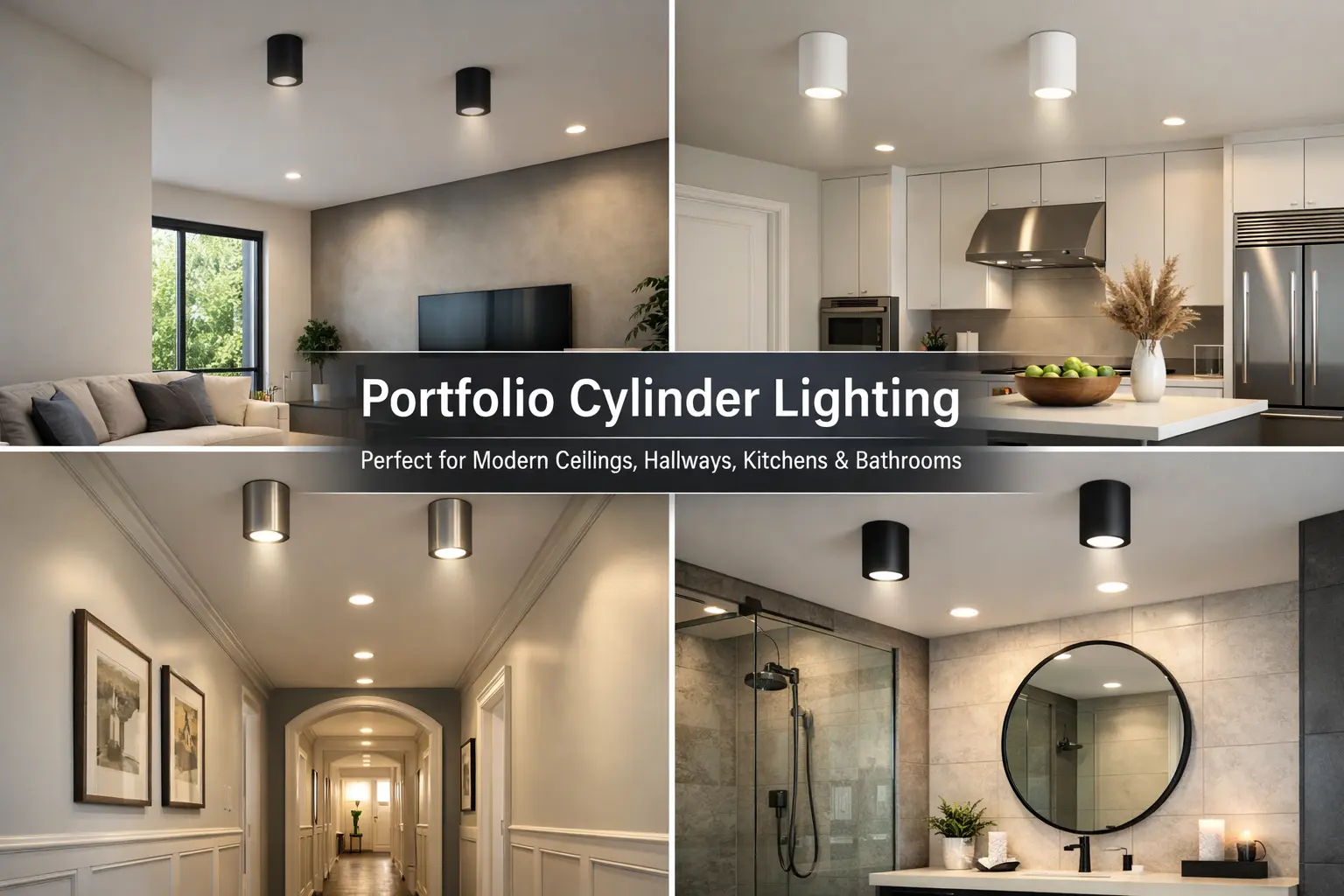
Quick Answer: Is Cylinder Lighting a Good Choice?
Cylinder lighting is a good choice when you want a visible, modern fixture with more focused light. It works best in hallways, entries, and accent areas—but it is not ideal for large rooms that need broad, even lighting.
- Best for: modern spaces, hallways, entries, accent lighting
- Not ideal for: large rooms or general lighting
- Better alternative for full coverage: flush mount or recessed lighting
Start Here: Should You Use Cylinder Lighting?
- Yes → if you want a modern visible fixture
- Yes → if you need focused or directional light
- No → if you need full-room brightness
- No → if you want hidden ceiling lighting
Common Cylinder Lighting Mistakes
- Using cylinder lights as the only light source
- Installing too few fixtures in larger rooms
- Ignoring ceiling height and fixture scale
- Choosing style without considering light coverage
The biggest reason people choose cylinder lighting is that it feels cleaner and more intentional than many standard fixtures. It gives you visible shape, directional control, and a more modern architectural look without automatically pushing the room into a harsh commercial style.
For a complete overview of how different lighting types work together, start with the lighting guide before choosing a fixture.
This page is part of a broader indoor lighting category. Explore Portfolio ceiling lighting for more fixture options and comparisons.
If you are still comparing related indoor fixture families, you may also want to look at Portfolio surface mounted downlighting, Portfolio recessed lighting, Portfolio adjustable downlights, Portfolio flush mount lighting, and Portfolio track lighting. If your issue is identifying an older product or finding instructions, use Portfolio lighting model number lookup and Portfolio lighting manuals.
Best Uses for Cylinder Lighting
- Hallways and entryways needing focused light
- Modern kitchens with clean ceiling design
- Bathrooms with minimal or architectural style
- Accent lighting where fixture shape matters
- Spaces where recessed lighting is not practical
When Cylinder Lighting Is NOT the Best Choice
- Large rooms needing broad, even light
- Low ceilings where fixtures feel bulky
- Traditional rooms where modern fixtures look out of place
- Spaces where hidden lighting is preferred
Why Cylinder Lighting Sometimes Feels Like the Wrong Choice
- Does not provide enough light for larger rooms
- Creates uneven brightness when used alone
- Feels too modern for traditional spaces
- Becomes visually distracting in low ceilings
- Used as the only light source instead of part of a layered plan
Why People Search for Cylinder Lighting
- Looking for a modern alternative to recessed lighting
- Trying to replace a flush mount ceiling light
- Wanting more focused or directional lighting
- Comparing cylinder lights vs track or downlights
- Deciding if cylinder fixtures will fit their room
What Portfolio Cylinder Lighting Is
Portfolio cylinder lighting usually refers to round, tube-shaped fixtures that mount to a ceiling or wall and direct light downward, upward, or in a more controlled beam than many standard fixtures. These lights are popular because they feel more architectural than a basic flush mount, but they are still simpler and more visible than recessed cans.
In practical terms, cylinder lighting often appeals to homeowners who want a room to look more current without making it feel overly complicated. A cylinder fixture can give an entry, hallway, kitchen, or bathroom a cleaner and more modern look while also improving how the light is aimed and distributed. That is especially useful in rooms where broad, flat light does not feel strong enough or where you want the fixture itself to contribute to the overall style.
This category also matters because “cylinder lighting” is often misunderstood. Some people assume it is just another form of recessed lighting. Others think it is purely decorative. In reality, it can be both useful and stylish. It is often chosen when you want more beam control, more fixture presence, and a shape that feels intentional in a modern or transitional room.
Where Portfolio Cylinder Lighting Works Best
Cylinder lighting is not the right answer for every room, but when it fits, it can look excellent. These fixtures tend to work best in spaces where focused light, a modern silhouette, and a visible ceiling or wall fixture all make sense together.
Hallways and Entries
Hallways and entries are strong candidates because cylinder lights can create a cleaner architectural feel than many older flush fixtures. If the home has a modern or updated look, cylinder lighting can help the entry sequence feel more deliberate and better lit.
Kitchens and Task-Oriented Areas
In kitchens, cylinder fixtures can be useful where a more directed beam is helpful. They often make more sense in supporting locations rather than as the only source of light in a large kitchen. They can work well over circulation areas, transitional spaces, or visually where you want a more contemporary ceiling line.
Bathrooms, Bedrooms, and Modern Living Spaces
In bathrooms, bedrooms, and living spaces, cylinder lighting usually works best when it complements other fixtures rather than trying to do everything alone. It can support a clean, minimal look while still adding visual character to the ceiling or wall.
| Room or Area | Why Cylinder Lighting Can Work | What to Watch For |
|---|---|---|
| Entry or foyer | Creates a modern, intentional first impression | Fixture scale and ceiling height |
| Hallway | Adds focused light and architectural rhythm | Spacing and glare |
| Kitchen support areas | Works well for controlled general light | Do not rely on it for every lighting job |
| Bathroom | Clean modern look in smaller ceiling zones | Moisture suitability and balance with vanity light |
| Modern living space | Fixture shape supports a more updated design style | Needs to fit the room’s broader lighting plan |
If your real project is more task-driven than style-driven, also compare Portfolio task lighting, Portfolio linear lighting, and Portfolio LED lighting.
Some Portfolio cylinder fixtures belong to decorative residential families, while others use commercial housings, optics, drivers, and control packages. The visual shape alone does not reveal whether the fixture accepts a standard lamp, a replaceable LED engine, or a matched constant-current driver. The Portfolio commercial lighting guide helps separate these product families and shows what label information is needed before sourcing a cylinder, driver, reflector, emergency component, or complete replacement.
Cylinder Lights vs Recessed, Flush Mount, and Track Lighting
One of the best ways to decide whether cylinder lighting is right for you is to compare it to the other fixture families it often competes with. This is where search intent becomes very practical, because many visitors are not committed to cylinder fixtures yet. They are still deciding which type of indoor light fits the room best.
Cylinder lighting works best as part of a full layout. See the indoor lighting layout guide to understand fixture spacing and layering.
Cylinder Lighting vs Recessed Lighting
Recessed lighting is usually the better choice when you want the ceiling to stay visually quiet. Cylinder lighting is usually the better choice when you want more fixture presence and a more architectural look. If the room needs hidden, broad ceiling light, recessed may fit better. If you want a modern visible fixture with more character, cylinder can make more sense.
Cylinder Lighting vs Flush Mount Lighting
Flush mount fixtures often provide softer, broader general light and are usually more traditional or more neutral in appearance. Cylinder fixtures feel more focused and more modern. They are often chosen for visual intent as much as light output.
Cylinder Lighting vs Track or Adjustable Downlights
Track lighting and adjustable downlights are often stronger when directional flexibility is the priority. Cylinder lighting is often stronger when you want a simpler, cleaner form and do not need the fixture to adjust as much.
For those comparisons, use Portfolio recessed lighting, Portfolio flush mount lighting, Portfolio track lighting, and Portfolio adjustable downlights.
How to Choose the Right Portfolio Cylinder Fixture
The right cylinder fixture depends on a few practical questions. How visible do you want the fixture to be? Is the room modern, transitional, or more traditional? Is the cylinder going to support general light, highlight a zone, or work with other fixtures in a layered plan? Those questions matter more than just picking a finish and hoping it works.
If you are planning lighting for an entire room, use the room-by-room lighting plan guide to build a balanced layout.
Think About Room Style First
Cylinder lighting usually fits best in modern, updated, minimalist, or transitional spaces. That does not mean it can never work elsewhere, but it tends to look strongest when the room already supports a cleaner design language.
Think About Beam and Coverage Next
A cylinder fixture can feel more focused than a broader ceiling light. That can be a benefit if the room needs more directed light, but it can also mean you need additional fixtures or layers elsewhere. This is especially important in kitchens, bathrooms, and larger circulation areas.
Think About the Whole Room, Not Just One Fixture
Good indoor lighting usually works in layers. A cylinder fixture may be part of the solution rather than the whole solution. In some rooms, it works best alongside vanity lights, lamps, under-cabinet lights, or other ceiling fixtures.
If your project is tied to a broader indoor-lighting plan, also look at Portfolio bathroom lighting, Portfolio under cabinet lighting, Portfolio wall lighting, and Portfolio pendant lighting.
When to Repair vs Replace Older Portfolio Cylinder Lights
If you already have older Portfolio cylinder lighting installed, the next question is usually whether it is worth repairing. That depends on what kind of fixture it is and what actually failed. Some issues are small and manageable. Others are signs that replacement is the better long-term move.
If the problem is a bulb, a simple visible hardware issue, a cover detail, or another part that can be matched without much trouble, repair may make sense. That is especially true if the fixture still suits the room and the rest of the set is in good shape. But if the finish is dated, the light output is not right for the room, or the exact match is too hard to find, replacement often becomes the smarter and cleaner path.
If you need help identifying an older model or locating supporting information first, use Portfolio lighting model number lookup, Portfolio lighting manuals, and Portfolio lighting parts and accessories.
Final Thoughts on Portfolio Cylinder Lighting
Portfolio cylinder lighting works best when you want a visible modern fixture that still feels practical. It is a strong option for hallways, entries, bathrooms, kitchens, and other indoor areas where the room benefits from more focused light and a cleaner architectural shape. It is not automatically better than recessed or flush-mount lighting, but it can be a much better fit when the visible fixture form is part of the room’s appeal.
That is what makes this category useful on its own. It gives visitors a clear place to understand what cylinder lighting is, where it fits, how it compares to nearby fixture categories, and what to do next whether they are buying, comparing, troubleshooting, or replacing an older Portfolio light. That clearer intent should make the page stronger for both visitors and search performance.
Cylinder Lighting vs Other Fixtures (Simple Decision Guide)
- Cylinder: visible, modern, directional
- Recessed: hidden, clean ceiling look
- Flush mount: broad, even room lighting
- Track lighting: adjustable and flexible
Portfolio Cylinder Lighting FAQ
What is Portfolio cylinder lighting?
Portfolio cylinder lighting usually refers to round, tube-shaped fixtures used for focused ceiling or wall lighting. These fixtures are often chosen for a clean modern look and for directional or controlled light output.
Where does cylinder lighting work best?
Cylinder lighting often works best in hallways, kitchens, entries, bathrooms, modern living spaces, accent zones, and other areas where you want a cleaner architectural look with more focused light.
Is cylinder lighting better than recessed lighting?
Not always. Cylinder lighting and recessed lighting serve different design goals. Cylinder fixtures are often chosen when you want the fixture to be visible as part of the room design, while recessed lighting is used when you want a more hidden ceiling look.
Should older Portfolio cylinder lights be repaired or replaced?
That depends on the fixture type and the failure. Some older Portfolio cylinder lights can still be repaired if the issue is a bulb, trim piece, hardware component, or another manageable part. Replacement is often smarter when the fixture is heavily dated, damaged, or not practical to match.
This page covers how Portfolio cylinder lighting works, where it fits best, and how it compares to other indoor fixture options. It is designed to help you decide if cylinder lighting is the right choice for your space, or if another type of lighting would work better.