
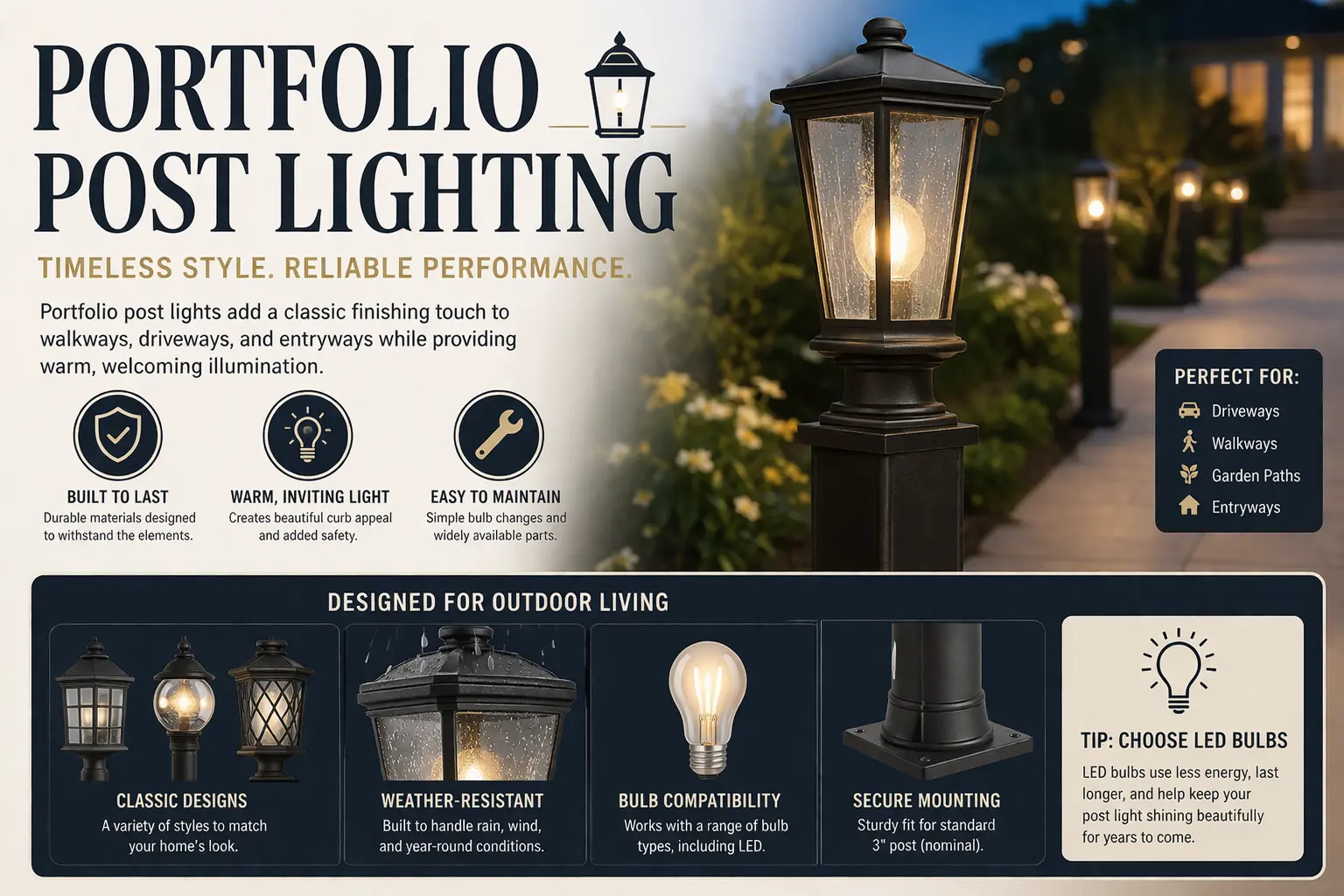
Quick Answer: What Is Portfolio Post Lighting?
Portfolio post lighting is a type of outdoor light fixture mounted on top of a post or column, used to illuminate key areas like driveways, walkways, gates, patios, and entry points. It provides more coverage and visual presence than path lights while offering a softer, more decorative effect than harsh flood lights.
Homeowners use post lights to improve visibility, enhance curb appeal, and define important transitions in the landscape. When placed correctly, post lighting helps guide movement, highlight entrances, and create a more balanced and finished outdoor lighting design.
Quick Decision: Is Post Lighting Right for You?
- Use post lights if: you want to define entrances or driveways
- Use post lights if: path lights feel too small
- Use post lights if: you want a decorative focal point
- Avoid if: you need wide-area flood lighting
A well-chosen post light can do more than illuminate one small area. It can help define the entrance to a home, improve curb appeal, make outdoor movement safer, and tie together other exterior fixtures like wall lanterns, deck lights, and landscape accents.
The strongest post lighting pages answer real homeowner questions, so this guide focuses on how post lights are used, what styles work best, and how to choose the right Portfolio post lighting setup for your space and budget.
Post lighting works best when it marks a transition—like an entrance, turn, or gathering space.
If your current light is broken, flickering, or outdated, start here:
Why Portfolio Post Lighting Works So Well Outdoors
Post lighting fills a very practical role in outdoor design. It is tall enough to be noticeable, strong enough to define a space, and flexible enough to work in both decorative and functional areas. That makes it a great option for homeowners who want more than simple path lighting but do not want the harder look of security-style fixtures.
Portfolio post lights are often used where people naturally enter, turn, pause, or gather. Think driveway entries, walkway transitions, patio edges, pier columns, mail areas, fence posts, and garden boundaries. In those spots, a post light helps guide movement while also making the space feel more finished.
Another reason post lighting remains popular is that it works with many different home styles. A lantern-inspired post light can look right at home with traditional or craftsman exteriors, while cleaner lines and simpler metal forms fit better with more modern homes. That flexibility gives buyers room to choose lighting that actually matches the character of the property.
If you are planning a full layout, it helps to review a complete lighting design guide so your post lights work with the rest of your outdoor setup.
If you are comparing options, see Portfolio path lights to understand when lower-profile lighting is a better fit than post lighting.
Best Places to Use Portfolio Post Lights
One of the easiest ways to get more value from post lighting is to install it where it solves both a lighting problem and a design problem. The right post light can mark a transition, improve safety, and make an otherwise plain area feel intentional.
For a complete outdoor layout, use the landscape lighting layout design guide to position fixtures for balance and visibility.
Driveway Entrances
A post light near the driveway entrance can make the home easier to find at night and add a stronger sense of arrival. This is especially useful on longer driveways or homes where the front elevation sits back from the road.
Walkways and Gate Areas
Post lights are a natural fit where a walkway begins, where a path turns, or where a gate opens into a backyard or side yard. They provide more presence than a path light and often work well as a visual anchor at key points in the landscape.
Patios, Courtyards, and Outdoor Living Spaces
In outdoor living areas, post lighting can help define the perimeter and add a warmer, more architectural feel than low fixtures alone. If that is part of your project, it also helps to review Portfolio deck lighting and Portfolio wall lantern so the overall look stays consistent.
Pier Mount and Column Installations
Some homeowners use post-style fixtures on masonry columns, gate piers, or entry walls instead of on full poles or posts. That approach can look especially strong near front walks, garden walls, or driveway columns where a taller standalone post is not necessary.
Post Lights Need Glare Control, Not Just Bright Bulbs
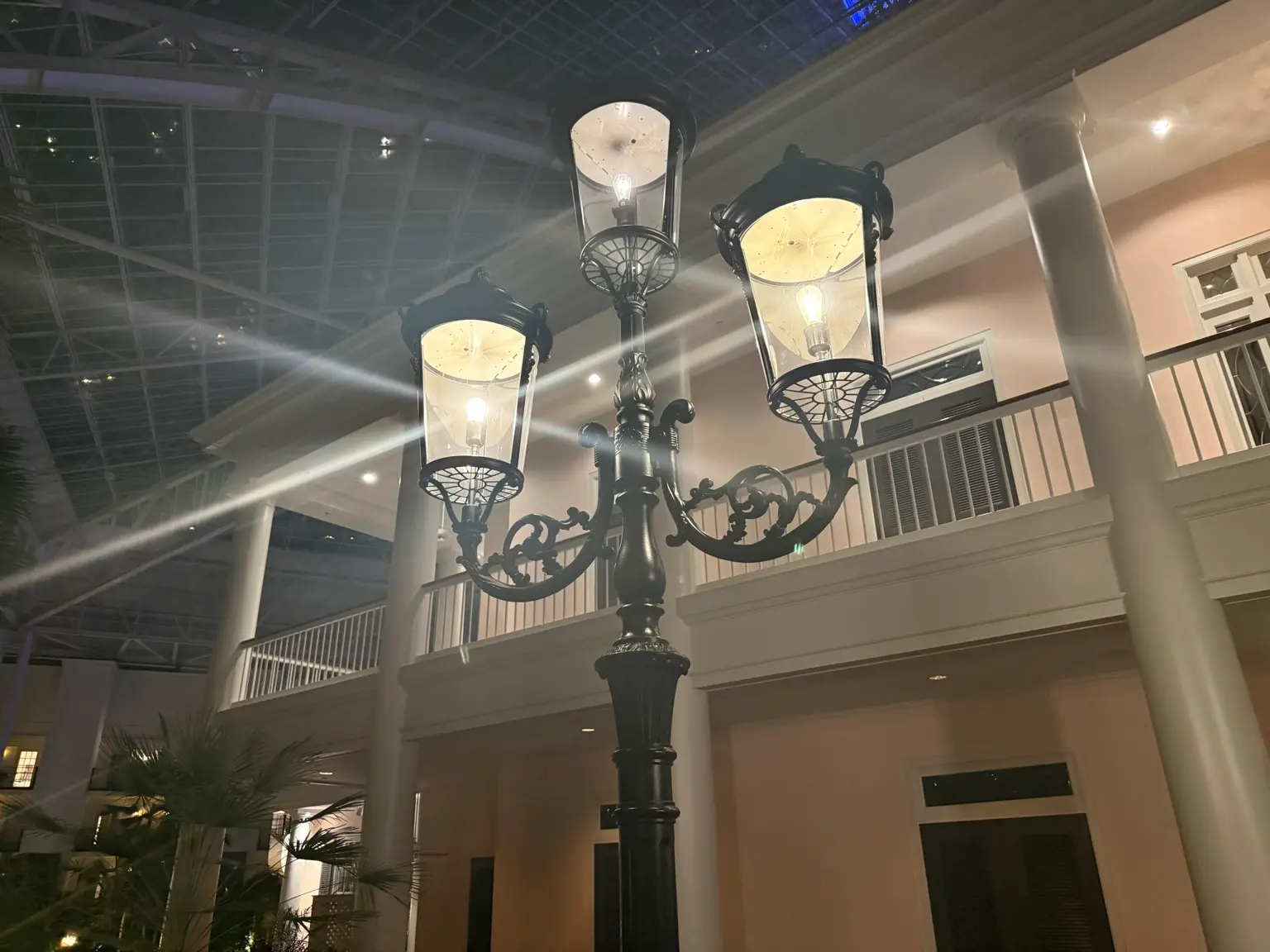
Post lights are often placed near entries, paths, patios, and driveways, so glare matters. A very bright exposed bulb can make the fixture look dramatic in a photo but uncomfortable in daily use.
For Portfolio post lighting, choose the bulb carefully. Match the fixture size, glass style, lumen output, color temperature, and viewing angle so the light improves visibility without shining directly into people’s eyes.
Common Post Lighting Mistakes
- Choosing the wrong size: too small disappears, too large looks bulky
- Poor placement: lights installed too far from entry points
- Too bright: creates glare instead of usable light
- Mismatched fixtures: does not match wall or landscape lighting
Post Light Buying Guide: What to Compare First
Choosing the right post light is not just about liking the shape of the fixture. Buyers usually get better results when they compare scale, finish, glass style, light output, and mounting type before ordering.
If you need wider coverage instead of decorative lighting, compare with Portfolio flood lighting to see when higher-output fixtures make more sense.
If your system uses wired outdoor lighting, see Portfolio low voltage lighting to understand how post lights connect to transformers and wiring.
If you are unsure how many lights your space needs, use this lighting spacing and planning guide to avoid over-lighting or under-lighting your entry.
Post lights often create visible glare if the light source is exposed. To understand how glare and uplight are evaluated, review the BUG rating explanation before choosing or replacing fixtures.
| Buying Factor | Why It Matters | What to Check |
|---|---|---|
| Fixture size | A post light should fit the post, column, or entry area | Too small can disappear, too large can feel heavy |
| Finish | It affects how the fixture works with the home exterior | Compare nearby wall lights, railings, and hardware |
| Glass style | Changes both look and brightness | Clear glass is brighter; frosted glass softens glare |
| Mount type | Not every light installs the same way | Check post top vs pier mount compatibility |
| Bulb or LED setup | Affects maintenance and long-term cost | Verify replacement bulb or integrated LED details |
Popular Portfolio Post Light Styles
Most buyers end up choosing a post light style based on the home itself rather than on the fixture alone. That is usually the right approach. A post light should feel like it belongs with the architecture and the rest of the exterior lighting, not like a random upgrade from a different house.
Traditional Lantern Style
Traditional post lights remain one of the safest choices because they work with so many exterior materials. They often feature lantern-inspired forms, visible glass panels, and finishes like black or bronze that blend easily with brick, siding, and stone.
Contemporary Post Lighting
Homes with simpler architecture often look better with cleaner post lighting lines. A more modern fixture can still feel warm and inviting if the scale is right and the light output is not too harsh.
Craftsman and Mission Looks
Craftsman-style post lights can be a great fit for homes with strong trim details, columns, and more architectural character. These fixtures often feel grounded and work especially well around porches, front walks, and entry walls.
LED Post Lighting
LED post lights are popular because they can reduce maintenance and keep outdoor lighting more efficient over time. Buyers who want longer bulb life and simpler upkeep often lean toward LED designs, especially for lights that stay on regularly throughout the year.
How to Choose the Right Portfolio Post Lighting for Your Home
Start by deciding what the light needs to do. Is the goal better visibility, stronger curb appeal, or a more finished entry? If the post light is mostly decorative, style and scale matter most. If it is mainly functional, brightness and placement become more important.
Next, think about what surrounds the fixture. A post light should feel connected to nearby exterior features. That includes the color of the home, the size of the post or column, nearby garage lights, and even the look of the front door hardware. Small details matter more outdoors because the fixture is often viewed from a distance.
It also helps to think in terms of a complete outdoor lighting plan. A post light rarely works alone. It may sit near a porch lantern, path lights, deck lighting, or low voltage landscape accents. For that reason, pages like Portfolio landscape lighting, Portfolio path lights, Portfolio outdoor transformer lighting, and Portfolio low voltage lighting can all help if your project extends beyond one fixture.
For more detailed placement strategies, see Portfolio lighting placement to position fixtures correctly across your property.
Post Lights vs Other Outdoor Lighting
| Type | Best Use |
|---|---|
| Post lights | Entrances, driveways, focal points |
| Path lights | Walkways and ground-level lighting |
| Flood lights | Wide-area security lighting |
Post Lights, Replacement Parts, and Installation Help
Sometimes a post light does not need to be fully replaced. If the glass is cracked, the hardware is worn, or the bulb setup is the real issue, a repair may make more sense than a complete fixture swap. That is especially true when the current light still matches the rest of the house.
If your current fixture is flickering, broken, or not working the way it should, start with Portfolio lighting troubleshooting. If the issue appears to be physical wear, missing hardware, or a replacement component, visit Portfolio lighting parts and accessories. And if you are planning a full replacement, use Portfolio lighting installation and instructions to review setup details before you begin.
If you want inspiration for combining post lights with other fixtures, see Portfolio landscape lighting ideas.
Common Portfolio Post Lighting Mistakes to Avoid
Choosing the Wrong Size
Post lights that are too small disappear, while oversized fixtures can look out of place. Scale matters more than most buyers expect.
Poor Placement
Installing a post light in the wrong location can create shadows or uneven lighting. Focus on entrances, transitions, and focal points.
Ignoring Surrounding Fixtures
Post lights should match nearby wall lanterns, path lights, and other fixtures for a cohesive look.
Too Much Brightness
Brighter is not always better. Post lighting works best when it complements the space instead of overpowering it.
Portfolio Post Lighting FAQ
What is Portfolio post lighting used for?
Post lighting is commonly used for driveway entrances, gates, walkways, patios, front yard features, and pier-mounted columns where a more visible outdoor light is needed.
Are post lights the same as pier mount lights?
Not exactly. They are closely related, but some fixtures are designed for full posts while others are designed to sit on top of masonry columns or piers.
What style post light works best?
The best style depends on the home. Traditional lantern looks work well for many exteriors, while cleaner fixtures often fit more modern homes.
Should post lights match wall lanterns?
Usually yes. Outdoor lighting looks more polished when post lights, wall lanterns, and other nearby fixtures share a similar finish or overall design direction.
More Portfolio Lighting Guides
Portfolio Outdoor Lighting
Explore more outdoor fixture types for porches, patios, walkways, gardens, and entry areas.
Read the guidePortfolio Wall Lantern
Compare post lights with wall lanterns if you want a coordinated entry and porch lighting plan.
Read the guidePortfolio Path Lights
Useful if you want lower accent lighting to work alongside post lights in the same landscape design.
Read the guidePortfolio Landscape Lighting
Main hub for outdoor lighting ideas, path lights, transformer setups, and landscape planning.
Read the guidePortfolio Lighting Parts and Accessories
Helpful if you need replacement bulbs, glass, hardware, or compatible parts before replacing the full fixture.
Read the guideBuy Portfolio Lighting
Browse more Portfolio lighting categories if you are comparing post lights with other indoor and outdoor options.
Read the guide