
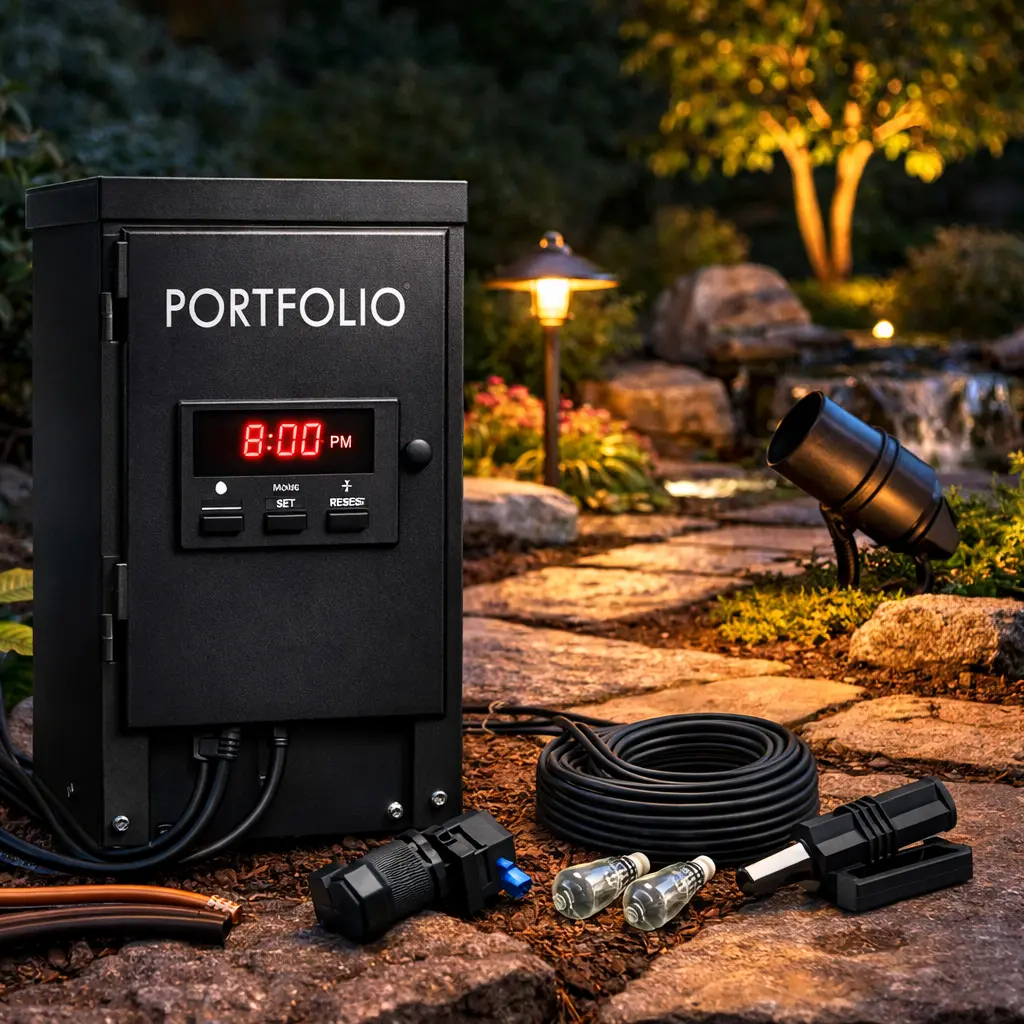
Portfolio Lighting transformer and control checks
Use this Portfolio Outdoor Transformer Not Working? Replacement, Sizing & Troubleshooting Guide guide alongside the label on your existing Portfolio transformer or control. Record the model number, electrical ratings and timer or photocell arrangement before selecting replacement parts or changing the wiring.
For Portfolio Outdoor Transformer Not Working? Replacement, Sizing & Troubleshooting Guide, start with evidence from the installed power equipment rather than a visually similar replacement. Record the exact model label, input/output ratings shown on the unit, terminal arrangement, control method, outgoing cable runs, and which runs still operate. That information separates a supply/control problem from a downstream cable, connector, or fixture fault and gives you a defensible replacement specification if repair is not practical. Use Portfolio Parts for the next model- or symptom-specific step.
Quick Answer
If your Portfolio outdoor transformer is not working, start by checking outlet power, the GFCI, timer settings, photocell behavior, and total system load before replacing the unit.
- Check whether the outlet has power
- Reset the GFCI if needed
- Review timer and photocell settings
- Look for overload, buzzing, or heat
- Replace the transformer if power is unstable or the unit keeps failing
If your low voltage landscape lights are dim, buzzing, inconsistent, or completely out, the transformer is one of the first things to check. This page helps you understand how Portfolio outdoor transformers work, what usually goes wrong, and how to choose the right next step.
Start here if you are troubleshooting a problem, comparing replacement options, or trying to figure out whether your current transformer is undersized, overloaded, or simply wearing out.
Many older transformers are still reliable and do not need to be replaced. Our legacy transformer retrofit guide explains how to upgrade controls and improve performance without installing a new unit.
Outdoor transformer lighting depends on more than wattage. Before mounting the unit, check the outdoor lighting transformer mounting code requirements for height above grade, siding safety, ventilation, GFCI protection, drip loops, and clearance from water or gas hazards.
Start With Your Transformer Problem or Goal
Most homeowners searching for a Portfolio outdoor transformer are trying to solve a specific issue or choose the right replacement. The fastest way to get results is to start with the exact problem or goal instead of guessing.
- Transformer not working
- Transformer buzzing
- Transformer getting hot
- Choosing the right transformer size
- Replacing a transformer
Once you match your situation, the rest of this guide will help you understand what to check, what to fix, and what to replace.
Why a Portfolio Outdoor Transformer Stops Working
Most transformer problems come down to a few common causes: no power at the outlet, a tripped GFCI, timer or photocell settings, overload, damaged wiring, or internal transformer wear. If every light in the system is affected at once, the transformer is usually the best place to start.
- No power reaching the transformer
- Photocell or timer settings keeping lights off
- Transformer overload from too many fixtures
- Buzzing, clicking, or overheating
- Output dropping across long cable runs
Identify the Portfolio transformer before making changes
For Portfolio Outdoor Transformer Not Working? Replacement, Sizing & Troubleshooting Guide, start with evidence from the installed power equipment rather than a visually similar replacement. Record the exact model label, input/output ratings shown on the unit, terminal arrangement, control method, outgoing cable runs, and which runs still operate. That information separates a supply/control problem from a downstream cable, connector, or fixture fault and gives you a defensible replacement specification if repair is not practical. Use Portfolio Parts for the next model- or symptom-specific step.
How Portfolio Outdoor Transformers Work
A Portfolio outdoor transformer takes standard household electricity and converts it into the lower voltage used by most landscape lighting systems. That lower voltage is what allows path lights, garden lights, deck lights, and spotlights to run safely through outdoor low voltage cable instead of full household wiring throughout the yard.
In a typical setup, the transformer connects to an outdoor power source, then feeds power through cable runs to the different fixtures in the system. Many homeowners compare Portfolio lighting transformers when an older unit stops working or no longer supports the number of lights in the yard.
Outdoor transformers do more than simply power landscape lights—they also determine how reliably the entire system performs over time. If your current unit is aging, underpowered, or no longer working properly, upgrading to a complete replacement kit can be a smart move. Our Portfolio landscape lighting transformer replacement kits guide explains how these kits work, what parts they usually include, and how to choose a replacement transformer kit that fits the needs of your current outdoor lighting layout.
Why Transformers Matter in Low Voltage Landscape Lighting
The transformer is more than a power box. It is the part of the system that determines whether the lighting layout has enough capacity to operate correctly. If the transformer is undersized, overloaded, or failing, the result can be dim lights, flickering fixtures, lights that shut off unexpectedly, or a system that will not turn on at all.
This is one reason many homeowners replace the transformer before they replace the lights themselves. In older systems, the fixtures may still be usable while the transformer has become the weak point. If that sounds familiar, it can help to compare Portfolio outdoor transformers and review the system load before buying anything else.
| Transformer Function | Why It Matters | What Happens If It Fails |
|---|---|---|
| Voltage conversion | Allows low voltage outdoor fixtures to operate safely | The full system may stop working |
| Power distribution | Supplies electricity to every light on the line | Some or all fixtures may go dark |
| Load handling | Supports the total wattage of the lighting layout | Lights may dim, flicker, or overload the unit |
| Timer and sensor control | Helps lights turn on and off at the right time | Lights may stay on, stay off, or behave inconsistently |
Timers, Photocells, and Control Features
Many outdoor transformers include built-in controls that make landscape lighting easier to manage. Common features include countdown timers, dusk-to-dawn photocells, or manual override modes. These controls are helpful, but they can also create confusion if the settings are wrong or the sensor is no longer working properly.
That is why some transformer problems look like wiring problems at first. A light that never turns on may simply be on the wrong timer setting. A system that stays on all day may have a photocell issue rather than a bad fixture. Review the control settings before replacing major parts.
Transformer-based systems are only as strong as the controls behind them. See our edge vs cloud lighting guide to learn why local processing can keep outdoor lighting responsive even when internet-based systems fail.
If you are exploring what a smarter outdoor transformer can do beyond timer-based control, see predictive arrival lighting behavior patterns. It explains how AI-enabled transformers can use learned arrival timing, sunset conditions, and phone proximity to trigger lighting more intelligently.
Outdoor transformers do more than power fixtures—they also shape how the lighting behaves at night. See how to reduce light pollution with smart outdoor lighting control to learn how dimming, warm-light settings, and late-night curfews can improve a transformer-based system.
A well-controlled lighting system depends heavily on timing and power management. Reducing unnecessary runtime is one of the easiest ways to improve efficiency and reduce glare. Learn how proper scheduling fits into a larger strategy for outdoor lighting regulations and dark sky compliance.
Which Portfolio Transformer Do You Need?
Choosing the right transformer depends on the total number of lights, the type of fixtures, and how your landscape lighting is wired. The most important factor is matching the transformer capacity to the system load.
Many older Portfolio outdoor transformers use legacy terminals, older photocell systems, or discontinued connector styles. Compare them in the Portfolio Lighting Master Model Technical Database before rewiring or replacing parts.
- Small systems: 100W–150W transformers
- Medium systems: 200W–300W transformers
- Large systems: 300W–600W transformers
If the transformer is too small, lights may appear dim or fail to turn on. If it is too large, the system may still work, but efficiency and control features may not match the layout.
I built a master transformer page that I included within this guide to help assist in finding the right transformer. Many of the discontinued transformers can be found at secondary outlet, but othr alternative lighting options may be available. I'll be updating this page as I find more alternatives.
For a detailed breakdown, see the Portfolio transformer sizing guide.
Outdoor transformers often struggle most during long summer runtimes or high-load conditions. See thermal throttling protection for outdoor lighting systems to understand how smarter heat management can prevent shutdowns and extend transformer life.
Outdoor transformers are often the foundation for seasonal lighting upgrades. See how to automate holiday lighting themes to learn how date-based themes, color changes, and app control can be added on top of an existing transformer system.
What to Look For Before Buying a Portfolio Outdoor Transformer
Buying the right outdoor transformer usually comes down to matching the transformer to the size and needs of the lighting system. The most important things to compare are total fixture load, cable run length, timer or photocell features, weather protection, and whether you expect to add more lights later.
- Check how many path lights, spotlights, and deck lights are on the system
- Compare the transformer capacity to the total fixture load
- Consider whether the system may expand later
- Look for timer and photocell features that fit how you want the lights controlled
- Confirm the transformer is designed for outdoor low voltage landscape lighting
- Review whether a replacement model needs to match the current wiring layout
If you are shopping for a replacement, it can also help to compare Portfolio landscape lighting transformers and low voltage landscape transformers side by side instead of choosing only by appearance.
Modern transformer upgrades often depend on better connectivity, not just better hardware. See Matter and Thread connectivity for outdoor lighting to understand how older transformer systems can join a more reliable local control network.
All Landscape Lights Are Out
If every light in your system is out, start with the transformer, outlet, GFCI, breaker, and timer settings before replacing bulbs or fixtures.
When all lights fail at once, the cause is usually power loss, a tripped protection device, or a transformer that is no longer sending output through the low voltage cable.
Check the Portfolio system from power source to fixtures
For Portfolio Outdoor Transformer Not Working? Replacement, Sizing & Troubleshooting Guide, start with evidence from the installed power equipment rather than a visually similar replacement. Record the exact model label, input/output ratings shown on the unit, terminal arrangement, control method, outgoing cable runs, and which runs still operate. That information separates a supply/control problem from a downstream cable, connector, or fixture fault and gives you a defensible replacement specification if repair is not practical. Use Portfolio Parts for the next model- or symptom-specific step.
Common Portfolio Outdoor Transformer Problems
Transformer-related problems usually show up in a few common ways. Sometimes the entire system goes dark. Sometimes the transformer buzzes or clicks. Other times, the lights come on only part of the time, stay on when they should not, or appear weak at the far end of the cable run.
All Lights Are Out
When every light in the system is dark, start with the outlet, GFCI, breaker, and transformer. If those are working, the transformer may not be supplying power properly.
Buzzing or Clicking Transformer
Buzzing or clicking often points to overload, internal wear, or a short somewhere in the system. This is one of the most common reasons homeowners search for a replacement transformer.
Timer or Photocell Problems
If the lights turn on at the wrong time, stay off after dark, or remain on during the day, the timer or sensor settings may need attention before the transformer itself is replaced.
Dim or Inconsistent Lights
Dim fixtures can point to voltage drop, an overloaded transformer, long cable runs, or poor connections. This is especially common in larger yards where lights are spread across multiple areas.
If you are working with an outdoor Portfolio transformer and the biggest concern is heat, our Portfolio transformer getting hot guide is the best next step. It explains why some low voltage transformers run warm during normal operation, what can make an outdoor transformer run too hot, and what to check before deciding the unit itself needs to be replaced.
Portfolio Transformer Buzzing or Clicking
A buzzing or clicking transformer usually points to overload, internal wear, a short in the system, or unstable power.
If the transformer is buzzing and the lights are dim, flickering, or inconsistent, check the total load, wiring condition, and whether the unit is running hot before choosing a replacement.
Portfolio Transformer vs Generic Low Voltage Transformers
Some homeowners consider switching to a generic transformer instead of replacing a Portfolio unit. While many low voltage transformers work similarly, compatibility, wiring layout, and control features can vary.
- Portfolio transformers: designed for matching systems and easier replacement
- Generic transformers: may require wiring adjustments or different connectors
Before switching brands, confirm voltage compatibility, wiring type, and load capacity to avoid performance issues.
Outdoor Lighting Systems Powered by a Transformer
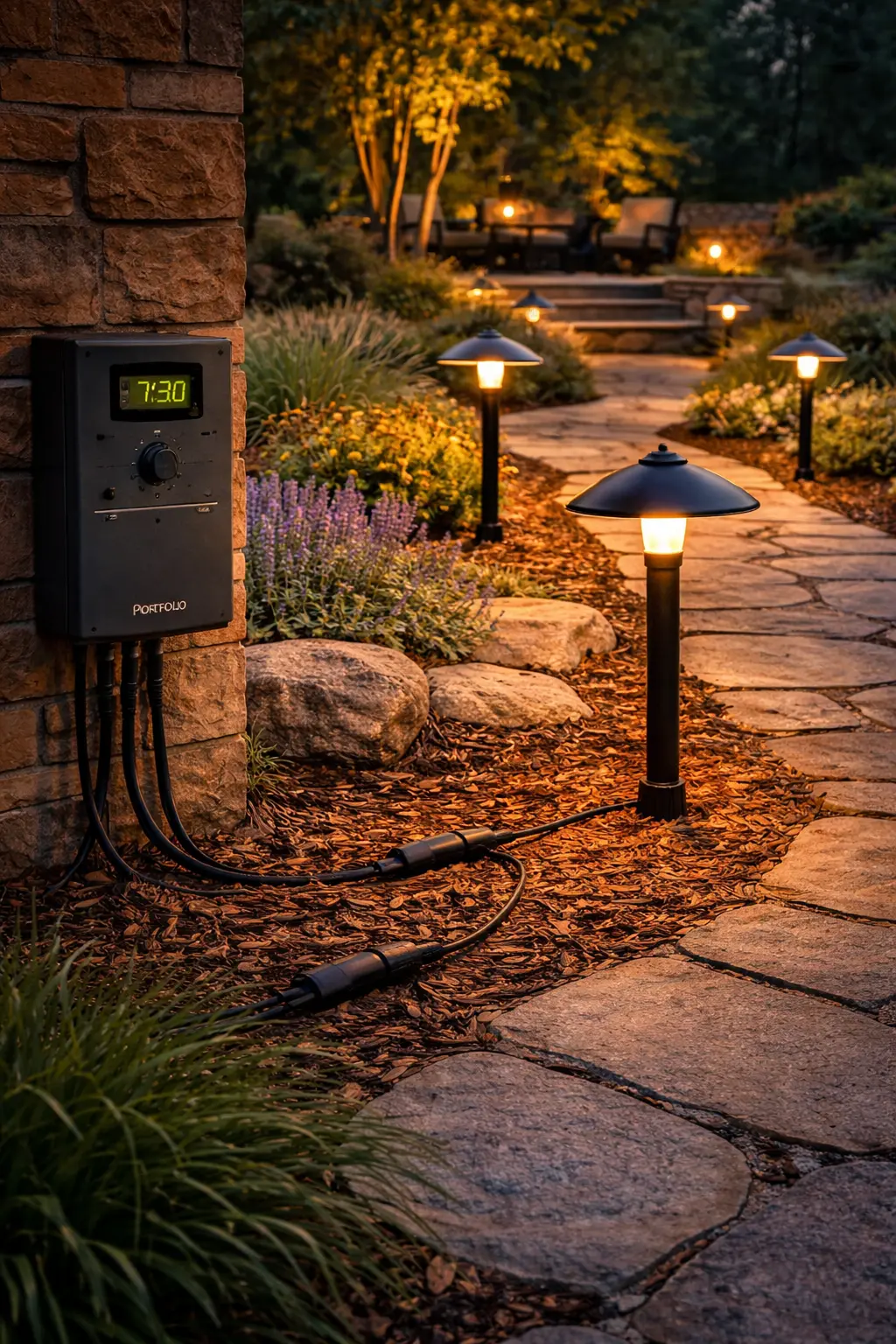
Path Light Systems
Path lights depend on a stable low voltage transformer setup to provide consistent brightness along walkways and outdoor paths.
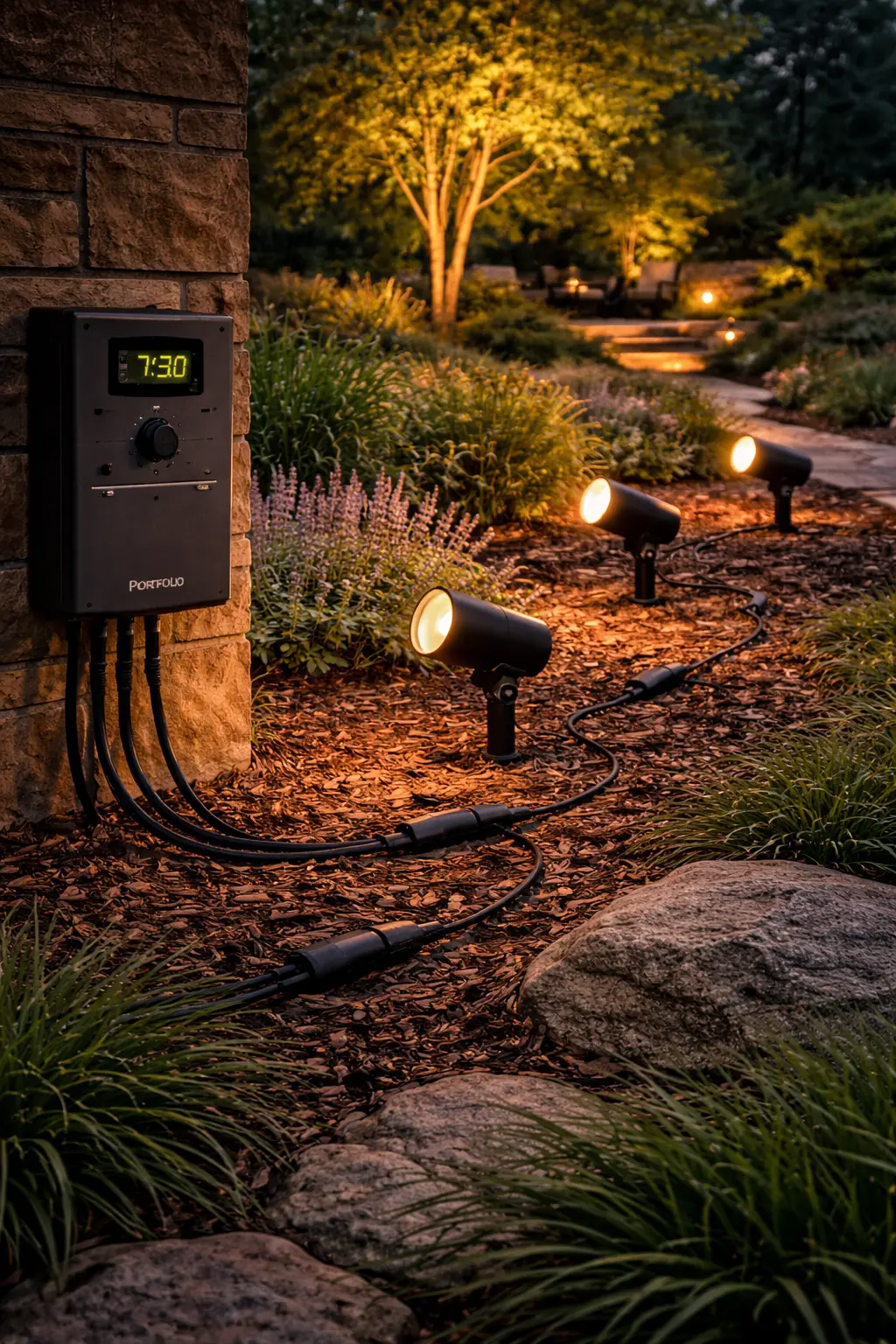
Spotlights and Accent Lighting
Spotlights and accent fixtures work best when the transformer, cable, and connector layout are matched to the load.
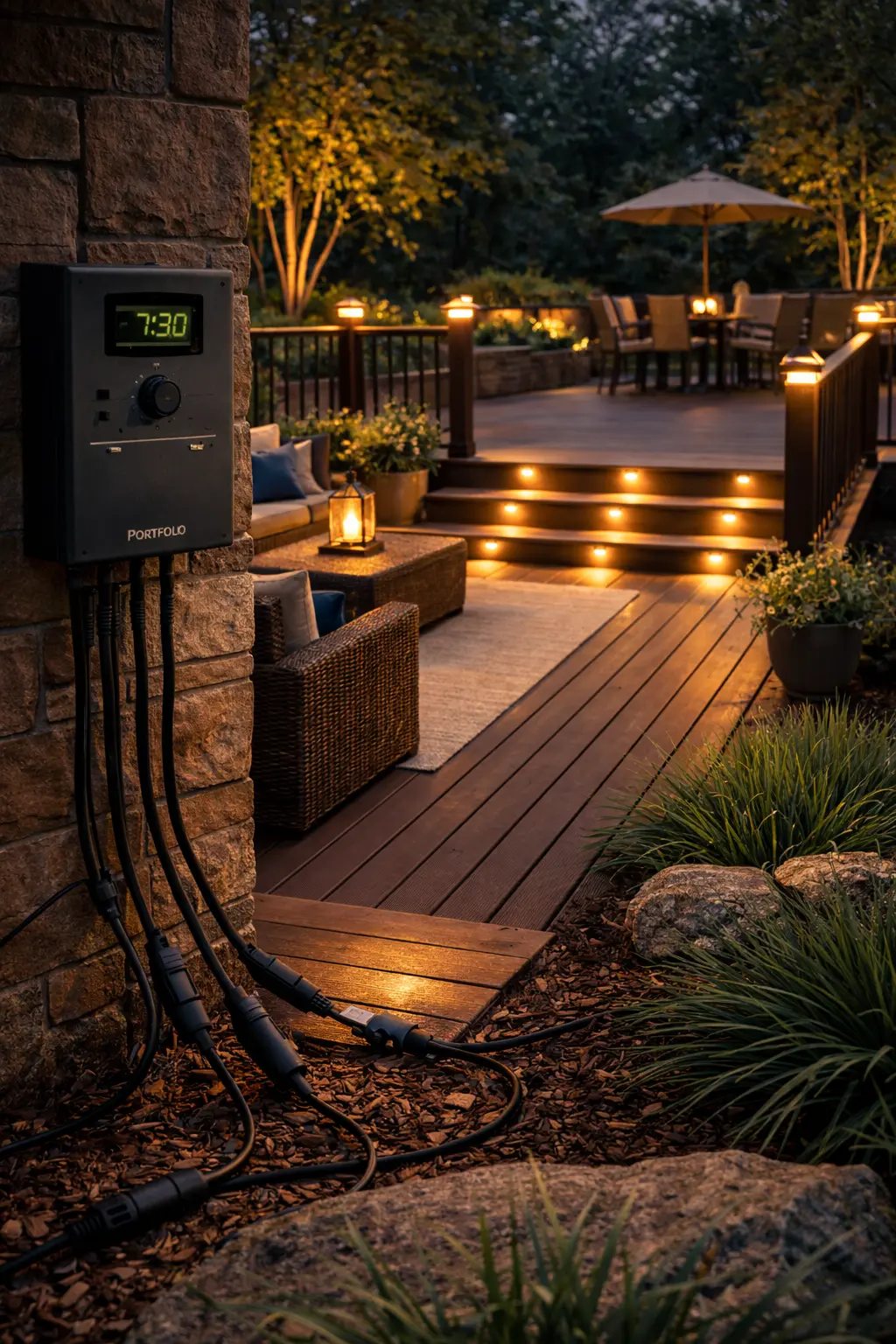
Deck and Patio Lighting
Deck lights, patio lighting, and other outdoor fixtures often share the same transformer and need enough capacity to run reliably.
Should You Repair or Replace the Transformer?
- Repair it if the issue is the outlet, GFCI, timer setting, or photocell
- Keep troubleshooting if the transformer still powers on and responds normally after reset
- Replace it if it buzzes loudly, overheats, fails under load, or no longer sends steady power
When to Repair and When to Replace
Sometimes the transformer only needs a reset, a setting correction, or a closer look at the outlet and wiring. In other cases, replacement is the smarter choice, especially when the unit is old, visibly damaged, overloaded, or no longer reliable in outdoor conditions.
If you are at the point where replacement seems likely, many homeowners compare Portfolio transformer listings alongside troubleshooting guides so they can decide whether to repair the current unit or replace it with a better fit for the system.
Before choosing a new unit, it helps to understand how much transformer capacity your system really needs. Our Portfolio lighting transformer sizing guide walks through fixture count, wattage planning, and how to leave enough room for reliable performance.
Outdoor transformer performance is no longer limited to fixed output and manual tap correction. Our AI transformer voltage load balancing guide explains how AI-enabled transformers can monitor load changes, shape output more efficiently, and reduce visible dimming in larger landscape lighting systems.
Traditional transformers provide stable power, but newer systems can go further by integrating solar backup. See solar hybrid lighting optimization to learn how combining solar and transformer power can improve uptime and reduce performance issues in outdoor lighting systems.
More Portfolio Transformer and Landscape Lighting Guides
Portfolio Lighting Transformer Troubleshooting
Fix common transformer issues such as buzzing, no power, overload problems, and inconsistent outdoor lighting.
Read the guidePortfolio Transformer Not Working
Step-by-step help when the transformer appears to be the reason the whole lighting system is down.
Read the guideHow to Reset a Portfolio Lighting Transformer
Learn when a reset may solve the issue before replacing the transformer.
Read the guideWhy Your Portfolio Transformer Is Buzzing
See what buzzing usually means and how to narrow down the problem before buying a replacement.
Read the guidePortfolio Lighting Transformer Wiring Diagram
Understand how the transformer, cable, and fixtures connect in a low voltage landscape system.
Read the guidePortfolio Landscape Lighting
Main hub for outdoor fixture ideas, path lights, low voltage layouts, and landscape planning help.
Read the guidePortfolio Low Voltage Lighting
Learn more about low voltage cable, transformer setup, outdoor fixture types, and system planning.
Read the guidePortfolio Landscape Lighting Installation Guide
Get help with layout planning, transformer placement, fixture spacing, and outdoor installation steps.
Read the guidePlan repairs without losing the original Portfolio layout
For Portfolio Outdoor Transformer Not Working? Replacement, Sizing & Troubleshooting Guide, start with evidence from the installed power equipment rather than a visually similar replacement. Record the exact model label, input/output ratings shown on the unit, terminal arrangement, control method, outgoing cable runs, and which runs still operate. That information separates a supply/control problem from a downstream cable, connector, or fixture fault and gives you a defensible replacement specification if repair is not practical. Use Portfolio Parts for the next model- or symptom-specific step.
Portfolio Outdoor Transformer Lighting FAQ
What does a Portfolio outdoor transformer do?
It converts standard household electricity into the lower voltage used by most landscape lighting fixtures such as path lights, spotlights, and deck lights.
Why is my Portfolio transformer buzzing?
Buzzing can point to overload, internal wear, or a short in the system. It is often a sign that the transformer needs troubleshooting or replacement.
Can a bad transformer cause all landscape lights to stop working?
Yes. If the transformer is not supplying power correctly, the entire low voltage lighting system can go dark.
Do outdoor transformers usually include timers?
Many do. Some also include photocells, countdown settings, or manual control options to make lighting schedules easier to manage.
Bottom Line
If your Portfolio outdoor transformer is not working correctly, start with power, settings, and total system load before replacing parts. Many transformer problems come from overload, timer or photocell settings, or a bad power source rather than failed landscape fixtures.
Once you confirm the real cause, it becomes much easier to decide whether you need troubleshooting help, a larger transformer, or a full replacement that better fits your lighting system.