
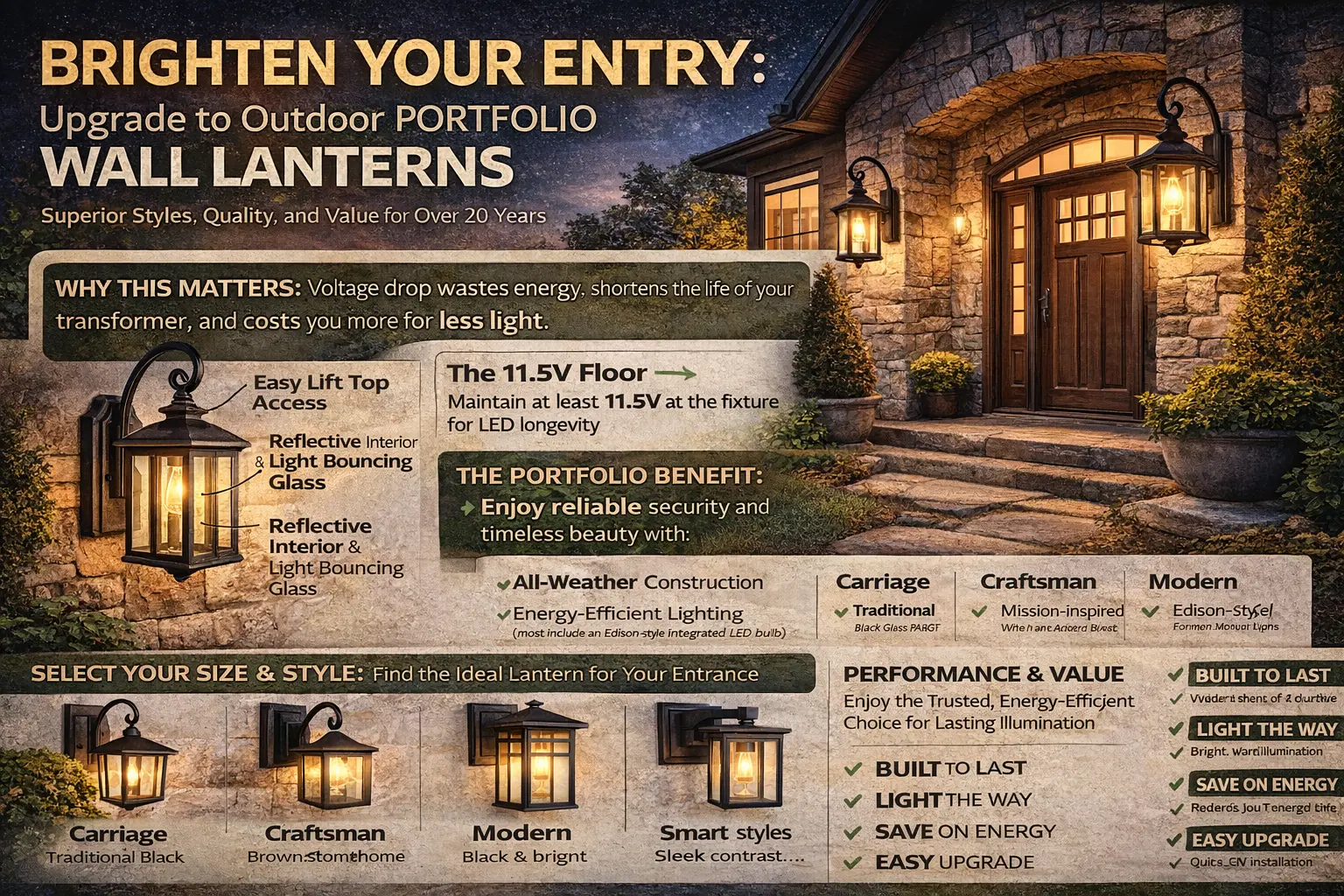
Quick Answer: What Is a Portfolio Wall Lantern?
A Portfolio wall lantern is a wall-mounted outdoor light fixture used for entryways, porches, garages, and patios. It provides both functional lighting and decorative style, making it one of the most common choices for front door and exterior wall lighting. Wall lanterns are best when you need focused light near entrances while also improving curb appeal.
Fast answer: A wall lantern is the best choice when you need entry lighting mounted beside a door, porch, garage, or patio wall and want the fixture itself to add style as well as light.
If you are planning a full outdoor lighting setup, start with this lighting plan and placement guide to make sure your fixtures work together correctly.
If you need walkway lighting → use path lights instead.
Not sure how it compares? See path lights or post lighting for other outdoor options.
Quick Decision: Is a Wall Lantern the Right Choice?
- Use a wall lantern: for front doors, porches, garage walls, and side entries
- Use path lights: for walkways and garden paths
- Use flood lights: for wider area coverage
- Use post lights: for driveways and gate entries
If you need a more focused beam for highlighting siding, stone, or architectural details, compare with Portfolio outdoor wall spotlights instead of using a lantern alone.
A Portfolio wall lantern can do more than light up a doorway. It can frame the entrance, improve visibility for guests, make the home feel warmer at night, and add a more polished outdoor look without changing the whole exterior.
The best wall lantern pages are useful first and decorative second. That is why this guide focuses on real buying questions such as placement, finish, size, brightness, weather use, and how wall lanterns compare with other outdoor fixture styles.
Quick Questions About Wall Lantern Lighting
Where should a wall lantern be placed?
Wall lanterns are usually installed beside front doors, garage doors, porches, patios, and side entries where direct light is needed.
Are wall lanterns better than path lights?
Wall lanterns are better for doors and walls, while path lights are better for walkways and garden paths. Most homes use both together.
How high should a wall lantern be mounted?
Most wall lanterns are mounted around eye level, typically 60–66 inches from the ground, depending on the door and wall height.
Do wall lanterns provide enough light?
They provide focused lighting near doors and walls, but larger areas may need additional fixtures like path lights or flood lighting.
Why Portfolio Wall Lantern Lighting Works So Well
Wall lanterns stay popular because they solve two needs at the same time. They provide practical light around the home, and they also act as a visible design feature. That combination is hard to beat for front entries, side doors, garage walls, patios, and covered porches.
A flush mount or recessed fixture can be useful, but a wall lantern often has more visual presence. It helps define the space and makes the exterior feel finished. On many homes, the wall lantern is one of the first fixtures people notice at night, especially near the main entrance.
While wall lanterns provide ambient lighting near entryways and structures, they are often paired with Portfolio path lights to create a complete outdoor lighting design that improves both safety and visual appeal along walkways, driveways, and garden paths.
Portfolio wall lantern lighting can also work across different styles. A simple black lantern may look right on a newer exterior, while a bronze or traditional lantern can blend nicely with classic brick or stone. That flexibility makes wall lanterns a strong option whether you are updating one fixture or trying to match several around the house.
Best Places to Use a Portfolio Wall Lantern
The most common place for a wall lantern is beside a front door, but that is only the start. Wall lanterns are useful almost anywhere a home needs directional light, safer movement, or a more finished exterior look.
If you are updating more than just the entry, see Portfolio landscape lighting ideas for ways to coordinate lanterns with paths, garden beds, and outdoor living areas.
Front Entry and Porch
A front porch lantern helps visitors see the door, improves nighttime visibility, and adds a more welcoming feeling. It is also one of the most important places for outdoor lighting because it affects both appearance and function.
Garage and Side Door Areas
Many garages look better with matching lanterns mounted on each side, especially when the fixtures are scaled correctly to the width of the garage door. Side entries are another good place for a lantern because those areas are often overlooked until they become inconvenient at night.
Decks, Patios, and Outdoor Living Areas
A wall lantern can be a better fit than path lights or spotlights when the goal is soft ambient light on a deck or covered patio wall. If you are already working on those areas, it is also worth reviewing Portfolio deck lighting and Portfolio outdoor lighting for a fuller exterior setup.
Indoor Accent Use
Some lantern-inspired wall fixtures work indoors too. Mudrooms, hallways, enclosed porches, and transitional spaces can benefit from a lantern shape if you want more decorative character than a plain wall fixture provides.
For safer walkways and better visibility beyond the entry, combine lanterns with path lighting to improve overall coverage.
What to Compare Before Buying a Portfolio Wall Lantern
The best wall lantern is not always the one with the most decoration. Fit matters more than people expect. Size, finish, glass style, brightness, and mounting location all affect whether a lantern looks balanced or awkward once installed.
For a broader exterior layout strategy, review how to design an outdoor lighting plan before choosing lanterns, path lights, and accent fixtures.
| Buying Factor | Why It Matters | What to Watch For |
|---|---|---|
| Fixture size | A lantern should match the scale of the door or wall | Too small looks weak, too large can feel crowded |
| Finish color | It affects how well the fixture blends with the exterior | Match trim, hardware, or nearby outdoor lights |
| Glass style | Changes both appearance and light output | Clear glass feels brighter; frosted glass softens glare |
| Bulb type or LED design | Controls brightness, warmth, and maintenance | Check compatibility before ordering replacement bulbs |
| Outdoor rating | Important for rain, sun, and weather exposure | Choose a fixture suited to the location |
Common Wall Lantern Buying Mistakes
- Choosing a fixture that is too small for the door or wall
- Mounting the lantern too high or too low
- Picking style before checking brightness and coverage
- Using only one lantern where paired fixtures would look more balanced
- Ignoring wet- or damp-location ratings
How to Choose the Right Portfolio Wall Lantern
Start with the space, not the fixture. A narrow front door area may look best with a slimmer lantern, while a wide garage wall or large porch column can handle a more substantial fixture. Buyers often make the mistake of choosing a lantern based only on close-up product photos instead of thinking about how it will look mounted on the actual house.
It also helps to think about the lighting goal. Do you want the lantern to make a statement, or do you want it to blend quietly into the architecture? Are you mainly trying to improve visibility near the lock and steps, or are you trying to make the whole entrance look more finished at night?
If the lantern is replacing an older fixture, measure the existing backplate area before buying. That can help avoid surprises around paint fade, siding marks, or old mounting patterns. And if you are replacing only one of a pair, compare finish and glass carefully so the new lantern does not look noticeably different from the remaining fixture.
Need light near a door → wall lantern
Need walkway lighting → path lights
Need wide-area lighting → flood lights
Buyer Tips for Porch, Patio, and Entry Lantern Lighting
Good wall lantern shopping is usually about avoiding the wrong choice, not chasing the fanciest one. Most buyers are happiest when the lantern fits the home, throws enough usable light, and still looks right during the daytime when the fixture is not turned on.
- measure the mounting area before you shop
- check whether the lantern is rated for wet or damp outdoor locations
- decide whether you want clear or frosted glass
- match the fixture with nearby porch, garage, or deck lighting
- confirm bulb type, wattage range, or integrated LED design
- review installation needs if the electrical box is older
If you want inspiration before choosing a fixture style, see outdoor lighting ideas and examples to compare different looks for entries, porches, and patios.
For buyers updating several outdoor fixtures at once, internal consistency matters. A wall lantern should not feel disconnected from the rest of the house lighting. It helps to compare related categories like Portfolio wall lighting, Portfolio sconces lighting, Portfolio post lighting, and Portfolio flood lighting so the exterior lighting plan feels coordinated instead of pieced together.
Installation, Replacement Parts, and Common Problems
In many cases, a wall lantern replacement is straightforward, but the details still matter. Older boxes, weathered mounting hardware, worn gaskets, cracked glass, or outdated bulbs can all slow down the project. That is one reason people often search for installation help or replacement parts before they order a full new fixture.
If your lantern flickers, hums, has broken glass, or stopped working after years outdoors, it may be worth checking our Portfolio lighting troubleshooting guide first. If the issue is mainly physical wear, the next stop may be Portfolio lighting parts and accessories. And if you are planning a full fixture swap, review Portfolio lighting installation and instructions before starting.
Homeowners updating outdoor walls also often pair a lantern refresh with nearby walkway or accent lighting. If that sounds like your project, the main Portfolio landscape lighting hub can help connect the rest of the system.
If your wall lantern is not working properly, check lighting troubleshooting steps before replacing the fixture.
Portfolio Wall Lantern FAQ
Are Portfolio wall lanterns only for outdoor use?
Not always. Many lantern-style wall fixtures are chosen for outdoor porches and entries, but lantern-inspired styles can also work in indoor accent spaces.
Where should a wall lantern be installed?
Common locations include front doors, porches, garage walls, side entries, patios, decks, and covered outdoor living areas.
How do I choose the right size wall lantern?
Start with the size of the door, wall, or column where it will be mounted. A fixture should look balanced in the space, not crowded or too small to notice.
What finish is best for a wall lantern?
That depends on the home. Black, bronze, and similar finishes tend to work well because they pair with many exterior materials and other outdoor fixtures.
More Portfolio Lighting Guides
Portfolio Outdoor Lighting
Explore more outdoor fixture types for porches, patios, walkways, and entry areas around the home.
Read the guidePortfolio Wall Lighting
Compare broader wall-mounted lighting options if you are still deciding between lanterns and other fixture styles.
Read the guidePortfolio Deck Lighting
Useful if your wall lantern project is part of a larger deck, patio, or outdoor living area update.
Read the guidePortfolio Post Lighting
See how post-mounted exterior fixtures compare with wall lanterns for entry and driveway lighting.
Read the guidePortfolio Lighting Parts and Accessories
Helpful if the issue is a broken shade, hardware piece, bulb, or replacement component rather than the full fixture.
Read the guideBuy Portfolio Lighting
Browse more Portfolio lighting categories if you are comparing lanterns with other indoor and outdoor options.
Read the guide