
Quick Answer: How Do You Weatherproof Outdoor Christmas Lights?
Weatherproof outdoor holiday lights by protecting plug connections, sockets, and the power source. Use weatherproof connection covers for extension cords, keep plugs off the ground, add drip loops before every plug or outlet, protect unused female ends, and plug the display into a GFCI-protected outlet with an extra-duty in-use weatherproof cover.
If one section has already gone dark, use this guide with troubleshooting Christmas lights half out.
Logic Summary: Water Causes Problems at the Weakest Connection
Holiday lights usually do not fail because every part of the display is wet. They fail because one weak point lets water reach metal contacts. That small wet path can create leakage current, corrosion, flicker, heat, or a GFCI trip.
Tripping GFCI
Usually caused by water inside a plug, socket, timer, extension cord end, or damaged wire jacket.
Flickering after rain
Often caused by micro-corrosion in sockets, loose bulbs, wet contacts, or weak plug connections.
One section dead
May be a failed string section, bad bulb, wet shunt, broken conductor, or corroded plug end.
Breaker trips immediately
Stop and inspect for damaged insulation, saturated plugs, overloaded cords, or water in the outlet cover.
Weatherproofing outdoor holiday lights is not about wrapping everything in tape. The best approach is to manage water before it reaches the electrical contacts.
This guide is built for November and December problems, but has year round information: Christmas lights that work on dry nights but trip after rain, extension cord plugs sitting in mulch, timers that get soaked, unused female ends full of water, and C7 or C9 sockets that flicker because corrosion has started inside the strand.
Water damage inside a C7 or C9 socket often begins before the string trips a GFCI or goes dark. Mineral tracks, green copper deposits, weakened spring pressure, and corrosion hidden beneath the bulb base can create resistance that causes flicker and localized heating. Weatherproofing prevents new damage, but an already compromised socket must be evaluated separately. The C7 and C9 socket repair and maintenance guide shows which light surface deposits may be cleaned, which corrosion patterns require socket replacement, and how socket orientation and drip paths contribute to repeat failures.
For the full outdoor wiring and safety overview, see landscape lighting electrical code and safety guide.
Permanent outdoor fixtures face the same moisture and corrosion problems as seasonal lighting, only year-round. The outdoor fixture corrosion and finish durability guide explains which finishes age best in wet, humid, and sun-exposed locations.
Outdoor holiday lighting installed near fire pits and outdoor heaters requires additional spacing awareness because heat exposure can damage wiring insulation, connectors and temporary decorations over time. This fire pit lighting safety and gas-line clearance guide explains important placement considerations for safer outdoor lighting around active heat sources.
Outdoor Christmas lights often start flickering after rain, snow, freezing temperatures or repeated wet-dry cycles because moisture works into plugs, sockets, adapters and inline controllers. That moisture can create resistance, corrosion and unstable LED behavior long before a strand completely fails. If your lights dim, blink or behave differently after weather exposure, review this LED Christmas light flicker troubleshooting guide along with your weatherproofing steps.
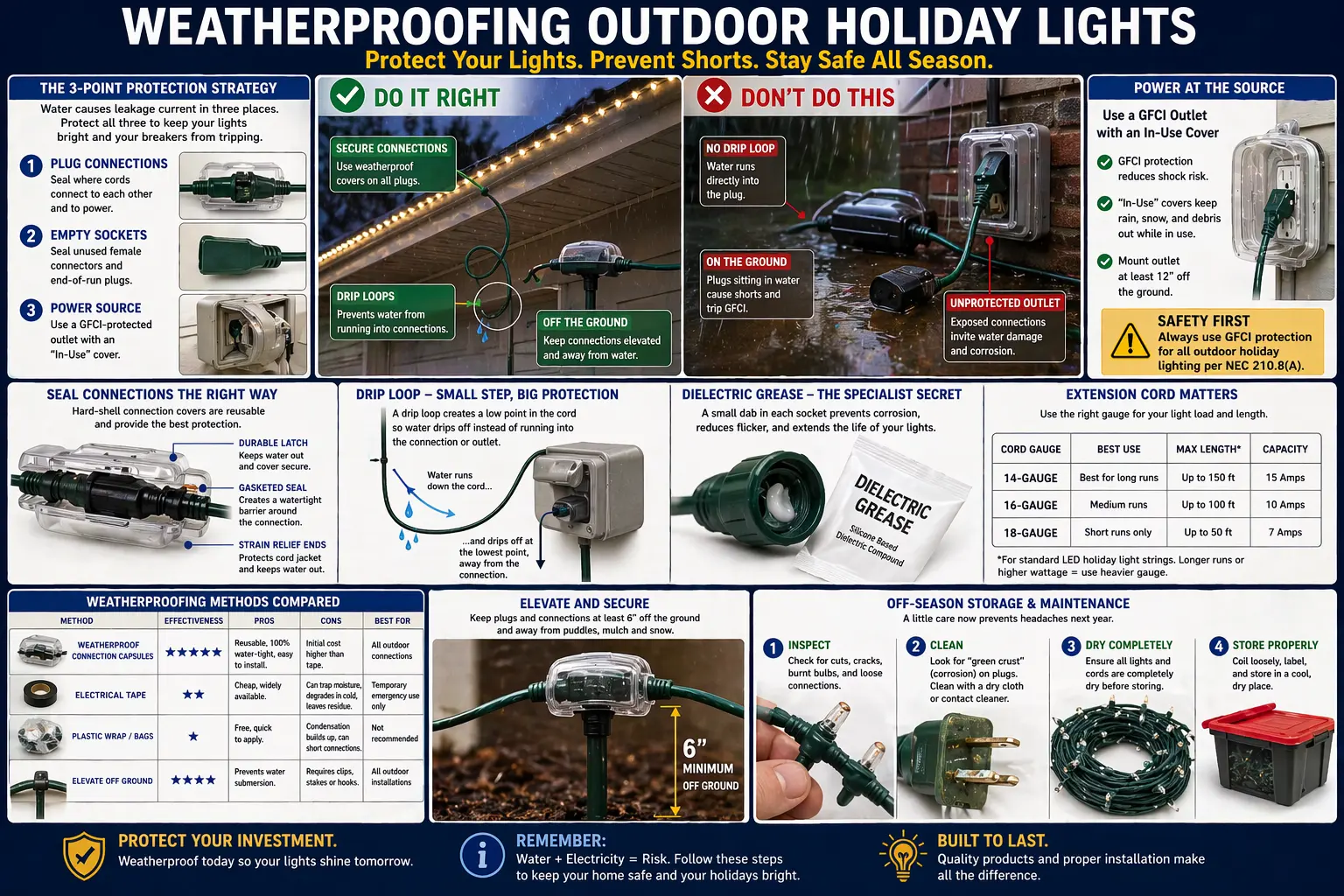
The Three-Point Protection Strategy
Outdoor holiday displays fail in predictable places. Protecting these three points usually solves most wet-weather problems.
1. Plug Connections
Every male-to-female plug connection is a water entry point. A hard-shell clamshell protector or weatherproof capsule is much better than tape because it physically shields the plug and can be reused.
2. Empty Sockets and Unused Ends
Empty sockets, missing bulbs, and unused female plugs can collect water. Cap unused ends, replace missing bulbs, and keep the final plug end pointing downward and off the ground.
3. Power Source
The outlet should be GFCI protected and covered by an extra-duty in-use cover that closes while the cord or outdoor timer remains plugged in.
4. Cord Routing
Even a protected plug can fail if water runs straight into it. Use drip loops so water drops off the cord before reaching the connection.
For permanent or semi-permanent installs, compare connector strategy with low voltage wire connectors landscape lighting.
Weatherproofing Methods Compared
Some popular DIY methods look helpful but actually trap moisture against metal contacts. Use this table to choose the strongest protection method.
If wet weather keeps causing failures, check whether the strand fuse has blown using our Christmas light fuse replacement guide after drying and protecting the connections.
Halloween lighting setups often combine fog machines, extension cords, landscape fixtures, and temporary wiring in wet fall conditions. The Halloween lighting safety and outdoor effects guide explains how to create dramatic displays without overloading circuits or exposing connectors to moisture.
Seasonal outdoor lighting setups frequently fail because temporary fixtures and connectors are exposed to rain without the correct protection level. The weatherproof outdoor lighting IP rating guide explains how different enclosure ratings handle wet-weather conditions.
| Method | Effectiveness | Pros | Cons |
|---|---|---|---|
| Weatherproof Capsules / Clamshell Covers | Highest | Reusable, protects the full plug connection, keeps water off contacts | Costs more than tape or bags |
| Electrical Tape | Low | Cheap and easy to find | Can trap moisture inside and leave sticky residue on plugs |
| Plastic Wrap or Bags | Poor | Free or very cheap | Condensation can build inside and short the plug |
| Elevating Connections Off Ground | High | Prevents submersion in puddles, snowmelt, mulch, and mud | Requires clips, stakes, or secure mounting points |
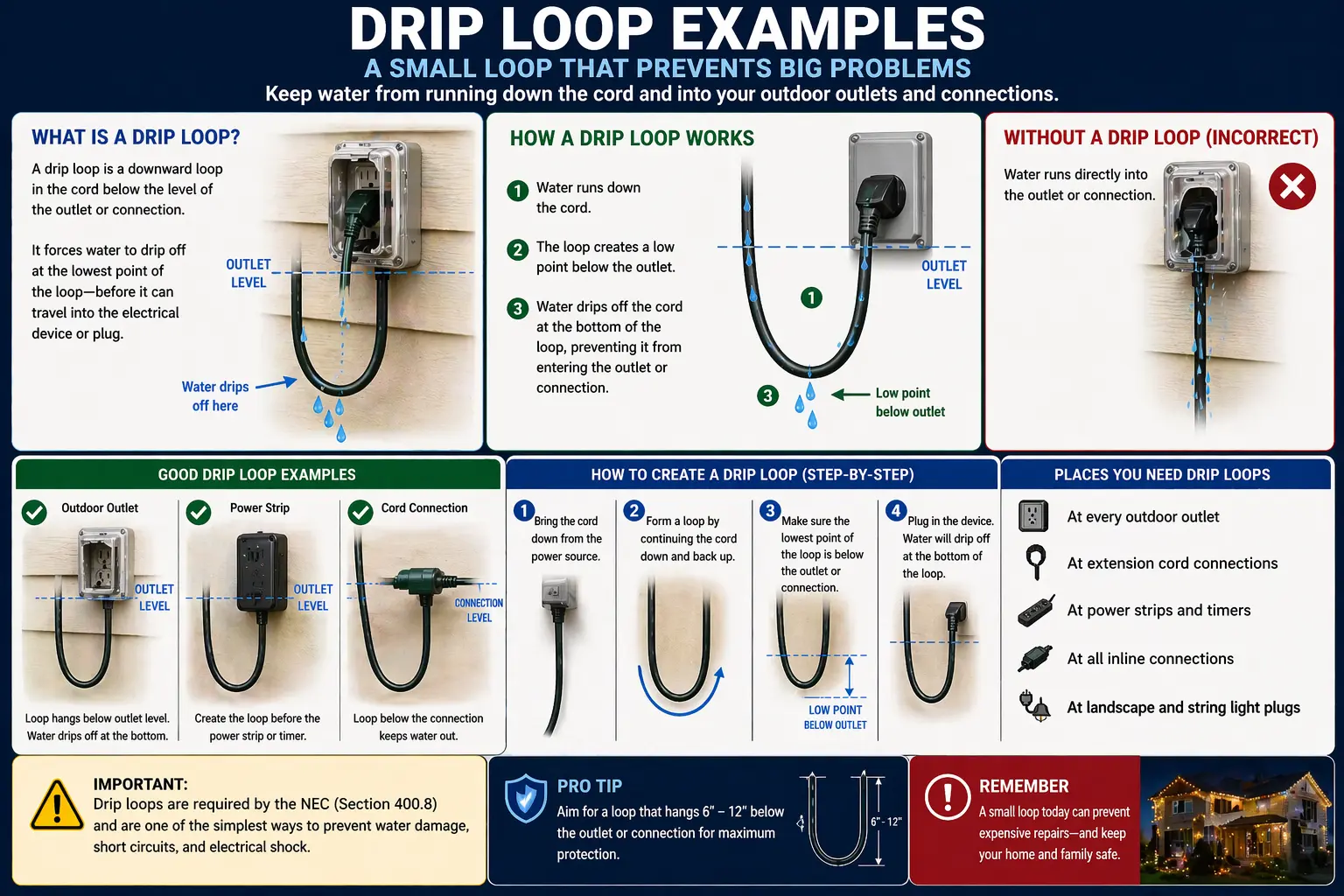
How to Create a Drip Loop
A drip loop prevents water from running into the junction box by allowing it to fall off before reaching the entry point.
- Run the wire below the box first
- Then loop it upward into the entry point
- Secure the loop so it does not flatten over time
Dielectric Grease: The Specialist Secret for C7 and C9 Sockets
C7 and C9 holiday light strings are popular because they look classic and bright, but their sockets can become vulnerable to moisture and oxidation. A small dab of silicone-based dielectric grease can help keep moisture away from the contact area and reduce flicker caused by micro-corrosion.
How to use it correctly
- Use only a small dab—not a packed socket full of grease.
- Apply before the bulb is installed so the contact area is protected.
- Replace cracked sockets, loose bulbs, or damaged cords instead of trying to “grease over” failure.
- Do not use grease to fix a burned, melted, or visibly damaged socket.
Most Common Junction Box Failure Points
- Missing or damaged gasket
- Unsealed conduit entry
- No drip loop
- Overfilled box causing heat buildup
- Improper connector type
Regularly inspecting these gaskets and entry points before the first November freeze can prevent the 'nuisance trips' that plague many residential displays.
Extension Cord Management: Gauge, Routing, and Drip Loops
Extension cords matter more than most holiday decorators think. A long, thin, overloaded cord can run warm, drop voltage, and create weak connections. A 14-gauge outdoor-rated cord is often a better choice for long holiday runs than a cheap 16-gauge indoor/outdoor cord.
Gauge matters
- 16-gauge: best for short, light-duty runs with modest LED loads.
- 14-gauge: better for longer outdoor runs and larger displays.
- 12-gauge: useful for heavy-duty outdoor power routing where load and distance justify it.
Use drip loops at every connection
A drip loop lets water fall off the cord before it reaches a plug, timer, outlet, or connection box. The loop should dip below the connection and then rise back up before entering the protected area.
For permanent outdoor wire planning, review landscape lighting wire burial depth code.
Why Outdoor Lights Trip GFCI in Rain
Water entering a junction box or connection creates a small leakage current that flows outside the intended path. This triggers the GFCI and shuts off power.
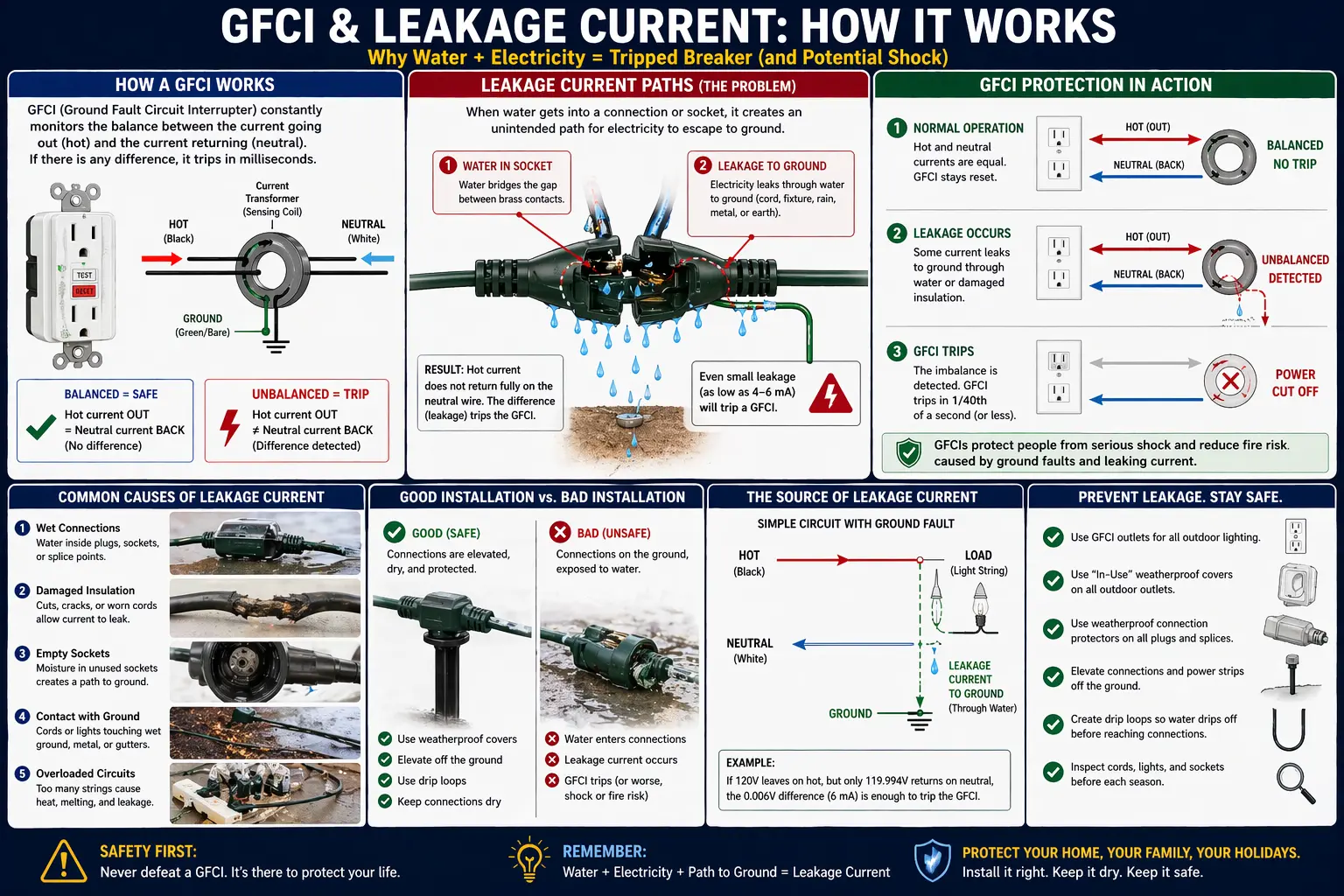
Key takeaway: Even a tiny amount of moisture can cause a trip, especially in poorly sealed boxes or connectors.
If your lights trip during rain, moisture may be the problem—but overload can also be involved. Use the holiday lighting power calculator to check circuit load before blaming the weather.
After fixing wet or corroded sockets, use the LED holiday bulb replacement guide to ensure replacement bulbs match the correct base, voltage, and outdoor compatibility.
Outdoor Outlets, Timers, and Extra-Duty In-Use Covers
A standard flip cover protects an outlet only when nothing is plugged in. Holiday displays need an in-use cover that can close while the cord, smart plug, or timer remains connected.
- Use an outdoor-rated timer or smart plug.
- Make sure the in-use cover fully closes around the cord.
- Confirm the timer is rated for the total connected wattage.
- Keep the cord exit pointed downward when possible.
For smart seasonal control, compare with smart holiday lighting setup and AI holiday theming logic.
Bad vs. Good Weatherproofing Examples
Bad: Plug Sitting in a Puddle
A plug connection lying in mulch, snow, or a puddle can collect water around the prongs and trip the GFCI.
Good: Plug Raised on a Stake
Elevating the connection and placing it inside a clamshell cover keeps the plug away from direct water and ground saturation.
Bad: Tape Wrapped Plug
Tape can hold moisture against the connection and makes it hard to inspect the plug later.
Good: Hard-Shell Protector
A reusable weatherproof connection box shields the plug while allowing the cord to exit cleanly.
De-Installation and Storage: Make the Lights Work Next Year
Weatherproofing does not end when the season is over. Many holiday lights fail the following year because wet, corroded, or oxidized plugs were packed away without inspection.
- Check plugs for green crust or white oxidation before storage.
- Let wet strands dry completely before boxing them.
- Clean lightly oxidized plug ends before corrosion worsens.
- Discard strings with cracked insulation, melted sockets, or damaged plug blades.
- Wrap strings loosely to prevent conductor fatigue and broken sections.
Permanent Holiday Installs Need Better Weatherproofing Too
Permanent and semi-permanent holiday lighting systems reduce annual ladder work, but they still need weather-resistant connectors, proper routing, protected controllers, and moisture-aware power supplies.
If you are comparing temporary strings with roofline systems, see permanent vs temporary holiday lights. For smart exterior lighting strategy, use AI outdoor lighting systems.
If your junction box connects to buried wiring, follow proper depth rules in landscape lighting wire burial depth code.
Water intrusion is one of the most common reasons outdoor holiday lighting systems stop working after rain, snow, freezing fog, or heavy dew. Moisture entering extension cord connections, inline fuses, controllers, timers, and plug interfaces can create electrical leakage that trips GFCI protection devices even when the lighting load itself is completely normal. Homeowners frequently assume they have overloaded a circuit when the actual problem is a wet connection hidden somewhere in the display. Our comprehensive holiday lighting GFCI and breaker trip repair guide explains how to identify moisture-related shutdowns, isolate affected sections, and protect outdoor electrical connections from future weather exposure.
Lighting Load and Wattage Checklist
| Lighting Type | Average Watts per 50ft | Max Strings (15A Circuit) |
|---|---|---|
| C9 Incandescent | 350W | 3–5 |
| Mini Incandescent | 20W | 20–30 |
| LED Mini / Wide Angle | 2.5W | 100+ |
Weatherproofing Outdoor Holiday Lights FAQ
Why do my outdoor Christmas lights keep tripping the GFCI?
This is usually caused by tracking or leakage current where water has entered a plug connection, empty bulb socket, wet timer, damaged cord, or unprotected outlet.
Is electrical tape enough to weatherproof a connection?
No. Electrical tape can trap moisture against the metal prongs and leave sticky residue. A hard-shell weatherproof connection box or clamshell protector is much more effective.
Can I use in-use covers for holiday timers?
Yes, but the timer must be outdoor-rated, fit inside the cover, and be rated for the total wattage of the connected light strings.
Should Christmas light plugs be off the ground?
Yes. Keeping plug connections above soil, mulch, snow, and puddles is one of the simplest ways to reduce GFCI trips and wet-weather failures.
Can dielectric grease stop Christmas lights from flickering?
It can help prevent moisture-related micro-corrosion in clean C7 and C9 sockets, but it will not repair damaged wiring, burned sockets, broken bulbs, or failed string sections.
Final Thoughts on Weatherproofing Outdoor Holiday Lights
The strongest holiday displays are not just bright; they are protected. Good weatherproofing keeps water away from the three failure points that matter most: plug connections, sockets, and the power source.
Use GFCI protection, raise connections off the ground, choose hard-shell connection covers instead of tape, create drip loops, protect unused ends, use proper cord gauge, and inspect the lights before storage.
More Holiday and Outdoor Lighting Guides
Holiday Lighting Guide
Use this broader seasonal hub for planning, setup, troubleshooting, safety, and display strategy.
Read the guideSmart Holiday Lighting Setup
Best for app control, timers, smart plugs, voice control, and connected holiday light scheduling.
Read the guideChristmas Lights Half Out
Use this when wet-weather failure has already caused part of the strand to go dark.
Read the guidePermanent vs Temporary Holiday Lights
Compare traditional seasonal strings with permanent roofline lighting systems.
Read the guideOutdoor Holiday Light Weatherproofing, GFCI Trips, and Wet-Weather Troubleshooting Help
This page is designed to help homeowners prevent the most common outdoor holiday lighting failures: water-filled plug connections, corroded sockets, tripping GFCI outlets, wet timers, undersized cords, and damaged light strings.
For complete seasonal planning, combine this page with the holiday lighting guide, smart holiday lighting setup, and troubleshooting Christmas lights half out.