
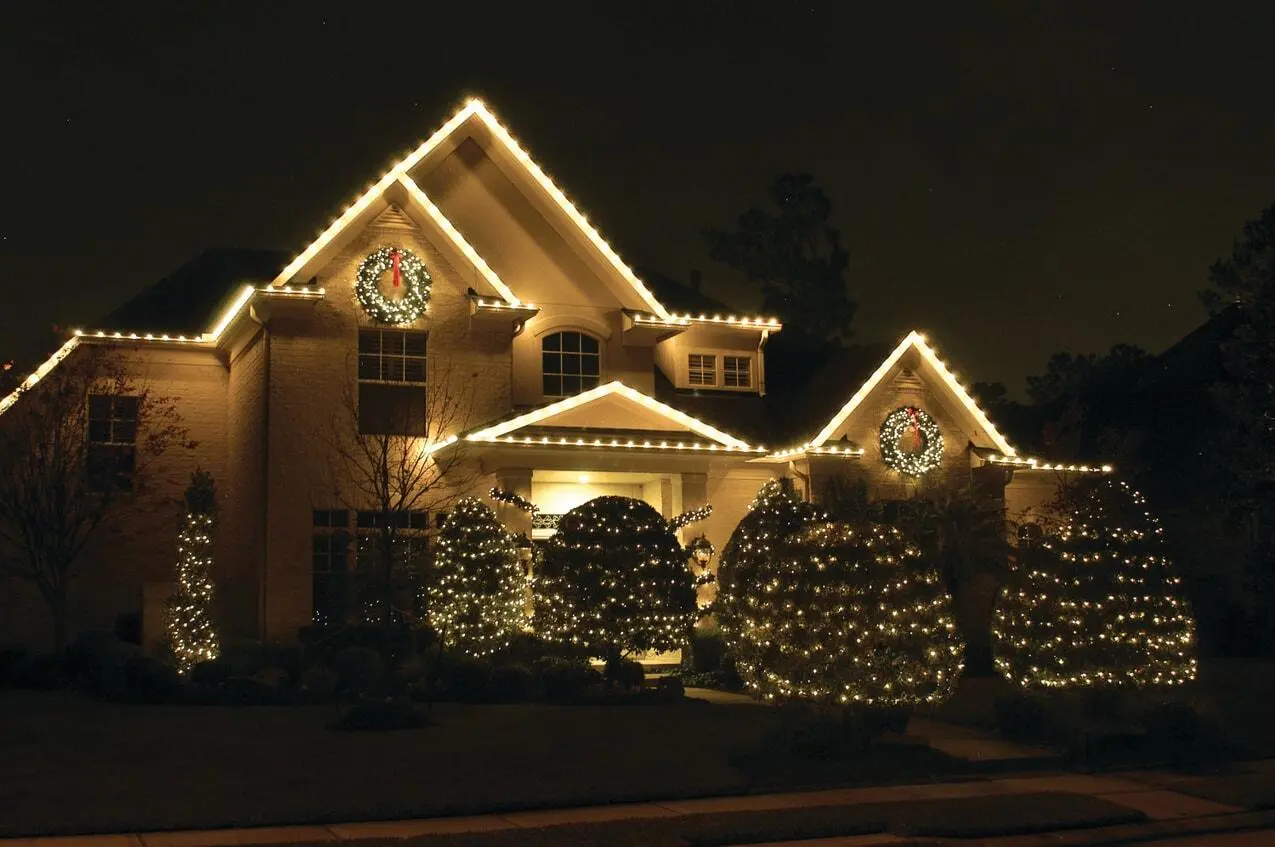
Quick Answer: Best Holiday Lighting Setup
Quick Answer: The best holiday lighting setup depends on your goal. Permanent roofline systems are best for year-round flexibility, while temporary string lights are better for seasonal decorating. Most problems come from power setup, weak connections, or poor storage—not the lights themselves.
- Use permanent RGBW lighting for year-round color and clean white light
- Use temporary strands for lower cost seasonal decorating
- Plan power, connectors, and timers before installation
- Use weatherproof (IP67/IP68) components outdoors
- Fix issues by checking power → connections → voltage drop
If you are planning a connected or app-controlled system, smart holiday lighting requires more than just choosing compatible products. Power stability, network reliability, and ecosystem design all affect performance. For a complete breakdown, see the smart holiday lighting setup guide to build a system that works consistently instead of failing mid-season.
Quick Setup & Troubleshooting Guide
| Goal | Best Choice | Why It Works | What to Watch For |
|---|---|---|---|
| Year-round lighting | Permanent RGBW system | Switch colors instantly for any holiday | Requires proper install and planning |
| Seasonal decorating | Temporary LED strands | Lower upfront cost and flexible placement | Needs setup and storage every year |
| Reliable operation | Weatherproof connectors | Prevents moisture failures | Cheap connectors fail quickly |
| Consistent brightness | Proper power planning | Avoids dimming and overload | Voltage drop on long runs |
| Troubleshooting issues | Follow power → connection → load | Finds the real problem quickly | Skipping steps leads to wrong fixes |
LED Christmas lights can flicker or dim for several reasons, including loose plug connections, damaged mini LEDs, failing inline fuses, overloaded strands, moisture in outdoor connectors or a weak controller. Before throwing away a full strand, use this LED Christmas light flicker repair guide to check the most common failure points and decide whether the strand can be cleaned, repaired, shortened, isolated or safely replaced.
Jump to Section
- Permanent Holiday Lighting
- Spring Holidays & Easter Lighting
- Summer Patriotic & Party Lighting
- Halloween, Harvest & Fall Lighting
- Christmas, Hanukkah, Kwanzaa & New Year Lighting
- Additional Holidays & Event Lighting
- Power, Amp Draw & Safety Planning
- Troubleshooting Logic Tree
- Smart Hubs, Matter & Thread
- Off-Season Storage & Maintenance
- Holiday Lighting FAQ
Permanent Holiday Lighting: A Year-Round Solution
For many homeowners, permanent holiday lighting is no longer just a luxury add-on. It is the practical answer to seasonal setup fatigue, uneven roofline clips, storage clutter, and repeated troubleshooting every time a strand is unpacked. Instead of treating every holiday as a separate installation project, a permanent system turns your house into a programmable lighting platform.
If you are deciding between traditional Christmas lights and a long-term upgrade, use our permanent vs temporary holiday lights comparison guide to compare cost, safety, automation, and long-term value.
This is also where most homeowners start comparing options. They’re usually looking at how the lights will look, how easy they are to control, how reliable they are, and whether one setup can work for Christmas, Halloween, patriotic holidays, birthdays, graduation parties, weddings, and everyday curb appeal.
For a deeper breakdown of system types, installation, and layout options, see Portfolio outdoor lighting to understand how permanent lighting fits into a full exterior setup.
Before installing lights outdoors, review our weatherproofing outdoor holiday lights guide to prevent rain failures, GFCI trips, and wet connection problems.
When installing holiday lights outdoors, always use a properly protected circuit. Review GFCI requirements for outdoor lighting to prevent shock hazards and nuisance trips.
If you want permanent lights to look like professional architectural lighting in the off-season, choose an RGBW system instead of RGB only. The dedicated white chip provides a cleaner 2700K-3000K warm white for everyday use, while RGB-only systems usually create a less natural white by mixing colors.
- IP67 or IP68 waterproofing for outdoor track and fixture durability
- RGBW LEDs for both holiday color and usable warm white
- UV-resistant housing for long-term roofline exposure
- Weather-rated connectors for stable year-round operation
Spring Holidays: Easter, Passover, Ramadan, Eid & Seasonal Refresh Themes
Easter and spring lighting displays often fail because winter damage was never repaired first. The Portfolio Easter & Spring Lighting Maintenance Guide walks through spring startup checks, moisture troubleshooting, photocell problems, and softer pastel RGBW scene planning.
Easter & Spring Renewal
Easter displays tend to work best with pastel color families, soft white string lighting, garden-focused accenting, and entryway emphasis. Spring is also a natural time to clean lenses, replace damaged clips, and reset timers if your winter lighting has just come down.
Passover, Ramadan & Eid
Not every spring holiday lighting setup should look like a carnival display. For faith-centered or family-centered seasonal lighting, subtle elegance often works better than heavy saturation. Warm white, amber, gold, and carefully placed architectural accents can feel more intentional than full-spectrum color everywhere.
Mother’s Day, Father’s Day & Graduation
These are often overlooked in holiday-lighting pages, but they matter for year-round search intent because homeowners want simple special-event setups without a full commercial install. Permanent or semi-permanent systems shine here because they let you create event scenes quickly.
Summer Holidays: Memorial Day, Juneteenth, Fourth of July, Labor Day & Party Lighting
Patriotic Displays
Red, white, and blue themes work best when each color has its own zone rather than mixing everything into one bright wash. Rooflines, columns, walkway edges, deck rails, and tree wraps all work, but controlled placement matters more than sheer volume.
Are you planning a red, white, and blue display this year? Use the Patriotic July 4th Outdoor Lighting Guide for RGBW color settings, roofline power planning, smart scenes, and safer neighbor-friendly lighting ideas.
BBQ, Patio & Party Lighting
Summer is also when many homeowners discover that decorative holiday lighting needs to function like real outdoor lighting. You still need visibility on steps, around seating, and near pathways. That is why summer holiday setups often overlap with your existing string-light and landscape-lighting layout pages.
Poolside and Wet-Area Safety
Water and temporary extension setups are a bad mix when the installation is rushed. Weather protection, outlet placement, and connector quality matter even more for summer entertaining because lights stay close to drinks, landscaping hoses, pool decks, and foot traffic.
Fall Holidays: Halloween, Harvest, Diwali & Warm Seasonal Themes
Halloween as the Biggest Fall Traffic Driver
Halloween lighting usually splits into three styles: spooky ambient color, theatrical effects, and family-friendly warm harvest scenes. Purple, orange, deep blue, and red are the most common directional colors, but placement matters more than raw brightness. Too much light kills the drama.
For fall decorating ideas beyond standard string lights, visit the Halloween outdoor lighting setup guide for pathway effects, spooky uplighting, fog-safe placement, and low-voltage landscape lighting ideas.
Harvest & Thanksgiving Warmth
Once the most theatrical Halloween displays come down, many homeowners want the same hardware to shift into a calmer warm-toned look. That is exactly where permanent systems and good control logic outperform temporary strands. Instead of rehanging everything, you switch the scene.
Diwali and Festival Lighting
Diwali-style lighting often emphasizes brightness, hospitality, entry accents, and layered decorative effects rather than just color wash. String lighting, step accents, and doorway framing all work well here if the installation stays clean and deliberate.
Winter Holidays: Christmas, Hanukkah, Kwanzaa & New Year’s Lighting
Christmas Masterclass
Christmas lighting still drives the largest volume, but it also creates the most frustration. Rooflines, trees, shrubs, walkways, and entry features all compete for power and visual attention. The most successful displays use a plan first: what is the focal point, where is the main power source, and how will the display be maintained after installation?
Hanukkah, Kwanzaa & New Year Displays
Not every winter setup should default to the same look. Hanukkah scenes often favor blue, white, and elegant window or entry emphasis. Kwanzaa displays can be richer and more symbolic in color balance. New Year displays often work best with cool white, gold, or celebratory animated themes that feel distinct from Christmas rather than leftover from it.
Weather and Reliability
Winter exposes weak connectors, overloaded circuits, failing timers, and poor strain relief faster than any other season. This is why professional holiday lighting is really a combination of design and maintenance discipline.
Additional Holidays & Everyday Event Lighting
- Valentine’s Day: Warm pink, red, and soft white accents work well on porches, patios, and tree wraps.
- St. Patrick’s Day: Green is the obvious color theme, but it looks better when balanced with soft white or architectural control.
- Birthdays and anniversaries: Permanent systems let you create one-night scenes without pulling out temporary strands.
- Weddings and parties: Elegant warm white usually outperforms saturated color unless the event specifically calls for it.
- Game-day or school-color lighting: Programmable systems turn the house into an event backdrop without extra install labor.
Quick Comparison: Temporary vs Permanent Holiday Lighting
| Type | Best For | Main Advantage | Main Limitation |
|---|---|---|---|
| Temporary strands | Seasonal decorating | Lower upfront cost | Must be installed and stored every year |
| Permanent roofline lighting | Year-round use | Fast scene changes for any holiday | Higher upfront planning and installation cost |
Power Planning Table: Strands, Bulbs & Amp Draw
Off-Season Storage and Maintenance
If your setup uses landscape wiring and transformers, review low voltage landscape lighting to understand how power distribution, cable runs, and load planning affect performance.
For sizing, load limits, and connection setup, see landscape lighting transformer guide before expanding your system or adding more lights.
Before buying replacement bulbs, use the LED holiday bulb replacement guide to match C7, C9, mini LEDs, voltage, and color temperature correctly the first time.
- Coil LED strands loosely to prevent internal wire fatigue
- Do not wrap strands tightly around your hand or elbow
- Store lights in a dry container away from heat and direct sun
- Inspect plugs, sockets, and clips before storage
- Apply a small amount of dielectric grease to outdoor connectors before long-term storage
- Label strands by roofline, tree, or zone to make next season faster
If your setup is exposed to storms or long outdoor runs, review landscape lighting surge protection guide to protect your system from electrical damage.
Many Christmas light failures actually begin months before the next holiday season. Moisture trapped in plugs, sockets, extension cord ends, and storage containers can slowly corrode metal contacts during the off-season, leading to flickering strands, intermittent outages, blown fuses, and weak electrical connections when decorations are installed again. Before packing lights away, review our Christmas light corrosion prevention and storage guide to learn how proper drying, inspection, storage conditions, and connector protection can significantly extend the life of both LED and incandescent holiday lighting systems.
If only part of your Christmas light strand is working, use our troubleshooting guide for Christmas lights half out to find the most common causes and the fastest next fix.
Before plugging in a full display, use our holiday lighting power calculator to estimate watts, amps, circuit load, and safe string limits.
One of the most frustrating holiday decorating problems occurs when an entire lighting display shuts down unexpectedly after working perfectly for days or even weeks. In many cases, the cause is not a failed light strand but an overloaded branch circuit, moisture intrusion, damaged extension cords, high startup current from inflatables, or a GFCI device responding to electrical leakage. Understanding the difference between a standard breaker trip and a GFCI trip can dramatically reduce troubleshooting time and prevent unnecessary replacement of working decorations. Our detailed holiday lighting breaker trip diagnostic guide explains how to identify overload conditions, isolate faulty decorations, diagnose rain-related shutdowns, and safely restore power to large seasonal displays.
| Lighting Type | Typical Use | Power Behavior | Planning Note |
|---|---|---|---|
| LED mini lights | Tree wraps, roofline accents, shrubs | Low power draw | Best for long run times and larger displays |
| LED C7 / C9 style bulbs | Rooflines, eaves, bold perimeter outlines | Moderate draw depending on count | Great visual impact with better efficiency than incandescent |
| Incandescent strands | Legacy displays and older spare inventory | Higher power use and more heat | Usually the first thing to replace in a modern display |
| Permanent LED systems | Year-round roofline and scene control | Depends on controller zone and scene | Need planning, not guesswork, for best long-term results |
- Short, low-density LED scenes are usually easy to power.
- Mixed temporary and permanent setups need a cleaner power plan.
- Longer runs and higher density mean more attention to connection quality and controller capacity.
- If you are using a low-voltage transformer in the setup, check capacity before assuming holiday lights can share it.
Comparison Table: C9 vs C7, LED vs Incandescent, Pro Grade vs Big Box
| Comparison | Option A | Option B | What Usually Matters Most |
|---|---|---|---|
| C9 vs C7 | C9 gives a bolder, more visible roofline effect | C7 looks slightly smaller and more restrained | Choose based on house scale and desired visual punch |
| LED vs Incandescent | LED runs cooler and uses less power | Incandescent has warmer nostalgia for some homeowners | LED usually wins on efficiency, safety, and long display hours |
| Professional grade vs big box | Professional grade is built for repeated seasonal use | Big box products are easier to buy quickly | Long-term reliability and connector quality often decide the real value |
Large LED Displays Need Structure and Power Planning
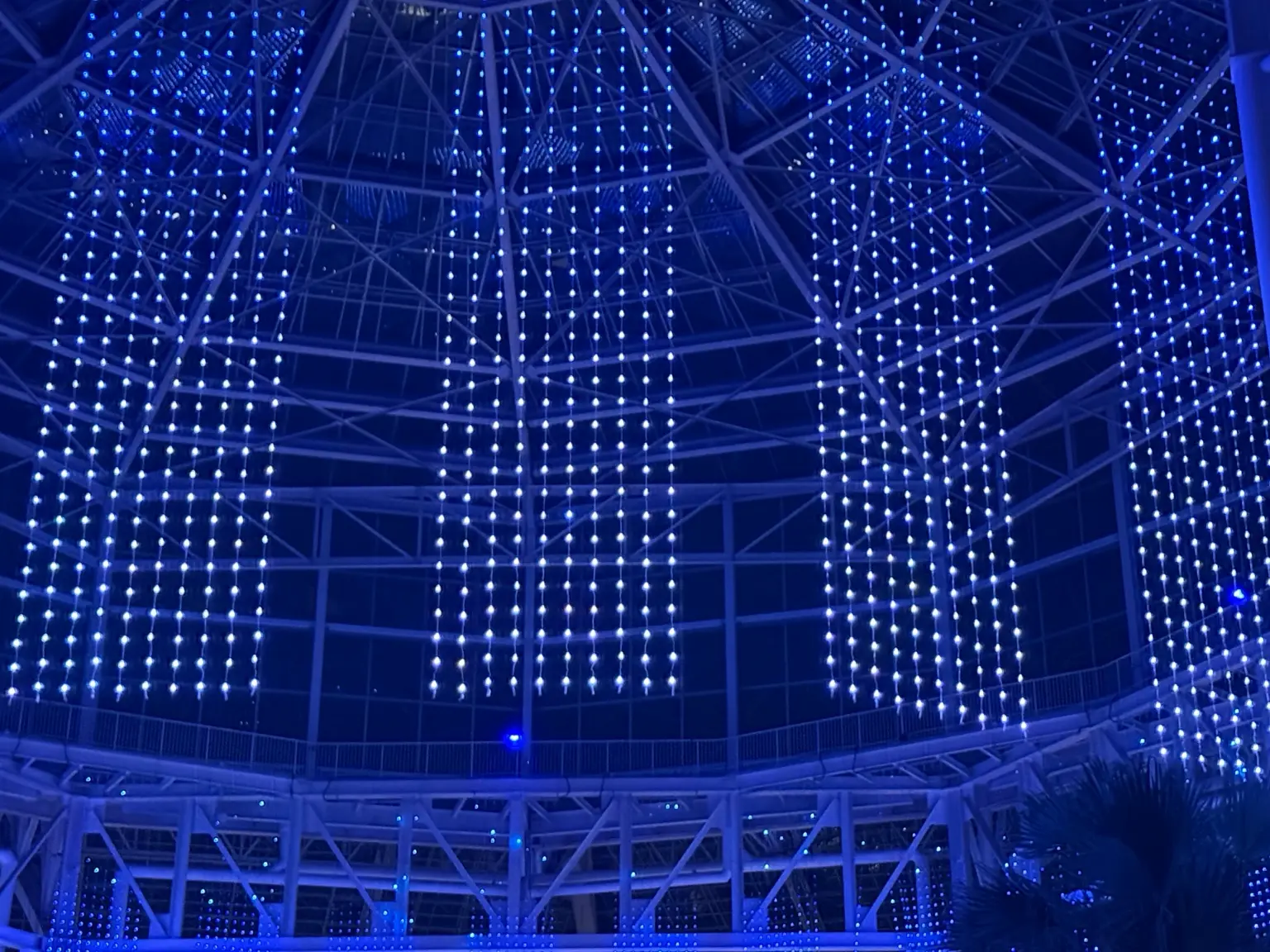
LED curtain lights and hanging light strands can create a strong holiday effect, but the installation should be planned before anything is plugged in. Think about attachment points, cord routing, extension cord limits, and whether the lights are rated for the location.
Blue-heavy displays can look dramatic, but they may also feel visually intense. Use them where the goal is decoration, not comfort lighting.
One of the biggest differences between a professional-looking holiday display and an amateur installation is wire management. Even expensive lights can look cluttered when extension cords, jumper wires, splitters, and power feeds are visible across roofs, landscaping, walkways, and entryways. Before installing seasonal decorations, review our hidden holiday lighting wire management guide for practical techniques that help conceal wiring while improving safety, appearance, and long-term durability.
Visual Troubleshooting Logic Tree
Many failures come from poor connections. See waterproof wire connectors for landscape lighting to prevent moisture-related problems and improve long-term reliability.
If your Christmas lights suddenly stop working or the plug fuse keeps blowing, use our Christmas light fuse replacement guide before replacing the entire strand.
Outdoor holiday lighting also relies on safe grounding practices. See our grounding and bonding guide for a deeper understanding of electrical safety.
If your holiday lighting feels too harsh or fatiguing, review biological lighting infrastructure to understand flicker, glare, and light spectrum quality.
This is especially important for children who are susceptable to flickers and strain.
| Problem | Most Likely Cause | Best First Check |
|---|---|---|
| Whole display is dark | Tripped GFCI, unplugged supply, failed timer | Check outlet, timer, and main plug first |
| Only part of the strand is out | Bad bulb, broken wire section, socket issue | Check bulbs and the dead section of wire |
| Colors flicker or scenes fail | Controller or signal issue | Check app settings, controller zones, and connections |
| Lights dim farther away | Voltage drop | Check wire length and total load |
If half a strand is out: Check for a failed bulb, damaged socket, or broken section of wire.
If everything is out: Start at the outlet, timer, controller, or transformer before touching every bulb.
If GFCI keeps tripping: Check weatherproofing, wet plugs, damaged insulation, or overloaded extension paths.
If colors are wrong or scenes fail: Check app scene assignment, controller zoning, and smart hub connectivity first.
If the display dims at distance: Re-check cable length, voltage drop, and connection quality.
Fast Diagnostic: Why Aren’t the Lights Turning On?
- Is the whole system dark?
- Check the GFCI outlet first. Moisture in one connector or one bad extension path can shut down the entire display.
- Are the colors flickering?
- This usually points to a data-signal issue in permanent systems or a loose connection in temporary strands.
- Are the lights dim at the end of the run?
- You may have voltage drop. Check cable length, connection quality, and whether the system needs better wire or an additional power feed.
If your system still isn’t working after basic checks, continue with Portfolio lighting troubleshooting to narrow down the issue step by step.
For outdoor-specific issues like buried wire faults or weather-related failures, use Portfolio landscape lighting troubleshooting to diagnose problems in yard lighting systems.
C7 and C9 displays deserve a separate inspection because their screw-base sockets fail differently from sealed mini-light strings. A bulb that works only when overtightened may have a flattened center contact, while flickering during rain can indicate shell corrosion, moisture at the cord-piercing connection, or a cracked socket body. Before discarding an entire roofline string, use the C7 and C9 holiday light socket repair and maintenance guide to identify E12 and E17 sockets, test the bulb separately, inspect both electrical contacts, and determine whether the socket can be serviced or should be replaced.
The Smart Hub Section: Matter, Thread & 2026 Holiday Control
If your long-term strategy includes permanent holiday lighting, smart architecture matters almost as much as the lights themselves. A poorly planned system turns every seasonal change into a setup chore. A well-planned system lets you shift from patriotic summer scenes to Halloween drama to Christmas presets with minimal manual work.
If your lights turn on and off automatically, use landscape lighting timer setup to configure schedules and avoid common control issues.
For related guides in this section, see Matter / Thread Connectivity, Holiday Lighting Setup Ideas, and Smart Hub Compatibility Guide.
The best holiday lighting systems work when design, power, weather protection, and maintenance all match. Most failures come from poor connectors, overloaded runs, weak storage habits, or trying to expand a system without checking power and control limits first.
Holiday Lighting FAQ
If your holiday lighting system is already failing, see landscape lights not working for a focused diagnostic path from power source to fixture.
Can I use my landscape lighting transformer for holiday lights?
Sometimes, but only if the holiday-lighting load matches the transformer output, voltage type, and wiring plan. Always check total wattage and whether the connected lights are designed for the same low-voltage system.
What is the best year-round option for holiday lighting?
Permanent holiday lighting is often the best year-round choice for homeowners who want seasonal color changes without climbing ladders every season.
Are LED holiday lights cheaper to run than incandescent lights?
Yes. LED holiday lights typically use far less electricity and run cooler, which makes them the better choice for long display hours and larger installations.
Why does half of my holiday light strand stop working?
Half-strand failures are often caused by a failed bulb, a damaged socket, a broken wire section, or a bad connection at the plug or inline fuse area.
For a complete overview of planning, layout, wiring, and fixture selection, see landscape lighting guide to build a system that looks good and works reliably year-round.
Expert-Verified Troubleshooting
Every technical guide on PortfolioLighting.net is reviewed for accuracy. Our troubleshooting procedures are based on 25+ years of field experience and are maintained by Philip Meyer to ensure accuracy and electrical safety compliance.