
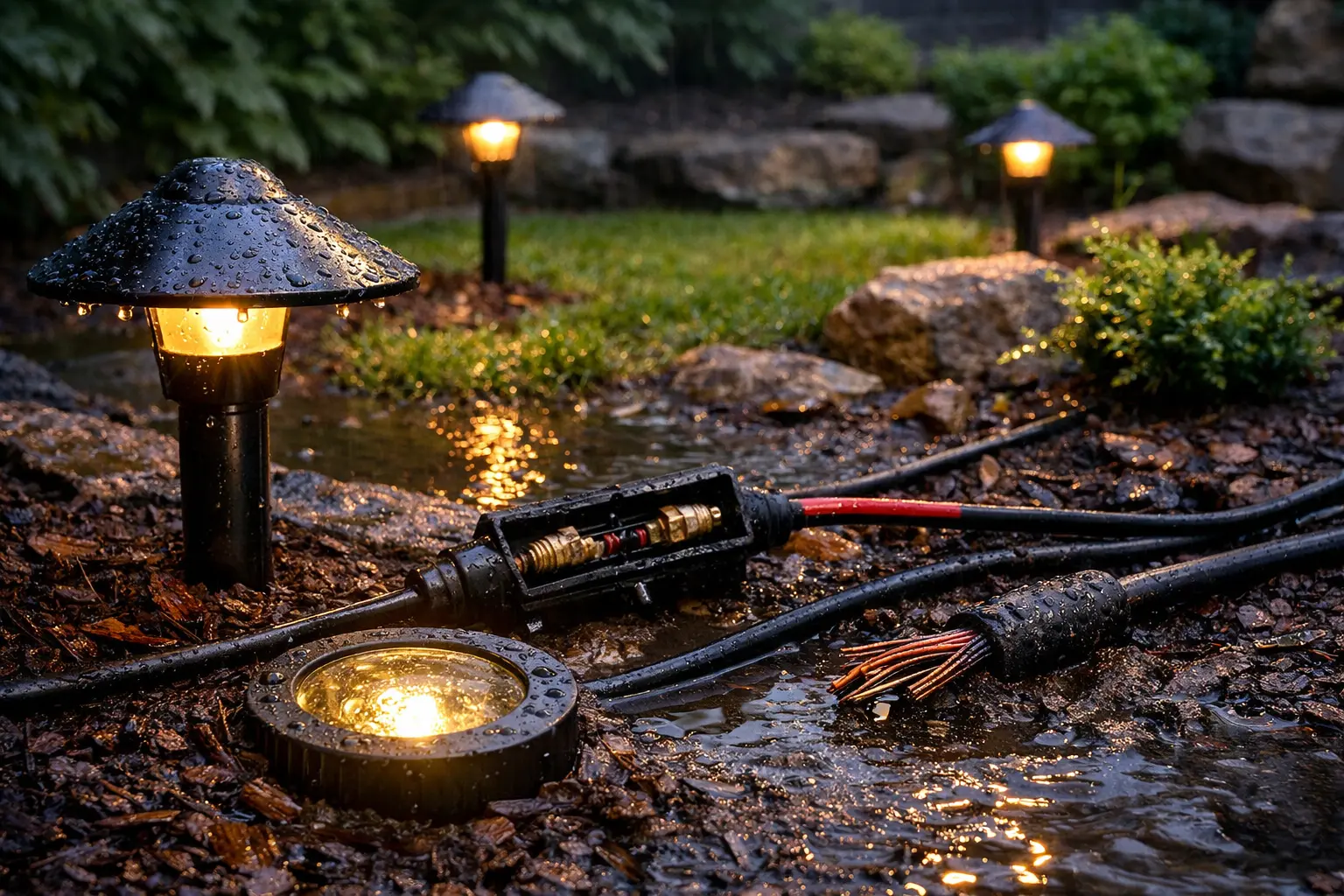
Quick Answer: Why Lights Stop Working After Rain
Landscape lights usually fail after rain because water creates a short circuit somewhere in the system. The most common causes are:
- Wet wire connectors causing a short
- Water inside fixtures damaging sockets or LEDs
- Damaged underground cable exposed to moisture
- Transformer safety shutdown from overload or short
Start at the transformer first, then check connectors and fixtures in the affected area to find the fault quickly.
Fast Diagnosis Guide
| What You See | Most Likely Problem |
|---|---|
| All lights off after rain | Transformer tripped or short circuit |
| Some lights off | Wet connector or damaged cable |
| Flickering lights | Moisture inside fixture |
| Works again after drying | Intermittent moisture short |
| One light always fails in rain | Cracked fixture or bad seal |
Is It a Connector, Fixture, or Cable Problem?
- Connector issue: multiple lights fail in one section
- Fixture issue: only one light fails repeatedly
- Cable issue: system fails after heavy rain or ground saturation
Identifying the type of failure helps you fix the system faster without unnecessary replacements.
Rain itself is not supposed to shut down a good outdoor lighting system. If your lights fail after a storm, the rain usually is not the real problem. It is exposing a weak point that was already there.
That weak point might be a corroded connector, a fixture with a bad seal, a damaged underground cable, or a transformer that trips whenever moisture creates a fault. Once you find that weak point, the repair is usually much more manageable than the symptom first makes it seem.
Rain-related lighting failures often start at exposed plugs or connections. Use our holiday light weatherproofing guide to prevent moisture from reaching the circuit.
If outdoor lights fail after rain or wet weather, the problem may not always be the transformer or wiring. Damaged weather seals, missing gaskets, and deteriorated O-rings can allow moisture into fixtures and connectors. Our outdoor lighting gaskets, O-rings, and seals guide explains how these protective components prevent water-related failures.
Most Common Causes After Rain
- Water inside wire connectors
- Cracked or leaking light fixtures
- Damaged underground cable
- Transformer tripping due to a short
- Well lights filling with water
Quick Diagnosis Table
Use this quick table to match the symptom you are seeing with the most likely cause and the best first repair step.
| Problem | Likely Cause | Quick Fix |
|---|---|---|
| Lights stopped after rain | Water in wire connector | Replace with a waterproof connector |
| Transformer reset tripping | Short circuit in cable | Locate and repair damaged wire |
| Light flickers after rain | Moisture in fixture | Dry the fixture and reseal the lens |
| Some lights off | Underground cable damage | Inspect the wiring path and branch connections |
| Only one fixture fails in wet weather | Cracked housing or failed seal | Repair or replace the fixture |
| System works again after drying out | Moisture-related intermittent short | Inspect connectors, cable, and wet fixtures carefully |
Why Landscape Lights Fail After Rain
Outdoor lighting systems are built to handle moisture, but they are not built to ignore damaged parts forever. Rain tends to reveal hidden problems such as loose wire connectors, cracked fixture housings, damaged underground cable, or poor drainage around in-ground fixtures. In dry weather, those weak points may not interrupt the circuit. Once water enters the system, the lighting can start flickering, trip the transformer, or stop working entirely.
This is why rain-related lighting failure is usually a symptom rather than the root cause. The storm is not creating the weakness from scratch. It is exposing a seal that already failed, a connector that was already loose, or a cable section that was already damaged under the soil.
If your system shuts off after rain, it may be caused by GFCI protection detecting leakage current. See GFCI requirements for outdoor lighting to understand why this happens.
The most helpful mindset is to treat rain as a clue. If the problem appears only in wet weather or right after a storm, that strongly points toward water intrusion, a moisture-sensitive short, or drainage trouble somewhere along the system.
Rain-related lighting failures can come from connectors, transformers, or fixtures that lack the proper enclosure protection. The landscape fixture waterproof-rating guide explains which IP levels are appropriate for exposed outdoor installations.
Most Common Causes of Portfolio Lights Failing After Rain
Most rain-related landscape lighting failures fall into a handful of common categories. Once you know what to look for, troubleshooting gets much faster.
Water Inside Fixtures
Rainwater can enter landscape fixtures through cracked lenses, worn seals, damaged housings, or poor drainage around the fixture base. Once water gets inside, it can short the bulb socket, damage the LED module, corrode internal wiring, or create intermittent flickering. This is especially common with older fixtures that still look fine from above but no longer seal properly.
Loose or Corroded Connectors
Low-voltage connectors corrode over time, especially in wet soil, mulch, and areas with repeated irrigation. If rainwater reaches an already weak connection, the electrical path may become unstable or fail completely. For broader cable and connection guidance, see landscape lighting cable guide.
Rain-related failures often come from unsealed outdoor connections. Use our outdoor lighting junction box requirements to verify the box, cover, gasket, and conduit entries.
Damaged Underground Cable
Underground cable can be cut or weakened by lawn aerators, shovels, edging tools, tree roots, and earlier landscaping work. In dry weather, the damage may not fully shut the system down. But when rainwater reaches the damaged section, it can create a short circuit or unstable connection. For a deeper look at this exact problem, use Portfolio landscape lights short circuit.
Transformer Safety Shutoff
Most landscape lighting transformers include a reset button, breaker, or internal protection that shuts down the system when a short or overload is detected. If moisture creates a fault after rain, the transformer may trip and keep the lights off until the problem is corrected. This is one reason rain-related lighting failure often feels like the whole system “just died.” Related help: Portfolio transformer tripping breaker.
How to Troubleshoot Landscape Lights After Rain
The best way to troubleshoot rain-related lighting failure is to move from the power source outward instead of jumping randomly from fixture to fixture.
Step 1: Check the Transformer
Verify the transformer is powered and has not tripped its breaker or reset. Check the timer, photocell settings, and output side if needed. If the transformer is not sending power, start there before opening fixtures. Related help: Portfolio transformer not powering lights and Portfolio lighting transformer troubleshooting.
Step 2: Inspect Wire Connectors
Check the connectors where fixtures attach to the main cable. Look for corrosion, loose wires, cracked connector shells, or signs of trapped moisture. Outdoor low-voltage connectors are one of the most common failure points after storms.
Step 3: Check Fixtures for Water
Remove the fixture cover or lens where possible and inspect the inside for moisture, standing water, mud, or corrosion. If water is present, dry the fixture thoroughly, inspect the seal, and replace cracked or damaged lens components. If the fixture repeatedly fills with water, replacement may be more practical than repeated repair.
Step 4: Inspect the Cable Path
Follow the cable route through the yard, especially near areas that have been edged, dug up, aerated, or changed recently. Look for damaged insulation, exposed wire, or sections where the cable may have been pinched. If needed, use Portfolio lighting wiring diagram to help think through system layout.
Step 5: Test Lights Individually
Disconnect fixtures one at a time to identify whether a single light is causing the short or shutdown. If the system comes back once one fixture is removed, that fixture or its local connection is likely the fault point.
If Portfolio lights work one night and fail the next, the issue is often a partially corroded connection or moisture-sensitive component. The intermittent Portfolio landscape lighting guide explains how weather, wire damage, and failing sensors create unstable lighting behavior.
Why Well Lights Are More Vulnerable After Rain
Well lights are often the first landscape fixtures to fail after rain because they sit below grade and naturally collect more moisture than above-ground fixtures. Even a well-built in-ground light depends on good drainage, intact seals, and stable surrounding soil to stay dry inside.
Common well-light rain issues include:
- poor drainage beneath the fixture
- clogged gravel beds or drainage paths
- soil shifting around the housing
- water pooling above the lens area
- seals weakening with age
If well lights are part of your problem, go directly to Portfolio well lights troubleshooting. These fixtures often need a more fixture-specific diagnosis than path lights or spotlights.
Preventing Rain Damage in Landscape Lighting
Preventive maintenance does a lot to reduce wet-weather failures. The strongest systems are not just installed well. They are checked periodically before small moisture problems become major repair problems.
- use waterproof gel-filled connectors designed for outdoor low-voltage wiring
- bury cables at a safe and consistent depth
- ensure proper drainage beneath in-ground fixtures
- inspect wiring connections after landscaping work
- replace cracked lenses and failing seals early
- keep well lights and low points free of packed debris
These simple steps can significantly extend the life of your system and reduce the chance that the next storm becomes a full troubleshooting project.
Final Thoughts on Portfolio Lights Not Working After Rain
If your Portfolio lights stop working after rain, moisture is almost always exposing a weak point in the system. That weak point may be a bad connector, a wet fixture, a damaged buried cable, or a transformer that is correctly shutting down because of a short.
The fastest way to fix the problem is to troubleshoot in order: check the transformer, inspect connectors, open suspect fixtures, and follow the cable path for hidden damage. Once you isolate the actual failure point, the repair is usually much more straightforward than the “everything died after rain” symptom makes it sound.
Portfolio Lights Not Working After Rain FAQ
Why do my landscape lights stop working after heavy rain?
Rainwater may enter connectors, fixtures, or damaged cable and create a short circuit that shuts down the lighting system.
Can rain damage low-voltage lighting?
Yes. Moisture entering weak connectors, cracked housings, or damaged cable can interrupt the low-voltage electrical path.
Why does my transformer trip after rain?
Transformers include safety breakers or reset functions that shut off power when a short circuit is detected somewhere in the wet system.
How do I waterproof landscape lighting connections?
Use waterproof gel-filled connectors designed for outdoor low-voltage lighting and replace any old corroded connectors that no longer seal properly.
Can water inside a fixture stop it from working?
Yes. Water inside the fixture can short the bulb socket, damage the LED module, corrode internal wiring, and cause flickering or total failure.
Why are well lights more likely to fail after rain?
Well lights sit below grade, collect water more easily, and depend heavily on proper drainage and intact seals to stay dry.
Portfolio systems that fail after storms may be tripping protection because moisture is entering a connector, transformer outlet, or fixture housing. The Portfolio landscape lighting GFCI troubleshooting guide walks through the most common wet-weather trip points.