
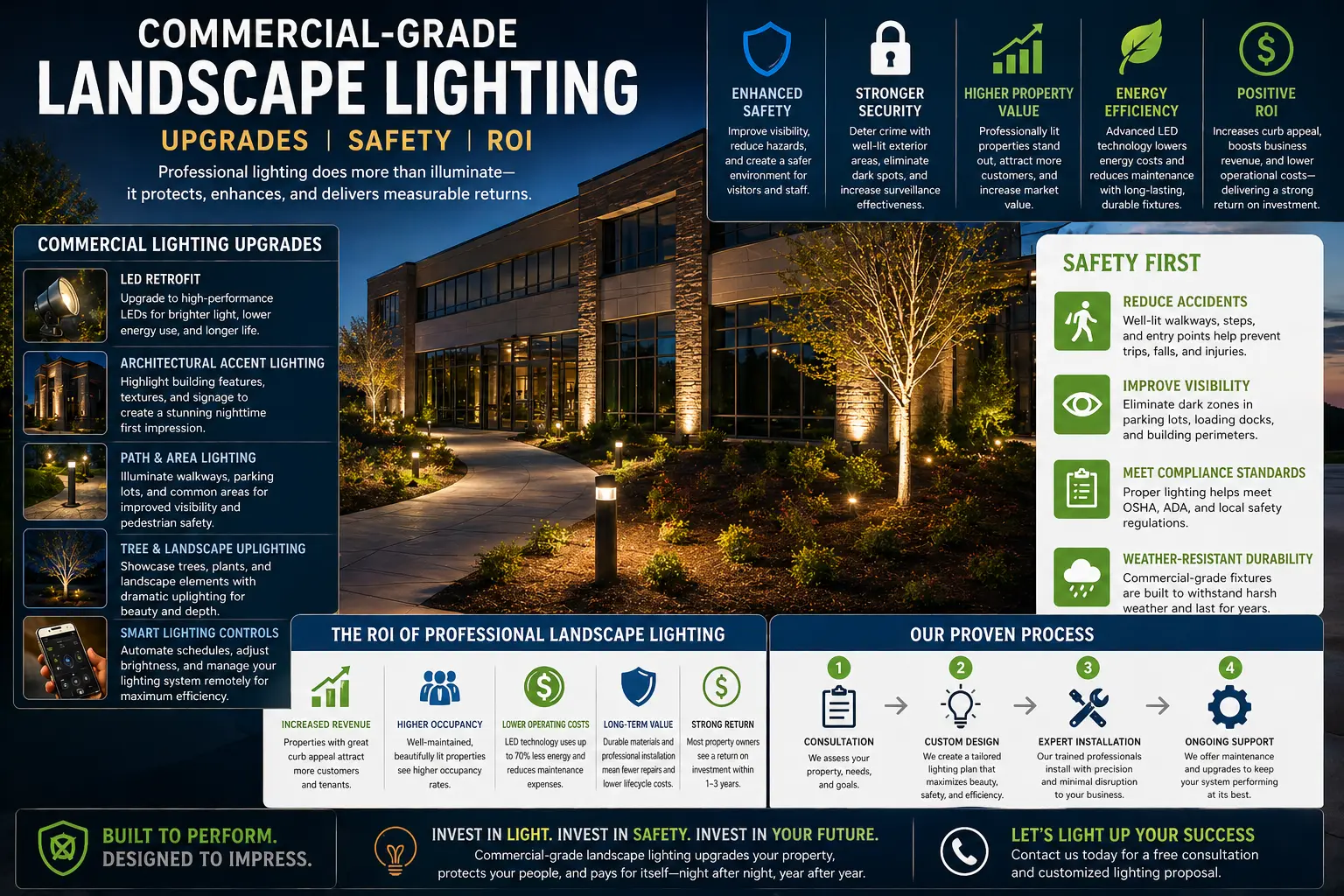
Quick Answer: When Should You Upgrade to Commercial-Grade Landscape Lighting?
Upgrade when your current system keeps failing, the property is large, the lights support safety, or the system protects a high-value home or business. Commercial-grade lighting becomes attractive when replacement labor, transformer failures, moisture damage, broken stakes, and poor voltage performance cost more than a properly designed system.
Commercial Upgrade Logic Summary
| Problem | Commercial-Grade Fix | Why It Improves ROI |
|---|---|---|
| Transformer trips or runs hot | Upgrade to a properly sized multi-tap transformer | Reduces overload, heat, nuisance trips, and premature failure |
| Dim lights at end of run | Use heavier-gauge cable and better voltage distribution | Improves brightness consistency and reduces service calls |
| Plastic fixtures break | Upgrade to brass or cast-aluminum fixtures | Longer lifespan and better curb appeal |
| Lights fail after rain | Use waterproof splices and sealed connectors | Prevents corrosion, shorts, and repeat troubleshooting |
Cheap landscape lighting usually fails from the same handful of problems: plastic stakes snap, thin housings leak, sockets corrode, low-grade connectors let water in, and under-sized transformers get pushed too hard. A commercial-grade upgrade solves those problems at the system level.
This page bridges practical Portfolio repairs with higher-end landscape lighting strategy. Start here if you have an old low-voltage system and want a durable, safer, more valuable outdoor lighting upgrade.
The Cost of Failure Calculator: Big Box vs Commercial-Grade Over 5 Years
A cheap system looks less expensive on day one. The hidden cost shows up after water intrusion, cracked stakes, corroded sockets, callbacks, transformer overload, and repeated labor.
| Cost Category | Big-Box Plastic System | Commercial-Grade Brass System | Why It Matters |
|---|---|---|---|
| Initial fixture cost | Lower upfront cost | Higher upfront cost | Cheap systems win the first receipt, but not always the five-year math. |
| Fixture body | Plastic, thin aluminum, or lighter housings | Brass, copper, stainless, or heavier cast housings | Better materials survive mower hits, UV, freeze-thaw cycles, and corrosion longer. |
| Stake failure | Common after soil movement or mower impact | Less common with heavier stakes and replaceable hardware | Broken stakes create repeat maintenance and crooked fixtures. |
| Socket corrosion | Frequent if water enters lens or connector | Reduced with better seals and serviceable lamps | Socket corrosion is one of the biggest hidden costs in cheap fixtures. |
| Transformer burnout | More likely when overloaded or connected with poor splices | Lower risk when sized with headroom and better terminal connections | A better transformer protects the entire investment. |
| Labor cost | Repeated repairs every season | Higher install quality, fewer repeat visits | Labor often costs more than the fixture over time. |
| 5-year ownership pattern | Replace, repair, troubleshoot, repeat | Install, inspect, adjust, maintain | The upgrade pays off when failures stop consuming weekends or service calls. |
Commercial vs. Residential Landscape Lighting: The Technical Difference
Commercial-grade landscape lighting is not just “brighter.” It is built to last longer, handle harsher conditions, support larger properties, and remain serviceable. The goal is fewer failures, better safety, and cleaner long-term performance.
Fixture Materials
Commercial-grade fixtures often use brass, copper, stainless hardware, thicker lenses, replaceable gaskets, and stronger stakes.
Serviceability
Better fixtures are easier to open, clean, re-lamp, reseal, and aim without breaking plastic tabs or stripped screws.
Wire and Connectors
Commercial systems rely on better direct-burial cable, waterproof splices, cleaner hub layouts, and voltage-drop planning.
Transformer Headroom
Pro systems leave capacity for voltage drop, future fixtures, zoning, and safer terminal temperatures.
For layout planning, use the landscape lighting layout design. For wire sizing, use the landscape lighting voltage drop calculator.
Public Liability: Why Safety Lighting Matters on Walkways and Commercial Properties
On residential properties, lighting improves comfort and curb appeal. On commercial or public-facing properties, lighting also supports safety. Walkways, steps, ramps, parking edges, entry paths, and transition zones need enough light to help people see surface changes.
What safer lighting should do
- mark steps, edges, ramps, and elevation changes;
- reduce dark gaps between parking and entrances;
- avoid glare that blinds visitors or drivers;
- use reliable power and weatherproof connections;
- keep security lighting and accent lighting on separate zones.
For electrical safety, see the landscape lighting electrical code safety guide and outdoor lighting GFCI requirements NEC 2026.
For code-related outdoor wiring rules, review the NEC 2026 landscape lighting code updates.
The 300W+ Transformer Deep Dive: Avoid Terminal Lug Overheating
Large systems fail differently than small DIY kits. Once a system reaches 300W or more, the transformer, wire gauge, terminal lugs, and connection quality become critical. A loose terminal screw can create resistance heat even when the transformer is technically the correct size.
Common 300W+ transformer problems
- Terminal lug overheating: loose strands, undersized wire, or loose screws create heat.
- Voltage drop: long runs make far fixtures dim and force users to over-correct incorrectly.
- Overloading: old halogen loads may exceed safe practical capacity.
- Moisture damage: outdoor enclosures and cord entries must stay protected.
- Poor zoning: everything runs at once even when security and accent lighting need different schedules.
If your current system keeps shutting down before you upgrade, first review Portfolio transformer tripping breaker to rule out overload, moisture, shorted wire, or a bad connection.
The Upgrade Path for Portfolio Owners: Keep the 12V Wiring, Upgrade the Weak Points
The specialist secret is that you may not need to tear out the whole system. Many Portfolio owners can keep portions of existing 12V direct-burial wiring if the cable is in good shape, correctly sized, and not causing voltage drop.
Keep the existing wire only if:
- the cable jacket is not cracked, nicked, chewed, or shovel-cut;
- the wire gauge supports the new fixture load and run length;
- old pierce connectors are replaced with waterproof connectors;
- the route is buried safely and not exposed at risers;
- voltage at the farthest fixture remains acceptable.
Upgrade in this order
- Transformer: replace undersized or failing power packs first.
- Connectors: replace old snap connectors with waterproof splices.
- Worst fixtures: start with broken stakes, corroded sockets, and leaking housings.
- Wire layout: fix voltage drop before adding more fixtures.
- Controls: add smart plugs, timers, zones, or AI-style controls last.
Use the Portfolio Lighting model library to identify old fixtures such as model 16034 before choosing a modern pro-grade replacement path.
If only one part failed, check Portfolio lighting parts and accessories before replacing the entire system.
For transformer sizing, wiring, and replacement strategy, see the Portfolio lighting transformer master guide.
Before increasing wattage or adding fixtures, calculate your wire run with the landscape lighting voltage drop calculator.
Commercial-Grade Lighting Should Improve Safety and Architecture
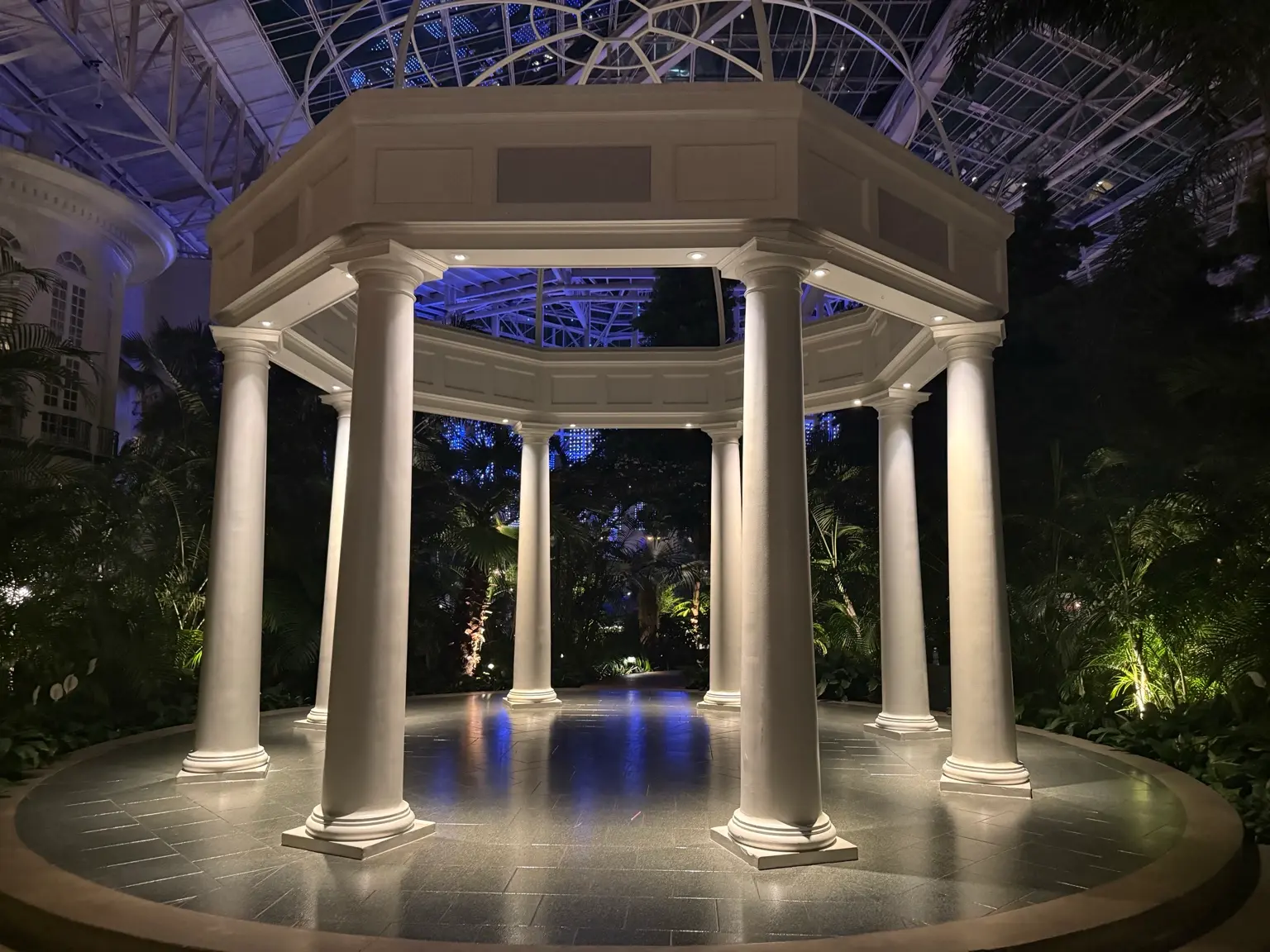
Commercial-grade lighting should do more than make a space brighter. It should guide movement, reduce dark zones, highlight important architecture, and make the property feel maintained and safe.
Column uplighting, step lighting, and planting-bed accents work best when they are balanced together instead of installed as separate random fixtures.
For commercial properties, lighting upgrades should be judged by visibility, reliability, and risk reduction, not appearance alone. The commercial landscape lighting liability guide explains how lighting decisions affect safety exposure and documentation.
Commercial lighting upgrades should be evaluated for safety, insurance exposure, and contractor qualifications before installation begins. The commercial landscape lighting contractor licensing guide explains why licensing matters for larger outdoor lighting projects.
Model Cross-Reference: Portfolio Fixture Failure to Pro-Grade Upgrade
| Old Portfolio Problem | Common Failure | Commercial-Grade Upgrade Direction | Before You Buy |
|---|---|---|---|
| 16034-style path light | Socket corrosion, debris, water in tiered cap, broken stake | Brass path light with replaceable LED lamp, stronger stake, and better drainage | Match height, spread, color temperature, and 12V compatibility. |
| Plastic path lights | Cracked stakes and tilted heads | Cast brass or aluminum path fixture with serviceable stake and threaded stem | Confirm stem thread and wire connection method. |
| Older spotlights | Ball-joint breakage and moisture behind lens | Brass bullet spotlight with replaceable MR16-style lamp and sealed lens | Compare beam angle, lamp type, and aiming hardware. |
| Small transformer | Buzzing, overheating, no room for expansion | Larger listed outdoor transformer with voltage taps and better terminals | Calculate load and voltage drop before upsizing. |
| Snap connectors | Intermittent contact and water intrusion | Gel-filled or silicone-filled waterproof low-voltage connectors | Match wire gauge and burial rating. |
If you are comparing old fixtures before upgrading, use the Portfolio Lighting model library and repair index to identify older transformers, path lights, parts, and repair paths.
Smart System Integration: Zoning, Schedules, and AI Control
A commercial-grade upgrade should separate the property into zones. That way, safety and security lights can stay active while decorative accent lights shut off later to save energy and reduce light pollution.
Recommended zones
- Security zone: driveways, side yards, gates, and dark approaches.
- Pathway zone: walkways, steps, and entry paths.
- Accent zone: trees, columns, walls, fountains, and architectural features.
- Outdoor living zone: patio, deck, pergola, kitchen, and seating areas.
Smart controllers can adjust for local sunrise and sunset times, seasonal schedules, and late-night dimming. Start with AI outdoor lighting systems and AI automated landscape lighting.
Upgrade Checklist: Build the Bulletproof System
- Transformer: size with headroom and choose outdoor-rated listed equipment.
- Wire: inspect existing 12V cable and calculate voltage drop before reuse.
- Connections: replace old snap connectors with waterproof splices.
- Fixtures: prioritize brass or serviceable fixtures in high-impact areas.
- GFCI: verify outdoor power source protection before upgrading controls.
- Zones: separate security, path, accent, and outdoor living circuits or schedules.
- Maintenance: clean lenses, inspect gaskets, and check terminals each season.
Related Upgrade Resources
Voltage Drop Calculator
Use this before reusing existing Portfolio wire or adding longer pro-grade fixture runs.
Open calculatorTransformer Replacement
Pick the correct replacement transformer before adding fixtures or switching to brass.
Open transformer guideModel Library
Identify old Portfolio models and match common failures to replacement paths.
Open model libraryGFCI Safety
Review outdoor GFCI rules before upgrading transformers, controls, or exterior power.
Open GFCI guideCommercial-Grade Landscape Lighting Upgrade FAQ
Is commercial-grade landscape lighting worth it?
It is worth it when your existing system keeps failing, the property is large, lights support safety, or the home/business needs a durable exterior upgrade. The payoff comes from fewer replacements, better reliability, safer walkways, and stronger curb appeal.
Can I keep my existing Portfolio 12V wiring?
Sometimes yes. You can reuse existing wire if it is direct-burial rated, undamaged, correctly sized, and does not create voltage drop problems. Replace weak connectors and inspect exposed risers before reusing old cable.
Does pro-grade lighting increase home value?
Quality outdoor lighting can improve curb appeal, outdoor usability, safety, and perceived property value. Many homeowners view professionally installed landscape lighting as a strong exterior ROI upgrade because it improves the home every night, not just during daylight.
What fails first in cheap landscape lighting systems?
The most common failures are broken plastic stakes, corroded sockets, wet connectors, cracked lenses, overheated terminals, and undersized transformers.
Should I upgrade the transformer or fixtures first?
If the transformer buzzes, overheats, trips, or lacks capacity, start there. If the transformer is healthy but fixtures are leaking or breaking, replace the worst fixtures and connectors first.
Commercial Upgrade Safety Disclaimer
This guide is educational and does not replace local code, manufacturer instructions, a licensed electrician, a lighting designer, or the Authority Having Jurisdiction. Commercial and public-facing properties may require additional permitting, inspections, liability review, or professional design.