
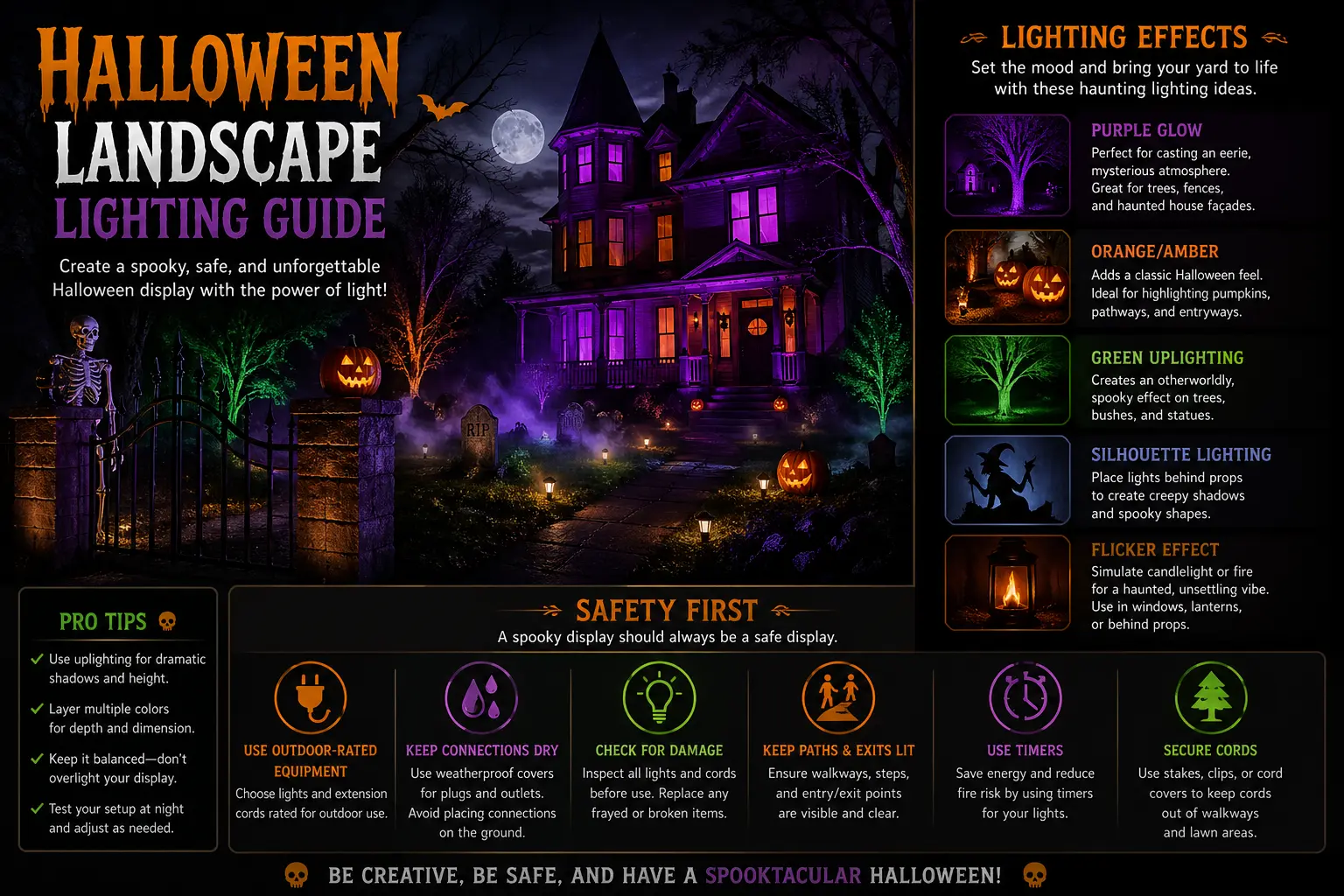
Quick Answer: How Do You Make Halloween Landscape Lighting Look Professional and Safe?
Use low-angle light, hidden fixtures, warm-white contrast, colored accent lights, GFCI-protected outdoor power, and protected cord connections. The most professional Halloween yards do not flood everything with bright light. They use shadows, fog, silhouettes, and controlled color so the yard feels haunted without creating trip hazards or wet electrical connections.
Halloween Landscape Lighting Logic Summary
| Effect | Best Lighting Setup | Safety Check |
|---|---|---|
| Ghost silhouette | Low floodlight behind figure | Keep cords behind props and away from walking paths |
| Fog glow | Blue or green low-voltage well light under fog | Keep fixtures and connectors dry and off wet ground |
| Orange pathway scene | Low-output LED path lights or colored bulbs | Check voltage drop at the farthest fixture |
| Yard haunt display | Separate lighting zones from props and inflatables | Use GFCI protection and avoid overloaded outlets |
Halloween lighting is different from Christmas lighting. Christmas lighting is usually about brightness and decoration. Halloween lighting is about controlled darkness. The shadows matter as much as the lights.
That is why the best Halloween display is built like a stage scene: one light creates the shape, one light adds color, and the rest of the yard stays dark enough to feel mysterious.
The Halloween Voltage Drop Trap: Long temporary runs of thin 16-gauge holiday wire can cause major voltage drop. If orange LEDs look yellow, weak, or dim at the end of the run, your voltage may have dropped below 10V. Use the landscape lighting voltage drop calculator before assuming the fixture failed.
For a complete breakdown of planning, setup, and troubleshooting, see the holiday lighting guide before building your Halloween display.
The Special Effects Technical Guide
Great Halloween landscape lighting is not about buying more lights. It is about placing fewer lights in smarter positions as well as safety. These techniques work with low-voltage landscape fixtures, temporary stake lights, colored floodlights, well lights, and smart outdoor plugs.
Silhouette Lighting
Place a floodlight behind a skeleton, gravestone, scarecrow, or tree branch so the prop blocks the beam and throws a huge shadow onto siding, a fence, or a garage door.
Fog Underlighting
Use a blue or green 12V well light under fog so the fog itself glows. Keep the fixture hidden below the fog line so visitors see the effect, not the source.
Wall Grazing
Place a light close to brick, stone, siding, or a fence and aim upward. Texture becomes dramatic, especially with green, purple, or orange.
Moonlighting
Mount or aim a cool blue/purple light downward from a tree to imitate spooky moonlight. Keep the ground partly dark so shadows feel larger.
This is especially true if you plan on having many trick or treaters coming to your home. I always want safety first at my home, especially with young visitors on Halloween and with lighting, it's important to always stress safety first.
If you're deciding between a temporary Halloween setup or a permanent lighting system, compare options in permanent vs temporary holiday lighting to choose the best fit for your home.For advanced effects like colored lighting, projection, and themed setups, explore Portfolio specialty lighting options to enhance your Halloween display.
The Silhouette Technique: Make a Small Prop Look Huge
The silhouette technique is the fastest way to make a basic Halloween prop look professional. Place a light behind the prop and aim it toward a flat surface such as house siding, a garage door, a fence, or a blank wall.
How to set it up
- Place the skeleton, tombstone, witch cutout, or branch 4 to 10 feet away from the wall.
- Set a floodlight or spotlight low behind the prop.
- Aim the light past the prop and onto the wall.
- Move the prop closer to or farther from the light to change shadow size.
- Use orange or warm white for classic haunted shadows, or purple for a monster-movie look.
The Graveyard Fog Setup: Light the Fog from Underneath
Fog looks flat when it is lit from above. For a graveyard effect, light it from underneath or from a very low side angle. A low-voltage blue or green well light hidden behind a tombstone can make the fog glow like it is coming out of the ground.
Fog lighting placement
- Place the light low: below the fog line, not above it.
- Hide the source: use a tombstone, shrub, rock, or planter to block the fixture from view.
- Use one strong color: green for toxic, blue for cold graveyard, purple for supernatural.
- Keep connections dry: fog machines and plugs need outdoor-rated connection protection.
If rain is likely, review weatherproofing outdoor holiday lights before putting fog-machine cords or low-voltage connections near wet grass.
Halloween Color Theory: Why Warm White Looks Haunted and Cool White Looks Clinical
The color temperature matters. 2700K warm white has a candle-like, aged, haunted feeling. When you pair it with deep purple or orange, the result looks cinematic. 5000K cool white often looks like a parking lot, hospital hallway, or security light.
- 2700K warm white: haunted mansion, candle glow, old lanterns, pumpkins.
- Orange: classic Halloween, pumpkins, flicker effects, low-angle shadows.
- Deep purple: supernatural, spooky forest, monster shadows, graveyard accents.
- Lime green: toxic, nuclear, laboratory, witch cauldron effects.
- Blue: cold moonlight, graveyard fog, ghostly paths.
- 5000K cool white: use carefully because it can flatten the mood and feel too clinical.
Interactive Atmosphere Comparison: Pick the Halloween Vibe First
| Theme | Primary Color | Lighting Technique | Specialist Tip |
|---|---|---|---|
| Classic Haunted | Orange / Warm White | Low-angle uplighting | Use flicker LED bulbs to mimic candles and keep the rest of the yard darker. |
| Toxic / Nuclear | Lime Green | Wall grazing or fog underlighting | Hide the light source in a bush or behind a tombstone so only the glow is visible. |
| Spooky Forest | Deep Purple / Blue | Moonlighting from trees | Keep the ground dark to hide “monster” shadows and make branches feel larger. |
| Graveyard Fog | Blue / Green | Low well light under fog | Place lights below the fog line and keep cords off wet grass. |
| Haunted Porch | Warm White / Purple | Side lighting and silhouette | Light the doorframe from the side, not straight on, so decorations cast shadows. |
Seasonal lighting effects can quickly become visually overwhelming when high-output LEDs are used without brightness control. The outdoor lighting brightness pollution guide explains how excessive lumen density affects visibility, glare, and neighborhood light balance.
Red Uplighting Creates Drama Fast
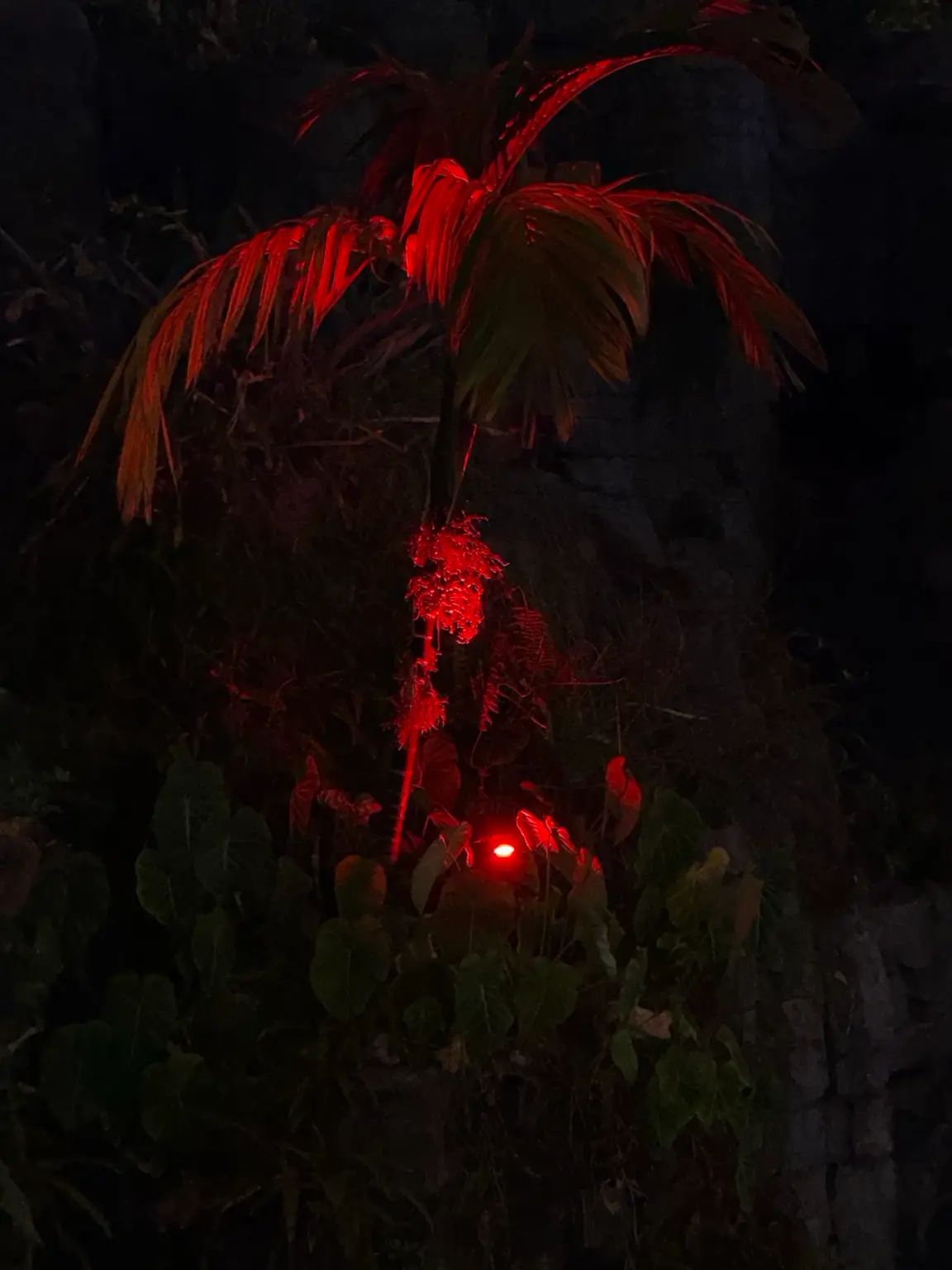
Red lighting is one of the fastest ways to turn ordinary plants, walls, or trees into a Halloween scene. It works especially well when aimed upward through leaves or rough textures.
Keep safety lighting separate from effect lighting. Use red or colored fixtures for mood, but keep paths, steps, and entrances visible with warmer white lighting.
Halloween lighting setups often place accent lights, extension cords and decorative effects close to fire pits, torches and outdoor flame features without considering long-term heat exposure or gas-line proximity. This fire pit lighting clearance and safety guide explains smarter ways to position outdoor lighting around active fire features while reducing glare and overheating risks.
Electrical Safety for Temporary Halloween Displays
Temporary does not mean unsafe. Halloween displays often fail because people run indoor cords through wet grass, tape plug connections together, overload outlets, or leave cord junctions sitting in mulch. Outdoor holiday wiring must still be treated as outdoor electrical equipment.
The 90-day temporary wiring rule
NEC discussions commonly allow temporary holiday and decorative wiring for a limited seasonal period, often referenced around 90 days. That does not remove the need for safe installation. Outdoor temporary displays still need proper cords, weather protection, GFCI protection, and safe routing.
Use these safety basics
- Plug outdoor displays into GFCI-protected power.
- Use outdoor-rated extension cords only.
- Keep plug connections off the ground.
- Use cord connection boxes for plug junctions during rain.
- Do not run cords across walkways without protection.
- Do not overload one outlet with fog machines, inflatables, lights, and props.
For more detail, read outdoor lighting GFCI requirements NEC 2026 and landscape lighting electrical code safety guide.
For outdoor outlet safety, review outdoor lighting GFCI requirements before plugging in Halloween displays.
Before building Halloween effects, make sure your base system is set up correctly. See Portfolio outdoor lighting systems for layout, wiring, and fixture setup basics.
Portfolio Transformer Capacity: Calculate the Halloween Load Before You Plug In
If you already have a Portfolio low-voltage landscape lighting system, you may be tempted to add 10 extra colored stake lights for Halloween. That can work only if the transformer has enough unused capacity.
Simple load formula
Total Halloween Load = Existing fixture watts + temporary Halloween fixture watts
What happens if you overload it?
- The transformer may buzz louder.
- Lights may dim or flicker.
- The transformer may trip or shut down.
- Terminal screws may heat if connections are loose.
- GFCI or breaker trips may become more likely if moisture is also present.
For deeper help, use Portfolio Lighting transformer troubleshooting, Portfolio transformer tripping breaker, and landscape lighting voltage drop calculator.
If you're working with older fixtures or not sure which parts your system uses, identify your setup using the Portfolio Lighting model library and repair index to match transformers, fixtures, and replacement components.
Cord Protection: Keep Halloween Plug Junctions Dry
October rain is the reason many Halloween displays fail. The fixture may be fine, but a plug junction sitting in wet leaves can trip GFCI or create a shock hazard.
- Use cord connection boxes: place plug junctions inside outdoor-rated connection boxes.
- Raise connections: keep plugs on stakes, bricks, or hooks instead of grass or mulch.
- Create drip loops: route cords so water drips below the plug, not into it.
- Do not tape wet plugs: tape can trap water instead of keeping it out.
- Separate loads: fog machines, inflatables, and lights should not all be jammed into one overloaded chain.
For weatherproofing help, see weatherproofing outdoor holiday lights.
If you are burying or routing temporary cable through the yard, compare safe depths in the landscape lighting wire burial depth code guide.
Halloween and seasonal lighting effects often reuse the same extension cords, controllers and LED strands that later appear in Christmas displays. If a strand flickers during Halloween, it is likely to become less reliable when used again in colder or wetter winter conditions. Before moving those lights into your Christmas setup, use this flickering LED Christmas lights repair guide to inspect weak plugs, damaged wires and unstable LED sections.
Smart Halloween Lighting: Plugs, Schedules, and Motion Triggers
Smart lighting is one of the strongest holiday lighting trends because it lets you control when the scare starts. Instead of running everything all night, you can schedule effects for sunset, peak trick-or-treat time, or motion-triggered moments.
Outdoor smart plugs
Use outdoor-rated smart plugs to schedule props, floodlights, string lights, and accent lights. A simple sunset schedule can turn the yard on automatically and shut it down after trick-or-treat traffic ends.
Motion triggers
A motion sensor can trigger a floodlight, sound effect, or fog accent when visitors walk up the path. This works best when the base lighting stays dim and the motion-triggered light creates the surprise.
Smart safety tip
Smart plugs still need outdoor-rated construction, GFCI-protected power, and weather protection. Smart does not mean waterproof unless the device is rated for outdoor use.
Continue with smart holiday lighting setup and AI outdoor lighting systems.
Model 16034 Easter Egg: The “Ghost” Path Light Halloween Trick
If you still have a working Portfolio model 16034 style path light, its classic globe and tiered look can be used as a subtle Halloween feature. A frosted orange tint or warm flicker-style bulb can make it look like a haunted walkway marker without adding a separate prop.
For more model help, use the Portfolio Lighting model library specifications and repair index.
Visual Diagrams to Add to This Page
Add one wide graphic near the top of this page and one smaller diagram near the safety section. These images help users understand the setup quickly and can bring traffic from Google Images and Pinterest.
- Silhouette diagram: floodlight behind skeleton → giant shadow on house siding.
- Fog setup diagram: blue/green 12V well light under fog, with plug junction protected off the ground.
- Safety diagram: GFCI outlet → outdoor smart plug → cord connection box → lights/props.
- Load diagram: existing Portfolio transformer load + extra Halloween stake lights.
Post-Halloween Cleanup: Inspect Before Winter
The display is not finished when the decorations come down. Halloween cords and landscape wires get stepped on, chewed, bent, soaked, and pulled around shrubs. Before storing lights or leaving your landscape system for winter, inspect everything.
- Check 12V wire: look for squirrel nicks, cracked insulation, crushed cable, and exposed copper.
- Check connectors: replace wet, loose, or corroded splices before they fail in winter.
- Check plug blades: look for black marks, green corrosion, or bent prongs.
- Check fixtures: remove leaves from lenses, well lights, and stake bases.
- Check transformer load: remove temporary Halloween fixtures from the Portfolio transformer load count.
If lights stop working after rain or after decorations are removed, use landscape lights not working after rain.
Related Halloween and Outdoor Lighting Resources
Holiday Lighting Guide
Plan safer seasonal displays and connect Halloween lighting into your larger holiday lighting strategy.
Open holiday guideWeatherproofing Outdoor Lights
Protect cord connections, plugs, sockets, and outdoor displays from rain and wet leaves.
Open weatherproofing guideGFCI Safety
Understand why outdoor Halloween displays should use GFCI-protected power.
Open GFCI guideTransformer Troubleshooting
Fix buzzing, overload, breaker trips, dimming, and transformer shutoff problems.
Open transformer guidePhilip Meyer's Halloween Checklist Before Those Trick or Treaters Start Coming
- Silicone-filled wire nuts: Helpful for temporary low-voltage outdoor splices that may face moisture.
- Digital multimeter: Use it to check 12V output at the farthest pumpkin, prop, or path light.
- Black gaffer tape: Hides shiny cords and reduces visible cable glare at night.
- Schedule 80 PVC scraps: Protects cords where they cross lawn edges, mulch borders, or high-traffic areas.
- Weatherproof cord covers: Keeps plug connections protected from dew, rain, and sprinkler overspray.
Halloween Landscape Lighting FAQ
Can I use indoor extension cords outside for Halloween lights?
No. Indoor extension cords are not designed for outdoor moisture, abrasion, temperature swings, or wet plug junctions. Use outdoor-rated cords, GFCI protection, and cord connection boxes for temporary Halloween displays.
How do I make Halloween landscape lighting look professional?
Use shadows, silhouettes, low-angle uplighting, warm white with orange or purple, hidden light sources, fog underlighting, and motion-triggered effects. Avoid blasting the whole yard with cool-white floodlights.
Can Halloween lights overload a Portfolio transformer?
Yes. If you add extra stake lights or colored fixtures to an existing Portfolio low-voltage system, add up the total wattage first. Do not exceed the transformer rating.
Do Halloween displays need GFCI protection?
Outdoor Halloween lighting should be powered from GFCI-protected outlets. Temporary seasonal wiring still needs outdoor-rated cords, weather protection, and safe connection points.
What color light is best for Halloween landscape lighting?
Warm white around 2700K is the best base color because it looks haunted and candle-like. Orange, purple, green, and blue work best as accents for shadows, fog, walls, and props.
Temporary Display Safety Disclaimer
This guide is educational and does not replace the NEC, local electrical rules, manufacturer instructions, or advice from a licensed electrician. Outdoor Halloween displays involve moisture, cords, trip hazards, and electrical loads. Use outdoor-rated equipment, GFCI protection, and professional help when working with 120V wiring or uncertain conditions.