
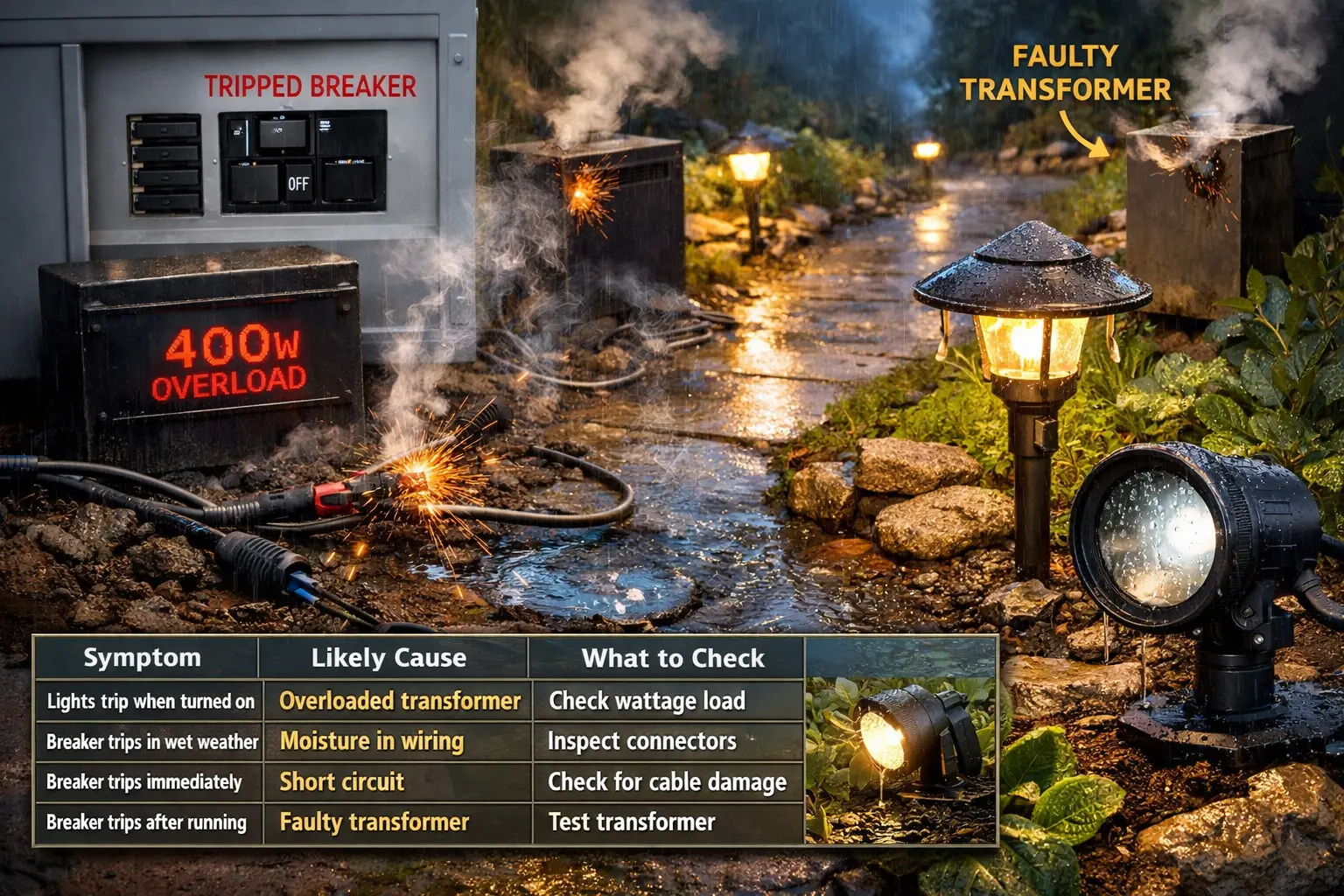
Why Are My Landscape Lights Tripping the Breaker? (Quick Answer)
Landscape lights trip the breaker when there is too much electrical load or a fault in the system. The most common causes are transformer overload, short circuits in the wiring, or moisture inside connectors or fixtures.
- Instant trip: short circuit or damaged wire
- Trip after running: transformer overload or overheating
- Trip after rain: moisture in connectors or fixtures
In most cases, breaker trips are not random failures—they follow a clear pattern that directly points to overload, a short, or moisture intrusion somewhere in the system.
Breaker Trip Logic Summary
| What Happens | What It Means | What To Do |
|---|---|---|
| Trips instantly when lights turn on | Short circuit or damaged wire | Inspect cable and isolate the damaged section |
| Trips after lights run for a while | Transformer overload or overheating | Check total wattage and upgrade transformer |
| Trips after rain | Moisture in connectors or fixtures | Dry and reseal connections, check low areas |
| Trips after adding new lights | System overloaded | Recalculate load and increase transformer size |
| Trips randomly | Intermittent wiring damage or moisture | Isolate runs and inspect connectors |
The pattern of when the breaker trips is the fastest way to identify the real cause. Always match the timing of the trip before replacing parts.
Start Here: Find Your Problem Fast
- If your breaker trips immediately → go to short circuit section
- If it trips after the lights run → check transformer overload
- If it trips after rain → inspect for moisture damage
- If it started after adding lights → check total system load
Start with the condition that matches your system. This will save time and prevent unnecessary part replacement.
Breaker trips are one of the most important landscape lighting symptoms to take seriously because they point to overload, heat, moisture, or a direct electrical fault somewhere in the system.
The most common causes are transformer overload, short circuits in the wiring, damaged cable, wet connectors, and faulty transformers. Start with the quick diagnosis table below, then work through the system carefully so you can isolate the fault instead of repeatedly resetting the breaker.
Why Landscape Lights Trip the Breaker
Landscape lighting trips the breaker when the system draws more current than it should or when a fault creates unsafe electrical conditions. The most common causes are an overloaded transformer, short circuit in the wiring, damaged low-voltage cable, moisture inside connectors, faulty transformers, and incorrect wiring installation.
Breaker trips can happen in different ways. Some systems trip the breaker the instant the lights try to turn on. Others trip only after rain, after the system runs for a while, or after new fixtures were added. Each pattern points to a slightly different cause.
Most Common Electrical Causes
- transformer overload
- short circuit in a cable run
- damaged or crushed low-voltage wire
- faulty transformer with internal failure
Most Common Moisture Causes
- wet connectors
- water inside a fixture
- buried splice exposed to moisture
- rain-related corrosion
Most Common Load Clues
- problem started after adding lights
- breaker trips when full system turns on
- transformer runs hot
- lights may dim before tripping
Most Common Short Clues
- breaker trips instantly
- problem follows yard work
- one section of wire looks damaged
- system fails after wet weather
Quick Diagnosis Table for Landscape Lights Tripping Breaker
Use this table to match the breaker trip pattern to the most likely cause before you start replacing transformers or digging up cable.
| Symptom | Likely Cause | What To Check | Detailed Fix |
|---|---|---|---|
| Breaker trips when lights turn on | Transformer overload | Total wattage load and transformer capacity | Portfolio transformer tripping breaker troubleshooting |
| Breaker trips during rain | Moisture in wiring | Wet connectors, buried splices, low fixtures | Portfolio lights not working after rain |
| Breaker trips instantly | Short circuit | Cable damage, exposed wire, wet faults | Portfolio landscape lights short circuit |
| Breaker trips after system runs | Overheating transformer | Transformer load, ventilation, heat buildup | Portfolio lighting transformer troubleshooting |
| Breaker trips randomly | Damaged wiring or intermittent moisture | Cable run, disturbed yard areas, connectors | Landscape lighting cable guide |
| Breaker trips after adding fixtures | Load exceeds transformer capacity | Fixture count, wattage, transformer size | Landscape lighting transformer guide |
How to Troubleshoot Landscape Lights Tripping a Breaker
Most systems use low voltage transformers, and understanding how they work is key to diagnosing breaker trips. See our low voltage landscape lighting guide for a full system overview.
Check transformer wattage load
Too many lights on one transformer can overload the circuit, especially when the full system turns on at once. Compare the total connected load to the transformer rating and consider whether the system was expanded over time without upgrading the transformer.
Inspect low-voltage wiring
Damaged or cut cable can create a short circuit that trips the breaker immediately. Look for places where the cable may have been cut, crushed, pinched, or nicked by edging tools, shovels, pets, or landscaping work.
If you suspect wiring issues, our landscape lighting wiring guide shows how to trace runs and identify damaged cable safely.
Check outdoor connectors
Loose, corroded, or poorly sealed connectors are common failure points. Open accessible splice areas and inspect for moisture, exposed copper, burned spots, or connections that were never fully sealed against the weather.
Look for moisture in fixtures
Rainwater inside fixtures, especially in well lights or low-ground fixtures, can create faults that trip the breaker. This is especially common in older systems or in areas where water collects after storms.
Test individual lighting runs
Disconnect sections of the system one at a time so you can isolate the problem. If the breaker stops tripping when one branch is disconnected, that section usually contains the fault.
Using wider beam fixtures than expected can increase total system load. Our beam spread guide explains how fixture choice affects brightness and electrical demand.
Common Mistakes When Landscape Lights Trip the Breaker
- Resetting the breaker repeatedly without diagnosing the cause
- Adding more lights without checking transformer capacity
- Ignoring moisture in connectors after rain
- Replacing the transformer before checking wiring faults
- Assuming the entire system is bad instead of isolating one section
Transformer Overload Problems
Transformer overload is one of the most common reasons landscape lights trip the breaker. When the total load exceeds the transformer capacity, the unit can overheat, struggle to maintain output, or trip protection as soon as the system turns on.
This problem often appears after more fixtures are added to an existing lighting system. A transformer that worked fine for a smaller setup may no longer be large enough once additional path lights, spotlights, or accent fixtures are connected.
For deeper help, review Portfolio lighting transformer troubleshooting, Portfolio transformer tripping breaker troubleshooting, and landscape lighting transformer guide.
If your system was expanded over time, spacing and fixture density can also affect load. See our landscape lighting spacing guide to better plan fixture distribution without overloading the transformer.
Too many fixtures placed too closely together can increase load on a single run. See proper spacing in our path light placement guide.
Short Circuits in Landscape Lighting
A short circuit happens when electricity takes an unintended path, often through damaged cable, exposed wire, wet connectors, or crushed insulation. In landscape lighting systems, short circuits are common after yard work, edging, digging, or years of weather exposure.
If the breaker trips instantly, the fault is often more severe and more direct than a simple overload. Start by checking the cable route, especially in areas where the wire may have been cut, pinched, or disturbed.
For a more specific short-focused guide, continue with Portfolio landscape lights short circuit and compare the symptoms to the exact way your breaker is tripping.
Moisture and Rain Damage
Water is one of the biggest reasons outdoor lighting systems trip the breaker. Moisture can enter connectors, buried splices, fixture housings, and transformer enclosures. Once water gets into the wrong place, the system may short, corrode, or trip the breaker repeatedly.
If the problem happens after rain, inspect wet areas in the yard first. Look for connectors in mulch, low spots where water pools, in-ground fixtures, and any area that was recently disturbed and may no longer be sealed correctly.
For deeper moisture troubleshooting, review landscape lights not working after rain.
Why Repeated Breaker Trips Should Not Be Ignored
Breakers trip for a reason. They are designed to stop unsafe current flow before heat and damage build up. If your landscape lighting breaker keeps tripping, the system is telling you there is a real fault that needs attention.
Resetting the breaker without isolating the cause can hide the problem temporarily, but it does not solve it. In some cases the system may trip again immediately. In others, the issue may get worse over time as moisture spreads or cable damage increases.
- instant trips often point to shorts
- trips during rain often point to moisture
- trips after adding lights often point to overload
- trips after running a while can point to transformer heat buildup
Do Not Assume the Whole System Needs Replacement
Homeowners sometimes assume repeated breaker trips mean the whole system is bad. In many cases, the real cause is much smaller: one damaged cable section, one wet splice, or one overloaded transformer.
That is why isolating the problem section matters so much. Disconnecting one branch at a time can often reveal the exact area causing the trip, which is much cheaper and easier than replacing every fixture in the yard.
Many breaker issues come from poor system design rather than failed parts. Review our landscape lighting layout guide to see how balanced planning prevents overload and wiring problems.
Many breaker issues are caused by installation mistakes. Review common problems in our landscape lighting mistakes guide before rebuilding your system.
Portfolio Systems and Landscape Lights Tripping the Breaker
Many landscape lighting systems installed over the past two decades used Portfolio low-voltage transformers and fixtures sold through Lowe’s. If your landscape lights are tripping the breaker and your system includes Portfolio components, the issue may be related to transformer overload, wiring damage, or moisture inside outdoor connectors. You can explore more detailed troubleshooting in our Portfolio lighting troubleshooting guide, learn about outdoor system layouts in Portfolio landscape lighting, diagnose transformer overload problems in Portfolio transformer tripping breaker troubleshooting, or review wiring layouts in our Portfolio lighting wiring diagram guide.
Landscape Lights Tripping Breaker FAQ
Why do my landscape lights keep tripping the breaker?
The most common causes are transformer overload, a short circuit in the wiring, moisture in connectors, damaged low-voltage cable, or a faulty transformer creating an electrical fault.
Can a bad transformer trip a breaker?
Yes. A bad or overloaded transformer can overheat, trip protection, or create unstable output that causes the breaker to trip when the lights turn on.
Why do landscape lights trip the breaker after rain?
Rain can expose moisture problems in connectors, buried splices, fixtures, and transformer enclosures. Water intrusion can create short circuits and repeated breaker trips.
How do I find a short circuit in landscape lighting?
Start by disconnecting sections of the lighting run one at a time, then inspect damaged cable, wet connectors, exposed copper, and the first section where the breaker stops tripping.
Can too many lights on a transformer trip a breaker?
Yes. Too many fixtures on one transformer can overload the unit, especially when the full system turns on at once, and that overload can trip the breaker.
Final Thoughts on Landscape Lights Tripping the Breaker
Landscape lights tripping the breaker usually point to one of four core problems: transformer overload, short circuits, moisture, or damaged wiring. The good news is that the trip pattern often gives useful clues about which one is most likely.
Start with safety, stop repeatedly resetting the breaker, and isolate the system one section at a time. That troubleshooting order gives you the best chance of finding the real fault without replacing more than necessary.
More Landscape Lighting Troubleshooting Guides
Landscape Lights Not Working
Main troubleshooting page for low voltage landscape lights that stop working fully or partially.
Fix landscape lights not workingLandscape Lights Not Turning On
Use this page when the system stays dark because of outlet, transformer, timer, or wiring problems.
Fix landscape lights not turning onLandscape Lights Blinking
Troubleshoot blinking outdoor lights, overload conditions, timers, and intermittent short issues.
Fix blinking landscape lightsLandscape Lights Not Working After Rain
Moisture-related troubleshooting for wet fixtures, soaked connectors, and outdoor short problems.
Fix landscape lights after rainLandscape Lighting Cable Guide
Review cable selection, run planning, and common low-voltage wiring mistakes.
Landscape lighting cable guideLandscape Lighting Transformer Guide
Learn how transformer sizing and load affect the reliability of outdoor lighting systems.
Landscape lighting transformer guideHow to Wire Landscape Lighting
Review practical cable and connector setup before rebuilding a faulted section of the run.
How to wire landscape lightingLandscape Lighting System Diagram
See how transformers, runs, and connectors fit together before tracing a breaker trip problem.
View system diagramLandscape Lights Tripping Breaker, Outdoor Lighting Tripping Breaker, and Low Voltage Landscape Lights Tripping Breaker Help
This page is designed to help readers diagnose landscape lights that are tripping the breaker by matching the trip pattern to the most common causes first. Use the diagnosis table and step-by-step checks above before replacing the transformer or rebuilding the entire lighting system.
Because breaker trips are closely tied to overload, short circuits, moisture, and damaged wiring, this page focuses on those safety-related faults rather than on broader design topics. That makes it more useful for homeowners trying to solve the exact problem quickly and safely.