
Quick Answer: Best Outdoor Lighting Ideas
The best outdoor lighting combines path lighting, accent lighting, and focal lighting into a simple layered layout.
- ✔ Path lights guide movement
- ✔ Spotlights highlight features
- ✔ Ambient lighting softens the space
- ✔ Entry lighting creates focus
Quick links: Lighting plan • Layout guide • Beam spread
Start Here: Simple Outdoor Lighting Layout
- ✔ Small yard → path lights + 1–2 accent lights
- ✔ Medium yard → path + accent + patio lighting
- ✔ Large yard → layered lighting across zones
Most outdoor lighting looks random because it is random. Fixtures get added one at a time, brightness levels do not match, path lights are spaced poorly, and focal features are chosen without a real plan. Good outdoor lighting feels natural, but it is rarely accidental.
That is why examples matter. When you understand why a front yard feels welcoming, why a backyard feels comfortable, or why a pathway looks balanced instead of overlit, the ideas become far more useful than a simple list of fixture suggestions.
Great outdoor lighting ideas only work when they are part of a well-planned layout. To turn these examples into a complete design for your property, use this outdoor lighting plan guide to map out your entire system step by step.
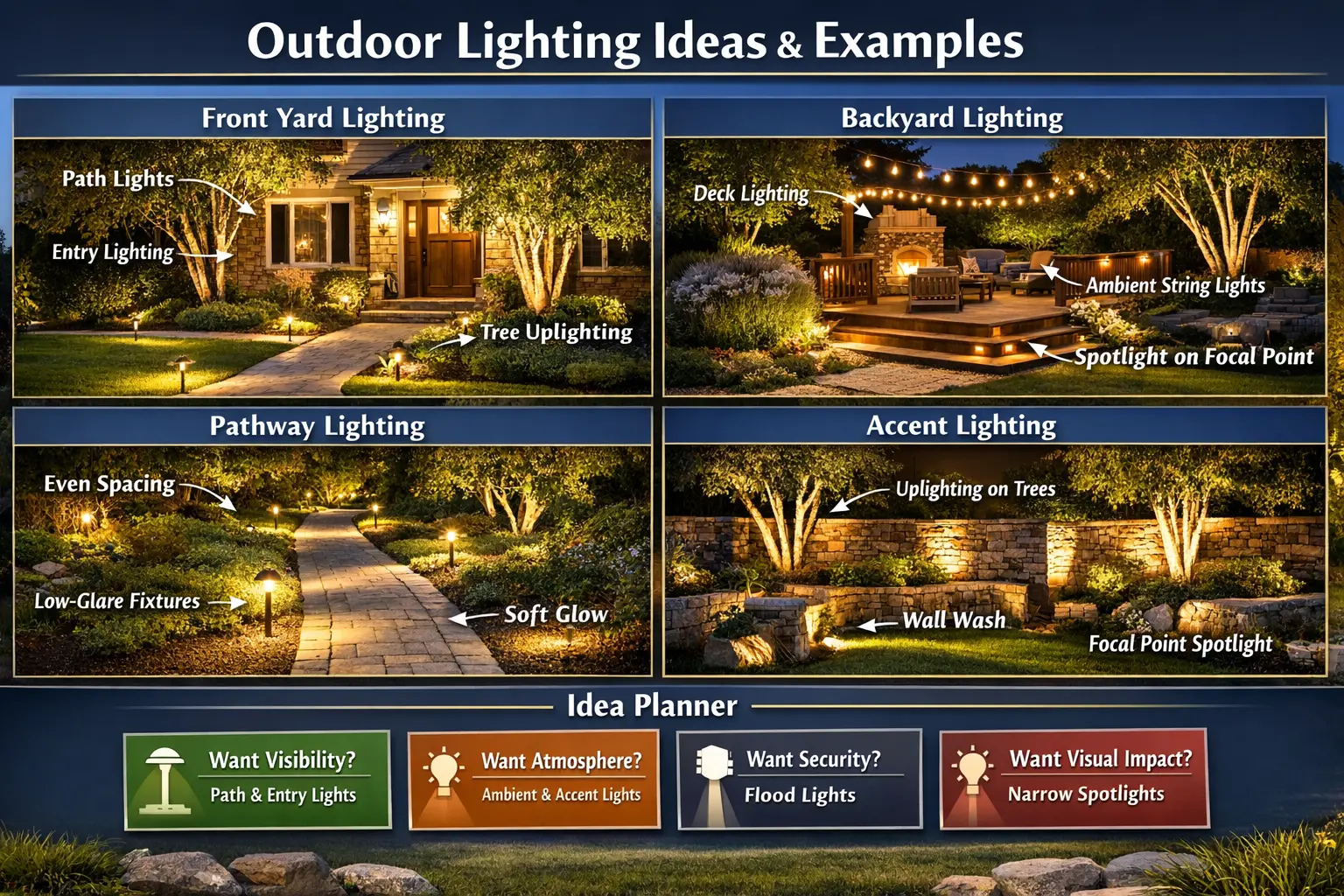
Front Yard Lighting Ideas
Front yard lighting should do three things well: guide people toward the entry, support curb appeal, and make the house feel intentional instead of dark and disconnected. One of the best front-yard ideas is to combine soft pathway lighting with selective accent lighting on trees, shrubs, columns, or stone features.
Another strong idea is to keep the entry brighter than the surrounding yard without flooding the whole façade. That contrast makes the home feel welcoming and helps the front door become the visual destination. Uplighting a few trees or architectural lines can also make the yard feel deeper and more finished at night.
What usually works best is not more fixtures. It is a better mix of guidance, structure, and emphasis.
Backyard Lighting Ideas
Backyard lighting should usually feel softer and more usable than front-yard lighting. Patios, decks, seating zones, and transitions matter more than curb appeal alone. A strong backyard idea is to layer low-glare ambient lighting with a few focused accent fixtures on trees, walls, or a water feature.
Deck lighting and patio edge lighting can help define the space without making it feel harsh. Soft lighting around a seating area often works better than one bright flood fixture because it creates comfort instead of glare. If the backyard includes steps or elevation changes, adding subtle guidance lighting usually improves both usability and appearance.
Pathway Lighting Ideas
Path lighting works best when it is gentle and balanced. One of the most common mistakes is creating a runway effect by placing fixtures too close together or making every pool of light too bright. Good pathway lighting should guide movement without calling too much attention to itself.
That often means choosing lower-glare fixtures, spacing them thoughtfully, and allowing some softness between light pools instead of trying to make every inch of the path equally bright.
Path lighting works best when spacing and placement are planned correctly. This landscape lighting layout guide explains how to position lights for a balanced look.
Accent Lighting Ideas
Accent lighting is where outdoor lighting starts to feel customized. Trees, focal shrubs, walls, stone textures, and garden features often become much more dramatic once they are lit correctly. Some of the best accent ideas use a narrow beam for a strong focal effect or a wider beam for a softer wall or bed wash.
Accent lighting is usually most effective when only the best features are chosen. Trying to light everything often weakens the effect of the whole yard. A few deliberate focal points usually create more visual depth than a cluttered field of lights.
Accent lighting relies heavily on beam spread and fixture type to create the right effect. This beam spread guide explains how to choose the right lighting angle.
Security Lighting Ideas
Security lighting should improve visibility without making the property feel harsh or overexposed. Good security lighting often focuses on entries, side-yard access points, drive areas, garages, and other dark zones rather than blasting the whole property with broad flood coverage.
Wide beam flood lighting can be useful where coverage matters most, but it should still be aimed carefully so it does not create glare or wipe out the visual layering that makes outdoor lighting attractive. Security lighting works best when it supports awareness without ruining comfort.
Parking areas need a different lighting strategy than patios, paths, and residential driveways because pedestrians and vehicles share the same space. If you are planning lighting for a business, apartment property, church, school, or other shared parking area, see our Parking Lot Lighting ADA Guide for accessible-space layout, pedestrian routes, signs, glare, pole placement, and nighttime visibility.
Outdoor Lighting Example Layouts
- Front Yard: Path lights + uplighting on trees + entry light
- Backyard: Deck lighting + soft ambient lights + focal spotlights
- Pathway: Even spacing with low glare fixtures
- Accent: Narrow beam spotlights on focal points
These examples are simple on purpose. They help you picture how different zones work together before you get lost in product choices. Once you know what type of effect you want, the planning decisions become much easier.
For a seasonal red, white, and blue display, see the Patriotic July 4th Outdoor Lighting Guide, which covers color placement, true white LEDs, roofline layouts, and smart July 4th scenes.
Strong Outdoor Lighting Ideas Must Also Work Technically
The best outdoor lighting design is attractive, but it also needs to avoid electrical noise, unsafe water-area placement, weak warranty evidence, and bedroom glare. If a design includes smart controls, cameras, sensors, or low-voltage LED drivers, the low-voltage lighting EMI troubleshooting guide explains how poor routing can cause interference and control problems. If the design includes a spa, the hot tub outdoor lighting guide shows how to use warm, shielded, low-glare lighting around water without turning the spa into a spotlighted stage. If the system later needs service or warranty support, the voltage drop documentation guide for warranty compliance explains what readings and photos prove proper installation. If fixtures face bedrooms, the dark-sky bedroom exterior lighting guide helps keep the design comfortable after bedtime.
Good Outdoor Lighting Ideas Still Need Repair and Control Logic
Outdoor lighting ideas only work well when the system is reliable, repairable, and aimed responsibly. If a visitor is using older Portfolio fixtures and needs help choosing between repair, replacement, or model-specific troubleshooting, the Portfolio Lighting AI troubleshooting assistant can help turn symptoms into a practical next step. For existing systems with dim lights, flicker, or unreliable connectors, the green dust low-voltage connector repair guide explains how copper corrosion can quietly reduce performance. For new beam angles, brighter fixtures, or property-edge lighting, the light trespass and property-line foot-candle guide helps keep the design attractive without creating glare complaints.
Outdoor Lighting Idea Planner
- Want visibility? → Use pathway + entry lighting
- Want atmosphere? → Use soft ambient + accent lighting
- Want security? → Use wide beam flood lighting
- Want visual impact? → Use narrow beam spotlights
Use Color Carefully in Landscape Lighting
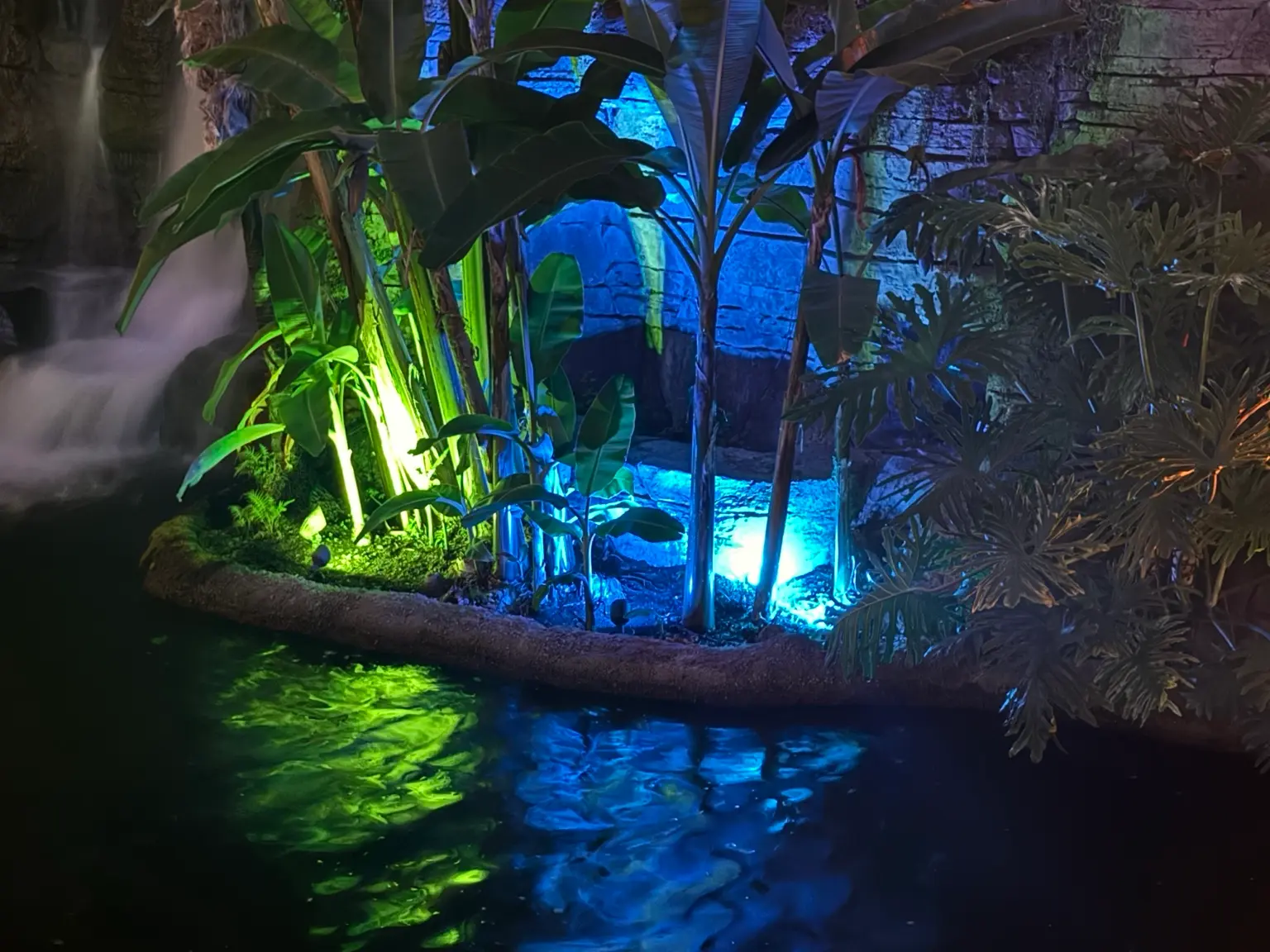
Colored outdoor lighting can make planting beds, water features, and stonework stand out at night. The key is restraint. Blue, green, and red lighting should support the scene without overwhelming the space or making walkways harder to see.
For most homes, I would use colored lighting only in limited accent zones and keep the main path, step, and entry lighting warm, steady, and easy on the eyes.
Good Outdoor Lighting Ideas Still Need Permit and Inspection Planning
A strong outdoor lighting design should look good at night and still hold up during inspection, warranty review, or a future home sale. Before building a large landscape, patio, solar, or pathway lighting project, check the landscape lighting permit requirements by state and use the as-built lighting diagram requirements to record the final system. If solar fixtures are part of the design, the UL 8750 solar lighting performance standards guide explains what separates reliable products from weak decorative lights. To keep the design from becoming a callback, compare it with the common landscape lighting code violations guide and the inspection failure database.
Common Outdoor Lighting Mistakes
Many outdoor lighting ideas fail because of poor placement or incorrect fixture selection. Common mistakes include using too many fixtures, spacing path lights too tightly, choosing the wrong beam angle, and trying to make every part of the yard equally bright.
Another common mistake is planning from the fixture outward instead of from the yard inward. The better approach is to start with the purpose of each zone, then choose the right type of light for that job.
Many outdoor lighting ideas fail because of poor placement or incorrect fixture selection. This lighting troubleshooting guide explains how to fix common problems.
Cost and Planning
Before implementing your lighting ideas, it helps to understand the cost of different layouts and fixture types. A simple path-light concept may be far less involved than a layered system with tree uplighting, deck lighting, wall washing, and transformer upgrades.
Before implementing your lighting ideas, it helps to understand the cost of different layouts and fixture types. This landscape lighting cost guide explains what to expect when planning your system.
If you are working with an older system, this Portfolio lighting parts and accessories guide can also help if your next step involves repairs, missing components, or upgrades.
What To Do Next
The best outdoor lighting ideas come together when they are part of a complete plan. Use this outdoor lighting design guide to turn these ideas into a fully functional layout that fits your space.
If you want a broader understanding of how indoor and outdoor lighting fit together, this complete lighting guide connects lighting design across the whole property. If you are focusing specifically on exterior systems, this Portfolio landscape lighting guide gives you a stronger outdoor foundation before you choose fixtures or finalize placement.
If you are planning a roofline lighting design, compare long-term options in our permanent vs temporary holiday lights guide before choosing your system.
Outdoor Lighting Ideas FAQ
What are the best outdoor lighting ideas?
The best ideas usually combine pathway lighting, entry lighting, accent lighting, deck or patio lighting, and a few carefully chosen focal points instead of trying to light everything equally.
How do I design outdoor lighting?
Start by dividing the yard into zones such as entry, pathways, seating areas, focal features, and security zones. Then choose fixtures based on what each zone needs most.
What lights should I use for a yard?
Most yards benefit from a mix of path lights, spotlights, accent lights, wall-mounted fixtures, and low-glare ambient lighting depending on the purpose of the space.
How many outdoor lights do I need?
The number depends on property size, layout, brightness goals, beam spread, and how many pathways or focal points you want to light.
What is the best layout for outdoor lighting?
The best layout is layered, purposeful, and balanced. It should support movement, improve usability, highlight the best features, and avoid the random look created by unplanned fixture placement.