
Quick Answer: What MR16 Bulb Do I Need?
Most Portfolio landscape lights use 12V MR16 LED bulbs. To choose the right replacement, match voltage, beam angle, and brightness to your existing bulb and fixture.
- Not working: Replace the MR16 bulb first
- Dim or uneven: Check the bulb or voltage drop
- Best choice: 12V warm white LED (2700K–3000K)
If your light still does not work after replacing the bulb, use landscape lights not working to diagnose the full system.
Quick Decision: What Should You Replace?
- One light out: Replace the MR16 bulb
- Multiple lights dim: Check the transformer
- Flickering: Check the bulb or wiring
Best MR16 Replacement Bulb Options
If you are choosing MR16 replacements for an older landscape fixture, make sure to compare color temperature before ordering. The Landscape Lighting Color Temperature Guide explains why warm 2700K to 3000K bulbs are usually the best fit for residential outdoor lighting.
- Most common: 12V MR16 LED (warm white)
- For spotlighting: Narrow beam angle
- For spread lighting: Wider beam angle
MR16 bulbs are small reflector-style bulbs designed for directional light. That makes them especially useful in applications where the light needs to be aimed at a walkway, planting bed, wall surface, display area, or task zone instead of flooding the entire space.
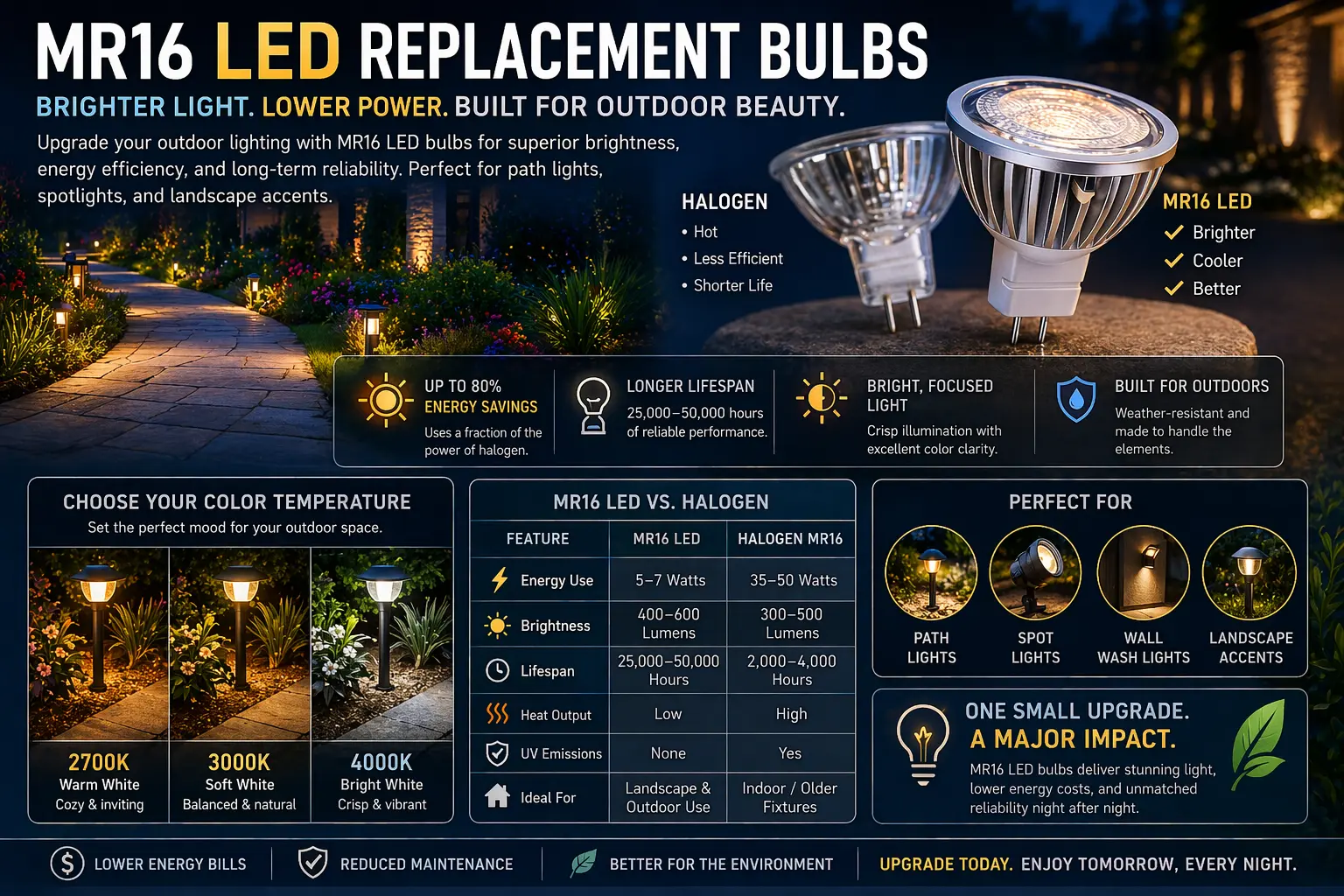
MR16 bulbs are a common upgrade for older landscape fixtures because they can improve efficiency, reduce maintenance, and provide cleaner light output. If you are checking beam angle, wattage equivalent, or socket fit, you can compare MR16 LED replacement bulbs for Portfolio lighting to find options that may work with your existing fixtures.
On Portfolio fixtures, MR16 LED bulbs often show up in landscape spotlights, outdoor path and accent systems, low voltage lighting setups, and some track lighting or recessed lighting applications. If the fixture body is still in good shape, a bulb replacement is often the smartest and least expensive fix.
Portfolio MR16 LED Bulb Compatibility Guide
Compatibility matters because not every directional fixture uses the same bulb base, voltage, or beam requirement. This table gives a practical overview of where MR16 bulbs are most likely to fit.
| Fixture Type | Uses MR16 Bulb | Typical Voltage | Notes |
|---|---|---|---|
| Landscape spotlights | Yes | Usually 12V low voltage | Common for tree, wall, and focal-point lighting. |
| Outdoor accent fixtures | Often | Usually 12V | Beam angle is important for highlight and accent effects. |
| Path and specialty garden fixtures | Sometimes | Usually 12V | Depends on the fixture head design. |
| Track lighting | Often | 12V or line-voltage, depending on the system | Frequently used for directional task or accent lighting. |
| Recessed directional fixtures | Sometimes | System dependent | More common in older or specialty directional trims. |
Most Common MR16 Replacement Mistakes
- Buying the wrong voltage (12V vs line voltage)
- Ignoring beam angle differences
- Choosing bulbs that are too bright or too dim
- Not checking transformer compatibility
- Replacing the bulb when the issue is wiring or power
MR16 LEDs react differently to voltage loss than older halogen lamps. The MR16 voltage-drop behavior guide explains why some LEDs flicker, strobe, or shift color at the far end of long landscape lighting runs.
What Is a Portfolio MR16 LED Replacement Bulb?
An MR16 bulb is a compact reflector bulb designed to throw light in a controlled direction. The “MR” refers to a multifaceted reflector, and the “16” describes the bulb diameter in eighths of an inch. In simple terms, MR16 bulbs are small, directional bulbs that work well when the light needs to be focused instead of spread widely.
That focused beam is one reason MR16 bulbs are so common in outdoor accent lighting. They can highlight trees, stonework, architectural textures, signs, or landscape features without washing out the whole yard. The same principle also makes them useful in some interior fixtures, especially where task lighting or directional beam control matters.
On older Portfolio systems, MR16 bulbs may have originally been halogen. Replacing them with LED MR16 bulbs can improve efficiency, reduce heat, and usually extend replacement intervals. For homeowners, that means less maintenance and better long-term lighting performance.
Where Portfolio MR16 LED Replacement Bulbs Are Commonly Used
Portfolio MR16 LED replacement bulbs are most useful in fixtures where controlled beam direction matters. Outdoor lighting is the most common example. A spotlight aimed at a tree trunk, entry pillar, or planting bed benefits from a concentrated beam far more than a general flood-style bulb would.
Landscape spotlights and accent fixtures
This is one of the strongest use cases. Many Portfolio landscape spotlight fixtures rely on MR16 bulbs because they are ideal for highlighting focal points outdoors. If a landscape accent fixture has lost brightness or stopped working, the MR16 bulb is one of the first things to inspect.
Low voltage outdoor lighting systems
MR16 bulbs are also commonly connected to low voltage lighting systems. In those setups, bulb replacement has to be considered alongside transformer sizing, wire runs, connector quality, and voltage consistency. If several lights fail at once, the issue may be larger than one bulb and could relate to the outdoor transformer lighting setup or a broader transformer troubleshooting issue.
Before installing an MR16 LED in an in-ground housing, check the Portfolio well light MR16 troubleshooting guide for heat buildup, enclosed-fixture ratings, lens clearance, and rapid LED failure symptoms.
Track lighting and directional interior lighting
Some Portfolio track lighting setups use MR16-style bulbs because they deliver focused, directional light that works well for artwork, display surfaces, counters, and task areas. In kitchens, studios, and work areas, directional bulbs can be much more useful than broad ambient fixtures because they put light exactly where it is needed.
Task lighting applications
MR16 bulbs can also support task-lighting goals where precise illumination matters more than wide coverage. In spaces where homeowners want to spotlight a work area, a wall feature, shelving, or a controlled kitchen or workshop zone, directional beam control becomes valuable. This is one reason the page also overlaps with Portfolio task lighting and, in some cases, under cabinet lighting.
How to Choose the Right Portfolio MR16 LED Replacement Bulb
The best MR16 replacement is not simply the first bulb with the right shape. A good replacement should match the fixture, the voltage, the beam needs, and the environment where the light is used.
Beam angle
One of the biggest performance differences between MR16 bulbs is beam spread. A narrow beam is best for spotlighting and concentrated accent lighting. A wider beam works better when you want softer spread over planting beds, signs, or broader surfaces.
Brightness
If the old bulb felt too dim, this is a good time to evaluate brightness. Outdoor accent lighting often benefits from a stronger bulb, but too much output can look harsh in smaller spaces. Try to match the scale of the feature being lit rather than assuming brighter is always better.
Color tone
Warm color tones tend to feel more natural in residential outdoor spaces. Cooler tones may work in more modern settings or certain task-lighting applications. The right choice depends on the look you want across the rest of the system.
Fixture condition
A new bulb cannot fix a damaged socket, cracked lens, loose connector, or failing transformer. If a replacement bulb burns out quickly or does not solve the issue, it may be time to inspect replacement hardware, globes and covers, or related parts and accessories.
Many legacy landscape lighting systems were originally designed for halogen MR16 lamps rather than modern LEDs. The legacy MR16 retrofit compatibility guide explains how older transformers and fixtures interact with newer LED replacements.
Installation Options and Replacement Steps
One reason MR16 replacement pages can perform well in search is that users are not only shopping. They also want to know how hard the job is. The good news is that replacing an MR16 bulb is often one of the simpler lighting maintenance tasks, especially when the fixture housing is still in good condition.
Basic bulb swap
In many Portfolio fixtures, the process is straightforward. Turn off power, allow the fixture to cool, remove the lens or access ring if necessary, take out the old bulb, and install the new MR16 bulb carefully into the socket. Then reassemble the fixture and test the light.
Outdoor fixture maintenance during installation
In landscape fixtures, bulb replacement is also a good time to inspect the rest of the housing. Look for moisture intrusion, debris buildup, worn gaskets, or loose wiring. Outdoor fixtures that sit low in mulch or soil can accumulate hidden issues even if the bulb appears to be the only problem.
System-level checks
If the new bulb still does not work, check the larger system. In low voltage lighting, that can include the transformer, cable runs, and connectors. Related pages like Portfolio landscape lights not working, landscape lighting wiring, and transformer not working can help narrow down the actual cause.
Signs Your Portfolio MR16 Bulb Needs Replacement
Some MR16 bulbs fail all at once, but many show warning signs first. Knowing those signs can save time and prevent unnecessary fixture replacement.
- Landscape spotlight flickers or cuts out intermittently
- Directional accent light appears dimmer than matching fixtures
- Bulb works only sometimes after rain or system cycling
- Light output has weakened noticeably over time
- Fixture housing is fine, but the beam is no longer stable or bright
- One spotlight fails while the rest of the lighting run still works
These symptoms are especially common in outdoor systems where bulbs face weather, age, and voltage variation over time. If one fixture goes dark but others on the same run still operate normally, the bulb becomes the most likely first fix.
If your MR16 bulbs appear dim or uneven, the issue may be voltage drop in your landscape lighting system, not the bulb itself.
Replacing the Bulb vs Replacing the Entire Fixture
In many cases, replacing a Portfolio MR16 LED bulb is the smarter move than replacing the whole fixture. If the housing, lens, and mount are still solid, a bulb change can restore the light at a much lower cost. This is especially true in established landscape systems where the fixture placement already works well and the larger design does not need to change.
If multiple MR16 bulbs fail or dim at once, the issue may involve transformer sizing and capacity rather than the bulbs themselves.
Full fixture replacement makes more sense when the body is corroded, the socket is damaged, water intrusion keeps returning, or compatible parts are no longer easy to source. If that happens, it can help to compare repair paths with where to buy Portfolio replacement parts, compatibility guidance, and even Portfolio lighting alternatives if the fixture family is older or discontinued.
Other Portfolio Lighting Replacement Guides
If you are replacing MR16 bulbs in a Portfolio fixture, these related pages can help with the rest of the repair or upgrade process.
MR16 LEDs installed in enclosed landscape fixtures often degrade faster because trapped heat stresses the driver electronics. The MR16 LED lifespan and heat database explains how enclosure conditions affect long-term lumen output.
Common MR16 Replacement Mistakes
- Buying the wrong voltage (12V vs 120V)
- Ignoring beam angle differences
- Replacing the bulb when wiring is the issue
- Choosing bulbs that are too bright or too dim
Portfolio MR16 LED Replacement Bulbs FAQ
What are Portfolio MR16 LED replacement bulbs used for?
They are commonly used in directional lighting applications such as landscape spotlights, low voltage accent lighting, and some track or recessed fixtures where beam control matters.
Can I replace a halogen MR16 bulb with an LED version?
In many cases yes, but compatibility with the fixture and system voltage still matters. It is always worth checking the setup before assuming every LED replacement will behave the same way.
Why is one landscape spotlight dimmer than the others?
A failing MR16 bulb is one possible cause, but voltage drop, wiring issues, connector problems, or moisture inside the fixture can also contribute.
Should I replace the bulb or the whole fixture?
If the housing and socket are still in good condition, replacing the bulb is usually the first and most affordable step. Full replacement makes more sense when the fixture body or internal components are damaged.
What voltage are MR16 bulbs in landscape lighting?
Most MR16 bulbs used in landscape lighting are low voltage, typically 12 volts, and are powered through a transformer. However, it is still important to confirm your system setup because some fixtures may vary.
Final thoughts
Replacing a Portfolio MR16 LED bulb is often the fastest and most affordable way to restore a directional fixture that has gone dim, flickered, or stopped working. The key is matching the replacement bulb to the fixture, voltage, and lighting goal instead of assuming every MR16 bulb will perform the same way.
If the bulb swap does not solve the issue, step back and check the transformer, wiring, connector quality, and overall low-voltage system. That approach helps you move from quick fix to full diagnosis without replacing good fixtures unnecessarily.